
" We don't sell the wine without touching the vine "
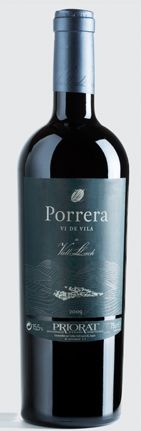
| Country: | Spain |
| Region: | Priorat |
| Winery: | Cellar Vall Llach |
| Grape Type: | Carignan |
| Vintage: | 2012 |
| Bottle Size: | 750 ml |
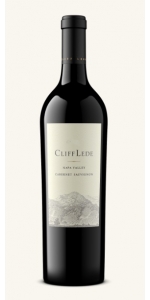
Clif Lede Cabernet Sauvignon Stags Leap is made from 82% Cabernet Sauvignon, 8% Merlot, 7% Cabernet Franc, 3% Petit Verdot.
Our Stags Leap District and Calistoga estate vineyards build the foundation of this wine with support from valued grower sites located in Oakville, Rutherford, and Howell Mountain. Composed of small batches from a variety of blocks of varying age, this wine represents a diverse range of carefully selected rootstocks and clones. Yields are maintained at sparse levels, with a focus on canopy management and vine balance. The resulting blend boasts a remarkable depth and complexity that is quintessential Napa Valley.
Grapes were picked in the darkness of the early morning hours. The freshly-harvested fruit immediately underwent rigorous selection by our three-tiered sorting process, which included our cutting-edge optical sorter. Whole berries were gently delivered by gravity to tank using our crane system, minimizing disruption of berry integrity. Cold soaks lasted approximately seven days, and fermentations were managed via a combination of délestage, pumpovers, and punchdowns. Extended maceration ranging from four to five weeks fine-tuned our tannin profiles, allowing us to perfect mouth feel and wine complexity. The wine was aged in French oak barrels, 48% of which were new, for twenty-one months.
Elegantly soft and lithe the 2021 coaxes the taster with warm dark chocolate and luscious black cherry aromas. More graphite, chocolate cake, crushed mulberries, and iron notes leap from the glass. The entry is filled with dark fruit flavors of cassis, blackberry, and blue berries and they’re all tinged with floral notes of jasmine and violets. The polished tannins along the finish feel Cashmere-like and beg the taster for another sip. – Christopher Tynan, Director of Winemaking
Review:
So silky and drinkable at the first sip, this well-concentrated wine feels tight and restrained with more tastes, holding its trove of black fruits, cedar, cinnamon and dark chocolate in a rich blanket of extra-fine tannins. Its complexity, layering and lingering finish are something special.
-Wine Enthusiast 94 Points
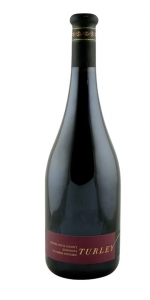
After working with the fruit for over a decade, Turkey is proud to present the first single-vineyard bottling for Turley from the Del Barba Vineyard. Contra Costa is a delta where the San Joaquin and Sacramento rivers meet, and these head-trained vines are planted in deep dehli blow sand, made up of decomposed granite coming down from the Sierra Mountains. The resulting wine embodies the best the delta has to offer: silken textures, ultra fine tannin, and dark saline fruits.
Review:
"The 2023 Zinfandel del Barba is ripe, boisterous and super-expressive. Floral overtones and bright acids run through a core of red/purplish fruit. Sandy soils confer lovely aromatic presence to this pure Zinfandel. This is an especially accessible offering from Turley."
-Vinous 91-93 Points
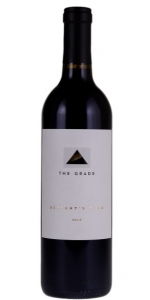
The Grade Cabernet Sauvignon Serpent's Back Napa Valley is made from 100 percent Cabernet Sauvignon.
Review:
The 2019 Cabernet Sauvignon Serpent's Back shows a more aromatic, high-toned side of this site. Bright red/purplish berry fruit, pomegranate, cinnamon and sweet floral accents are all laced together. The Serpent's Back is the most refined of these three Cabernets, but it has plenty of Calistoga punch.
-- Antonio Galloni 95 Points
The Grade Cabernet Sauvignon Serpent's Back Napa Valley is made from 100 percent Cabernet Sauvignon.
Review:
The 2019 Cabernet Sauvignon Serpent's Back shows a more aromatic, high-toned side of this site. Bright red/purplish berry fruit, pomegranate, cinnamon and sweet floral accents are all laced together. The Serpent's Back is the most refined of these three Cabernets, but it has plenty of Calistoga punch.
-- Antonio Galloni 95 Points
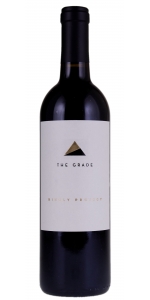
The Grade Cellar Kingly Project Cabernet Sauvignon is made from Napa Valley Cabernet Sauvignon.
"This is a noble expression of Cabernet Sauvignon" in full regalia, with decadent aromas and a mouthfeel viscous and sleek. "This vintage of the Kingly Project Cabernet Sauvignon enters the scene" -- Thomas Rivers Brown
Review:
The 2018 Cabernet Sauvignon Kingly Vineyard is endowed with tremendous richness and concentration. It emerges from the best spots within Block 5, which is a bit more protected from the elements. The 2018 is a bit closed today, but it has a lot of promise. Time in the glass brings out layers of inky dark fruit and the savory, minerally notes that are such signatures. This potent Calistoga Cabernet needs time to shine, but it is impressive today just the same.
-Vinous 96 Points
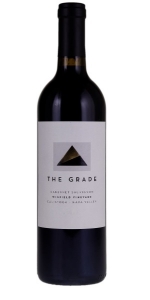
The Grade Napa Cabernet Sauvignon Winfield Vineyard is made from Napa Valley Cabernet Sauvignon.
“This wine expresses a focused balancing act of dark, rich black fruit, and a fine tannin structure, illuminated through the core with a laser-like acidity. The wine displays a deep purple-red hue with a cranberry halo. Aromas of cassis, cinnamon, citrus oil, roasted meat, and lilac swell from the glass.
“The palate is marked by a wave of jet-black brambly fruit up front, followed by an exotic spice mid-palate and a long, complex finish that lasts and lasts expressing notes of flowering jasmine, and oolong tea. The silky tannins hold everything together and will certainly allow this wine to evolve in the cellar for at least 7-10 years.” - Thomas River Brown
Review:
The 2018 Cabernet Sauvignon Winfield Vineyard is an absolutely gorgeous wine that conveys a striking interplay of richness, power and nuance. Silky and restrained for this site, the Winfield offers up a compelling melange of red fruit, iron, cedar, tobacco, rose petal and dried herbs, all in a mid-weight style that is incredibly appealing. The Winfield is a selection taken from Blocks 1, 4 and 5.
-Vinous 94 Points
Porrera’s great Carignan grapes are famous in the auspicious circles of world wine connoisseurs.
Celler Vall Llach is privileged to possess vineyards which grow extraordinary Carignan grapes and which have allowed the winery to release this new Vi de Vila de Porrera (new category of wine within the DOCa. Priorat which is based on the concept of village-level wines), as the winery’s true jewel.
Ancient Carignan vines, carefully selected from vineyards which are over a hundred years old and then blended with an average of 15% Grenache grapes.
These vines are from a different era and truly define the personality of our Porrera de Vall LLach.
The 2012 vintage was good in the cooler zones as the lack of rain and successive heat waves led to some grapes turning to raisin in the sunnier vineyards. Rainfall was well below the average levels of the previous years. This vintage can be characterised by a lack of rain, but most particularly by the successive heat waves which occurred from the month of May until the end of August. These heat waves caused the vines water stress as there was practically no rainfall from the middle of spring until the end of the summer. The effects of this were not apparent in the hotter zones and the vineyards with more sun exposure until the end of a spell of extreme temperatures in August.
This was due to the fact that relative humidity was higher than normal and the windy periods tended to be less intense. It rained in March and April and after that, rainfall tended to be insignificant until the beginning of July when it did not rain at all until the end of September. In terms of average temperatures during 2012, they tended to be normal. Regarding the different grape varieties, it is worth pointing out that Garnatxa (Grenache) and Carinyena (Carignan) better withstood water stress, whilst recently introduced varieties tended to turn more readily to raisin. This ability to better withstand drought was more visible in the older vineyards. Over the spring and summer months, the scarce rainfall meant that grapes were very healthy and there were no problems with botrytis.
The grapes ripened healthily in the lead up to harvest. Up until the end of August, we did not observe any water stress and berry development and ripening continued without problems. This was a dry vintage from the flowering phase right up until the ripening phase and was characterised by a significant gap between levels of alcohol and phenolic
Review:
Ripe, lush and a touch raisiny on the nose, this smells like boysenberry pie and crème de cassis liqueur. Chewy, tannic and a bit heavy in this youthful state, this offering from vineyards in the town of Porrera (Vall Llach's home) delivers blackberry, cassis and prune flavors along with a toasty, chocolaty, oak-heavy finish. Best from 2016 through 2021. - Wine Enthusiast 93 Points
Focussing on quality over quantity, Celler Vall Llach has firmly embraced a small-is beautiful ethos of microproduction for its vineyards and "trossos".
Consistent with this philosophy, the celler has imposed a ceiling on production and growth in order never to lose the personal and thorough supervision exerted over each stage of the process of wine making.
All this, and the unique character of Priorat allow us to offer you wines that Vall Llach hopes you will find fascinating and exclusive
To the East of Priorat (Southern Catalunya), few kilometers from Coll Teixeta, we find Porrera, a historical Priorat municipality where Celler Vall Llach was created.
The township takes up 28,54 km² and spreads along the valley of the Cortiella River, which flows across the territory from East to West and finally runs into the Siurana River. The northern and western sectors are limited for La Serra del Molló. Practically the whole territory is covered with vineyards.
After the depopulation of La Garrantxa, Porrera is the only populated centre in the municipality.
You can arrive from Falset by T-740; from Reus by first taking N-420 (to Coll Teixeta) and later by TP-7041; from Cornudella de Montsant by taking C-242 (until Venta d'en Pubill) and then by TP-7402 to Porrera.
Porrera is a farming town but only a 40% of the land is cultivated. The rest are waste lands covered with brushwood and forests. The chief crops are vine, almond and hazelnut trees. There are some unused beads of lead and baryta and also some fountains of ferrous water.
The farming co-operative was founded in 1932.
Along the centuries Porrera earned itself the reputatio of 'the most rebellious city in Catalunya' but, History has also proved that the village has always fought for liberty.
Despite the continuous wars and fights that destroyed the village, Porrera has built and rebuilt its buildings and kept its noble and proud appearance. The sumptuous buildings, the wide streets and the rivers evoke its glorious past.
The most remarkable building in the Neoclassical parish church of Sant Joan Evangelista built between 1763 and 1711.
Visitors should not miss the hermitage of Sant Antoni Abad built in 1610 on top of a craggy hill, and also the route along the sundials spread all over the village.
Raats MR Mvemve Raats de Compostella is made from 63% Cabernet Sauvignon, 17% Cabernet Franc, 12% Malbec, 6% Petit Verdot, 2% Merlot
The name de Compostella (meaning “field of stars” or “compilation of stars”) was chosen to reflect the fact that each component is crafted to stand alone as a world class varietal wine. The wine exhibits a deep, dark ruby color. Blackcurrant and black cherry fruit with hints of violets, cedar and cinnamon are revealed on the nose. The palate is rich and complex with mineral, blackberry fruit and dark chocolate on the finish. The five Bordeaux varietals harmoniously convene in this consistent, linear flavor profile that is polished with a well-defined finish.
Review:
he 2020 De Compostella is composed of 30% Cabernet Franc, 28% Cabernet Sauvignon, 21% Malbec, 16% Merlot and 5% Petit Verdot. Beginning with a focused, juicy and complex nose of dark red fruits, the wine has impeccable balance between oak, fruit and earthy floral tones. Full-bodied and with succulent acidity, the palette offers a firm frame of fine-grained tannins, while the fruit profile makes way for elegant earth and notes of crème de cassis sway with subtle flavors of sage and spiced plum. The red blend continues to somersault and reveal its complexities over the long-lingering and ever-evolving finish. Be patient with this exceptional wine
-Wine Advocate 95 Points
Mordoree Tavel Rose Reine des Bois is made from 60% Grenache, 15% Clairette, 10% Syrah, 10% Cinsault, 5% Bourboulenc (biodynamically farmed on a rocky/sandy plateau over clay).
This wine comes from a parcel planted on a pebbled soil covered with stones, whose geology is typical of the grands crus from the Rhone Valley (a base made of marine molasse from the Miocene period covered with an alpine diluvium from the Villafranchian period). 100 % destemming, cold maceration during 48 h., pneumatic pressing, fermentation at 18° C.
To pair with: roasted and or spicy chicken, duck, goose, fish soup, white meat, seafood and a lot of fishes (tuna, John Dorry, red mulet, etc...).Quite all Asian cuisine. Dishes with garlic, dishes with tomatoes.
In the glass the wine is deeply colored pink, almost orange/salmon. Complex aromas of white flowers, raspberry, pomegranate, strawberry, minerals, and citrus rise from the glass. Palate is full-bodied and voluptuous yet retains elegance while delivering great fruit intensity balanced by minerals and citrus. Light tannins appear mid-palate and carry through to the finish, giving it serious structure. Fresh, complex, and very long on the finish. Overall, powerful, textured, and food-driven — a “serious” Tavel that can age 1–5 years. Best enjoyed from June/July 2026 onward.



