" We don't sell the wine without touching the vine "
| Country: | United States |
| Regions: | California California (Sonoma County) |
| Winery: | Chateau Diana Winery |
| Grape Type: | Syrah |
| Vintage: | 2014 |
| Bottle Size: | 750 ml |

Siegel Ketran Red Blend is made from 35% Syrah, 30% Petit Verdot, 25% Carmenere, 10% Cabernet Franc
Ketran is coming from the Mapuche Language and it means "plowed earth". In fact, Earth was plowed by fire from the volcanic acitivity. Ketran is a tribute to the volcanic soils that gave birth to the fantastic terroir of Los Lingues, located at the foothills of the “Cordillera de los Andes".
The wine is clean and bright in color.
The wine displays a very aromatic and elegant nose of ripe black fruit, prune and dried fig.
The mouthfeel is smooth and the length to the finish is quite exceptionnal, with sweet and fleshy tannins, balanced by a perfectly integrated acidity which gives the wine some freshness and emphasizes the presence of fruit and its ability to age.
Coming from the volcanic soils of Los Lingues, at the foothills of the Andes mountain.
The wine went through ML fermentation, it was then aged 24 months in French Oak barrels.
The wine has been slightly filtered before bottling.
Review:
"2014 is the second release of Siegel's top red wine, made from a four-way cuvée of Syrah, Petit Verdot, Carmenère and Cabernet Franc. Plush, spicy and smoothly oaked, with some tannic backbone and a glossy finish. Needs time. 2021-30"
- Tim Atkin MW (Chile 2019 Special Report), 94 pts
Ketran is Siegel’s most ambitious wine. Debuting with the 2013 vintage, it’s a selection of the best barrel lots from Los Lingues in the Andean zone of Colchagua. The blend works very well, especially if you let the wine breathe for a few hours beforehand. The oak steps aside, and the aromas of fruit and herbs take over in a red with firm, sharp tannic structure that leaves room for the acidity—not very prominent in a warm year, but still present—to achieve balance. This blend is for the cellar.
-Patricio Tapia - Descorchados 94 Points

Avennia Gravura Red Blend is made from 48% Cabernet Sauvignon, 41% Merlot, 11% Cabernet Franc
Gravura is our ode to the Graves AOC of Bordeaux, emphasizing a harmony of Cabernet Sauvignon and Merlot. The name is a play on an artisan printing technique, and on the Bordeaux region of Graves, which features similar blends. Featuring more Merlot and with the addition of Red Mountain fruit, this wine is designed to be more generous and voluptuous in style, while still remaining complex and balanced.
Gravura Tasting Notes: Beautiful nose of red and black fruits, some savory leaf notes, mocha, pencil shavings. The palate is elegant and balanced, almost pretty: raspberry, black and red currants, milk chocolate and caressing tannins. Finish medium-long and ethereal.
Avennia Gravura Red Blend is made from 48% Cabernet Sauvignon, 41% Merlot, 11% Cabernet Franc
Gravura is our ode to the Graves AOC of Bordeaux, emphasizing a harmony of Cabernet Sauvignon and Merlot. The name is a play on an artisan printing technique, and on the Bordeaux region of Graves, which features similar blends. Featuring more Merlot and with the addition of Red Mountain fruit, this wine is designed to be more generous and voluptuous in style, while still remaining complex and balanced.
Gravura Tasting Notes: Beautiful nose of red and black fruits, some savory leaf notes, mocha, pencil shavings. The palate is elegant and balanced, almost pretty: raspberry, black and red currants, milk chocolate and caressing tannins. Finish medium-long and ethereal.

Avennia Justine Red Blend 56% Grenache, 31% Mourvèdre, 13% Syrah
Justine reflects our belief that Washington is capable of producing world class blends of grape varieties traditional to the Southern Rhone region of France. The name is inspired by one of the great heroines of recent literature, who also sprung from the imagination of the Mediterranean. Dark, seductive, complex, with a chasm of depth: The Justine is a great reflection of Avennia's mission of expression, and Washington's generous terroir.
Tasting Note: Big black cherry, blackberry, hints of orange peel, fresh herbs and loam on the nose. Plush and round on the palate. Dark earthy fruits from the Mourvedre, along with citrus high notes, mountain flowers, jasmine, and savory herbs. Balanced and complex without forgetting its hedonistic roots in the Southern Rhone.
Review:
A blend of 56% Grenache, 31% Mourvèdre, 13% Syrah brought up all in older oak, the 2016 Justine offers a great core of black fruits as well as lots of peppery herbs, earth, and classic meatiness. It looks to be a great vintage for this cuvée."
- Jeb Dunnuck (April 2018), 92-94 pts

Avennia Valery Red Blend is made from 86% Merlot and 14% Cabernet Franc
Valery is named for the patron saint of wine in the St. Emilion region that inspired it.
We started with old vine Merlot from a stony block in the heart of the Yakima Valley and added complex, aromatic Cabernet Franc from the Horse Heaven Hills. The result is a balanced, complex wine with the elegance and ethereal perfume that this blend of two of Washington’s best varietals are known for.
The nose on this wine is very perfumed, almost exotic with notes of fresh violets, red plum, winter mint, fresh herbs and crushed limestone qualities. The palate is poised and balanced, with red fruits and mocha powder encapsulated in limestone. The finish lingers delicately, with the Cabernet Franc asserting a light tobacco and herb note, giving depth. A compelling wine that will continue to unwind for 7-10 years in the cellar.
Review:
"Brought up in 30% new French oak, the 2016 Valery (70/30 Merlot and Cabernet Franc) offers more black cherry and earthy, herbal notes as well as a medium-bodied, seamless, beautifully balanced style. It too shows a vibrant, fresh, yet concentrated style that has a Bordeaux feel in its weight and texture."
- Jeb Dunnuck (April 2019), 93 pts
"Good medium-dark red. Aromas of blueberry, mocha, licorice and violet are a bit darker than those of the 2015 version. Dense and penetrating, with wild flavors of dark berries, licorice and game given lift by rocky minerality and a minty nuance. Chris Peterson slightly acidified his Cabernet Franc from Champoux Vineyard, which he added to the wine for richness. This beauty may yet tighten up in the bottle.- Stephen Tanzer"
- Antonio Galloni's Vinous (November 2018), 92+ pts
Avennia Valery Red Blend is made from 86% Merlot and 14% Cabernet Franc
Valery is named for the patron saint of wine in the St. Emilion region that inspired it.
We started with old vine Merlot from a stony block in the heart of the Yakima Valley and added complex, aromatic Cabernet Franc from the Horse Heaven Hills. The result is a balanced, complex wine with the elegance and ethereal perfume that this blend of two of Washington’s best varietals are known for.
The nose on this wine is very perfumed, almost exotic with notes of fresh violets, red plum, winter mint, fresh herbs and crushed limestone qualities. The palate is poised and balanced, with red fruits and mocha powder encapsulated in limestone. The finish lingers delicately, with the Cabernet Franc asserting a light tobacco and herb note, giving depth. A compelling wine that will continue to unwind for 7-10 years in the cellar.
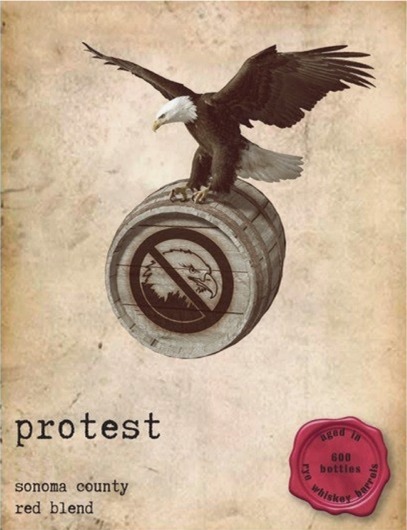
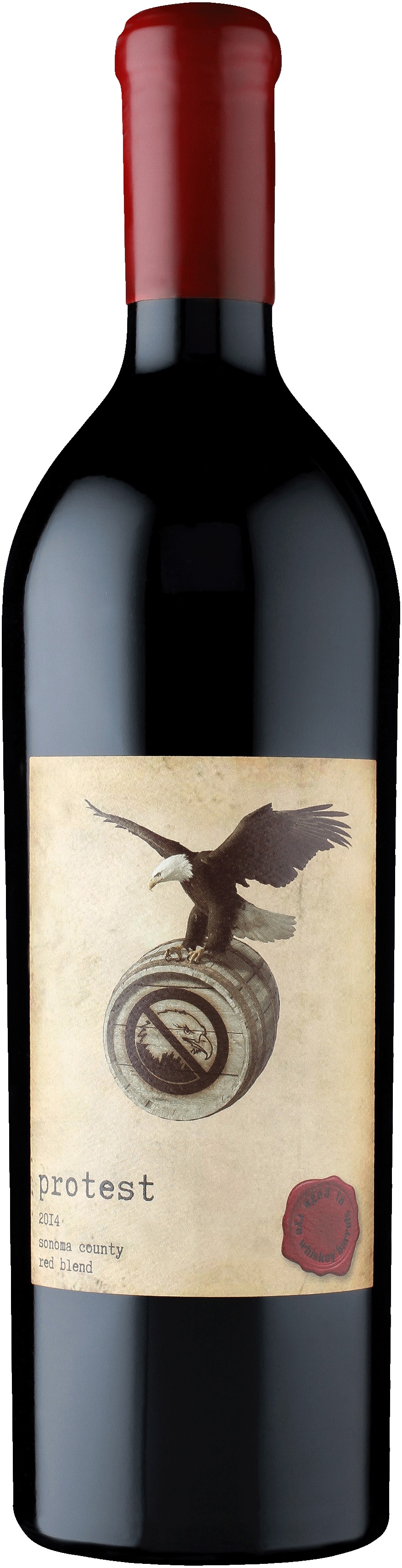
Protest Red Blend 2014 is made from 89% Syrah, 7% Malbec, 4% Zinfandel.
This is a Sonoma Valley Red blend wine aged in craft Rye Whisky barrels. The Protest is a dedication and an attitude.
The Rye whiskey aromas are uniquely subtle, and meld well with the silky, dense-fruit Syrah with hints of cigar box and fresh leaf tobacco. The intense, dusty-black fruit flavors have a warm intermingling of the Rye whiskey flavors. It taste like a sumptuous wine, but then it has transformed into a different animal, with the Rye whiskey aromas and tastes. More delicious chewy, bacon-fat tones, with deep blackberry and black raspberry jam highlights. It invokes a pleasantly, pipe smoke filled room, with old classic novels lying about.
Pairs well with steak, heavier marinades. More of a sipping wine, really.
The Chateau Diana Winery, located in Sonoma County, CA, was founded 30 years ago when Tom and Diane Manning moved from New York to California to pursue their dream of providing high quality California wines for the East coast. Over the course of 30 years, the Chateau Diana Winery has developed a specialty in producing low alcohol wines. Today, the winery is owned by siblings Corey and Dawn (Manning) where they follow the traditions and values their parents adopted when they first began operations.
Date Founded: 1981
The winery was named after Diane Manning, the mother of brother and sister Dawn and Corey. Tom and Diane Manning started the winery in 1981 on land bought from the former Le Baron Ranch.
Chateau Diana Winery was founded in 1981, but its beginnings were crafted along a career path that would take Tom Manning, and later, his young family on a coast-to-coast journey.
Tom was orphaned as a child and raised by his aunt. Though he never finished high school, he was a hard worker from the age of 14. Sales seemed to come natural to Tom and he moved through the sales ranks of various companies. Eventually, he found a natural fit within the wine industry.
With his young wife Diane and his expanding family, Tom lived in various states, eventually settling in beautiful Northern California. Residing first in San Francisco, Tom was lucky to be involved in the early days of a rapidly growing wine retailing group, Trader Joe’s. The owner personally selected Tom to develop Negociant Wine Brands.
With the rapid sales and success that Tom enjoyed, he seized the opportunity to open his own winery facility in 1981. Affectionately named after his wife, Chateau Diana was born in Healdsburg, Ca. Craig, their eldest son, joined Tom and Diane in this exciting venture. Over the next two years, the Mannings developed new wines within the Chateau Diana brand while also looking for a more permanent home for their winery.
In 1983, a dream was realized with the purchase of the LeBaron Ranch encompassing 60 acres in the Dry Creek Valley. 30 years later, the Manning family honors the LeBaron’s legacy of maintaining a family-owned winery. The business continued to grow with a sales office in Southern California, whom their daughter Dawn runs herself. In 1991, another son Corey joined his sister in the family business.
The period between 1999 and 2001 held many changes for Chateau Diana and the Manning family, saddest of which was the unexpected loss of winemaker, Craig Manning. The continued growth of the business within this family struggle, including necessary expansions to the winery facility, was shouldered by Dawn, Corey, and Craig’s Wife, Donna. Their dedication and commitment to hard work is a deep family conviction and is key to the accomplishments at Chateau Diana. When walking the grounds of Chateau Diana you can feel the love and care Craig Manning put into the winery before his passing. He is gone but never forgotten.

Boussey Pommard is made from 100 percent Pinot Noir.
Pommard has been cultivated in the area for several Centuries. The name Pommard comes from Pomone, goddess of the fruits and gardens.
The wine boasts a nice cherry red color. The nose is complex and powerful with predominant notes of fruit (Morello cherry, citrus, fresh fig), forest and spice. In the palate, it is powerful and robust with flavors of cherry and spice with well-integrated tannins. Great balance.
Perfect with beefsteak, furred or feathered game, stewed poultry and cheeses like Epoisses.

Michel Thomas Sancerre Blanc is 100% Sauvignon Blanc (40% Caillottes, 40% Grosses Terres, 20% Silex)
The wine displays an exotic nose with a touch of smoke and licorice. On the palate, peach and watermelon dominate with citrus zest and chalk notes.