
" We don't sell the wine without touching the vine "

“1752” is the name of the Damilano Barolo Cannubi Riserva, in honor of the year in which the historic bottle was first marked “Cannubi”. It still exists today perfectly conserved by the Manzone family in Bra, close to Barolo. The bottle is clearly marked as being of “1752” vintage, indicating that Cannubi historically precedes Barolo.
About the Vineyard:
The Cannubi Cru is in found within one of the 6 core zones which comprise a UNESCO heritage site in Italy. A mixture of Tortonian and Helvetian calcareous marl gives the grapes intense aromas of cherry, plum and tobacco, rose and violet in sequence. Its low potassium and high calcium/magnesium content offer the wine a fine and polished touch. The vineyard is located at about 270 m. a.s.l. and has a south-east sun exposure. Barolo Riserva Cannubi 1752 It is a small plot of about 2 hectares of Nebbiolo vines, currently between 30 and 50 years of age.
Tasting Notes:
Garnet ruby red in color, the bouquet is intense and balanced, with notes of violet, red fruit, cherry and plum, spices, liquorice, cocoa, leather and tobacco. Dry, robust, full-bodied, very persistent, rich and velvety
Food Pairing:
This wine is excellent with typical piedmontes pasta (tajarin, ravioli); perfect with red meat, braised and roast meat, game and absolutely ideal with all types of cheeses.
Review:

Gagliasso Barolo Riserva Oak Box is made from 100% Nebbiolo
Complex and intense aromas of red fruits intermixed with licorice, prune, leather, smoke and notes of toasty oak and vanilla. Full-bodied on the palate with loads of ripe dried and candied fruits, pepper and mocha.
After malolattic fermentation the wine stays for 10 months in French barrels, 10% new oak and 90% different years; after this period all barrels are blended ( 50% Torriglione and 50% Rocche dell’Annunziata) in old barrels for 48 months again. The wine is bottled and refined for 24 months.
There's a gritty, sandy quality to the tannins that would cut through roast pork stuffed with prunes.

Reviews:
On the savory side, this red opens with freshly mowed grass, hay and eucalyptus aromas before revealing cherry, strawberry, rose and mineral flavors. Fleshy, with a matrix of dense tannins flexing their muscles on the finish. Shows excellent potential. Best from 2023 through 2042.
-Wine Spectator 96 Points
Floral and red fruit nose. Supple attack, very polished and concentrated, with fine-grained tannins and ample acidity. This has a linear drive, precision. and a very long finish. The rewards will be substantial for the patient consumer.
-Decanter 97 Points

All older vintage wines have been purchased from a single collectors cellar. Pictures can be requested before shipment.

No Syrah terroir in Sonoma County compares with Sonoma Mountain’s northwest crown—cool fog-affected mornings, sun-bathed afternoons, cooled by persistent coastal breezes, and temperate evenings. The soils in Steiner’s Syrah blocks — ashy and moondust-like, littered with decomposing sea bed — further contribute to the unique nature of this site. After a 3-vintage hiatus, I am thrilled to be back working with Steiner Vineyard’s Syrah. By its nature, this slow-to-ripen, cool-climate site produces fabulously deep, intense, structured wines. Now, raising a big, brawny Syrah is no rare act of alchemy. It is the wonder of Steiner’s terroir — a magical elegance and beauty, informing the inherent power, depth and intensity — that makes this bottling so special. 2016 produced a classic wine that deftly balances massive flavors and texture, while retaining vital freshness, and a palpable sense of cool. Production was low, so get it while you can. Simply a “WOW” wine, not to be missed.
VINEYARD: Steiner Vineyard. Located at 1,100 ft, on the northwest crown of Sonoma Mountain. CRUSH: Early morning harvest by hand, October 1st, cluster and berry sorted, destemmed and crushed. FERMENT: 5-day cold soaks, followed by 14 day native fermentation in open-top bins. AGING: 20 months, French oak, 100% new, mixture of 300L hogsheads and barrique shapes. Never racked prior to bottling. Bottled unfined, unfiltered.
Review:
"Refined and stylish, featuring a complex core wrapped in multilayered blackberry and blueberry flavors, laced with bitter chocolate, black licorice and smoky meat notes. Drink now through 2030.- Tim FISH"
- Wine Spectator Insider (January 15th 2020), 93 PTS

Avennia Justine Red Blend 56% Grenache, 31% Mourvèdre, 13% Syrah
Justine reflects our belief that Washington is capable of producing world class blends of grape varieties traditional to the Southern Rhone region of France. The name is inspired by one of the great heroines of recent literature, who also sprung from the imagination of the Mediterranean. Dark, seductive, complex, with a chasm of depth: The Justine is a great reflection of Avennia's mission of expression, and Washington's generous terroir.
Tasting Note: Big black cherry, blackberry, hints of orange peel, fresh herbs and loam on the nose. Plush and round on the palate. Dark earthy fruits from the Mourvedre, along with citrus high notes, mountain flowers, jasmine, and savory herbs. Balanced and complex without forgetting its hedonistic roots in the Southern Rhone.
Review:
A blend of 56% Grenache, 31% Mourvèdre, 13% Syrah brought up all in older oak, the 2016 Justine offers a great core of black fruits as well as lots of peppery herbs, earth, and classic meatiness. It looks to be a great vintage for this cuvée."
- Jeb Dunnuck (April 2018), 92-94 pts
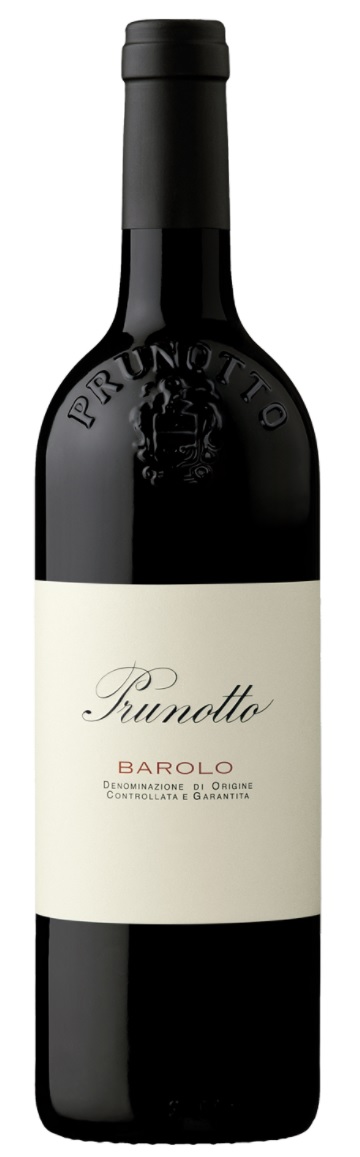
Prunotto Barolo is made from 100 percent Nebbiolo.
Prunotto’s Barolo is garnet red in color. The nose is complex and generous with pleasing aromas of rose petals, red fruit and spicy notes. The palate is full, well-balanced with velvety tannins.
Review:
Fragrant and refined, this focused red opens with alluring scents of iris, woodland berry, botanical herb and pipe tobacco. It's vibrant and linear, featuring strawberry compote, raspberry and star anise framed in bright acidity and taut, polished tannins. Drink 2022–2028.
-Wine Enthusiast 93 Points
This is elegant, exuding cherry, plum, eucalyptus and mineral flavors. There is a chalky element in the texture that's clean and drying as this tightens up on the finish, with fine intensity and length. Best from 2023 through 2040. 1,000 cases imported.
Wine Spectator 93 Points
Cantina Sociale Ai Vini delle Langhe, a winemaking co-op, was incorporated in 1904 in the city council room of Serralunga's Town Hall presided by Mr. Giacomo Oddero, a notary public and a youthful Alfredo Prunotto as a witness. Among those present at the ceremony were prominent citizens who made important contributions to the history of Alba and the surrounding communities, as well as many small local producers. The first harvest took place in 1905. Unfortunately the following years were burdened by an uncertain economic trend worsened by the effects of the First World War.
On the deadline for renewal of the Cantina Social’s by-laws in 1922, many of its members changed their minds and no longer delivered their grapes to the co-op. The vintage was exceptional but was not abundant. The winery began to have serious financial difficulties and was put into liquidation. In the middle of this predicament, Alfredo Prunotto met and married Luigina. Together they decided to take over the Ai Vini delle Langhe co-op and gave it their name. Their dedication and passion soon made the winery famous and it began exporting Barolo and Barbaresco all over the globe: first to South America and then to The United States, two markets that had recently opened to foreign trade. Prunotto was one of the few companies that believed in this commercial strategy.
In 1956, Alfredo Prunotto decided to retire and he sold the company to wine technician and friend Beppe Colla who was assisted by Carlo Filiberti and later by his brother Tino Colla. As early as 1961, the owners of Prunotto began to identify specific production areas, well-know vineyards of excellence, and began single vineyard vinification to produce the very best crus such as Barolo Bussia and Barbera d’Alba Pian Romualdo.In 1972, a new winery was designed by architect Ugo della Piana, a native of this northern area of Piedmont. The winery was built near the city of Alba where Prunotto's main offices are still located today.
The Antinori family first became involved with the Prunotto winery in 1989 initially handling distribution and then in 1994, when the Colla brothers decided to retire, they took over production upholding the excellent quality standards that Alfredo Prunotto successfully achieved. The winery's production philosophy, always extremely attentive to details and deeply passionate about wine, brought Prunotto and the Antinori family together to face a new challenge: to explore and develop the potential of this new terroir where both local and international varieties can express the area's remarkable territorial identity. In 1990 this project took shape when Albiera Antinori, Marchese Piero Antinori’s eldest daughter, further defined the winery's personality by concentrating on the vineyards: the first was the Bussia vineyard, one of the most prestigious in the Barolo area followed by Costamiòle in Agliano to produce Nizza, and land in Calliano for research and development for introducing vines new to this area such as Albarossa and Syrah.
A captivating panorama with its beautiful rolling hillsides and small sloping valleys wrapped with rows of vines. A territory that is both fascinating and inviting not only for its natural landscape, distinctive colors and the peace and quiet that prevails but also for its historical heritage and cultural traditions that are part of its unique character. Alba is a charming town with Baroque and Renaissance buildings and a series of medieval towers that were built by the city’s noble families. The entire region, with its vineyards, castles and medieval hamlets, safeguards one of the most important and unique artistic and architectural patrimonies in Piedmont. The estate covers an area of approximately 65 hectares (161 acres) with vineyards in the very best wine producing zones in the region. Careful, attentive vineyard management is the most important fundamental value in winemaking. Only top quality grapes can produce great wines that are able to express the grape variety’s personality and territorial identity.
The winery represents the perfect balance between tradition and innovation using state-of-the-art technology to express and interpret the many nuances of this historic winemaking territory. Prunotto’s vineyards extend over an area of approximately 65 hectares (161 acres) in the territories of The Langhe and Monferrato and are subdivided into smaller parcels of land and single vineyards where great red wines are produced. Respectful of regional traditions, white wines are also crafted such as Moscato d’Asti and Arneis as well as an innovative rosé and two brands of grappa, one from Barolo Bussia and one from Barbera d’Asti Costamiòle. Prunotto conducts studies, research and development and actively carries out experimentation in the vineyards without any pre-planned formulas. Particular attention is given to promoting sustainable agriculture and improving manual techniques. Each year and each harvest are unique and for this reason Prunotto’s winemaking team evaluates the best timing and techniques for vineyard management and for the production of each vintage respecting varietal characteristics while expressing its finest potential. Progress in the cellars is always preceded by developments in the vineyards.
New projects were introduced after detailed soil studies that provided valuable indications for choosing rootstocks and the best clones able to adapt to each parcel, favoring the expression of their vineyard of origin. The most important historical production areas are Bussia, Bussia Vigna Colonnello, Costamiòle, Bansella, Bric Turot, Pian Romualdo and Occhetti. Prunotto’s production philosophy has always been directed towards progress, continuous advancements in our cellars and in aging techniques, a constant challenge to achieve the finest quality. A new winery was built in 1999, adjacent to the historic offices designed by architect Della Piana in the 1970’s, exclusively for vinification and aging. This project was pivotal for expanding and improving the winery's facilities where all stages of production take place. This temperature-controlled facility maintains constant temperatures throughout the year and guarantees perfect storing and aging conditions. For production of Barolo, Barbaresco and Nebbiolo, the older 100-hectoliter Slavonian oak barrels, in use since the 1970's, have been replaced with large Allier and Slavonian oak barrels in 27, 32, 53 and 77 hectoliter sizes, formats that are more suitable to bring out the potential of each individual vineyard and assist each wine to achieve its greatest expression. Over the years, we have also replaced the outdated cement vats with stainless steel tanks that are able to preserve the grapes’ characteristic aromas and fragrances. The new vertical vinification tanks are also stainless steel and are lower in height with a larger diameter allowing for greater contact of the skins with the juice during fermentation.

It is the purest example of tempranillo grapes from Rioja Alavesa. Coming from a vineyard over a hundred years old with an extremely low production. You can taste a high concentration of ripe fruit, well-bodied, with a final touch of toffee and lime soil plus a perfect acidity which makes this wine fresh and very tempting.
VINEYARD From the Cuba Negra Vineyard in southern Labastida, the El Belisario bottling comes from Tempranillo vines planted in 1910.
ALCOHOL 14.5%
PROCESS Fermented naturally in oak foudre. Malolactic fermentation and aging occur in 100% new French oak barriques over two years.
TASTING Along with its brilliant garnet color, aromas of cherries, dried plums, black pepper, and savory mushroom leap from the glass. The palate is fresh and concentrated with mixed red and black fruit, chocolate, menthol, and coffee. Displays a surprisingly elegant nature. Pair with game, red meat and dark chocolate.
Review:
One of those wines that makes you belief in the special magic of old vines, El Belisario hails from La Greña, parcel planted on limestone rich soils in 1910. Aged in older French barrels, it's a focused, nuanced, wonderfully expressive Tempranillo with raspberry, pomegranate and red cherry fruit, filigree tannins, energetic acidity and sweet, caressing oak spices.
96 Points - Top Rated Single Vineyard in Tim Atkin's 2023 Rioja report

The nose of our the Cabernet Sauvignon shows remarkable purity, opening with juicy fruit-punch and layered notes of blue and red fruit dried with sweet herbs. The palate builds with blackberry pie filling, baker’s chocolate, and freshly ground coffee, underscored by an earthiness of loam and underbrush. Acidity is finely tuned, carrying structure through the middle and sides of the wine. For those who can wait, cellar this bottle for several years. For those who cannot, double decant 4–5 hours before serving and let the wine come fully alive.
Blackberry pie filling, baker’s chocolate, freshly ground coffee, earthy loam and underbrush, red and blue fruit dried with sweet herbs
Review:
"How do you do Cabernet the Donelan way—and do it in Sonoma? The answer began with archetyping older styles of Cabernet. The vineyard lies near Skipstone, encompassing sites such as T-T Vineyard, Obsidian, and Constant on Diamond Mountain. For Joe Donelan, the goal was to craft a Cabernet reminiscent of what Mondavi was producing in the 1970s and early 1980s—wines defined by freshness, clarity, and balance rather than sheer weight. The result is vivid, bright, and pure-fruited, with an immediate freshness factor. Red berry fruit, cherry, and cassis lead the way, framed by a medium-bodied structure with velvety-textured tannins and a creamy mid-palate that makes the wine deeply engaging and remarkably easy to drink. Sagebrush and black olive notes lend savoury complexity, joined by subtle hints of tobacco, all carrying through to a long, mineral-driven, fruit-focused finish. - Jonathan CRISTALDI"
Decanter (January 5th 2026), 97 points



