" We don't sell the wine without touching the vine "
| Country: | United States |
| Regions: | California California (Lodi) |
| Winery: | Red Phoenix |
| Grape Type: | Zinfandel |
| Vintage: | 2019 |
| Bottle Size: | 750 ml |

Robert Mondavi Winery Napa Red Blend is made from 74% Cabernet Sauvignon, 13% Cabernet Franc, 9% Merlot, 4% Petit Verdot.
Robert Mondavi’s vision was to elevate Napa to the world stage. In celebration of his achievement, our Napa Tier wines are sourced from distinctive vineyards throughout the Napa Valley and truly emulate a classic Napa Valley style.
Nearly half of this year’s blend is sourced from the deep, well-drained soils of Oakville, which provides gorgeously dark, supple wines with fine tannins. Stags Leap District, Oak Knoll, Yountville, and Rutherford also find their place in the bottle, with the varying mesoclimates and soils of these vineyards integrating seamlessly into a 100% Napa Valley blend.
Review:
-James Suckling 93 Points
-Jeb Dunnuck 91 Points

Robert Mondavi Winery The Estates Red Blend is made from 49% Cabernet Franc, 47% Cabernet Sauvignon, 4% Petit Verdot.
Robert Mondavi’s vision was to elevate Napa to the world stage. In celebration of his achievement, our Napa Tier wines are sourced from distinctive vineyards throughout the Napa Valley and truly emulate a classic Napa Valley style.
Aromas of blackberry, cherry, toasted almond, bay leaf and mocha. Luscious ripe cherry and cassis, with savory notes of dried herbs and toast. Rich, weighty, and mouth-coating, with classic fine To Kalon tannins.
Review:
-James Sucking 94 Points
-Jeb Dunnuck 94 Points

Laird Jillians Red Blend is made from 65% Cabernet Sauvignon, 18% Syrah, 10% Merlot, 5% Malbec and 2% Petit Verdot
21 months in 75% French Oak and 25% American Oak (40% new and 60% neutral)
Vineyard: Cabernet Sauvignon (60% Mast Ranch + 40% Linda Vista Ranch), Syrah (100% Eagle Vines Ranch), Merlot (100% Big Ranch), Malbec (100% Flat Rock Ranch) and Petit Verdot (100% Flat Rock Ranch).
Appellation: Napa Valley
Our family has been proudly growing grapes in Napa Valley for two generations; this unique fusion of four varietals honors the youngest member of the third generation in our farming family, our daughter Jillian. This Left Bank Bordeaux-style blend with a twist of Rhone is structured, but easy to drink. Jillian’s is the only blend we make and it’s our most popular red wine.
Tasting Notes: Complex and precocious just like the real Jillian. Its deep, ruby red appearance accompanied by viscous legs leads the way to a seductive bouquet of toasted oak, lavender and ripe strawberries. A medium bodied palate, with delicate tannins and acidity, leads the way to tart dusty cherries and boysenberries that dance across your palate, while flavors of clove, vanilla and blueberry custard unfold on the finish.
Review:
-James Suckling 92 Points

Sale price good on website only and wine must be shipped to your home.
Siegel Reserve Red Blend 1234 is made from 50% Syrah, 30% Carmenère, 10% Cabernet Franc and 10% Petit Verdot.
Deep ruby color. Intense aromas of black fruits, white pepper, spices and a hint of clove. The blend of four varieties gives a complex, deep wine with juicy tannins, good volume and very balanced.
Pre-fermenting cold maceration for five days, alcoholic fermentation at 26-28 C to obtain color and structure. Post fermentation maceration of two to three weeks according wine tasting and then the wine is separated from the skins. The wine ends its malolactic fermentation in tank. Harvest: by hand (30 day harvest window)
Paella, Confit de Canard (duck confit) and pastas.

Booker Vineyard Oublie Red is made from 33% Syrah, 30% Grenache, 28% Mourvèdre, 5% Tannat, 4% Petite Sirah
Oublié's blend is always Grenache, Syrah and Mourvèdre – the California version of a Châteauneuf du Pape. The namesake is a play on the French term for "forgotten." Rhône varietals grow beautifully on the estate and Booker believes that they are far-too-often forgotten when you think of a California wine. Deep ruby/purple in color, this hearty expression of a Paso GSM boasts confident notes of boysenberry, licorice and cedar on the nose. On the palate, the taster is rewarded with lively flavors of raspberry coulis mingled with blonde roast coffee and chocolate ganache. For lovers of Mourvèdre, this vintage of Oublié will show off. It drinks bolder than prior vintages, mostly because the Mourvèdre was so special in '19.
Oublié is traditionally one of Booker's most food-friendly wines and should pair well with most dishes.
Review:
-Wine Advocate 97 Points

Figgins Estate Red Wine is a blend of Cabernet Sauvignon, Petit Verdot & Merlot
Dark to the rim, with signature aromatic notes of ripe red and blue fruits, tanned leather, black olive, and lilac. The nose simply brings a smile. On the palate, if I had to describe the wine in one word it would be precision. The way the sweet fruit and dramatic length are braced by lively acidity and tannins aligns so perfectly that the wine is, quite simply, delicious.
Review:
-Eric Guido (Vinous) 97 Points
-Jeb Dunnuck 97 Points
-James Suckling 96 Points
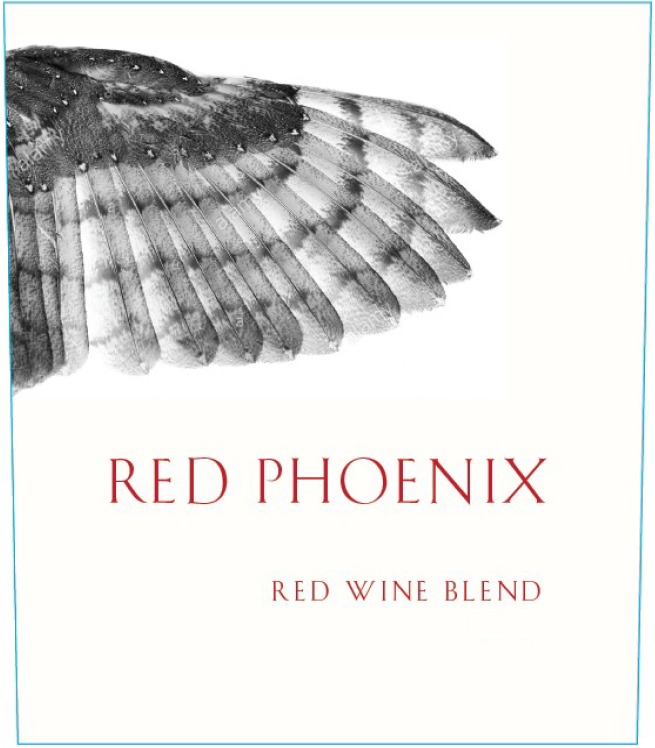
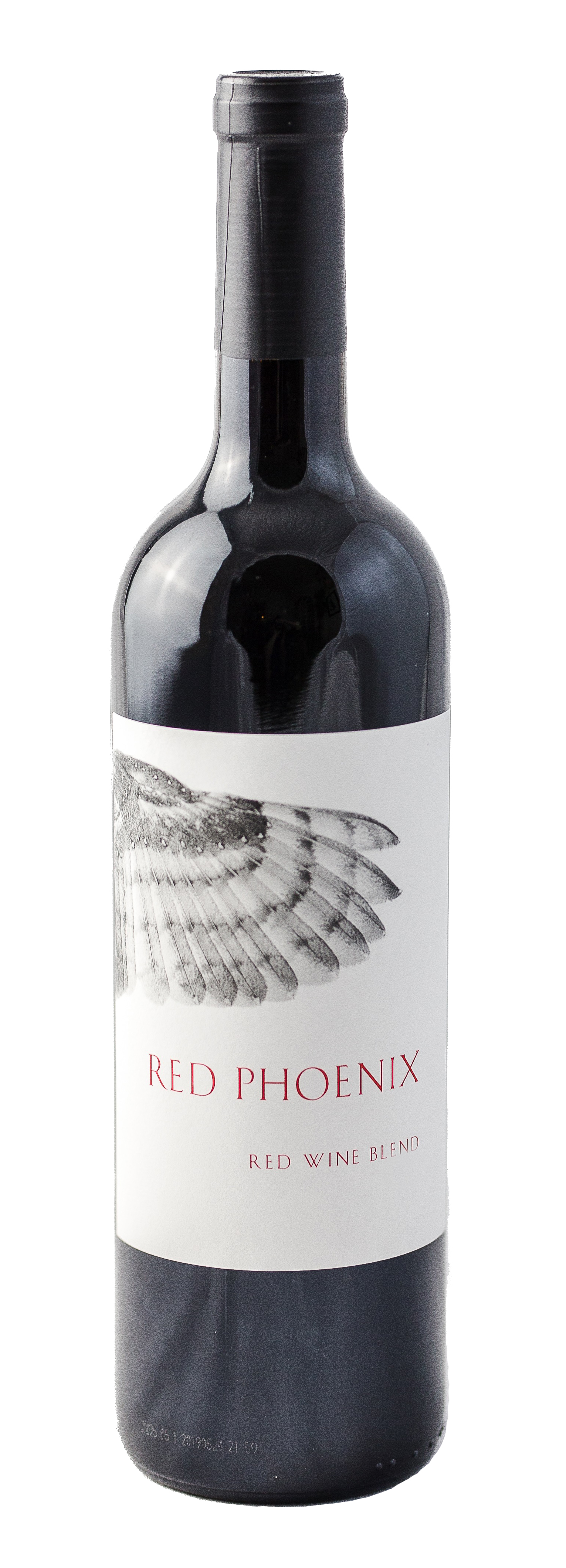
Red Phoenix Red Blend is made from 57% Zinfandel; 14% Petit Verdot; 12% Petite Sirah; 7% Syrah; 5% Merlot; 5% Cabernet Sauvignon.
With European origins dating back centuries ago, blended red wine is once again having its day in the sun. Red Phoenix Red Wine Blend represents the essence of this well-deserved resurgence. Unbound by a single varietal or appellation, and given more flexibility with vintages, winemaker Joseph Smith skillfully showcases six distinct varietals in this luscious and layered wine. Unlike traditional red blends, Red Phoenix is both barrel aged and barrel fermented, adding structure, balance, and a new dimension to a wine that is rooted in tradition and soars on the palate.
APPELLATION
75% of the fruit is coming from Lodi AVA, while the remaining 25% are Napa Valley AVA's fruits.
Coastal aromas of fresh fruit and lush florals coupled with a deep ruby color intrigue the senses. Bright, bold flavors of cherry and blackberry ascend on the palate while showcasing subtle, smooth tannins. The wine crescendos with anise, chocolate and toasted oak, offering depth and complexity, as velvety flavors continue to linger and evolve throughout the long, rich finish.
Review:
-Wine Enthusiast 90 Points
Bill Leigon created the name Red Phoenix. Leigon was inspired and moved by the courage and resilience of the people in Napa Valley in the face of, not only the Coronavirus Pandemic of 2020, but also the horrific fires in Napa Valley. In many cases people have had to rebuild their lives from the literal ashes of fires and disease. Despite seemingly insurmountable crisis, people have risen to the occasion, met every challenge and emerged stronger. Red Phoenix is a tribute to Hope that fills the human spirit and in the end, enabled the creation of a beautiful wine- Red Phoenix.

Prager Smaragd Klaus Riesling is made from 100 percent Riesling.
Franz Prager, co-founder of the Vinea Wachau, had already earned a reputation for his wines when Toni Bodenstein married into the family. Bodenstein’s passion for biodiversity and old terraces, coupled with brilliant winemaking, places Prager in the highest echelon of Austrian producers.
Smaragd is a designation of ripeness for dry wines used exclusively by members of the Vinea Wachau. The wines must have minimum alcohol of 12.5%. The grapes are hand-harvested, typically in October and November, and are sent directly to press where they spontaneously ferment in stainless-steel tanks.
Klaus sits adjacent to Achleiten and is one of the Wachau’s most famous vineyards for Riesling. The vineyard is incredibly steep with a gradient of 77% at its steepest point. The southeast-facing terraced vineyard of dark migmatite-amphibolite and paragneiss produces a tightly wound and powerful wine. The parcel belonging to Toni Bodenstein was planted in 1952.
Tasting Notes:
Austrian Riesling is often defined by elevated levels of dry extract thanks to a lengthy ripening period and freshness due to dramatic temperature swings between day and night. “Klaus is not a charming Riesling,” says Toni Bodenstein with a wink. Klaus is Prager’s most assertive and robust Riesling.
Food Pairing
Riesling’s high acidity makes it one of the most versatile wines at the table. Riesling can be used to cut the fattiness of foods such as pork or sausages and can tame some saltiness. Conversely, it can highlight foods such as fish or vegetables in the same way a squeeze of lemon or a vinaigrette might.
Review:
What a stunning example of cool climate riesling. It’s full-bodied and deep, but so cool and delicate, packing in sleek layers of honeysuckle, apricots, lemons and grapefruit married to thyme and crushed rock. So long and seamless, with tension and focus that just keeps going. Sustainable. Try from 2025.
-James Suckling 98 Points

Clos du Val Napa Valley Cabernet Sauvignon 2023 is made from Cabernet Sauvignon.
The Wine
This is Clos du Val's Napa Valley Cabernet Sauvignon — the house's classically styled, broadly sourced Cabernet drawn from vineyards across the valley floor and surrounding benches. The 2023 is a blend of 75% Cabernet Sauvignon, 10% Merlot, 6% Cabernet Franc, 5% Malbec and 4% Petit Verdot. It pours a deep ruby and opens with pure cassis and black cherry lifted by graphite, tobacco leaf, sweet brown spice and a whisper of cured herbs. Medium- to full-bodied and beautifully balanced, it is firm without ever turning hard, with fine-grained tannins, bright acidity and a long, silky, cocoa-dusted finish. A polished, food-friendly Napa Cabernet that drinks wonderfully now and will hold comfortably into the early 2030s — and, at this price, one of the genuine values in classic Napa Valley Cabernet.
Winery Info
Clos du Val was founded in 1972 in the Stags Leap District of Napa Valley by French-born winemaker Bernard Portet and American proprietor John Goelet. Portet grew up at Château Lafite-Rothschild, where his father was technical director, and he set out to make Napa wines in a restrained, ageworthy Bordeaux idiom rather than the bigger, riper California style of the day. The bet paid off almost at once: at the legendary 1976 Judgment of Paris, Clos du Val's debut 1972 Cabernet was one of only a handful of California reds chosen to stand against first-growth Bordeaux — and in the celebrated ten-year rematch of that tasting, it finished first of all the wines. More than fifty years on, Clos du Val remains one of Napa's benchmark houses, its wines prized for elegance, balance and a graceful capacity to age. The engraving of the Three Graces on the label is a nod to the harmony the family has always chased in the glass.
Review:
Refined and earth-driven, showing tightly wound black-fruit aromas. The palate is focused and pure with finely tuned tannins and a generous yet precise palate. A lovely wine to drink now or cellar.
James Suckling, 94 Points