" We don't sell the wine without touching the vine "
| Country: | South Africa |
| Region: | Riebeek Kasteel |
| Winery: | Riebeek Cellars |
| Grape Type: | Chardonnay |
| Vintage: | 2017 |
| Bottle Size: | 750 ml |
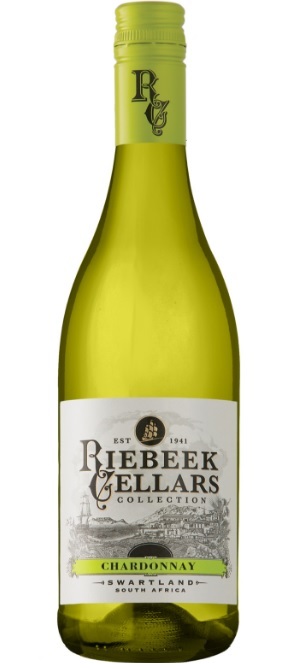
Riebeek Chardonnay is made from 100 percent Chardonnay.
This unoaked Riebeek Chardonnay displays a brilliant green-gold color. The style is dry but fruity. The nose offers exceptional tropical aromas that follow through in the palate with a well-rounded finish of lingering citrus fruits. It is lovely with most entrees from crisp salads to creamy soups and chicken, whether served grilled or in a creamy sauce.
Free run juice was used. After settling and acid adjustment, juice was inoculated with selected yeast. Fermentation temperature remained between 13-14 degrees Celsius. Wine was left on lees for a few months prior to bottling to enhance the flavour.
It is lovely with most entrees, from crisp salads to creamy soups and chicken, whether served grilled or in a creamy sauce.
Riebeek Chardonnay is made from 100 percent Chardonnay.
This unoaked Riebeek Chardonnay displays a brilliant green-gold color. The style is dry but fruity. The nose offers exceptional tropical aromas that follow through in the palate with a well-rounded finish of lingering citrus fruits. It is lovely with most entrees from crisp salads to creamy soups and chicken, whether served grilled or in a creamy sauce.
Free run juice was used. After settling and acid adjustment, juice was inoculated with selected yeast. Fermentation temperature remained between 13-14 degrees Celsius. Wine was left on lees for a few months prior to bottling to enhance the flavour.
It is lovely with most entrees, from crisp salads to creamy soups and chicken, whether served grilled or in a creamy sauce.
Riebeek Cabernet Sauvignon is made from 85% Cabernet Sauvignon,15 % Shiraz.
An exciting new world style wine with upfront blackcurrant flavors. The black fruit is well-balanced with subtle French oak for a complex nose and an elegant and lingering follow-through. An exceptional example of a lighter style Cabernet Sauvignon that can be enjoyed young. Excellent with red meat dishes or veal.
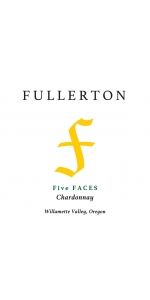
Fullerton Five Faces Chardonnay is made from 100 percent Chardonnay.
Five FACES is an acronym for the Fullerton family – Filip, Alex, Caroline, Eric, and Susanne. The wines blend fruit from multiple vineyards in Willamette Valley, mainly in the north of the valley with one to the west in the Van Duzer Corridor. A full representation of the Willamee Valley’s soil types is on display with one volcanic vineyard, two loess (windblown) vineyards, and two sedimentary vineyards. The vineyards range in elevation from 550-700 feet.
Honeydew melon, japanese pear, apricot, honeysuckle, apple-blossom, nutmeg, brioche, and lemon curd. Melon is echoed on the palate with notes of lemon, tangerine, toasted almonds, and fennel. Lovely and integrated acidity balances the palate weight from 17 months on the lees.
17 months in 10% new French Oak
Paris with creamy dishes and cheeses. Chicken and Turkey.
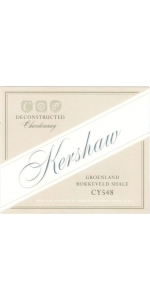
Kershaw Chardonnay Deconstructed Groenland Shale CY548 is made from 100 percent Chardonnay.
The inspiration for this Chardonnay stems from my belief that the Elgin region has both a signature grape as well as particular terroirs within its demarcated boundary that reflect regional credentials. This Chardonnay was selected from a sub-region of Elgin from a specific vineyard and an individual clone (CY548).
Tasting Notes:
Sourced from the foothills of the Groenland Mountain in Northern Elgin this clone has been taken from Corton Charlemagne cuttings. It produces wines that have aromatics oscillating between lemon blossom, white flowers, petrichor and struck stone. Full in body they exude concentration with white stone fruit yet reinforced with an austere texture and robustness that makes for excellent aging potential. The Bokkeveld Shales adds structure and concentration to the flavor.
Vineyards:
Sourced from the foothills of the Groenland Mountain in Northern Elgin this clone has been taken from Corton Charlemagne cuttings.
Winemaking:
Grapes were hand-picked in the early autumnal mornings, placed into small lug baskets and tipped directly into a press before being gently whole-bunch pressed up to a maximum of 0.6 bar or until a low juice recovery of 580 liters per ton was obtained. The juice gravity-flowed directly to barrel (no pumps were used at all) without settling. The unclarified juice had no enzymes or yeast added to it and therefore underwent spontaneous fermentation until dry, with malolactic discouraged. The wine rested in barrel for 4 months prior to judicious sulfuring and a further 7 months’ maturation in barrel before racking and bottling.
Barrel: Selection: A small number of artisanal coopers are selected from mostly Burgundy, with only French oak was chosen. Up to 40% of the oak is new with the remainder split into 2nd and 3rd fill barrels of predominantly 228 litres.
Look at pairing this with textured fish, straightforward chicken dishes, pan-fried or grilled pork dishes, soft-rind cheeses, cream or creamy dishes be it with pasta or the aforementioned fish, chicken or pork, to allow the complexity of the wine to shine through. If using mustard, preferably use Dijon mustard as it uses verjus (soured grape juice) and not vinegar. Also look to delicate herbs (tarragon, dill, basil, parsley) rather than hard stalked herbs (rosemary, thyme, oregano, etc). Avoid smoked meats or fish as well as highly spiced dishes as this can overwhelm the wine and clash with the oak. I would try oysters; Lobster grilled or boiled but not thermidor as it is too rich; turbot, dover sole, sea bass, yellowtail with a shellfish sauce; fish pie; roasted free-range chicken with tarragon; roast loin of pork with garlic and ginger; truffle risotto; pasta in a clam sauce; slice of brie de meaux.
Review:
"Perfume of flowers, minerals and citrus zest. The palate is dense and focused, almost chewy with an opulent mandarin mid palate and long, savory finish. Matured in 50% new oak that is seamlessly integrated with the wine."
- International Wine Review (Richard Kershaw Lifts Elgin To New Heights, February 2019), 94 pts
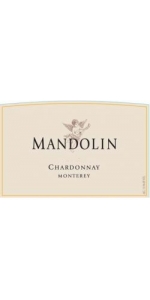
With its maritime influence, California's Monterey region has an extended growing season that yields wines with full flavor development and great acid balance.
Mandolin Chardonnay has a lush tropical fruit core, balanced by crisp acidity and nicely integrated oak.
The grapes for this Chardonnay were sourced from vineyards in the Santa Lucia Highlands AVA of Monterey County, where high winds, dry days, and bay fogs create a cool, but very long, growing season. These growing conditions are ideal for cool-climate grapes such as Chardonnay, and lead to full, forward fruit flavors and ideal acidity. Grapes were harvested at an ideal balance of sugar and acid, and the wine was fermented in 1-2 year-old French oak barrels. This wine did not undergo malo-lactic fermentation, thus preserving its bright acidity. Total Acidity: 0.70 pH: 3.45 Residual Sugar: 0.51 g/liter
Riebeek Chardonnay is made from 100 percent Chardonnay.
This unoaked Chardonnay displays a brilliant green-gold color. The style is dry but fruity. The nose offers exceptional tropical aromas that follow through in the palate with a well-rounded finish of lingering citrus fruits.
It is lovely with most entrees from crisp salads to creamy soups and chicken, whether served grilled or in a creamy sauce.
The Riebeek Cellars Estate
Riebeek Cellars was established in 1941 and is situated in Riebeek Kasteel at the foot of Bothma's Kloof Pass. This medium-sized winery on the western coast of the Cape Province of South Africa sources its grapes from the fertile Riebeek Valley and the slopes of the mountain where the climate is very similar to the Mediterranean. Through the years as vineyard practices developed, cultivars were planted in soil and at slopes best suited to them. These well-tended vineyards enable the production of high quality wines which makes Riebeek Cellars the choice of wine buyers internationally. Well-known both in South Africa and abroad, Riebeek Cellars manages a variety of brands for various countries.
Heritage
Corporal Pieter Cruythoff, a scout of Jan van Riebeeck, founded the Riebeek Valley in 1661. Impressed by the single standing mountain, he called it Kasteelberg (“Castle Mountain”) commemorating the Castle of Good Hope in Cape Town, the fortress of Commander Jan van Riebeeck. The twin towns, Riebeek Kasteel and Riebeek West, established at the foot of Kasteelberg, are therefore also suitably named after Van Riebeeck.
The Riebeek Valley is a mecca of wonderful wines, exceptional food and exquisite art where tourists and locals alike are forever tempted into spending more time than allowed. The serene valley falls in the bigger Swartland region which is called the 'bread basket' of South Africa for its grain production, while it is further internationally acclaimed for its high quality olive products. With various hotels and fine-dining restaurants as well as true country hospitality, the Riebeek Valley has become a very popular tourist destination. The ultimate charm of Riebeek is however in its people and their commitment and passion for wine.
"Located in the Western Cape region of South Africa, this winery was established in 1941, which makes it relatively old compared to all the new wineries that have sprung up in this area. Among the first Pinotages I can recommend, it’s also a good value. Pinotage, which is, of course, ubiquitous in South Africa, was first made in 1941, when the Cinsault grape (primarily grown in southern France and the Rhone Valley) was crossed with Pinot Noir." - Robert Parker's Wine Advocate (Issue 201, June 2012).
'Belle Côte', French for “Beautiful Slope”, was named by Sir Peter after the famous ski run in Courchevel, France. The oldest of the four Knights Valley Estate Chardonnay vineyards, ‘Belle Côte’ consistently exemplifies the potential of crafting exceptionally high-quality Chardonnay from our mountain vineyards. Planted at 1,700 to 1,800 feet (518 to 549 meters), Belle Côte has a southeastern exposure and a western border of native trees, which shelter the vines from the hot afternoon sun. These unique attributes create a naturally cool microclimate that provides an extended growing period and slow-ripening fruit, resulting in a later picking schedule that often continues into October (two to three weeks longer than most Chardonnay vineyards in Napa and Sonoma Counties).
The combination of a wet winter with significant rains in December through March and cool weather delayed budbreak nearly a month. Flowering and fruit set were also pushed back and the weather during the later flowering was favorable resulting in decent fruit set and slightly above average yields for the Chardonnay vineyards—a marked improvement over the record-low yielding 2022 vintage. The growing season was temperate without major heat spikes allowing the berries to hold onto their acidity which carried through into the wines. Harvest was almost a month later than normal with the last Belle Côte block coming in on November 2nd.
As the oldest of the four Peter Michael Winery estate Chardonnay blocks, 'Belle Côte' exemplifies the consistent quality of Chardonnay these mountain vineyards produce. Due to the naturally cool climate of the site’s high elevation, and mitigated exposure to the hot afternoon sun by its southeastern exposure and a stand of trees on its western border, the vines are allowed to slowly ripen. The growing season for Belle Côte typically extends into October, two to three weeks longer than most Chardonnay vineyards in Napa and Sonoma Counties.
With highly expressive aromatics of orange blossom, jasmine, candied orange peel, and rose petal, the 2023 'Belle Côte' showcases its unique terroir and thirty-three-year-old vines with a rich, creamy entry, dense, broad, juicy mid-palate and a lengthy, refined finish. There is a seamless quality to this wine that matches power, gras, and intensity with structure and weightlessness. The 2023 'Belle Côte' can be enjoyed in its youth or after many years of cellaring.
Review:
This extraordinary estate-grown wine from a great vintage is super vibrant, energized and tangy, with vital acidity supporting luscious ripe pear and apple flavors on a silky texture. Can't think of anything it lacks. Seamless, layered, yet structured and fresh, boding well for longer-term aging. It has a melts-in-the-mouth quality and an extra long finish. Drinkable now and best from 2030.
-James Suckling 100 Points
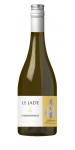
Le Jade Chardonnay is made from 100% Chardonnay
The wine comes from south-facing vineyards planted on clay and limestone hills overlooking the Etang de Thau, a coastal lagoon situated between the port of Sète and Cap d'Agde.
Le Jade Chardonnay offers a wonderful yellow color, a complex nose of white flowers, mild tobacco and vanilla. Rich and full-bodied mouthfeel; concentrated with just a touch of sweetness.
Serve with a gratin of scallops, pan-fried sole, or grilled oysters with shallots, parsley and a touch of cream. Also great with goat cheese or chocolate cake!