" We don't sell the wine without touching the vine "
| BUY MORE! SAVE MORE! | ||||||||||||||||
|
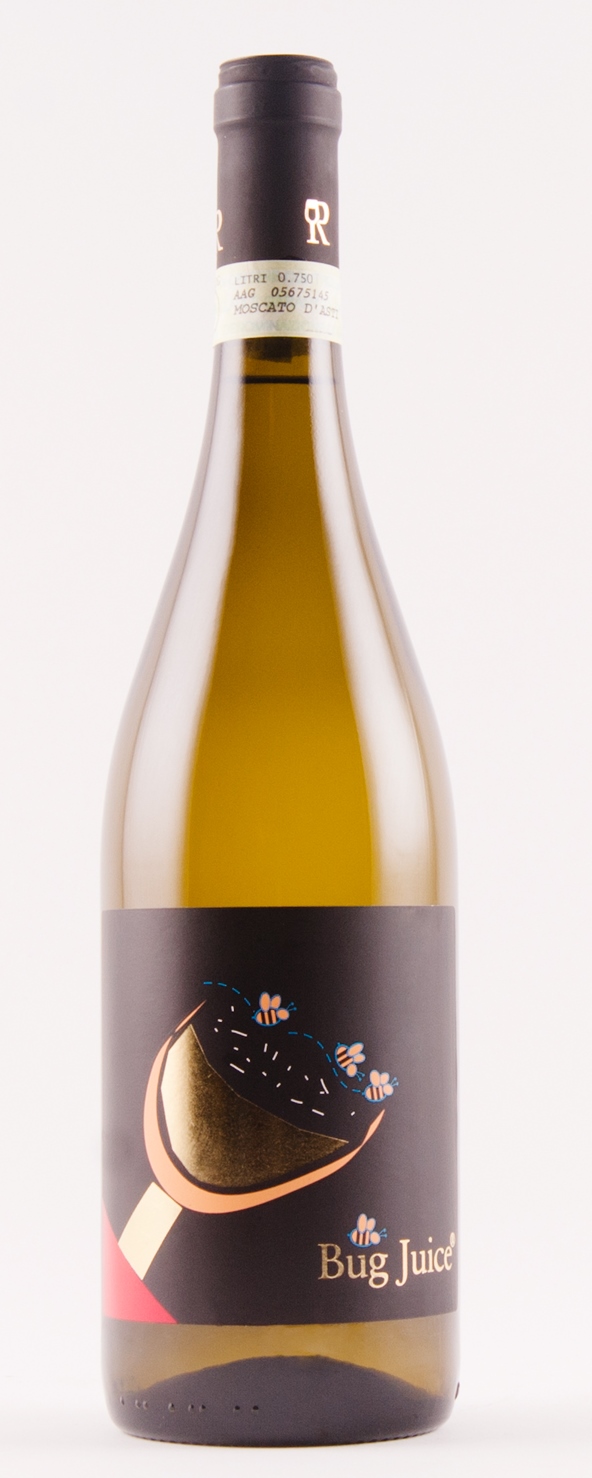
Rinaldi Moscato d'Asti Bug Juice is made from 100 percent Moscato.
Straw-yellow color. The bouquet is delicate and intense with aromas of fruit (apple, peach) and spices (sage). The palate is sweet and smooth with lingering aromatic persistence. A refreshing and pleasant wine, perfect for brunch, picnics or poolside.
The training system used is Guyot with a density of 2500-3000 vines per hectare Manual harvest into crates. Soft pressing. Settling in steel vats to allow natural clearing of musts. Racking, increase in temperature. Temperature and pressure controlled fermentation until bottling.
Dessert, ideal with hazelnut cake. Original with "strong" cheese such as Robiola of Roccaverano and Gorgonzola.
The Rinaldi Estate
The winery is located on the hills of Alto Monferrato, close to Acqui Terme, in the heart of one of the most precious areas of south Piedmont. The family business was founded in 1961 by Oreste Rinaldi. It is run today by his son Andrea and his daughter Paola. The family has been producing wine for 40 years from their vineyards located on a particularly privileged area with a favorable microclimate and a perfect southwestern exposure
The Rinaldi Vineyard
Currently Rinaldi has 20 hectares of vines (49.6 acres), 19hectares owned, 1 hectares rented. Their single vineyard Bricco Cardogno, planted to Moscato, is a vineyard that measures 2.5 hectares (6.75 acres) and was planted 40 years ago by Andrea Rinaldi’s grandfather. It is located 240- 300 m above sea level. The soil type in this vineyard is limestone (tufa). All grapes are hands harvested with extreme care. Quality starts in the vineyard. The single vineyard Bricco Rioglio is planted with Brachetto grapes, limestone based with 15-year-old vines. (Bricco is a tea cup in local dialect).

Rinaldi Moscato d'Asti Bug Juice is made from 100 percent Moscato.
Straw-yellow color. The bouquet is delicate and intense with aromas of fruit (apple, peach) and spices (sage). The palate is sweet and smooth with lingering aromatic persistence. A refreshing and pleasant wine, perfect for brunch, picnics or poolside.
The training system used is Guyot with a density of 2500-3000 vines per hectare Manual harvest into crates. Soft pressing. Settling in steel vats to allow natural clearing of musts. Racking, increase in temperature. Temperature and pressure controlled fermentation until bottling.
Dessert, ideal with hazelnut cake. Original with "strong" cheese such as Robiola of Roccaverano and Gorgonzola.
Rinaldi Moscato d'Asti Bug Juice is made from 100 percent Moscato.
Straw-yellow color. The bouquet is delicate and intense with aromas of fruit (apple, peach) and spices (sage). The palate is sweet and smooth with lingering aromatic persistence. A refreshing and pleasant wine, perfect for brunch, picnics or poolside.
The training system used is Guyot with a density of 2500-3000 vines per hectare Manual harvest into crates. Soft pressing. Settling in steel vats to allow natural clearing of musts. Racking, increase in temperature. Temperature and pressure controlled fermentation until bottling.
Dessert, ideal with hazelnut cake. Original with "strong" cheese such as Robiola of Roccaverano and Gorgonzola.

Rinaldi Rose Moscato Pink Bug Juice NV is made from Moscato d'Asti 90%, Brachetto d’Acqui 10%
Alcohol by Volume: 7%
Zone de Production: Ricaldone’s territory on the hills called ‘Bricco Rioglio’ and ‘Valmorana’,and Celle. Average altitude 280 m above sea level, calcareous soil with tufa layers.
Training System: guyot with a cultivation density of about 3000 vines per hectare.
Vinification: manual harvest into crates, usually at the first week of September. Temperature controlled maceration for about 24 hours with mechanic plunging of the cap and pumping over to extract a slight rosé color from the skins. Soft pressing. Settling in steel vats to have a natural clearing of musts. Further temperature and pressure controlled fermentation.
Sensorial Description: this wine, with light rosé color, strikes for its scent of spices and fruits. Its acid freshness suits its sweetness and offers a well balanced wine.
Serving Suggestions: aperitif wine, fruit cakes, fruit salad.Wine for brunch or poolside. To best appreciate this wine serve it fresh.

Rinaldi Barbera d' Asti La Bricca is made from 100% Barbera d'Asti.
"Bricca" means the top part of the hill. (see picture of the vineyards)
La Bricca is a deep, ruby-red colored wine with violet hues. The bouquet is vinous and intense with ethereal aromas (typical of the Barbera grape) and scents of ripe fruit and spices. The wine is full-bodied with very pleasant silky tannins. Long and harmonious with a good aging potential.
Enjoy it with meat dishes, rich pasta, risotto and well-aged cheeses. To appreciate the wine at its best, the bottle should be left at least 24 hours at room temperature and opened 1 hour before serving.

Rinaldi Celle Cabernet Sauvignon is made from 100% Cabernet Sauvignon.
Intense red color with purple reflections. The characteristic aroma is pleasant and dominated by notes of blackberry, plum and black currant. A short passage in wood gives it elegance and complexity.

Rinaldi Eramare Piemonte Cortese is 90% Cortese and 10% Sauvignon Blanc.
The Cortese grapes are coming from the Estate's vineyard located at the best exposures between Ricaldone and Maranzana at about 220 meters above sea level.
A salty and tasty white wine; fresh, simple and juicy.
After the alcoholic fermentation the wine refines on yeast for 4 months just to have a better color and taste.
A lot of minerality and notes of grapefruit.
Ideal for an aperitif, or with seafood appetizers, fish first courses, grilled fish, and vegetable pies.

Turley Kirschenmann Vineyard Zinfandel is made from 100 percent Zinfandel.
Organically farmed, own-rooted, head-trained and dry-farmed vines planted in 1915 in the silica-rich sandy soils of the east side of the Mokelumne River AVA. Marking the 10th vintage of this wine, bright ripe red fruits, raspberry preserves, and white pepper burst forth from the glass. Precise on the palate like a perfectly seasoned piece of meat, with more red berries and a sumptuously complex texture.
Review:
The 2023 Zinfandel Kirschenmann Vineyard is one of the best wines I have tasted from this site, as it has more textural depth and resonance than is typically the case. As always, the Kirschenmann Zinfandel is aromatic and lifted. In 2023, it is a bit more complex and nuanced than it often is. Bright red-toned fruit and floral overtones linger. This is such a pretty wine.
Vinous 92-94 Points

Neyer's Cabernet Sauvignon Red Wine has a bright ruby hue with aromas of wild cherries, chocolate and fresh tobacco leaf. The finished wine is remarkable for its flavor and complexity, and the wine looks to be one that will improve for many years. Planted in 1992 by David Abreu, this fruit is located on ground higher than 600 feet on rocky land rich with basalt. This vineyard is one of the rare 10% in Napa Valley capable of producing great Cabernet Sauvignon and is planted around the Neyers Ranch.
Review:
-Decanter 93 Points
-Wine Enthusiast 93 Points