
" We don't sell the wine without touching the vine "
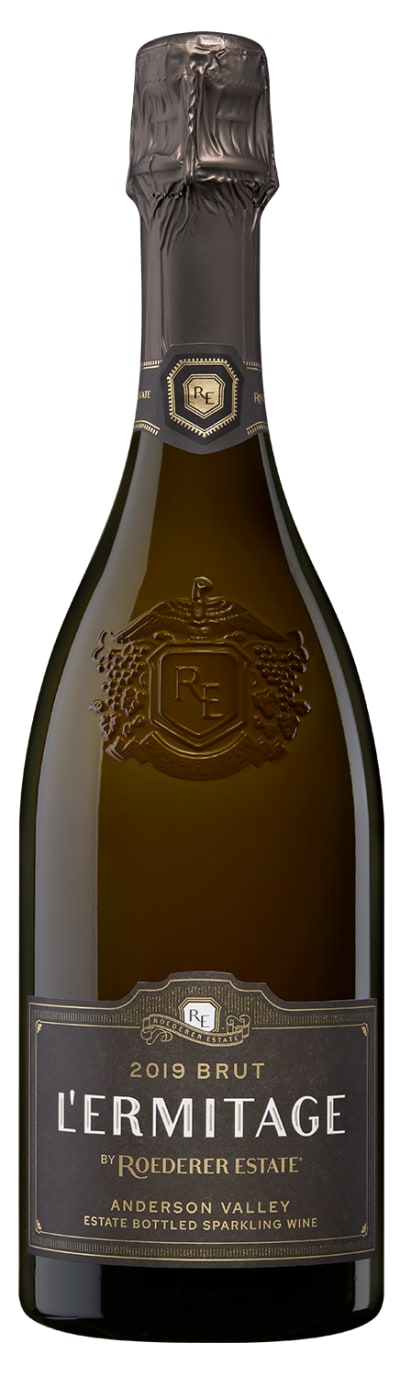
| Country: | United States |
| Regions: | California California (Anderson Valley) |
| Winery: | Roederer |
| Grape Type: | Chardonnay |
| Organic: | Yes |
| Vintage: | 2019 |
| Bottle Size: | 750 ml |

Intense, fresh and fruity bouquet, reminiscent of a tangy red fruit tart (wild strawberry, blueberry), slightly sweet yet underpinned by more concentrated, jammy and citrus notes. The aromatic complexity comes through after a few swirls in the glass giving us a medley of spice, warm cinnamon and peppers. Fleshy attack dominated by ripe, crunchy, plump red fruit that brings depth and creaminess. The fruity structure is gradually elongated by a chalky, mineral freshness that creates a lingering sensation of lightness and harmony on the finish.
Review:
Roederer's 2014 Brut Vintage is beautiful, offering up aromas of pear, mirabelle plum, red berries, warm biscuits and smoke. Full-bodied, layered and elegantly muscular, it's seamless and complete, with terrific mid-palate depth and amplitude. Framed by bright acids and enlivened by a pinpoint mousse, it concludes with a penetrating finish. The blend is 70% Pinot Noir, emphasizing Verzy, and pressure is a touch higher than in its more ethereal Blanc de Blancs counterpart. As I wrote of its 2013 predecessor, this is a wine that puts many prestige cuvées to shame.
95 Points Robert Parker's Wine Advocate

Charles Smith K Vintners Powerline Estate Syrah is made from 100 percent Syrah.
Friendly, approachable and vivacious, yet also dark and mysterious. Black cherry, allspice, black ash, and orange blossom. Thyme and flint with ark fruit, cedar, kelp, black pepper, juniper, crushed rock, and tons of complex floral notes. Fear not, embrace it.
While just bottled a week before this tasting, the 2019 Syrah Powerline Vineyard certainly wasn't showing any worse for it, offering a stunning bouquet of ripe red and black fruits as well as white pepper, sandalwood, tobacco, and new leather. Pure, medium to full-bodied, and vibrant, with supple, polished tannins, this brilliant Syrah is going to keep for 10-12 years, if not longer.
-Jeb Dunnuck 97 Points

Robert Mondavi Winery The Estates Red Blend is made from 49% Cabernet Franc, 47% Cabernet Sauvignon, 4% Petit Verdot.
Robert Mondavi’s vision was to elevate Napa to the world stage. In celebration of his achievement, our Napa Tier wines are sourced from distinctive vineyards throughout the Napa Valley and truly emulate a classic Napa Valley style.
Aromas of blackberry, cherry, toasted almond, bay leaf and mocha. Luscious ripe cherry and cassis, with savory notes of dried herbs and toast. Rich, weighty, and mouth-coating, with classic fine To Kalon tannins.
Review:
This has a pretty fragrance of violets, green peppercorns, salted olives, blackcurrants and black raspberries. Creamy, salted dark chocolate and praline to follow. Medium-to full-bodied with fine-grained tannins. Delicious and superbly balanced. 50% cabernet franc, 47% cabernet sauvignon and 3% petit verdot.
-James Sucking 94 Points
The 2019 Red Blend Estate comes all from the To Kalon Vineyard and is close to an even split of Cabernet Franc and Cabernet Sauvignon. It's a clear step up over the base Red Blend and offers terrific, full-bodied aromas and flavors of darker fruits, dark chocolate, violets, and a kiss of spring flowers. With silky tannins, terrific balance, and outstanding length, it's going to evolve for 15 years or so.
-Jeb Dunnuck 94 Points

Torello Corpinnat Finca Can Marti Brut 32% Chardonnay, 32% Xarel.lo, 22% Macabeo and 14% Parellada.
The Can Martí estate soils have been formed from sediments from the Garraf Massis, deposited thousands of years ago. One of the most characteristic features of the estate’s soils is the presence of accumulations of calcium carbonate.The movement of water through the soil dissolves the carbonates present and takes them to a certain depth. The continuous repetition of this process has ended up producing the accumulation of these deposits.When these become massive, after thousands of years, they bind together and and form a hard stratum called a petrocalcic horizon. This hard stratum limits the availbility of water to the vine and the production, but is a factor that gives the grape quality.
Straw yellow color, fine and constant bubbles, clean and bright, with golden reflections. The nose reveals a subtle aromatic intensity with fresh and sweet aromas. Honey flowers, citrus notes, white fruit, and balsamic herbs such as fennel.
In the mouth the acidity is well balanced, with delicate bitter notes to the finish and a set of ripe fruits and balsamic nuances.

Torello Corpinnat Special Edition Brut Reserve is made from 44% Xarel.lo, 37% Macabeo, 11% Chardonnay, 8% Parellada.
The estate soils have been formed from sediments from the Garraf Massis, deposited thousands of years ago. One of the most characteristic features of the estate’s soils is the presence of accumulations of calcium carbonate. The movement of water through the soil dissolves the carbonates and takes them to a certain depth. The continuous repetition of this process has ended up producing the accumulation of these deposits. When these become massive, after thousands of years, they bind together and form a hard stratum called a petrocalcic horizon. This hard stratum limits the availability of water to the vine and the production, but is a factor that gives the grape quality
The wine offers a straw yellow color, clean, transparent, fine, and persistent bubbles with a rosary formation. In the nose fresh pear aromas stand out along with delicious notes of pastry cream, white flowers, and candied fruits. On the palate, good balance and acidity. Powerful and flavorful with white flowers and notes of brioche, almond and great length.
Special Edition is very versatile and matches with many different kinds of dishes; pasta, pork, chicken, fish, seafood, rice, cold cuts, desserts.

Salmon hue with bright red tints. Fine and energetic bubbles. A ripe, complex and youthful bouquet of slightly tangy red fruit (redcurrants, blackcurrants), ripe citrus (blood orange) and roasted cocoa beans. After some time in the glass, the wine reveals sappier, floral and sweet notes with a saline, almost briny, core. The first impression of the wine is of a generosity, softness and concentration. One has the sensation of biting into juicy, ripe fruit and blood orange, it is a fabulous aromatic explosion with luscious and slightly tangy overtones. The concentrated and dense body takes over and reinforces the impression of substance, of concentrated liqueur on the mid-palate. The finish stretches out, perfectly-honed, gradually revealing umami notes thanks to the precise and crisp mineral freshness.
Reviews:
The 2015 Brut Vintage Rosé is generous and demonstrative, bursting with aromas of peach, orange and pear mingled with hints of red berries, fresh bread and ginger. Full-bodied, layered and vinous, it's rich and enveloping, its textural attack segueing into an ample, fleshy core that's girdled by bright acids and enlivened by a pillowy mousse. Long and expansive, it's more generous and gourmand than its racier 2014 predecessor, but just as good.
-Wine Advocate 94 Points
This shows lots of cotton candy and peach, together with strawberries and cream. But not overpowering. Some cranberry, too. It’s medium-to full-bodied with fine bubbles and a lively finish. Dosage 8g/L. Drink now or hold.
-James Suckling 94 Points
Roederer Estate L'Ermitage Brut is made from 52% Chardonnay, 48% Pinot Noir.
The 2019 features aromas of quince paste and light pastry crust. The entry is bright and textured midpalate. A mouthwatering finish is highlighted by pear skin and an even, creamy texture.
Review:
If sunshine could be bottled it would be this. Aromas of fresh succulent stone fruit, a hint of yeast, citrus blossoms and notes of quince on the nose. The mousse is creamy and light with baked red apples, blood orange zest, white grapefruit, sticky caramel and layered salinity with a mouthwatering finish. It will bring a smile to your lips.
-Wine Enthusiast Cellar Selection 100 Points
Jean-Claude Rouzaud, former president of Champagne Louis Roederer, understood that first-rate estate vineyards create exceptional sparkling wines, which is why he selected the 580-acre Anderson Valley vineyard and winery site in 1982. Jean-Claude, who has since handed down the family tradition and position to son Frédéric Rouzaud (pictured), believed that estate-owned vineyards were essential to ensure the highest quality wine, spending several years exploring California’s diverse regions for ideal growing conditions. The vineyards were planted in 1984, the winery was built in 1986, and the first Roederer Estate MV Brut cuvée was introduced in 1988.

Salvadori Chianti Riserva DOCG 2017 is made from Sangiovese 90% , Merlot 10

The word "Balade" is French for wandering. This is a fitting term for our annual exploration of single-vineyard Pinot Noir & Chardonnay blocks on the west coast. Each vintage, we will bottle only the most compelling and nuanced expression of pinot noir from a single selected vineyard and release it as a limited bottling.
Tasting Notes
Beautiful golden hue with enticing aromas of honeyed almond, vanilla custard, ripe pear, and hints of lemon zest. On the palate, lush notes of apricot, crisp green apple, and a touch of toasted hazelnut come forward. This wine has a well-balanced mouthfeel that dances on the palate with bright, lively acidity and subtle minerality, offering a stunning
expression of a coastal driven Chardonnay.
Review:
Creamy, desirous notes of lemon curd bathed in toffee nougat reach a peak as it settles across the mouth thanks to a fine acid structure. Baked pear smooths out on mid-palate, with buttered croissant on the elegant, lengthy finish - The Tasting Panel, May/June 2025
-Tasting Panel 95 Points
The word "Balade" is French for wandering. This is a fitting term for our annual exploration of single-vineyard Pinot Noir & Chardonnay blocks on the west coast. Each vintage, we will bottle only the most compelling and nuanced expression of pinot noir from a single selected vineyard and release it as a limited bottling.
Tasting Notes
Beautiful golden hue with enticing aromas of honeyed almond, vanilla custard, ripe pear, and hints of lemon zest. On the palate, lush notes of apricot, crisp green apple, and a touch of toasted hazelnut come forward. This wine has a well-balanced mouthfeel that dances on the palate with bright, lively acidity and subtle minerality, offering a stunning
expression of a coastal driven Chardonnay.

Trefethen Family Vineyards Dragon's Tooth Red is made from 49% Malbec 37% Petit Verdot 14% Cabernet Sauvignon.
Our Nana, Catherine Trefethen, was Welsh. Her twin loves of wine and family were the original inspiration for our estate in Napa Valley’s Oak Knoll District. Celebrating our heritage, “Y Ddraig Goch”, the symbol of Wales, adorns this bottle of Dragon’s Tooth, a provocative blend born from the rockiest part of our vineyard.
This wine opens with expressive aromas of cherry and blackberry accented with notes of fig, tobacco leaf, and sarsaparilla. Full-bodied and balanced, the integrated flavors of ripe dark fruit lead to a lush and abundant finish.
Winery Chef Chris Kennedy enjoys Dragon‘s Tooth with earthy and rich cuisine. He suggests pairing it with our Creamy Mushroom Pasta. The complementary flavors, textures, and intensity of both the dish and the wine are stunning.
Review:
“Intrepid aromas of richly peppered blue and black fruit with a sheen of minty refreshment. Structured, polished and densely textured, with indulgent tannins and a penetrating bead of fine acidity. Built for the long haul.”
-2024 Decanter World Wine Awards 97 Points

Obsidian Vineyard Syrah is bathed in terroir. The vines experience severe stress, pushing the roots ever deeper through rock in search of water, producing miniature clusters of intense power. Given the wine’s natural propensity for tannin, we take extreme care in the cellar to chisel/whittle its rough edges and leave room for richness to flatter its distinctive scaffold. The mid-palate supports flavors of roasted coffee beans, sarsaparilla, and dark chocolate. The finish marches on long after most wines have tired.
Our estate vineyard — the six-acre Obsidian Vineyard in the Knights Valley AVA — has an incredibly complex soil structure. It takes its name from a layer of volcanic obsidian rock that was discovered when we drilled for water.
Chocolate ganache, black currants, fig, graphite, and an expansive mouthfeel.
Review:
"Joe Donelan believes his Obsidian Vineyard is one of the world’s greatest sites for Syrah. I’ve visited the site twice, and can say candidly it certainly sits among the most striking vineyards I've ever laid eyes on within the U.S. It sits like a rock on a promontory—two switchbacks to reach the top—and the stones under the top soil, quite literally, never stop emerging from the ground. The place has an ancient, almost sacred, temple-like feel. It is consistently swept by afternoon breezes. The vineyard was replanted in 2017 after fires ravaged it. Winemaker David Milner laid out the site at denser spacing than before, at 2,000 vines per acre to keep yields per vine low while still achieving sensible tonnage, averaging around three tonnes per acre. Viognier was planted for co-fermentations, alongside some Cabernet Sauvignon, for a single vineyard bottling of that grape. ‘God put on his viticultural hat when he designed this site,’ says Milner. The vineyard is planted with ENTA 174, 877, and Alban 1 clones, along with Donelan Heritage selections certified virus-free. The wine, the 2023 vintage release (the first from the new vines), was aged for 21 months in 36% new oak and co-fermented with 1.8% Viognier, using 32% whole clusters. And it is positively gorgeous: composed of nine different blocks, each fermented separately, then assembled through sequential blending, with no racking until bottling. From just five-year-old vines, this wine is utterly extraordinary—something oddly achievable from young vines on rare occasion. I tasted this wine from the same bottle over three days. While the high-toned espresso-bean and cedar accents are present at first pull of the cork, they mellow out a day later, and the fruit profile is so vibrant. This is the sign of an excellent wine. I first tasted wines from the Donelan’s Obsidian Vineyard years ago at Tasting Panel Magazine in the late, great Anthony Dias Blue’s office. Cushing Donelan showed the wines, and to this day, I recall the first moment I put my nose into a glass of Obsidian Syrah. In early January of 2026, as I nosed this brand new release of Obsidian Syrah, I was transported straight back to that tasting twelve years ago. What’s remarkable is that the aromatics are unmistakably the same, yet from these new, more densely planted vines, the aromas are more refined—precision-farmed wines from young vines delivering a level of detail and poise that feels beyond their years. So what’s in the glass? Pure red, black, and blue fruit nuances layered with tobacco, white truffle character, violet pastille, and an intoxicating perfume. White pepper notes emerge on the medium- to full-bodied palate, framed by velvety tannins. Iron-like and crushed slate minerality underpins dazzling black cherry and blackberry fruit, brown spices, and blood orange richness. There’s a velvety, iron-fist quality here that exudes polish, complexity, and undeniable quality. You want to drink it now—and you absolutely can—but it will also reward time in the cellar. Either way, you’ll be utterly wowed. And when you realise the price is under £100, the achievement becomes even more staggering. As these vines mature, what will become of them in subsequent vintages? I suspect that as the vines mature, they'll go in and out of phases, but so long as Mother Nature cooperates, I expect this wine to continue to dazzle each vintage. - Jonathan CRISTALDI"
Decanter (January 5th 2026), 100 points
This is the first vintage of the Obsidian Syrah after wildfires torched the vineyard in 2017, leading to significant redevelopment. Throughout all those years, the Donelans have exhibited remarkable patience and a clear sense of purpose. This is their reward: a truly magnificent, towering wine of the highest level.
Knights Valley is one of the most magical grape-growing districts in the United States, but it is not very well known because only a few estate wineries are located there.
The 2023 Syria Obsidian Estate is one of the most profound, moving wines I have tasted in Sonoma County. Blackberry, gravel, incense, chocolate, lavender, and dried herbs race out of the glass. Delicate yet powerful, the 2023 is spectacular. It is also very fairly priced in today’s market.
Vinous 100 Points

Paul Hobbs West Sonoma Coast Pinot Noir is made from 100 percent Pinot Noir.
Hailing from the newly established West Sonoma Coast AVA,.
Lovely ruby red shades catch the eye, while exotic notes of tart Morello cherry and pungent pine forest swirl with fresh raspberry. Bright, pure fruit carries through on the palate, layered with earthy hints of damp loam and rocky salinity, all backed by the elegant, fine-grained tannins and stylish grip that cool West Sonoma Coast offers at its best.
Review:
A rush of sugared beet, pomegranate, and vanilla-soaked raspberry mingles with a touch of salinity on entry, while a soil component reflects the super-cool climate of the appellation. Power and elegance coexist in this red, which finishes with graphite, peony, basil, and exotic incense.
-Tasting Panel 97 Points

Gagliasso Barolo Riserva Oak Box is made from 100% Nebbiolo
Complex and intense aromas of red fruits intermixed with licorice, prune, leather, smoke and notes of toasty oak and vanilla. Full-bodied on the palate with loads of ripe dried and candied fruits, pepper and mocha.
After malolattic fermentation the wine stays for 10 months in French barrels, 10% new oak and 90% different years; after this period all barrels are blended ( 50% Torriglione and 50% Rocche dell’Annunziata) in old barrels for 48 months again. The wine is bottled and refined for 24 months.
There's a gritty, sandy quality to the tannins that would cut through roast pork stuffed with prunes.

DAOU Vineyards Reserve Cabernet Sauvignon is made from 77% Cabernet Sauvignon, 23% Petit Verdot.
A heady nose delivers fruit-forward aromas of blackberry, raspberry and plum with traces of licorice, thyme, vanilla and cherry. The palate is beautifully balanced, showing layers of black fruit and chocolate-covered blueberry with underlying herbal, cedar and mineral complexity. Exquisitely rounded tannins imbue the finish with stature and length.
Review:
Black plum and roasted walnut aromas meet with woodspice on the nose of this bottling. The palate is tense and firm yet still brighter with blackberry, pepper and nut flavors that cling to the persistent structure. — Matt Kettmann
-Wine Enthusiast 93 Points




