
" We don't sell the wine without touching the vine "
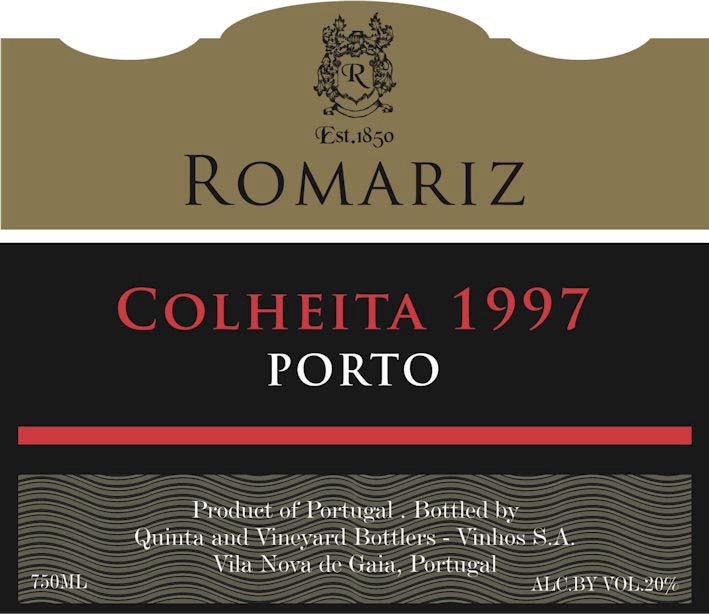
| Country: | Portugal |
| Region: | Douro |
| Winery: | Romariz Port |
| Grape Type: | Port Blend |
| Vintage: | 1997 |
| Bottle Size: | 750 ml |
Made from Touriga Nacional, Touriga Francesa, Tinta Barroca, Tinta Roriz, Tinto Cão, Tinta Amarela
The color is beginning to denote the age, showing a certain similarity to coffee and waxed wood. The aroma combines quince-jam, delicate orange blossom and a touch of vanilla. Delicious smooth butterscotch and dried fruit flavors.
A Romariz Colheita brings together the finest wines from good extensive stocks to express the individual richness and flavours of the particular year enhanced by the nutty characteristics that come with the Tawny ageing process.
Pairs with nut based desserts, pecan pie and apple strudel.

Romariz 20 Years Old Tawny is rich, warm and well balanced. Concentrated, firm tannins. Aromas of hazelnuts and walnuts, raisin, honey, caramel and dark chocolate notes. Excellent with desserts, cheese or by itself at the end of a meal.
Fragrant nose, velvety nutty flavors, rich dried fruit characteristics, powerful, and heady tawny.
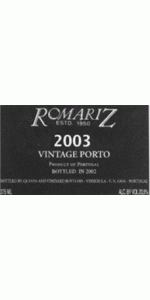
Flowering in the Duoro occurred in the last 10 days of May. The weather conditions provided for a perfect flowering season. The Romariz Vintage Port 2003 yielded wines of great color and supple tannins, with a vintage stamp being evident in most wines. Production: 8,000 cases. "Another bright and fruity young Vintage Port with plum, grape and blackberry aromas with just a hint of stems. Serious nose here. Full-bodied, with soft, round tannins and a long, caressing finish. A beauty."
- J.S., Wine Spectator, 89-91 pts
"Bright dark ruby. Deep, perfumed aromas of cassis, licorice, violet and minerals. Lush and high-toned in the mouth but with very good vinosity and spine. Lovely fruit-driven flavors of black cherry, blackberry and dark chocolate. Little sign of the roasted side of 2003. Not hugely concentrated but suave, supple, minerally and sweet. Finishes with ripe tannins and very good spicy persistence. A very good showing. Accessible already but balanced for medium-term aging."
- Stephen Tanzer's International Wine Cellar, 89 pts
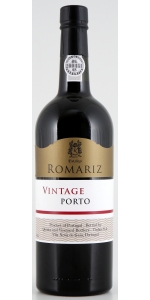
Romariz Vintage Port is made from Touriga Nacional, Touriga Franca, Tinto Cão, Tinta Roriz, Tinta Barroca
Deep inky purple color. Intricate nose with aromas of blackberries and logan berries, subtle hints of amber and spring blossom and delicate spice. A tight, well-formed palate with an abundance of dark berry fruit, rich chocolate and liquorice, culminating in a long finish. Firm, closely woven tannins that give the wine great structure and body. An elegant finely constituted Vintage Port which will drink beautifully now or age quietly in the cellar.
A vintage port is made from blended grapes, all from the same vintage year. Vintage ports are historically only declared every 3 out of 10 years. Romariz vintage ports age for up to two years in oak, then go unfiltered into the bottle for further aging.
SALE!
Made from Touriga Nacional, Touriga Francesa, Tinta Barroca, Tinta Roriz, Tinto Cão, Tinta Amarela
The color is beginning to denote the age, showing a certain similarity to coffee and waxed wood. The aroma combines quince-jam, delicate orange blossom and a touch of vanilla. Delicious smooth butterscotch and dried fruit flavors.
A Romariz Colheita brings together the finest wines from good extensive stocks to express the individual richness and flavours of the particular year enhanced by the nutty characteristics that come with the Tawny ageing process.
Pairs with nut based desserts, pecan pie and apple strudel.
The Romariz Port Estate
The port house of Romariz was founded in 1850 by Manoel (Manuel) da Rocha Romariz. Manoel was a descendant from a well known Oporto family.
Over the years, Romariz developed business dealings in Brazil and other Portuguese Colonies (Africa and China), and to a lesser extent England. Historically, Romariz was known for wood ports, like Colheitas (single vintage Tawnies) and in top years vintage ports.
In 1966, the Romariz family sold their brand and business to Guimaraens & Co. (who own Fonsecca) and the business continued on. Some years passed by and eventually Fonsecca and Taylor’s joined forces. Today, Fonsecca, Talyor and Romariz share the same winemaker and facility in Vila Nova de Gaia.
Today, Romariz offers a wide range of Ports: wood, vintage, LBV’s and Colheitas. Their main markets are Portugal, Denmark and France. All grapes come from region #2, Cima Corgo, the heart of the best growing area along the Douro River. Romariz being a “Portuguese” port firm, adheres to a rich warm style of port wines.
Enemigo El Enemigo Gran Enemigo is made from 100% Cabernet Franc.
In the spectrum of people who pay attention to detail, winemakers are often incredibly detail-oriented. This can sometimes spill over to become an internal battled, and, as Alejandro Vigil and Adrianna Catena state, "We are our own worst enemy." El Enemigo pays homage to this internal struggle.
The nose presents sweet aromas of black ripen fruits with hints of vanilla and chocolate, which appear after the oak ageing. The mouthfeel is sweet with structured, persistent tannins due to the natural acidity of this wine, leading into an excellent long finish.
Review:
The nose of the 2018 Gran Enemigo El Cepillo Single Vineyard, from a low-yielding and drier year, is full of curry, a note that was a constant across the three vintages I tasted together, but it tends to be stronger in low-yielding and dry years like this. It's also floral and comes through as aromatic and a little exotic, in a good way, with elegance, persistence and very pure flavors. It has fine-grained tannins, great acidity and balance. 7,200 bottles. All these single-vineyard bottlings mature in ancient 4,000-liter oak foudres for some 15 months.
-Wine Advocate 97 Points"Pretty and inviting on the nose with gorgeous aromas of floral violet, cassis and completed with a lifted, delicate liquorice note. The palate is graced with deep herb, pepper, crunchy red fruit and graceful, silky tannins."
-Decanter 97 Points

Maysara Autees Pinot Blanc is made from 100 percent Pinot Blanc
No oak
Autees is the ancient Persian Goddess that protects all plants, animals and trees on Earth. She is the protector of life and all things that grow.
A slightly richer episode of Pinot Blanc, tending towards monologues of ripe apricot and even lychee.
Act I is entitled: ‘Floral scents in the nose are pure honeysuckle alight on a cool breeze…’ Then the grizzled director cuts to a shock of acidity that beckons you back again.
Act II opens with a playful back-and-forth of the mineral laden mid-palate and a lilting tune of a green grass finish.
Act III is seldom noticed over your mile-wide smile.
At Maysara Winery & Momtazi Vineyard, we are committed to cap-turing the complete expression of our land and conveying it to you through superior quality in every bottle. We practice only low-impact, holistic farming methods in our Demeter Certified Biodynamic Vineyard. We are confident these practices are the best way to capture the true essence of the soil in our fruit and ensure health of our vines and the unique accent of our terroir for generations. This philosophy is carried into the cellar, where Demeter Certified Biodynamic wine-making practices produce wines with intensity, sophistication and elegance while maintaining a purity of both fruit and earth.
Stellar with the firmer cheeses, fresh, ripe fruit and subtly herbed seafood.



