" We don't sell the wine without touching the vine "
| Country: | United States |
| Region: | California |
| Winery: | Rubus |
| Grape Type: | Cabernet Sauvignon |
| Vintage: | 2017 |
| Bottle Size: | 750 ml |
This California Cabernet Sauvignon has rich flavors with a hint of black currant and cherry. The tannins are soft, leading to a smooth finish with a hint of oaked vanilla and a touch of eucalyptus/mint freshness.
100% California AVA Cabernet Sauvignon.
Average age of the vines: 15 years.
Picked at premium ripeness. Fermented in static tanks with pump-overs three times per day.
Aged five months French oak Barrels.
Alcohol: 13.5%
RS 0.5 g/l
TA 5.7 g/l
Serve this deep purple hued beauty with a variety of hearty dishes ranging from Osso Bucco to grilled red meats and cheeses.
Rubus Cabernet Sauvignon Napa Valley is made from 100 percent Napa Valley Cabernet
Its long finish displays full mature flavors of blackberry, currant and chocolate with just a hint of toasty oak and black cherry. The tannins are refined and polished, allowing the fruit to be the focus.
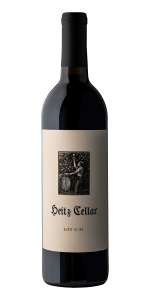
The origin of Lot C-91 began in the fall of 1969 when Joe Heitz created this one-off cuvée, which was very normal in those days, as a more premium version of his already iconic Napa Valley Cabernet Sauvignon bottling. Joe envisioned Lot C-91 as a greater step up in quality from the Napa Valley Cabernet Sauvignon, with a higher quality of fruit sourcing, coming exclusively from the sought-after single vineyards of Heitz Cellar.
Lot C-91 is the culmination of 50 years of tireless effort, trial and error, and the continual desire to make a unique expression of the heralded vineyards of Heitz Cellar.
Review:
Wow. Such a racy and exciting nose! This is quite agile and nimble, full of red and blue berries in the forefront, then complemented by spiced orange, earl grey, red plums, potpourri, savory plums and chocolate. Tense and elegant on the palate, which is all about succulent red berries, nuance and texture. Nothing redundant here. A great Napa cabernet sauvignon that has real definition. A beauty by all accounts!
-James Suckling 96 Points
In 1969, Heitz produced a one-off cuvée called Lot C-91. It was thought of as an elevated version of the Napa Valley Cabernet – a 'best of the best' blend from sites throughout Napa. After a bottle of the '69 turned up and turned heads at a Heitz wine dinner, the winemaking team decided to produce a modern iteration. It's comprised of vineyards in four AVAs: Rutherford (34%), Oakville (34%), Howell Mountain (17%) and St Helena (15%). The dazzling nose instantly shows off the component from Martha's Vineyard and on the palate it walks the line between succulent, powerful, herbal and floral, showing none of the heat of the 2017 vintage. As of June 2020, this was still a barrel sample, while many Napa 2017s are already on the market.
-Decanter 96 Points
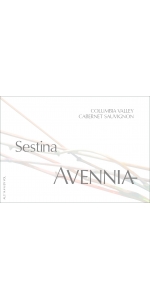
Avennia Sestina Cabernet Sauvignon is made from 77% Cabernet Sauvignon, 17% Merlot, 6% Cabernet Franc.
The story of this wine - The Sestina is an ancient form of poetry from Medieval France. Just as a modern poet can fill this form with new expressions, Avennia uses the traditional Bordeaux blend to express Washington. Sestina is their vision for an old vine, complex blend where all of the components complement each other. This wine is designed for the cellar, so the emphasis is on structure, balance, and complexity.
Winemaker Tasting Notes - “Good deep ruby/garnet color, with aromas of black cherry, fresh black currant, dark mocha, cigar box, and graphite. The palate is lively and dense with mountain berries, mocha, vanilla honey, damp earth, and wildflowers. The finish shows a distinct chalky minerality and beautiful tension. This is a classically balanced and ageworthy Sestina. Drink 2025-2040.” - Chris Peterson, Winemaker
Review:
"The Cabernet Sauvignon-dominated release from Peterson, the 2017 Sestina comes from the Red Willow, Bacchus, and Dionysus vineyards. Rocking levels of crème de cassis, sappy herbs, violets, and cedar pencil all flow to a full-bodied, incredibly pure, polished 2017 that offers flawless balance, ripe tannins, and a great, great finish. It's more approachable than normal yet is still going to evolve for 15 to 20 years. The blend is 77% Cabernet Sauvignon, 17% Merlot, and the rest Cabernet Franc, all raised 20 months in 50% new French oak."
- Jeb Dunnuck (April 2020), 95 pts
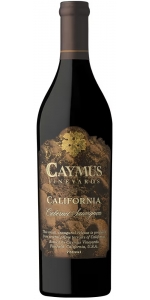
I feel this wine expresses the greatness of California and its hidden pockets where Cabernet can excel. The cold Pacific Ocean running the entire length of the state presents maritime influences – and with each small distance eastward the climate warms. Stony soils, south facing slopes and moderately warm conditions are the keys to producing dark, rich and good tasting Cabernet.
A small release from Caymus Vineyards, this wine is a California-appellation Cabernet Sauvignon – supple, dark and rich, bearing the signature hallmarks of Caymus. It is sourced from sites throughout the state which feature climatic conditions, soils and topography that are ideally suited to Cabernet. This project stems from excitement over California's diverse vineyard land, often in lesser-known areas, with the potential to produce exceptional Cabernet.
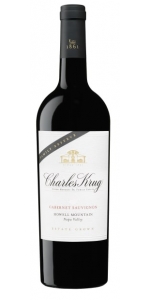
Charles Krug Family Reserve Howell Mountain Cabernet Sauvignon is made from 100 percent Napa Cabernet Sauvignon.
Rising 1,650 feet above the Napa Valley floor on the southwestside of Howell Mountain, the Family Reserve Howell MountainCabernet Sauvignon sits above the fog line. The distinctiveclimate, along with volcanic and iron-rich red soils, producefruit with great balance and intensity.
Review:
The 2017 Cabernet Sauvignon Limited Release Cold Springs is the most distinctive of the wines in this range of limited-release Cabernets from Charles Krug. Gravel, licorice, menthol and spice all develop in a Howell Mountain Cabernet endowed with tremendous class and nuance.
-Vinous 92 Points
This California Cabernet Sauvignon has rich flavors with a hint of black currant and cherry. The tannins are soft, leading to a smooth finish with a hint of oaked vanilla and a touch of eucalyptus/mint freshness.
100% California AVA Cabernet Sauvignon.
Average age of the vines: 15 years.
Picked at premium ripeness. Fermented in static tanks with pump-overs three times per day.
Aged five months French oak Barrels.
Alcohol: 13.5%
RS 0.5 g/l
TA 5.7 g/l
Serve this deep purple hued beauty with a variety of hearty dishes ranging from Osso Bucco to grilled red meats and cheeses.
The Rubus Concept
Rubus wines are a private label created and used by Kysela Pere et Fils, LTD in order to buy, bottle and market wine found at incredible quality/price ratio. All Rubus wines are selected by Fran Kysela MS.
It was first used for a superb batch of 1,200 cases of Amador county Zinfandel back in 1997. The wine sold in a few days and the Rubus brand was not used since then.
During a trip in California in 2009, when Fran Kysela tasted some incredible wines (available in bottle but without label), he decided to help resurrect the brand creating an outstanding Cabernet Sauvignon from Stag's Leaps district in Napa Valley (California) , followed by an excellent Chardonnay from Russian River Valley (California)
We then developed the Rubus Zinfandel from Lodi (California).
In 2011, we added a Shiraz/Viognier blend from the Barossa in Australia.
For 2012, the newest addition to the Rubus line is a Chardonnay from Colchagua Valley in Chile.
Rubus is now its own brand representing quality for the consumer and an incredible price along the way.
Rubus Meaning
The name RUBUS means "raspberry" in Latin and it is the name given to the genus of flowering plants in the rose family. For instance, here are some famous fruit from the Rubus family with their latin names:
Rubus fruticosus agg. – Blackberry
Rubus idaeus – European Red Raspberry
Rubus occidentalis – Black Raspberry
Rubus pensilvanicus – Pennsylvania Blackberry
Rubus strigosus – American Red Raspberry
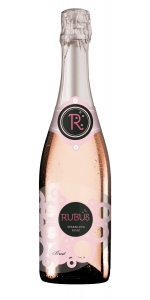
Rubus Brut Rose is made from 60% Tempranillo, 40% Bobal.
The Rubus Project was created by Fran Kysela as a way to source & sell incredible wines at value prices. All wines in this international project are hand-selected by Fran Kysela. Rubus wines are fruit driven, true-to-type values that over deliver - a true representation of quality for the consumer at an excellent price.
Stunning salmon-pink hues. The nose is intense and fine, dominated by notes of red berries. On the palate, the combination of fine bubbles and delicate aromas produces a delightfully light and silky rosé.
Machine harvest. The base wine is fermented at a low temperature. The second fermentation takes place at 14°C for 2 weeks, followed by dosing.
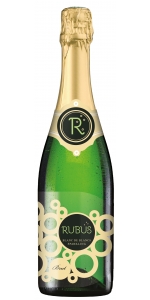
Rubus Brut Blanc de Blanc NV is made from 1/3 Ugni Blanc, 1/3 Airen, 1/3 Muscat .
The Rubus Project was created by Fran Kysela as a way to source & sell incredible wines at value prices. All wines in this international project are hand-selected by Fran Kysela. Rubus wines are fruit driven, true-to-type values that over deliver - a true representation of quality for the consumer at an excellent price.
Elegant pale yellow color with fine bubbles. Floral and fruity on the nose, with aromas of fresh butter and cake. On the palate, the wine is crisp and harmonious - a delightful sparkling wine.
Machine harvest. The base wine is fermented at a low temperature. The second fermentation takes place at 14°C for 2 weeks, followed by dosing.
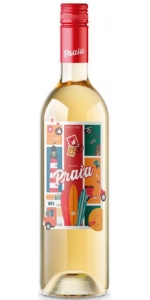
Praia Aveleda Vinho Verde NV is made from 40% Loureiro, 20% Trajadura, 20% Arinto, 20% Azal.
Praia, which means "beach" in Portuguese, is a smooth and fresh wine with delicate and lovely fruity flavors. Slightly spritzy, it is well balanced and very refreshing.
The region is typical for its unique wines that are fresh and light, combined with a very well balanced acidity. These characteristics result from the region's unique soil and climate, with a strong Atlantic influence that you will identify when you taste it.
The wine is ideal as an aperitif or throughout a meal, especially with fish, seafood, white meat and salads. Due to it freshness, it is particularly pleasant in a relaxed and informal ambiance.

Zombie Zin Zinfandel is made from 95% Zinfandel and 5% Syrah
Be careful if you go out at night. The Zombie Zin is designed to be consumed in hiding with the only friends you have left... post apocalypse.
The Zombie Zin is sporting a new label design with a torn look, that suggests a window into another world. The colors are more vibrant earth-tones and the capsule is a deep red.
The Zombie Zinfandel is very dark in color, almost a black-purple. The aromas are of ripe, dense black fruits and a hint of dried herbs. The flavors are complex and rich, sporting succulent blackberries, powdered cinnamon, cola and cherry jam. Just a hint of black pepper in the long finish.
The grapes for the Zombie are sourced throughout California, mostly from the dry, hot sandy soils of the Delta region and the Central Valley. The final blend benefitted from some inky Syrah grapes that came from the Central Coast. The wine was fermented in Stainless Steel and aged for about a half a year in American oak.
Pairs well with bloody BBQ meats, sinister soups with eye of newt, bubbly caldron of fleshy stew.
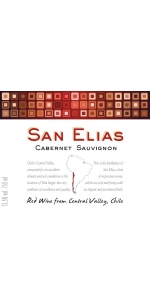
Siegel San Elias Cabernet Sauvignon is made from 100 percent Cabernet Sauvignon.
Fresh and delicate cassis tones, a great structure. Draw the cork half an hour before serving and serve at room temperature.
Smooth and fruity on the palate, the wine goes well with pasta, salads.
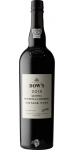
Exceptionally aromatic with aromas of violets, hints of blackberry, blackcurrant and black plum on the nose. There is some spice that is balanced with fresh acidity and minerality. A long finish with ripe but firm tannins.
Dow's Senhora da Ribeira can be enjoyed anytime and pairs wonderfully with chocolate desserts and soft cheeses like creamy Stilton or Roquefort.
Review:
Rich and fruity, this wine is packed with intense black-currant flavors. It is perfumed, ripe with a good tannic background. The density of the wine and the firm structure point to a long aging process. Drink this beautifully structured wine from 2026.
-Wine Enthusiast 93 Points
Winemaking:
Senhora da Ribeira has one of the most advanced specialist wineries in the Douro, combining the best of traditional winemaking practice, evolved over centuries, and the latest state-of-the-art automated systems. Three granite ‘lagares’ for foot treading are complemented by three ‘robotic’ lagares, designed by the Symington family and installed in the quinta’s winery in 2001.
It has long been recognised that traditional treading produced some of the finest Ports, but there are some drawbacks involved in traditional treading; temperature control is difficult, there is a limit to how long people are willing to tread and they need to sleep. The winemaker’s options are therefore limited, he or she cannot order treading at different times through the night, or pull people off the picking team at will. Furthermore, emptying the traditional lagar takes a long time; in the meantime the fermentation process is accelerating away. A further handicap arose over recent years, when an increasing scarcity of labour obliged producers to look for less labour-intensive vinification solutions. The Symingtons opted to devise a mechanical means of replicating the proven method of foot treading. The result was the Symington ‘robotic lagar’, an automated treading machine which exactly replicates the gentle action of the human foot and which has revolutionised winemaking in the Douro Valley. This equipment is very expensive but the results have been so good that an increasing proportion of Dow’s finest wines are now made in these automated lagares. Approximately half of the wines for Dow’s much praised 2003 Vintage were vinified in them.
The Senhora da Ribeira’s Quinta Vintage Ports have amassed a highly impressive number of awards: three Gold Medals at the International Wine Challenge, (2008, 2006 and 2001, for the 2005, 2002 and 1999 Vintages, respectively) as well as seven Silver Medals and two Gold Medals at the International Wine & Spirit Competition (London, 2008 for the 2005 Vintage and 2002 for the 1998 Vintage). In September 2006, Jancis Robinson MW wrote, “One very exciting new bottling is Dow’s Quinta da Senhora da Ribeira 2004...this single quinta bottling demonstrates superb quality with wonderful vibrancy. Great wine in any context - not that unlike some California reds! This is definitely a wine to look out for when it is released.”
Wine Profile
The very hot climate through the summer at this vineyard results in highly complex and concentrated wines but very low yields. Colours of the musts in the fermentation tanks are always purple-black due to the very high skin to juice ratio. The old vines add further to the intensity of the wine as they make up a very large percentage of the vineyard. The resulting wine can be described as being the essence of Vintage Port, with powerful wild red-fruit flavours, leading into rich black chocolate notes, the whole balanced by complex, attractive and peppery tannins.
One of the Douro’s most beautiful vineyards, Senhora da Ribeira is located 24km (15 miles) upriver from Quinta do Bomfim in the remote Douro Superior. The vineyard commands a magnificent north bank position, overlooking a broad sweep of the Douro, directly opposite another famous Symington owned vineyard: Quinta do Vesuvio. Senhora de Ribeira was built close to an ancient river crossing, guarded by two 12th century castles on either side of the river built by the Moors during their centuries long occupation of Iberia. A small chapel dedicated to the ‘Lady of the River’ (literally: Senhora da Ribeira) has stood here for centuries and gave the quinta its name. Travellers would pause here to ask for a safe river passage and onward journey.
Senhora da Ribeira’s wines are some of the finest in the Douro and they complement those from Bomfim in the composition of Dow’s classic Vintage Ports. The quinta’s high proportion of old vines (45% are over 25 years old) is of critical importance. The old vines are very low-yielding, producing on average less than 1Kg of grapes each, giving intense and concentrated musts which are ideal for classic Vintage Port. The remainder of the vineyard was replanted as follows: 21% in 2001 and 34% from 2004, the latter involving mainly Touriga Nacional vines. This grape variety - very important for Vintage Port - now represents almost exactly a third of the total planted at the quinta. The entire vineyard has the maximum ‘A’ rating.
As with Bomfim, the consistency of the climate plays a key role, although the rainfall is only half of that experienced at Bomfim: 448mm is the 10 year average. This more extreme climate, hot dry summers and cold, equally dry winters results in wines with unique depth of colour and complexity.
As with Quinta do Bomfim, the best Ports from Senhora de Ribeira are used to make Dow’s Vintage Ports in the great and rare ‘Declared’ years. In the good year’s when Dow’s does not ‘declare’ a Vintage, the best wines of ‘The Lady of the River’ are bottled as Dow’s Quinta de Senhora da Ribeira Vintage Port. They will tend to mature a little earlier than the very rare ‘Declared’ years, but can be every bit as good as some other Vintage Ports.
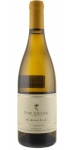
'Ma Belle-Fille' was named by Sir Peter as a warm tribute to Emily Michael, his "Daughter-in-Law", and mother of the third generation of the family. Planted at the highest elevation on the estate, the marine influence on Ma Belle-Fille vineyard is greater, resulting in cooler daily temperatures in the summer and autumn months. Situated above the summer fog ceiling and exposed to the southeast, the vineyard receives the very first rays of sunshine each morning and remains sunny all day long. This full exposure, combined with cooler temperatures, causes the fruit to mature earlier than the rest of our estate.
Vintage Notes
The combination of a wet winter with significant rains in December through March and cool weather delayed budbreak nearly a month. Flowering and fruit set were also pushed back and the weather during the later flowering was favorable resulting in decent fruit set and slightly above average yields for the Chardonnay vineyards—a marked improvement over the record-low yielding 2022 vintage. The growing season was temperate without major heat spikes allowing the berries to hold onto their acidity which carried through into the wines. Harvest was almost a month later than normal with the last Belle Cote block coming in on November 2nd.
At the highest elevation on the estate, the marine influence on Ma Belle-Fille is greater, resulting in cooler daily temperatures in the summer and autumn months. Situated far above the summer fog ceiling and exposed to the southeast, the vineyard receives the very first rays of sunshine each morning and remains sunny all day long. This full exposure, combined with cooler temperatures, causes the fruit to mature earlier than the rest of our estate.
Beautifully perfumed with layers of honeysuckle, jasmine and dried orange peel accented by apricot, vanilla cream and spring flower notes, the 2023 ‘Ma Belle-Fille’ delivers with a rich, creamy entry and generous, structured mid-palate showing great drive and intensity with a long, mouth-watering finish. A truly special wine from an extraordinary vintage.
Review:
So delicious and drinkable from the first whiff to the lingering finish. An uber-chardonnay that packs in all the richness of fruit and smooth spiciness of oak fermentation, with vibrant acidity and a silky texture. Well balanced in a cool, ideal vintage and a great candidate for aging longer term. Drinkable now and best from 2030.
James Suckling 99 Points