
" We don't sell the wine without touching the vine "
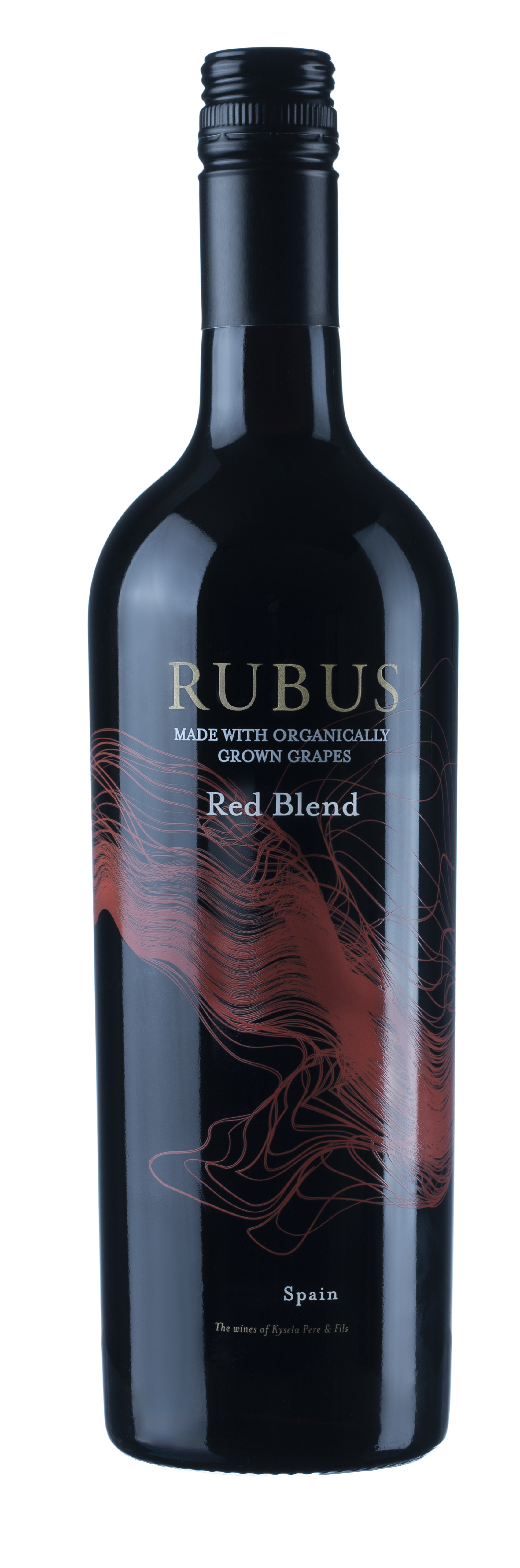
| Country: | Spain |
| Region: | Tierra de Leon |
| Winery: | Rubus |
| Grape Type: | Tempranillo |
| Vintage: | 2022 |
| Bottle Size: | 750 ml |
Avennia Justine Red Blend 61% Grenache, 21% Mourvèdre, and 18% Syrah.
Justine reflects our belief that Washington is capable of producing world class blends of grape varieties traditional to the Southern Rhone region of France. The name is inspired by one of the great heroines of recent literature, who also sprung from the imagination of the Mediterranean. Dark, seductive, complex, with a chasm of depth: The Justine is a great reflection of Avennia's mission of expression, and Washington's generous terroir.
Tasting Note: Big black cherry, blackberry, hints of orange peel, fresh herbs and loam on the nose. Plush and round on the palate. Dark earthy fruits from the Mourvedre, along with citrus high notes, mountain flowers, jasmine, and savory herbs. Balanced and complex without forgetting its hedonistic roots in the Southern Rhone.
Review:
-Owen Bargreen 95 Points
The Tempest was one of the first wines, and the first Proprietary Blend, we produced. At the time, it seemed almost uncanny that we were able to access three grape varietals at the same time from the same vineyard; it was blind luck or perhaps the proverbial “perfect storm.” The resulting wine reflected a fierce determination to brave the storm as well as a new desire to realize the possibilities of Merlot. The Tempest is still made with outstanding grapes, from vineyards such as Blair in Calistoga and cooler sites like Farella and Orchard. Predominantly Merlot with lesser amounts of Cabernet Sauvignon depending on vintage, The Tempest is a roiling cauldron of fresh red and blue fruit and silky tannins – a wine that shows what Merlot can be in the right hands, from the right vineyards.
Red fruit; silky tannins; more approachable in its youth
Review:
The 2022 The Tempest is a blend of 67% Merlot, 10% Cabernet Franc, and 23% Cabernet Sauvignon. Deep garnet-purple colored, it comes skipping out of the glass with bright, cheery notes of black raspberries, mulberries, and kirsch, leading to hints of lavender, wild sage, and aniseed. The medium to full-bodied palate delivers bright, crunchy fruit with firm, fine-grained tannins and great tension, finishing on a lingering peppery note. This was bottled in March 2024.
Rubus Prosecco Organic is made from 100% Glera.
The Rubus Project was created by Fran Kysela as a way to source & sell incredible wines at value prices. All wines in this international project are hand-selected by Fran Kysela. Rubus wines are fruit driven, true-to-type values that over deliver - a true representation of quality for the consumer at an excellent price.
Clean, light, fresh & airy. 100% Glera, Certified Organic + vegan friendly.
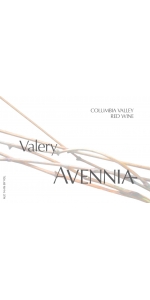
Avennia Valery Red Blend is made from 88% Merlot and 12% Cabernet Franc
Valery is named for the patron saint of wine in the St. Emilion region that inspired it.
We started with old vine Merlot from a stony block in the heart of the Yakima Valley and added complex, aromatic Cabernet Franc from the Horse Heaven Hills. The result is a balanced, complex wine with the elegance and ethereal perfume that this blend of two of Washington’s best varietals are known for.
The nose on this wine is very perfumed, almost exotic with notes of fresh violets, red plum, winter mint, fresh herbs and crushed limestone qualities. The palate is poised and balanced, with red fruits and mocha powder encapsulated in limestone. The finish lingers delicately, with the Cabernet Franc asserting a light tobacco and herb note, giving depth. A compelling wine that will continue to unwind for 7-10 years in the cellar.
Review:
"This Merlot dominant blend is made in the style of Bordeaux's Right Bank. Still, it offers a brilliant complexity sourced from two of Washington's most important sites, with old-vine Merlot that comes from a rocky section of Boushey Vineyard and Cabernet Franc from the Horse Heaven Hills standard bearer Champoux Vineyard. The resulting wine is dazzling, complex and refined. Elegance in the floral tones of dark violets and dried lavender mingle with smoky clove and a savoury saline pique. The palate offers intensity, rich red fruits, savoury dried anise and hints of wild desert sage. There's a core of dark chocolate and a streak of pencil lead into the finish."
- Decanter 96 Points
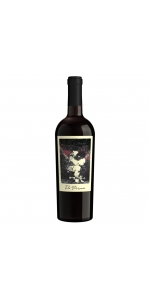
The Prisoner Wine Company The Prisoner Red Blend is made from a blend of Zinfandel, Cabernet Sauvignon, Petite Sirah, Syrah, and Charbono.
Bright aromas of ripe raspberry, vanilla, and coconut give way to flavors of fresh and dried blackberry, pomegranate, and vanilla, which linger harmoniously for a smooth and luscious finish.The Prisoner Red Blend was inspired by the wines first made by the Italian immigrants who originally settled in Napa Valley. The Prisoner is now the most recognized red blend, leading the resurgence of interesting blends by incorporating Zinfandel with the unlikely mix of Cabernet Sauvignon, Petite Sirah, Syrah, and Charbono.
On the nose, dried blackberry, dried açai berries, and hints of cedar and tobacco leaf are accented by sweet spices of clove, cinnamon, and nutmeg. Flavors of ripe dark cherry, blackberry coulis, and hints of anise linger harmoniously for a soft, vibrant finish balanced by ripe tannins.
Chef Brett recommends pairing The Prisoner Red Blend with Kalbi Short Ribs or Chicken Mole Tostada.
Vineyards: When you outgrow winemaking tradition, you must forge your own path. And we did. The Prisoner exists because of the collaboration with our growers, many of which have been with us since the very beginning—from the Solari Family Vineyard in Calistoga, where old school sensibilities meet new techniques, to the Korte Ranch in St. Helena, a vineyard whose diligence outlasted the Prohibition and has sustained four generations.
-150x300.jpg "Rubus Reserve Pinot Noir Los Carneros 2022")
The Rubus Project was created by Fran Kysela as a way to source & sell incredible wines at value prices. All wines in this international project are hand-selected by Fran Kysela. Rubus wines are fruit driven, true-to-type values that over deliver - a true representation of quality for the consumer at an excellent price.
Rubus Reserve Pinot Noir is sourced from Carneros, Napa Valley. It shows complexity with raspberry and cherry notes that dance on the tongue.
Rubus Spanish Red Blend Organic is made from 70% Tempranillo and 30% Syrah.
The Rubus Project was created by Fran Kysela as a way to source & sell incredible wines at value prices. All wines in this international project are hand-selected by Fran Kysela. Rubus wines are fruit driven, true-to-type values that over deliver - a true representation of quality for the consumer at an excellent price.
This Organic Red Blend from Tierra de Castilla is 70% Tempranillo and 30% Syrah. It’s made in a Rhone style, with whole berry fermentation proceeded by skin contact. You’ll find a dark purple color, rich cherry fruit, freshness and a surprisingly long finish that’s almost too good to be true for a value wine.
Enjoy this with tapas, burgers, pizza or grilled vegetables.
The Rubus Concept
Rubus wines are a private label created and used by Kysela Pere et Fils, LTD in order to buy, bottle and market wine found at incredible quality/price ratio. All Rubus wines are selected by Fran Kysela MS.
It was first used for a superb batch of 1,200 cases of Amador county Zinfandel back in 1997. The wine sold in a few days and the Rubus brand was not used since then.
During a trip in California in 2009, when Fran Kysela tasted some incredible wines (available in bottle but without label), he decided to help resurrect the brand creating an outstanding Cabernet Sauvignon from Stag's Leaps district in Napa Valley (California) , followed by an excellent Chardonnay from Russian River Valley (California)
We then developed the Rubus Zinfandel from Lodi (California).
In 2011, we added a Shiraz/Viognier blend from the Barossa in Australia.
For 2012, the newest addition to the Rubus line is a Chardonnay from Colchagua Valley in Chile.
Rubus is now its own brand representing quality for the consumer and an incredible price along the way.
Rubus Meaning
The name RUBUS means "raspberry" in Latin and it is the name given to the genus of flowering plants in the rose family. For instance, here are some famous fruit from the Rubus family with their latin names:
Rubus fruticosus agg. – Blackberry
Rubus idaeus – European Red Raspberry
Rubus occidentalis – Black Raspberry
Rubus pensilvanicus – Pennsylvania Blackberry
Rubus strigosus – American Red Raspberry
Avennia Arnaut Syrah is made of 100% Syrah
For our taste, no one grows finer Syrah in the state than Dick Boushey. We named this wine after the Provencal Troubadour Arnaut Daniel, who invented the Sestina poem form, thus creating a connection between our two flagship efforts.
"Deep, dark Syrah notes on the nose, with dark blackberry, blueberry reduction, grilled meat, crushed olive, black licorice, camphor, pen ink, and cracked black pepper. The palate is super concentrated and dense, tightly focused, and deeply complex. Savory blueberry, pan drippings, a hint of orange essence, and hand-rubbed sage come through on the extremely long and nuanced finish. A compelling wine that will age for a couple decades at least." - Chris Peterson, Winemaker
We make this wine with minimal manipulation, using native yeasts and bottling unfined and unfiltered, to allow the "place" to shine through.
AVA: Yakima Valley
Blend: 100% Boushey Vineyard Syrah
Winemaking: 15% whole cluster, native yeast, 15% new French oak, aged 16 months, bottled unfined & unfiltered.
Review:
"Boushey Vineyard is holy ground for Syrah in Washington. This is yet another wine that will inspire a vinous pilgrimage. Dried herb, smoked meat, iron, and dark fruit aromas lead to full-bodied, saturated, palate-staining dark fruit flavors. The intensity is off the charts – earthshaking, with wave upon wave of dark fruit flavors. There’s plenty of structure around it all. It sticks around for a long, slightly warm finish. Best enjoyed at a cool 62 degrees. Give it a long decant if drinking in the near term." - Sean P. Sullivan
95 points & Critic's Choice, Northwest Wine Report
All varietal from a great vineyard in the Yakima Valley, the 2020 Syrah Arnaut Boushey Vineyard offers a perfumed, complex nose of mulled red and black berries, peppery, savory herbs, and some meaty, iron-like nuances. This complex, medium to full-bodied beauty has fine tannins, a layered, elegant mouthfeel, and a gorgeous finish.
- Jeb Dunnuck, 94 pts.
Rinaldi Eramare Piemonte Cortese is made from 90% Cortese and 10% Sauvignon Blanc.
The Cortese grapes are coming from the Estate's vineyard located at the best exposures between Ricaldone and Maranzana at about 220 meters above sea level.
A salty and tasty white wine (90% cortese 10% sauvignon) fresh simple and juicy.
After the alcoholic fermentation the wine refines on his yeast for 4 months just to have a better color and taste.
A lot of minerality and note of grapefruit.
Ideal for an aperitif, or with seafood appetizers, fish first courses, grilled fish, vegetable pies, mixed Piedmontese appetizers, omelettes.



