
" We don't sell the wine without touching the vine "
| BUY MORE! SAVE MORE! | ||||||||||||||||
|
| Country: | Japan |
| Region: | Niigata |
| Winery: | Shirataki Shuzo |
| Grape Type: | Rice Wine (Sake) |
| Organic: | Yes |
| Vintage: | NV |
| Bottle Size: | 300 ml |
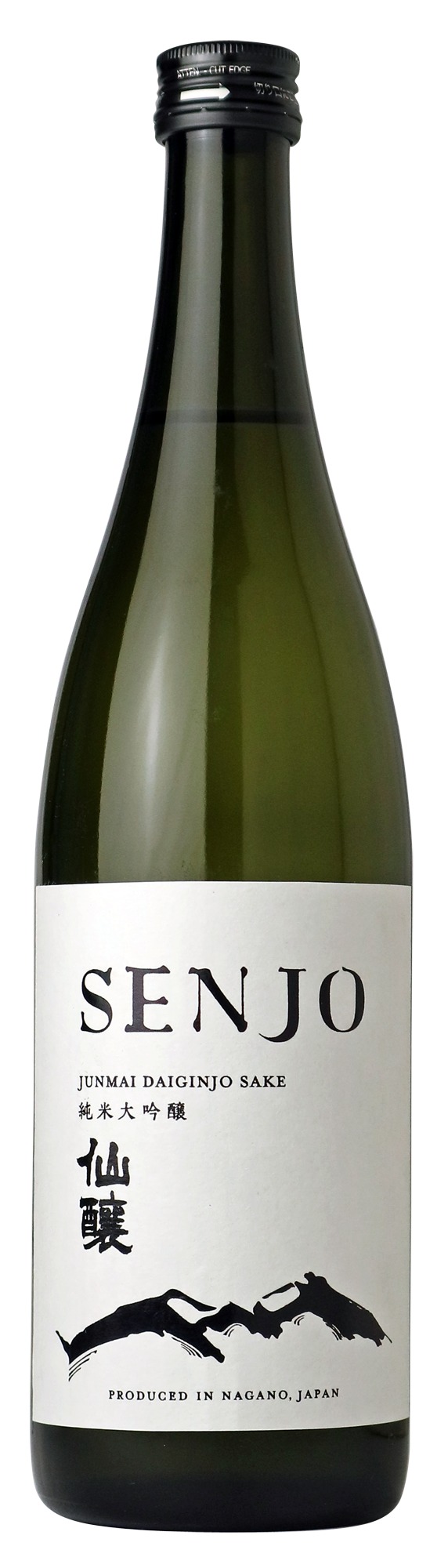
Juicy & Refreshing. Full of fruity flavors with clean sweetness. Brewed with Hitogokochi, the special sake rice harvested in Nagano, and natural water slowly filtered down the Japan Alps. In 1866, toward the end of the Edo period, Matsujirou Kurogouchi and his family started a small sake brewery currently called Senjo named after Senjo Ga Take, a 3000-meter peak in the Japanese Alps. Today Senjo Brewery strives to combine art with science and old skill with new technology by adding modern twits to the rich historical traditions of Sake brewing.
Pair with Deep-fried fish with sweet & sour sauce, Young sweetfish tempura (chiayu tempura), Caesar salad.
ABOUT SHIRATAKI SHUZO:
Shirataki is located in the heart of the Japanese Alps called "Snow Country" in the Niigata prefecture. Each spring the snowpack melts providing an abundance of clear natural spring water. This water runs through a coal seam providing a natural filtration process that accentuates the taste and quality of the water. This very soft water is the secret behind the very light, elegant, pretty style of sake made at Shirataki. The town of Echigo Yuzawa is home to "Koshihikari" a famous high quality rice brand in Japan.

Caymus has a signature style that is dark in color, with rich fruit and ripe, velvety tannins – as approachable in youth as in maturity. We farm Cabernet grapes in eight of Napa’s 16 sub-appellations, with diversification enabling us to make the best possible wine in a given year. This Cabernet offers layered, lush aromas and flavors, including cocoa, cassis and ripe dark berries.

Camus Graves Blanc is made from 50% Sauvignon Blanc and 50% Semillon.
A beautiful, brilliant color, this wine offers a great aromatic balance with complex and mineral notes, Offering white fruit (peach and pear), citrus (grapefruit and lemon), and a toasty finish with a delicate oak presence. The mouthfeel is rich and complex with a great minerality, freshness, structure, and a good length to the finish.
Pairs with poultry, fish, and shellfish.

This gift pack consists of 3 different 100ML bottles :
- one bottle of White Port (100ml)
- one bottle of Tawny Port (100ml)
- one bottle of Ruby Port (100ml)
Perfect impulse buy for the holidays or for a birthday gift !

Alain Jaume Lirac Rouge Roquedon is made from 60% Grenache, 20% Syrah, 10% Mourvedre, 10% Carignan.
A blend of Grenache, Syrah, Mourvèdre, and Carignan grown on clay and sandy soils, mostly on terraces covered by pebble stones. Lirac is located in front of Chateauneuf du Pape, on the opposite side of the Rhone River.
Lirac Roquedon reveals an intense red garnet color and a nose dominated by a bouquet of red and black ripe fruits (kirsch and wild Blackberry). The mouth is full, with flavors of blackcurrant, liquor and spice. Tannins are both harmonious and elegant. The palate finishes with hints of liquorice and vanilla, which brings length and complexity to the wine.
Traditional wine-making in stainless still vats. Crushed and destemmed grapes. Fermentation temperature : 30°C. 18 days of vatting with pigeages. Ageing mainly in vats and about 10% in oak barrels. Bottling 15 months after the harvest.

Juicy & Refreshing. Full of fruity flavors with clean sweetness. Brewed with Hitogokochi, the special sake rice harvested in Nagano, and natural water slowly filtered down the Japan Alps. In 1866, toward the end of the Edo period, Matsujirou Kurogouchi and his family started a small sake brewery currently called Senjo named after Senjo Ga Take, a 3000-meter peak in the Japanese Alps. Today Senjo Brewery strives to combine art with science and old skill with new technology by adding modern twits to the rich historical traditions of Sake brewing.
Pair with Deep-fried fish with sweet & sour sauce, Young sweetfish tempura (chiayu tempura), Caesar salad.
Juicy & Refreshing. Full of fruity flavors with clean sweetness. Brewed with Hitogokochi, the special sake rice harvested in Nagano, and natural water slowly filtered down the Japan Alps. In 1866, toward the end of the Edo period, Matsujirou Kurogouchi and his family started a small sake brewery currently called Senjo named after Senjo Ga Take, a 3000-meter peak in the Japanese Alps. Today Senjo Brewery strives to combine art with science and old skill with new technology by adding modern twits to the rich historical traditions of Sake brewing.
Pair with Deep-fried fish with sweet & sour sauce, Young sweetfish tempura (chiayu tempura), Caesar salad.

This Junmai Daiginjo has a beautiful nose full of banana, melon and star anise. The all natural brewing process gives this sake a bright fresh palate of plum, lime and minerality with a clean dry finish. A very food friendly sake, and is thought to be best after the meal with a light, smooth, rich cow's milk cheese.
POLISHING RATIO: 40%
ALCOHOL: 16-17%
SMV +/-: +1.0
ACIDITY: 1.2
RICE KOJI: HATTANISHIKI
RICE KAKE: HATTANISHIKI
YEAST STRAIN: PROPRIETARY YEAST
FOOD PAIRINGS: Poached Lobster, Seared Scallops, Tofu, Steamed Dumplings
CHEESE PAIRINGS: Brillat Savarin, Cambozola, Dulce Latte Gorgonzola, Mimolette

Sake Eikun Junmai Ginjo Water Lords 12/720ml is made with Iwai rice.
Eikun sake uses water from a source called "Fusui", rated as one of the top 100 sources of water in Japan. This water source is located just south of the ancient Japanese, and still cultural capital of Japan, Kyoto.
Aromas of macadamia oatmeal cookie, spicy zucchini bread, and vanilla cream with a satiny fruity-yet-dry medium-to-full body and a layered, banana custard, jicama, salted whole nut, apple, and radish nuanced finish. A Wonderfully vibrant and flavorful sake.-Beverage Tasting Institute 94 points (Exceptional)
RATING: 94 points (Exceptional)
CATEGORY: Junmai Ginjo Sake, Sake
ALCOHOL BY VOLUME: 15.3%
TASTING LOCATION: In Our Chicago Tasting Room
TASTING DATE: Dec-05-2012
WINE ID: 200768
Made with Iwai rice.
Eikun sake uses water from a source called "Fusui", rated as one of the top 100 sources of water in Japan. This water source is located just south of the ancient Japanese, and still cultural capital of Japan, Kyoto.
Rice milling: 60%

Woodsy honeycomb, nutshell, and mushroom patch aromas with a satiny fruity-yet-dry medium-to-full body and a delicate savory mushroom stock, chestnut, and golden beet driven finish. A fine choice for tempura. 91 Points -Beverage Tasting Institute
RATING: 91 points (Exceptional)
CATEGORY: Junmai Ginjo Sake, Sake
ALCOHOL BY VOLUME: 15.4%
TASTING LOCATION: In Our Chicago Tasting Room
TASTING DATE: Dec-05-2012
WINE ID: 200767

This unpasteurized sake is exciting and lively with a nose full of citrus, apple blossom and shizo. The palate is equally as bold featuring fresh persimmons, marshmallow and slightly underipe stone fruit. The finish is clean showing soft minerality.
POLISHING RATIO: 60%
ALCOHOL: 15.5
SMV +/-: +5.0
ACIDITY: 1.6
RICE KOJI: GOHYAKUMANGOKU
RICE KAKE: KOSHI IBUKI
YEAST STRAIN: K1801
FOOD PAIRINGS: Sushi Nigiri with fatty fish, oysters, omelettes, Lighter Italian, Chinese or French dishes
CHEESE PAIRINGS: Mildly ripe Coulommiers or Brie, Italian Raschera

Thus, the first Édition of Krug Rosé, a singular Champagne achieving an astonishing balancing act between finesse and substance, came to be.
The story of Krug Rosé dates back to 1983. With Joseph’s non-conformist spirit at heart, the 5th generation of the Krug family gave birth to a new composition, a bold rosé inspired by the House’s reputed art of blending, to be re-created each year.
Krug Rosé is an unexpected rosé Champagne combining elegance and boldness – inspired by the dream of the fifth generation of the House of Krug to conceive a rosé Champagne that did not exist, a rosé Champagne that could be re-created every year.
Krug Rosé 27ème Édition is a blend of 38 wines from 9 different years, the youngest of which is from 2015, while the oldest dates back to 2005. ▪ It was completed with 10% traditionally macerated Pinot Noir of the year blended from plots in Aÿ and Mareuil-sur-Aÿ, to add a unique spiciness, colour and structure. Its final composition is 57% Pinot Noir, 23% Chardonnay and 20% Meunier. ▪ A stay of around seven years in Krug’s cellars gives Krug Rosé 27ème Édition its unique expression and elegance.
At first sight, its subtle pale pink colour holds a promise of elegance. On the nose, aromas of rose hips, cured ham, mulberries, redcurrant, peony, pepper and pink grapefruit. On the palate, delicate flavours of honey, citrus and dried fruit with a long finish, enhanced by its fine bubbles complete the experience.
Review:
Thirty-eight wines from nine vintages spanning 2005 to 2015 - 55% of them reserve - went into this blend of 57% Pinot Noir, 23% Chardonnay, and 20% Meunier; a nonpareil of shimmering depth. On the pure, precise nose, raspberries and roses mingle with suggestions of woodsiness, honey-cured ham, and parmesan rind before vibrating with white peach and red currant, honeyed cashew, and a soupcon of tobacco leaf and cucumber on the palate - where the tension between its almost ethereal refinement, thanks not least to the unending mousse, and the luxuriance of its finish is simply (or not so simply) delicious.
-Tasting Panel 99 Points

Obsidian Vineyard Syrah is bathed in terroir. The vines experience severe stress, pushing the roots ever deeper through rock in search of water, producing miniature clusters of intense power. Given the wine’s natural propensity for tannin, we take extreme care in the cellar to chisel/whittle its rough edges and leave room for richness to flatter its distinctive scaffold. The mid-palate supports flavors of roasted coffee beans, sarsaparilla, and dark chocolate. The finish marches on long after most wines have tired.
Our estate vineyard — the six-acre Obsidian Vineyard in the Knights Valley AVA — has an incredibly complex soil structure. It takes its name from a layer of volcanic obsidian rock that was discovered when we drilled for water.
Chocolate ganache, black currants, fig, graphite, and an expansive mouthfeel.
Review:
"Joe Donelan believes his Obsidian Vineyard is one of the world’s greatest sites for Syrah. I’ve visited the site twice, and can say candidly it certainly sits among the most striking vineyards I've ever laid eyes on within the U.S. It sits like a rock on a promontory—two switchbacks to reach the top—and the stones under the top soil, quite literally, never stop emerging from the ground. The place has an ancient, almost sacred, temple-like feel. It is consistently swept by afternoon breezes. The vineyard was replanted in 2017 after fires ravaged it. Winemaker David Milner laid out the site at denser spacing than before, at 2,000 vines per acre to keep yields per vine low while still achieving sensible tonnage, averaging around three tonnes per acre. Viognier was planted for co-fermentations, alongside some Cabernet Sauvignon, for a single vineyard bottling of that grape. ‘God put on his viticultural hat when he designed this site,’ says Milner. The vineyard is planted with ENTA 174, 877, and Alban 1 clones, along with Donelan Heritage selections certified virus-free. The wine, the 2023 vintage release (the first from the new vines), was aged for 21 months in 36% new oak and co-fermented with 1.8% Viognier, using 32% whole clusters. And it is positively gorgeous: composed of nine different blocks, each fermented separately, then assembled through sequential blending, with no racking until bottling. From just five-year-old vines, this wine is utterly extraordinary—something oddly achievable from young vines on rare occasion. I tasted this wine from the same bottle over three days. While the high-toned espresso-bean and cedar accents are present at first pull of the cork, they mellow out a day later, and the fruit profile is so vibrant. This is the sign of an excellent wine. I first tasted wines from the Donelan’s Obsidian Vineyard years ago at Tasting Panel Magazine in the late, great Anthony Dias Blue’s office. Cushing Donelan showed the wines, and to this day, I recall the first moment I put my nose into a glass of Obsidian Syrah. In early January of 2026, as I nosed this brand new release of Obsidian Syrah, I was transported straight back to that tasting twelve years ago. What’s remarkable is that the aromatics are unmistakably the same, yet from these new, more densely planted vines, the aromas are more refined—precision-farmed wines from young vines delivering a level of detail and poise that feels beyond their years. So what’s in the glass? Pure red, black, and blue fruit nuances layered with tobacco, white truffle character, violet pastille, and an intoxicating perfume. White pepper notes emerge on the medium- to full-bodied palate, framed by velvety tannins. Iron-like and crushed slate minerality underpins dazzling black cherry and blackberry fruit, brown spices, and blood orange richness. There’s a velvety, iron-fist quality here that exudes polish, complexity, and undeniable quality. You want to drink it now—and you absolutely can—but it will also reward time in the cellar. Either way, you’ll be utterly wowed. And when you realise the price is under £100, the achievement becomes even more staggering. As these vines mature, what will become of them in subsequent vintages? I suspect that as the vines mature, they'll go in and out of phases, but so long as Mother Nature cooperates, I expect this wine to continue to dazzle each vintage. - Jonathan CRISTALDI"
Decanter (January 5th 2026), 100 points
This is the first vintage of the Obsidian Syrah after wildfires torched the vineyard in 2017, leading to significant redevelopment. Throughout all those years, the Donelans have exhibited remarkable patience and a clear sense of purpose. This is their reward: a truly magnificent, towering wine of the highest level.
Knights Valley is one of the most magical grape-growing districts in the United States, but it is not very well known because only a few estate wineries are located there.
The 2023 Syria Obsidian Estate is one of the most profound, moving wines I have tasted in Sonoma County. Blackberry, gravel, incense, chocolate, lavender, and dried herbs race out of the glass. Delicate yet powerful, the 2023 is spectacular. It is also very fairly priced in today’s market.
Vinous 100 Points




