
" We don't sell the wine without touching the vine "

| Country: | Spain |
| Region: | Tierra de Leon |
| Winery: | Senorio De Sarria |
| Grape Type: | Grenache |
| Vintage: | 2012 |
| Bottle Size: | 750 ml |
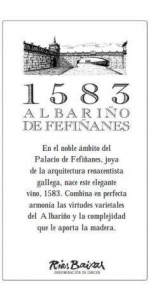
Fefinanes Albarino de 1583 Albarino is made from 100% Albarino.
Aged for 5 months in oak barrels (a combination of fine-grained American and French Allier barrels).
1583 is the birth date of the Viscount of Fefinanes, Gonzalo Sarmiento Valladares, builder of the Castle of Fefinanes, in Cambados.
They wanted to pay tribute to their ancestor with this wine that managed to reach a perfect harmony between the fruitiness of the Albarino grape and the complexity brought by the oak aging.
Lovely straw yellow color, clean and bright. The nose is reminiscent of ripe crystallized fruit and spices. The palate is elegant, round and well balanced, with a silky texture.
Excellent with shellfish, grilled or stewed fish, white meats, poultry.
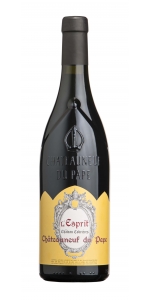
The vineyard is situated on the high tablelands, which are characteristic of the northern area of Châteauneuf-du-Pape. The terrain consists mainly of alpine diluvium and chalky Miocenian soil, with large flint pebbles covering the surface. These pebbles conserve the heat of the day during the night, thus avoiding too much evaporation.
85-year-old vines. Aged 12 months in French oak. Intense ruby color, with a dominant nose of black fruits (blackcurrant and blackberry) evolving into smoke and grilled notes. Robust tannins on the palate with a long finish.
L'Esprit de Chateau Cabrieres Chateauneuf du Pape Rouge is 50% Grenache, 15% Syrah, 15% Mourvèdre, 10% Cinsault and 10% remaining: Muscardin, Counoise, Picpoul, Terret noir, Vaccarèse, Clairette, Bourboulenc, Roussanne, Picardan.
Pairs best with choice red meat, prime rib and game, or try with strong cheeses and chocolate dessert.
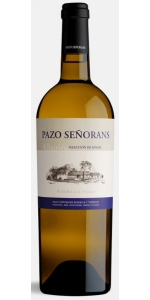
Pazo de Senorans Seleccion de Anada Albarino is made from 100 percent Albarino.
Straw yellow with greenish tints, vivid and brilliant. High intensity and very expressive. Profusion of aromas with traces of mineral. Great volume and ample body leaving a lasting impression from beginning to end.
Reviews:
The 2015 Albariño Selección de Añada is nothing short of phenomenal. For some reason, I hadn't tasted the young 2015 Albariño at the time it was released. It comes from the Los Bancales vineyard planted some 50 years ago and fermented with indigenous yeasts but without malolactic fermentation. It has a bright, almost fluorescent color and a complex, subtle and nuanced, elegant and expressive nose, with notes of sea shells and sea breeze, grass and white flowers. It's very clean, and the palate shows great balance and even feels a bit young. It has remarkable acidity and freshness (seven grams of tartaric acid) with good ripeness and 13% alcohol. This matured in tank with lees for over 30 months and was bottled in June 2024. It feels more serious and less exotic than earlier vintages. 18,000 bottles produced. This is the finest vintage that I can remember. Bravo!
-Wine Advocate 97 Points
Tech:
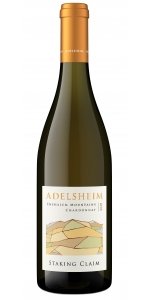
Adelsheim Vineyard Chardonnay Staking Claim is made from 100% Chardonnay.
Review:
Grapefruit pith, flint, roasted almonds and toasted lemons here. It’s medium-bodied, flinty and gently toasty with bright acidity and a fresh, tight finish. Sustainable.
-James Suckling 92 Points
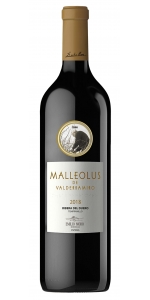
Deep cherry red in color with a garnet rim. On the nose, it is intense and elegant, with a base of ripe fruits that blends with the subtle tertiary aromas of sweet spices and cocoa. On the palate, it is balanced, full-bodied but with sweet and pleasant tannins, with a long and very persistent aftertaste.
Review:
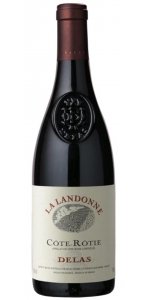
Delas Freres Cote Rotie La Landonne Rouge is made from 100 percent Syrah.
This very ancient region dates back to the Roman Era and is located on the right bank of the Rhône. It is said that during the Middle Ages, “The Seigneur de Maugiron” gave a hillside to each of his two daughters - one was brunette and the other fair - thus, were born the names of “Côte Brune” and “Côte Blonde.” Wines from the Côte Blonde tend to be more delicate and lighter in character than the fuller wines of the Côte Brune. Together, they make a wine of style and substance. This cuvée is a vineyard plot selection. The grapes come exclusively from a plot within the named slope of “La Landonne.”
This cuvée‘s first vintage was 1997. The wine is only made in the very best years. Its highly limited production never exceeds 2,500 bottles per year.
The steep, terraced hillsides along the river produce wines that are among the "biggest" reds of France. The Delas Côte-Rôtie is primarily Syrah with an addition of up to 10 to 20% of Viognier grapes in the crop. The soils of the northern part of the Côte Brune vineyard consists of extremely steep, terraced slopes of ferruginous mica schists which are covered with schist sand (arzel). The Côte Blonde has a varied geology with gneiss and granite predominating at the most southern side of the appellation. The area has dry, hot summers with regular rainfalls during other seasons. The grapes for the “La Landonne” cuvée are picked by hand at maximum maturity. Fermentation takes place in traditional open-topped concrete tanks, following three days of pre-fermentation cold maceration. Before fermentation, the maceration process continues under controlled temperatures of 82°F to 86°F. Daily cap pushing down and pumping over are carried out for about 10 days with total vatting time of up to 20 days. The wine is aged for 14 to 16 months in new or one year old oak casks. The barrels are topped up regularly.
Food Pairing: This wine pairs wonderfully with fine meats, roasted beef, water games, truffles and spicy stews. The bottle should be opened 1 to 3 hours before drinking. This wine needs at least 3 years cellaring before it can open up its complexity. In such case it is strongly recommended to decant before serving.
Tasting Notes: The wine‘s deep color is underscored by plummy hues. A complex nose shows deep, fruity aromas with hints of licorice and roasted coffee. Endowed with a dense and silky tannic structure, this is a full, fleshy wine that provides an ample and generous palate. Its lasting finish speaks of considerable ageing potential.
Reviews:
This is dark and still a bit reticent, with a cast iron cloak around the core of dark currant, plum and blackberry paste flavors, showing lots of sweet bay leaf, anise and singed apple wood notes in the background. There's serious grip through the finish. For the cellar.
-Wine Spectator 96 Points
Very open, spicy and fresh on the nose, you could almost open this now. Struck flint notes assist in teasing out notes of leaf tea, tobacco, rosemary and rose. Very full-bodied, generous but powerful on the palate, tense and mineral. Mouthcoating ripe, sweet tannin and robust amounts of sweet baking spices, along with more tobacco and black fruit on the palate. Has depth, length, power and impressive balance despite the high alcohol. Drink from now into 2022, or from 2031 to 2040. Lieu-dit La Landonne, from the Brune side (mica schist bedrock). Matured in new and one-year-old barrels for 14 months.
-Decanter 96 Points
The 2019 Côte Rôtie La Landonne comes from one of the greatest sites for Syrah in the world, the La Landonne lieu-dit located close to the center of the appellation, on the Côte Brune side. It reveals a deeper purple hue (it's slightly more opaque than the Seigneur de Maugiron) and offers a brilliant nose of ripe cassis, black raspberries, scorched earth, smoked herbs, and seared meat. Full-bodied and powerful on the palate, this is a deep, spicy, concentrated Côte Rôtie with a plush, layered mouthfeel, sweet tannins, beautiful balance, and a great, great finish. This puppy brings the fruit, opulence, and texture of the vintage yet still has a classic Côte Rôtie character.
-Jeb Dunnuck 96 Points
Fresh aromatic layers of mint sit atop crushed red cherries and wild strawberries, with light clove and thyme on the nose. The palate is rich and enticing with black cherries, plums, rhubarb, pomegranate seeds, black olives and freshly picked rosemary leaves. Tremendous texture, structure, and refreshing acidity carry this wine to a robust finish of orange zest and black tea leaves. Maisons Marques & Domaines USA.
- Wine Enthusiast 96 Points
This very ancient region dates back to the Roman Era and is located on the right bank of the Rhône. It is said that during the Middle Ages, “The Seigneur de Maugiron” gave a hillside to each of his two daughters - one was brunette and the other fair - thus, were born the names of “Côte Brune” and “Côte Blonde.” Wines from the Côte Blonde tend to be more delicate and lighter in character than the fuller wines of the Côte Brune. Together, they make a wine of style and substance. This cuvée is a vineyard plot selection. The grapes come exclusively from a plot within the named slope of “La Landonne.”
This cuvée‘s first vintage was 1997. The wine is only made in the very best years. Its highly limited production never exceeds 2,500 bottles per year.
The steep, terraced hillsides along the river produce wines that are among the "biggest" reds of France. The Delas Côte-Rôtie is primarily Syrah with an addition of up to 10 to 20% of Viognier grapes in the crop. The soils of the northern part of the Côte Brune vineyard consists of extremely steep, terraced slopes of ferruginous mica schists which are covered with schist sand (arzel). The Côte Blonde has a varied geology with gneiss and granite predominating at the most southern side of the appellation. The area has dry, hot summers with regular rainfalls during other seasons. The grapes for the “La Landonne” cuvée are picked by hand at maximum maturity. Fermentation takes place in traditional open-topped concrete tanks, following three days of pre-fermentation cold maceration. Before fermentation, the maceration process continues under controlled temperatures of 82°F to 86°F. Daily cap pushing down and pumping over are carried out for about 10 days with total vatting time of up to 20 days. The wine is aged for 14 to 16 months in new or one year old oak casks. The barrels are topped up regularly.
Tasting Notes
The wine‘s deep color is underscored by plummy hues. A complex nose shows deep, fruity aromas with hints of licorice and roasted coffee. Endowed with a dense and silky tannic structure, this is a full, fleshy wine that provides an ample and generous palate. Its lasting finish speaks of considerable ageing potential.
Food Pairing
This wine pairs wonderfully with fine meats, roasted beef, water games, truffles and spicy stews. The bottle should be opened 1 to 3 hours before drinking. This wine needs at least 3 years cellaring before it can open up its complexity. In such case it is strongly recommended to decant before serving.
Senorio de Sarria Rosado Vinedo #5 2012 is made from 100% Garnacha from old vines.
One of the finest roses I have tasted this year, the 2012 Vinedo No. 5, made from 100% old Grenache vines from a single vineyard, is loaded with character. It is an expressive, medium-bodied, light salmon/pink-colored, dry rose with flamboyant, jammy strawberry and raspberry characteristics. A beautiful texture as well as a long finish result in a terrific rose. Readers may be interested to know it was chosen as the best Spanish rose in a competition held by 500 sommeliers. Drink it over the next year.-Robert Parker 90 Points
Crimson red. Intense aroma of strawberry candies, lychees, grapefruit and wild red berry fruits. Fresh and fruity palate with soft, smooth entry. Balanced, long and lingering
The Senorio De Sarria Estate
Although the winery was founded in 1953, history shows that this land has been used for cultivating vines for many centuries. There is a close link between the history of Navarra and the history of the Señorío, as one of the lords of Sarría, Juan de Azpilicueta, covered the expenses of the studies of his brother, St. Francis Xavier, patron saint of Navarra, with the income obtained from the exploitation of these lands.
Located in Puente La Reina, at the heart of the Pilgrims´ Way to Santiago, Señorío de Sarría finds itself in an area that offers excellent climate and soil conditions, enabling a range of top quality wines to be elaborated.
The Senorio De Sarria Vineyards
110 hectares of numerous varieties of vines are spread out on the slopes and sun-facing sides of the Sierra del Perdón, Olite and Corella.
Each plant, each vineyard, each plot receives exquisite care and special monitoring to make great wines from the outset. Tempranillo, Graciano, Mazuelo, Cabernet Sauvignon and Merlot for the production of red wines. Garnacha for rosés. And Chardonnay for whites. Each grape variety has been carefully selected and cultivated in the most appropriate place, taking into account the light, humidity and temperature conditions required in each case.
Viejo Isaias Juana Cabernet Franc is made from 100 percent Cabernet Franc.
Cabernet Franc has an intense bright velvety red color. In the nose this wine reveals a complex expression marked by fresh berries followed by hints of floral aromas. It also displays some smoke and vanilla from the oak barrels. It is rich and balanced in the mouth with an elegant tannic structure and long fresh fruit end.
Vineyard information:
Location: Perdriel, Luján de Cuyo, on the highest area of the Mendoza river - Mendoza.
Altitude: 950m above sea level.
Soil: Stony, from Alluvial origins
Coming from our estate vineyards in Perdriel and Lujan de Cuyo.
Aged in 50% French and 50% American Oak barrels for 12 months. First and second use only.
Wine was slightly filtered before bottling.
Excellent when paired with red meats, pasta with spicy sauces, matured cheeses.
Review:
"Hints of plums and dark berries with some dried flowers, following through to a medium body with round tannins and a juicy finish. Bigger in nature. Drink or hold."
- James Suckling (March 2022), 92 pts

Larroque Bordeaux Blanc is made from 73% Sauvignon Blanc and 27% Colombard.
No oak.
Color : Pale yellow with green tints.
Nose : Complex aromas of white flowers, exotic fruits, citrus and boxwood, with a touch of minerality.
Mouth : Aromatic, with a nice richness and freshness. Predominant flavors of tart, crisp fruit.
Marie-Christine, the daughter of Henri Ducourt, purchased this prestigious left-bank property in 1979, which lies on the border of the Graves appellation.
The 60-hectare vineyard was rapidly replanted and the château building, which dates from 1348, was restored.
Our family now produces three different-colored wines there: red, white and rosé.
Grown on loamy-clay soil.
Harvest : Machine harvesting in the cool, early morning
Maceration : Skin-contact maceration for several hours, depending on ripeness, and pressing
Fermentation : Beginning of the cold alcoholic fermentation (12°C / 53°F) then an increase in temperature to finish the fermentation at 20°C / 68°F.
Enjoy this wine as an aperitif or during the meal with fish, seafood or chicken salad.



