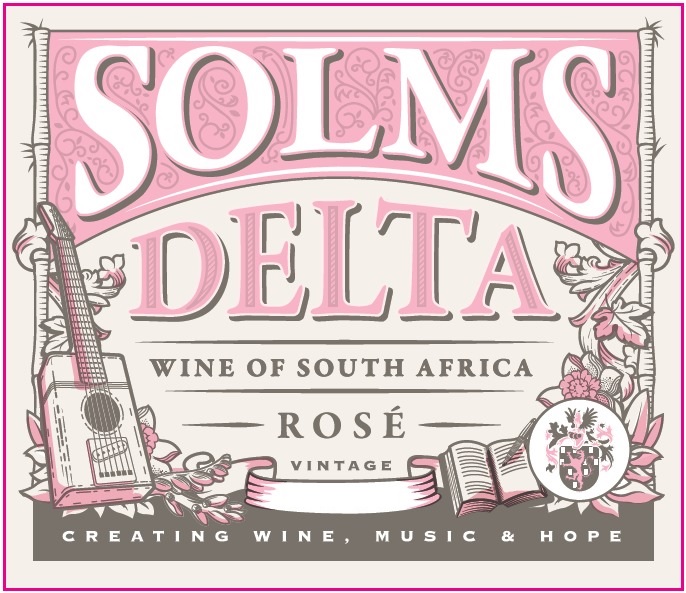
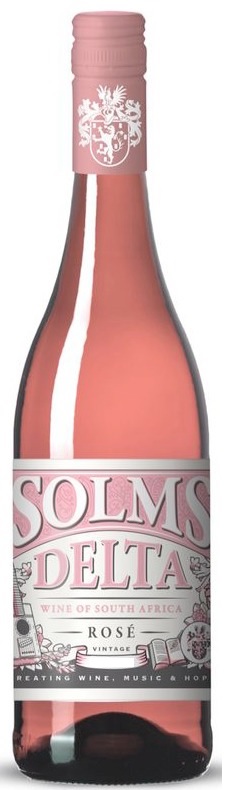
" We don't sell the wine without touching the vine "
| Country: | South Africa |
| Region: | Western Cape |
| Winery: | Solms Delta Winery |
| Grape Type: | Grenache |
| Vintage: | 2016 |
| Bottle Size: | 750 ml |

All older vintage wines have been purchased from a single collectors cellar. Pictures can be requested before shipment.
This is a 6 pack with 2 bottles each from vintages from 2013, 2015, and 2016.
***Tenimenti Angelini Val di Suga Vigna Spuntali Brunello di Montalcino 2016:
The 2016 Vigna Spuntali Brunello di Montalcino is the most brooding of the lineup from Val di Suga and is sourced from the southwest of the region on sandy soils. There are aromatics of black raspberry, licorice, menthol, sage, cinnamon, and iron-rich earth. Its Mediterranean influence is felt on the palate with ripe black cherry, dried herbs, and sun-baked earth. This is the fullest bodied and most savory of the Val di Suga lineup, with more roundness and grip. Its structure will benefit from cellaring for several years and will be great drinking over the next 20 years or more. 2026-2040.
-Jeb Dunnuck 96 Points
***Tenimenti Angelini Val di Suga Vigna Spuntali Brunello di Montalcino 2015:
The 2015 Vigna Spuntali Brunello di Montalcino is more introverted on first opening, with notes of black plum, licorice, dried Mediterranean herb, and sun-baked earth. On the palate, it offers a tart dried fruit character, with a building tannin structure that finishes with tomato leaf, and bitter herbs. The most rustic and burly of the wines in the lineup of the 2015 Val di Suga vintage, it will benefit from allowing some time in cellar to see how this matures and its tarriness develops. Drink 2026-2036
-Jeb Dunnuck 94 Points
***Tenimenti Angelini Val di Suga Vigna Spuntali Brunello di Montalcino 2013:
Plenty of spices and fresh herbs on the nose, such as dried rosemary and nutmeg, to match the underlying dried redcurrants and cranberries. Full-bodied with plenty of concentration, but still shows a very sturdy, tannin backbone and punchy acidity, to drive this through to a long finish. Drink in 2021.
-James Suckling 94 Points
This dry Rosé is very aromatic on the fruitiness with a great style and elegance.
Average age of the vines is 25 years old.
We produce a part of this cuvee with 12 hours skin maceration and another part from directly pressed grapes.
Wine was slightly filtered before bottling to insure the wine remains stable.
This wine is the perfect friend for barbecue, salads and of course aperitif. This is ideal for warm days in the garden, as well as elegant poultry dishes.
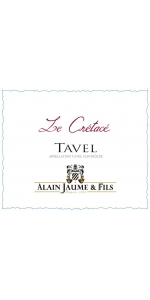
Alain Jaume Tavel Rose Le Cretace is made from 60% Grenache, 30% Syrah and 10% Mourvedre
Rosé de saignée (bleed technique) with a vibrant ruby color, complex and elegant, notes of crushed strawberries and rose petals.
Tavel Le Cretace Rose gives up vibrant wild strawberry, watermelon, crushed flowers and hints of spice to go with a medium-bodied, layered and seamless profile on the palate. A classic rose from this appellation, enjoy this beauty with food over the coming year or two.
Pair with roasted and/or spicy Turkey, sushi, seafood and grilled fish, Asian food.
Alain Jaume Tavel Rose Le Cretace is made from 60% Grenache, 30% Syrah and 10% Mourvedre
Rosé de saignée (bleed technique) with a vibrant ruby color, complex and elegant, notes of crushed strawberries and rose petals.
Tavel Le Cretace Rose gives up vibrant wild strawberry, watermelon, crushed flowers and hints of spice to go with a medium-bodied, layered and seamless profile on the palate. A classic rose from this appellation, enjoy this beauty with food over the coming year or two.
Pair with roasted and/or spicy Turkey, sushi, seafood and grilled fish, Asian food.

No Syrah terroir in Sonoma County compares with Sonoma Mountain’s northwest crown—cool fog-affected mornings, sun-bathed afternoons, cooled by persistent coastal breezes, and temperate evenings. The soils in Steiner’s Syrah blocks — ashy and moondust-like, littered with decomposing sea bed — further contribute to the unique nature of this site. After a 3-vintage hiatus, I am thrilled to be back working with Steiner Vineyard’s Syrah. By its nature, this slow-to-ripen, cool-climate site produces fabulously deep, intense, structured wines. Now, raising a big, brawny Syrah is no rare act of alchemy. It is the wonder of Steiner’s terroir — a magical elegance and beauty, informing the inherent power, depth and intensity — that makes this bottling so special. 2016 produced a classic wine that deftly balances massive flavors and texture, while retaining vital freshness, and a palpable sense of cool. Production was low, so get it while you can. Simply a “WOW” wine, not to be missed.
VINEYARD: Steiner Vineyard. Located at 1,100 ft, on the northwest crown of Sonoma Mountain. CRUSH: Early morning harvest by hand, October 1st, cluster and berry sorted, destemmed and crushed. FERMENT: 5-day cold soaks, followed by 14 day native fermentation in open-top bins. AGING: 20 months, French oak, 100% new, mixture of 300L hogsheads and barrique shapes. Never racked prior to bottling. Bottled unfined, unfiltered.
Review:
"Refined and stylish, featuring a complex core wrapped in multilayered blackberry and blueberry flavors, laced with bitter chocolate, black licorice and smoky meat notes. Drink now through 2030.- Tim FISH"
- Wine Spectator Insider (January 15th 2020), 93 PTS
Tasting Notes:
The wine has a focused palate, supported by concentrated fruit and a mineral core. The nose shows bright red fruit with raspberry, strawberry and apple notes. Alluring light salmon color.
Label Detail:
Celebrating Solms-Delta’s rich history, this wine is nicknamed “Lekkerwijn”. The back label tells the story of the farm adjoining Delta, now largely incorporated into it. The first owner, Henri l’Ecrévent, was granted the property in 1690. Locals, unable to pronounce his name, solved the problem by dubbing him Arie Lekkerwijn. He was slain nine years later by the first owner of Delta, Hans Silberbach, who then took flight and was never seen again.
Grape Varietals: 100% Grenache Noir
Style of Wine: Dry rosé
Vinification: The grapes were given overnight skin contact to extract color and flavour and then gently pressed to extract only the best juice. The wine was then tank fermented at cool temperatures to optimise fruit expression.
Maturation: The wine was aged on the lees in tanks for 6 months
Alcohol 13% Vol
Residual Sugar 2.14 g/l
Total Acidity 5.3 g/l
pH 3.28
It’s an ideal lunch-time wine, and a perfect partner for smoked salmon, poultry, cold ham and nutty-style hard cheeses.
Produced by Solms-Delta (Pty) Ltd, which is a joint venture between the Solms and Astor families and the Wijn de Caab Trust, the beneficiaries of which are the historically disadvantaged residents and employees of Delta farm and its environs.
The South African roots of world-renowned neuroscientist Professor Mark Solms brought him back home in 2002 to revitalise the historic Delta wine estate … and to fundamentally rethink Cape wine-making traditions in the process.
Solms assumed custodianship of the 320-year-old estate with a vision that went much deeper than re-establishing its vineyards and cellars. He also wanted to do something about the legacy of his European forebears (who had settled in the Cape six generations before) and thereby address the pressing social and economic problems facing South Africa today.
First he planted Rhône varietals, ideally suited to the dry, hot and windy ‘Mediterranean’ climate of the Franschhoek Valley. Then he and the winemaker Hilko Hegewisch introduced desiccation – a largely forgotten, ancient mediterranean vineyard practice.
The result is a stable of wines that delivers a new, uniquely South African style. These are classical wines with a difference: made from grapes desiccated on the vine in the manner of the ancient Greeks, using selected French varietals that are known to thrive in Mediterranean climes, intelligently blended with the tried-and-tested favourite grape varietals of the old Cape. The wines offer a cascade of tastes and styles, all with a distinctive sense of place.
Label Detail:
Nicknamed “Vastrap” ( meaning “trample”) after the style of music which unites Khoesan trance-dance with Dutch folk music. Played on any instrument such as concertinas, homemade violins, banjos and ‘blik-kitaars’. The traditional excuse for a Vastrap party was the trampling of a newly laid cow-dung floor; but the ancestors are said to have preferred the open air.
Beatus began with a dream and a friendship. Our dream was to make wine in Châteauneuf du Pape, one of the first regions to inspire the desire to pursue winemaking in general, and of working with Grenache in particular.
We developed a long-standing friendship with Anne-Charlotte Melia-Bachas, Proprietor of Chateau de la Font du Loup, who approached us with the idea to craft a wine together a number of years ago.
This has all come to fruition with Beatus, a wine that we have decided to make ongoing, every year — since tasting the exciting results of the first vintage in barrel.
The vineyard parcel selected for this wine is a single plot of 80-year old Grenache at the top of La Crau in Châteauneuf du Pape, the highest location in the AOC. It sits on a north-facing slope that helps guard against the sometimes intense summer heat that can affect the surrounding areas.
This plot is called “Le Poteau” and has been generously granted to us by Anne-Charlotte as the core of this wine, with supplementation of Syrah and Mourvèdre from surrounding parcels also grown on the Chateau de la Font du Loup estate, to round out the blend.
The winemaking is directed by myself and carried out by Anne-Charlotte, Stéphane Dupuy d’Angeac and their team. It is our hope to bring you one of the finest expressions of Grenache from this special region each and every vintage.
Yields from this block are very small due to the age of the vines, therefore only up to 100 cases of Beatus will be produced each year, depending on the conditions of the vintage.
Our first release was in November of 2022.
– Winemaker Todd Alexander
Review:
Made in collaboration with Chateau de la Font Du Loup, the 2020 Beatus is an extraordinary bottling that rivals some of the top wines of this region. The nose is hugely perfumed with red rose petals, potpourri, sage and shades of red currants. The palate displays the same level of concentration as it does on the bouquet. Beautiful guava and ripe strawberry fruits parade with copious minerals and a sinfully good texture on the palate. Fresh and vibrant, this is just sensational stuff to enjoy in its heady youth.
Owen Bargreen 97 Points
Long Shadows Feather Cabernet Sauvignon is made from 100 percent Washington State Cabernet.
Acclaimed Napa Valley vintner Randy Dunn has a reputation for producing world-class Cabernet Sauvignon. He brings more than four decades of winemaking experience to the Columbia Valley to produce Feather, his only wine made outside of California.
Tasting Notes: Deep crimson colored with pure and expressive Cabernet Sauvignon character. Generous aromas and flavors of dark fruits, violets, coffee and toasted herbs combine with a textured mid-palate to deliver a big, yet focused, wine with polished tannins and persistent finish.
Winemaking: Grapes were hand-harvested at the peak of ripeness, then lightly crushed and fermented in small stainless steel tanks. Once fermentation was underway, the cap was pumped over aggressively to extract color and structure. As fermentation neared completion, pump overs were handled more gently to further extract color and flavors without imparting harsh tannins. The finished wine was aged 22 months in 90% new Vicard French oak barrels (Randy's cooper of choice at Dunn Vineyards as well).
-Review:
A stunning wine from 2022, the Long Shadows ‘Feather’ comes from Sonnet Vineyard as well as Bacchus and Dionysus Vineyards. This cool vintage beauty really needs several hours in the decanter to be fully evolved right now. On the nose this takes on bay leaf and red bell pepper alongside cassis and shades of black licorice. The palate is lush and dense with a terrific mouthfeel and smooth texture. Considering the coolness of the vintage, this has a beautiful combination of finesse, viscosity and flavor density. Drink 2025-2040-
Owen Bargreen 95 Points