" We don't sell the wine without touching the vine "
| Country: | South Africa |
| Region: | Western Cape |
| Winery: | Solms Delta Winery |
| Grape Type: | Grenache |
| Vintage: | 2016 |
| Bottle Size: | 750 ml |

All older vintage wines have been purchased from a single collectors cellar. Pictures can be requested before shipment.

This is a 6 pack with 2 bottles each from vintages from 2013, 2015, and 2016.
***Tenimenti Angelini Val di Suga Vigna Spuntali Brunello di Montalcino 2016:
The 2016 Vigna Spuntali Brunello di Montalcino is the most brooding of the lineup from Val di Suga and is sourced from the southwest of the region on sandy soils. There are aromatics of black raspberry, licorice, menthol, sage, cinnamon, and iron-rich earth. Its Mediterranean influence is felt on the palate with ripe black cherry, dried herbs, and sun-baked earth. This is the fullest bodied and most savory of the Val di Suga lineup, with more roundness and grip. Its structure will benefit from cellaring for several years and will be great drinking over the next 20 years or more. 2026-2040.
-Jeb Dunnuck 96 Points
***Tenimenti Angelini Val di Suga Vigna Spuntali Brunello di Montalcino 2015:
The 2015 Vigna Spuntali Brunello di Montalcino is more introverted on first opening, with notes of black plum, licorice, dried Mediterranean herb, and sun-baked earth. On the palate, it offers a tart dried fruit character, with a building tannin structure that finishes with tomato leaf, and bitter herbs. The most rustic and burly of the wines in the lineup of the 2015 Val di Suga vintage, it will benefit from allowing some time in cellar to see how this matures and its tarriness develops. Drink 2026-2036
-Jeb Dunnuck 94 Points
***Tenimenti Angelini Val di Suga Vigna Spuntali Brunello di Montalcino 2013:
Plenty of spices and fresh herbs on the nose, such as dried rosemary and nutmeg, to match the underlying dried redcurrants and cranberries. Full-bodied with plenty of concentration, but still shows a very sturdy, tannin backbone and punchy acidity, to drive this through to a long finish. Drink in 2021.
-James Suckling 94 Points

This dry Rosé is very aromatic on the fruitiness with a great style and elegance.
Average age of the vines is 25 years old.
We produce a part of this cuvee with 12 hours skin maceration and another part from directly pressed grapes.
Wine was slightly filtered before bottling to insure the wine remains stable.
This wine is the perfect friend for barbecue, salads and of course aperitif. This is ideal for warm days in the garden, as well as elegant poultry dishes.

Alain de la Treille Rose d'Anjou is made from 50% Gamay, 50% Grolleau
The Rosé d'Anjou AOC, also known as Anjou Rosé AOC, produces medium-sweet rosés. Wines are made predominantly from Grolleau, with percentages of Cabernet Franc, Cabernet Sauvignon, Gamay, Malbec and Pineau d'Aunis permitted. Anjou soils reflect the geological identity of its border position between Armorican and Parisian basins. The terroirs consist of metamorphic and crystalline rocks (schist, sandstone) known as Anjou Noir, and ‘Terres Blanches’ (white earth) limestone known as Anjou Blanc. The AOC covers 1,890 hectares (4,668 acres).
The Grolleau grape derives its name from the French word ‘grolle’, meaning crow – a reflection of the dark black color of the grapes.
Crisp and refreshing with vibrant aromas of strawberry and raspberry. Juicy and well-balanced with a long finish.
Selective juice extraction to preserve color & aromas. Temperature controlled fermentation is followed by aging on the fine lees. No malolactic fermentation; no oak.
To be served chilled (10°C/50°F) with barbecued meats, salads, any spicy food, poultry dishes and of course appetizers.

Alain Jaume Bellissime Cotes du Rhone Rose is made from 50% Grenache Noir, 25% Cinsault, 20% Syrah and 5% Mourvedre
Salmon-pink color, clear and brilliant. The nose is fruity and spicy, reminiscent of wild strawberry and fine Provencal spices. The palate is full, well-balanced and fruity, with a long, fresh finish. A beautiful and delicate rosé.
A part is drawn off the skins with short maceration and the other part is from direct press. Fermentation in stainless steel at cool temperature. Bottling 5 months after harvest.

Alain Jaume Tavel Rose Le Cretace is made from 60% Grenache, 30% Syrah and 10% Mourvedre
Rosé de saignée (bleed technique) with a vibrant ruby color, complex and elegant, notes of crushed strawberries and rose petals.
Tavel Le Cretace Rose gives up vibrant wild strawberry, watermelon, crushed flowers and hints of spice to go with a medium-bodied, layered and seamless profile on the palate. A classic rose from this appellation, enjoy this beauty with food over the coming year or two.
Pair with roasted and/or spicy Turkey, sushi, seafood and grilled fish, Asian food.
Tasting Notes:
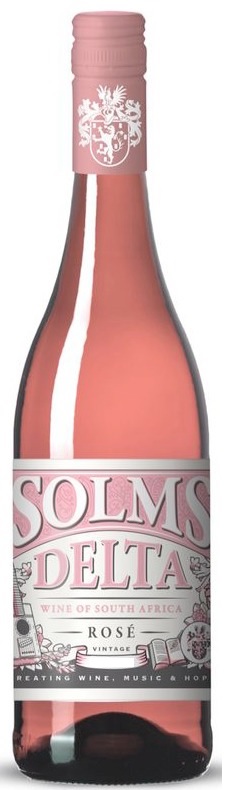
The wine has a focused palate, supported by concentrated fruit and a mineral core. The nose shows bright red fruit with raspberry, strawberry and apple notes. Alluring light salmon color.
Label Detail:
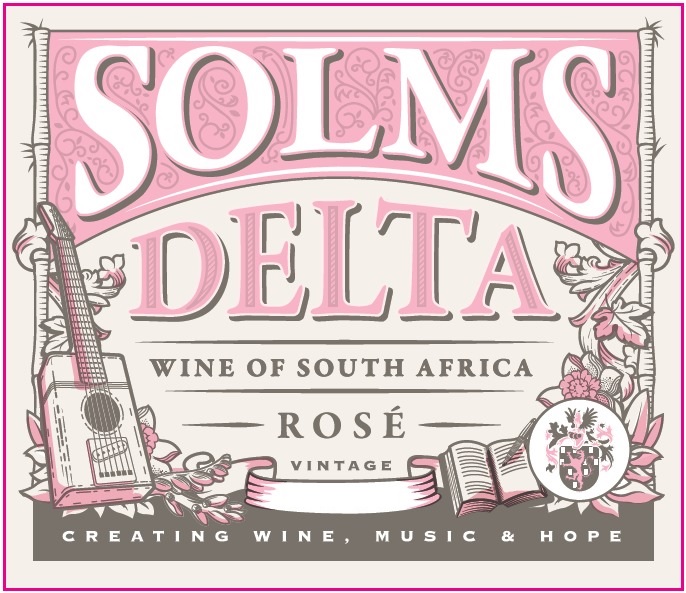
Celebrating Solms-Delta’s rich history, this wine is nicknamed “Lekkerwijn”. The back label tells the story of the farm adjoining Delta, now largely incorporated into it. The first owner, Henri l’Ecrévent, was granted the property in 1690. Locals, unable to pronounce his name, solved the problem by dubbing him Arie Lekkerwijn. He was slain nine years later by the first owner of Delta, Hans Silberbach, who then took flight and was never seen again.
Grape Varietals: 100% Grenache Noir
Style of Wine: Dry rosé
Vinification: The grapes were given overnight skin contact to extract color and flavour and then gently pressed to extract only the best juice. The wine was then tank fermented at cool temperatures to optimise fruit expression.
Maturation: The wine was aged on the lees in tanks for 6 months
Alcohol 13% Vol
Residual Sugar 2.14 g/l
Total Acidity 5.3 g/l
pH 3.28
It’s an ideal lunch-time wine, and a perfect partner for smoked salmon, poultry, cold ham and nutty-style hard cheeses.
Produced by Solms-Delta (Pty) Ltd, which is a joint venture between the Solms and Astor families and the Wijn de Caab Trust, the beneficiaries of which are the historically disadvantaged residents and employees of Delta farm and its environs.
The South African roots of world-renowned neuroscientist Professor Mark Solms brought him back home in 2002 to revitalise the historic Delta wine estate … and to fundamentally rethink Cape wine-making traditions in the process.
Solms assumed custodianship of the 320-year-old estate with a vision that went much deeper than re-establishing its vineyards and cellars. He also wanted to do something about the legacy of his European forebears (who had settled in the Cape six generations before) and thereby address the pressing social and economic problems facing South Africa today.
First he planted Rhône varietals, ideally suited to the dry, hot and windy ‘Mediterranean’ climate of the Franschhoek Valley. Then he and the winemaker Hilko Hegewisch introduced desiccation – a largely forgotten, ancient mediterranean vineyard practice.
The result is a stable of wines that delivers a new, uniquely South African style. These are classical wines with a difference: made from grapes desiccated on the vine in the manner of the ancient Greeks, using selected French varietals that are known to thrive in Mediterranean climes, intelligently blended with the tried-and-tested favourite grape varietals of the old Cape. The wines offer a cascade of tastes and styles, all with a distinctive sense of place.
Label Detail:
Nicknamed “Vastrap” ( meaning “trample”) after the style of music which unites Khoesan trance-dance with Dutch folk music. Played on any instrument such as concertinas, homemade violins, banjos and ‘blik-kitaars’. The traditional excuse for a Vastrap party was the trampling of a newly laid cow-dung floor; but the ancestors are said to have preferred the open air.

Avennia Sestina Cabernet Sauvignon is made from 77% Cabernet Sauvignon, 17% Merlot, 6% Cabernet Franc.
The story of this wine - The Sestina is an ancient form of poetry from Medieval France. Just as a modern poet can fill this form with new expressions, Avennia uses the traditional Bordeaux blend to express Washington. Sestina is their vision for an old vine, complex blend where all of the components complement each other. This wine is designed for the cellar, so the emphasis is on structure, balance, and complexity.
Winemaker Tasting Notes - “Good deep ruby/garnet color, with aromas of black cherry, fresh black currant, dark mocha, cigar box, and graphite. The palate is lively and dense with mountain berries, mocha, vanilla honey, damp earth, and wildflowers. The finish shows a distinct chalky minerality and beautiful tension. This is a classically balanced and ageworthy Sestina. Drink 2025-2040.” - Chris Peterson, Winemaker
Review:
"The Cabernet Sauvignon-dominated release from Peterson, the 2017 Sestina comes from the Red Willow, Bacchus, and Dionysus vineyards. Rocking levels of crème de cassis, sappy herbs, violets, and cedar pencil all flow to a full-bodied, incredibly pure, polished 2017 that offers flawless balance, ripe tannins, and a great, great finish. It's more approachable than normal yet is still going to evolve for 15 to 20 years. The blend is 77% Cabernet Sauvignon, 17% Merlot, and the rest Cabernet Franc, all raised 20 months in 50% new French oak."
- Jeb Dunnuck (April 2020), 95 pts

Bachelet Bertrand Saint-Aubin Premier Cru En Remilly is made from 100 percent Chardonnay.
Saint-Aubin is situated in the heart of the Côte des Blancs, between Chassagne-Montrachet and Puligny-Montrachet; both white and red wines are produced here but Chardonnay remains predominant. The Saint-Aubin appellation covers a wide area, with an altitude ranging from 300 to 450 meters, and with very varied expositions and soils, which makes each climat unique.
Saint-Aubin En Remilly is located in the south-east of Gamay, a hamlet near the village of Saint Aubin and next to the Puligny-Montrachet and Chassagne-Montrachet appellations. This area benefits from a south-western exposition.
The wine offers a pale yellow color, with gold nuances; a mineral nose, a dense texture on the palate, bringing together substance and tension.
Perfect as an aperitif, pairs very well with firm-textured fish or with shellfish.