
" We don't sell the wine without touching the vine "
| Country: | France |
| Region: | Bordeaux |
| Winery: | Suau |
| Grape Type: | Cabernet Sauvignon |
| Organic: | Yes |
| Vintage: | 2016 |
| Bottle Size: | 750 ml |

Avennia Red Willow Cabernet Sauvignon is made from 100% Cabernet Sauvignon.
The Red Willow Cabernet is a true blockbuster.
Coming from one specific block of 30 year old vines at this iconic vineyard, then strictly barrel selected, this is the essence of powerful, old vine Washington Cabernet. After all of our efforts promoting the idea of the Bordeaux blend, it would take a pretty compelling argument to suspend that idea and make a 100% varietal Cabernet. In 2016 Red Willow provided us with just that. Each time we tasted it in the barrel, the belief grew that this was something special. Something we can't make every year. In the end we were won over, and decided to make a limited amount of this wine. But don't be fooled, as this too is a blend and a selection. Each year as we are tasting the grapes as harvest approaches, we notice that the vines near the bottom of this long, steep west-facing slope, are a little different. The vines at the bottom are in a little richer soil, and get a little more water, so we pick them separately, sometimes even a week or ten days apart, and keep them separate in barrel.
This wine is all from the top of the vineyard, with its lower yield and poorer soils giving more concentration and interest. Then further, nearly every combination of new and used French oak barrels were trialed to find the best blend. It's not enough just to use the four best barrels, but to trial each combination to see how they complement each other. For a wine with this much mass, 100% new French oak was used for the first time at Avennia. It is a wine that needs a little cellaring to start, but should last a very long time.
Review:
"The 2016 Cabernet Sauvignon Red Willow Vineyard is 100% Red Willow Cabernet Sauvignon that will spend roughly 20 months in close to 100% new French oak. Blackcurrants, smoked herbs, chocolate, and graphite notes all give way to a full-bodied, plump, rich, concentrated effort that's going to be better with short-term cellaring and keep for two decades."
- Jeb Dunnuck (April 2018), 94-96 pts
Avennia Valery Red Blend is made from 86% Merlot and 14% Cabernet Franc
Valery is named for the patron saint of wine in the St. Emilion region that inspired it.
We started with old vine Merlot from a stony block in the heart of the Yakima Valley and added complex, aromatic Cabernet Franc from the Horse Heaven Hills. The result is a balanced, complex wine with the elegance and ethereal perfume that this blend of two of Washington’s best varietals are known for.
The nose on this wine is very perfumed, almost exotic with notes of fresh violets, red plum, winter mint, fresh herbs and crushed limestone qualities. The palate is poised and balanced, with red fruits and mocha powder encapsulated in limestone. The finish lingers delicately, with the Cabernet Franc asserting a light tobacco and herb note, giving depth. A compelling wine that will continue to unwind for 7-10 years in the cellar.
Review:
"Brought up in 30% new French oak, the 2016 Valery (70/30 Merlot and Cabernet Franc) offers more black cherry and earthy, herbal notes as well as a medium-bodied, seamless, beautifully balanced style. It too shows a vibrant, fresh, yet concentrated style that has a Bordeaux feel in its weight and texture."
- Jeb Dunnuck (April 2019), 93 pts
"Good medium-dark red. Aromas of blueberry, mocha, licorice and violet are a bit darker than those of the 2015 version. Dense and penetrating, with wild flavors of dark berries, licorice and game given lift by rocky minerality and a minty nuance. Chris Peterson slightly acidified his Cabernet Franc from Champoux Vineyard, which he added to the wine for richness. This beauty may yet tighten up in the bottle.- Stephen Tanzer"
- Antonio Galloni's Vinous (November 2018), 92+ pts
Chateau Bourdieu Absolu Blaye Cotes de Bordeaux is made from 79% merlot, 17% Cabernet Sauvignon, 4% Malbec.
When Luc Schweitzer was joined by his two sons Richard and Ludovic at the estate, he wanted to embrace this new chapter in the family history and launched in 2016 a special cuvée from Château Bourdieu called "Absolu". This top-of-the-range cuvée is the best of what their terroir has to offer. The 35 year-old facing south vines benefit from a meticulous care: regular maintenance of the soil, yield control, manual leaf stripping, sorting of the berries - all practices that ensure the quality of this great Bordeaux wine.
A deep garnet color with magnificent purple highlights. The nose is intense and full, revealing notes of ripe black fruits and subtle hints of vanilla and roasted coffee. Great structure with finesse and tannic density that brings depth and length to the mouth. The aromatic purity of the perfectly ripened grape varieties is magnified by the complex and subtle oak flavors.
Pair: Rib of grilled beef and tournedos Rossini - butter pan-fried beef filet served on a crouton, and topped with a hot slice of fresh foie gras.
Review:
"A rich, opulent wine, this is full of dark tannins and powerful fruit. It's a big wine, with licorice and dense wood flavors that give a smoky character and reflect some serious extraction. The wine needs to smooth out to showcase its concentrated richness. Drink from 2024. - Roger VOSS"
- Wine Enthusiast (May 2021), 91 pts
Larroque Bordeaux Blanc is made from 73% Sauvignon Blanc and 27% Colombard.
No oak.
Color : Pale yellow with green tints.
Nose : Complex aromas of white flowers, exotic fruits, citrus and boxwood, with a touch of minerality.
Mouth : Aromatic, with a nice richness and freshness. Predominant flavors of tart, crisp fruit.
Marie-Christine, the daughter of Henri Ducourt, purchased this prestigious left-bank property in 1979, which lies on the border of the Graves appellation.
The 60-hectare vineyard was rapidly replanted and the château building, which dates from 1348, was restored.
Our family now produces three different-colored wines there: red, white and rosé.
Grown on loamy-clay soil.
Harvest : Machine harvesting in the cool, early morning
Maceration : Skin-contact maceration for several hours, depending on ripeness, and pressing
Fermentation : Beginning of the cold alcoholic fermentation (12°C / 53°F) then an increase in temperature to finish the fermentation at 20°C / 68°F.
Enjoy this wine as an aperitif or during the meal with fish, seafood or chicken salad.
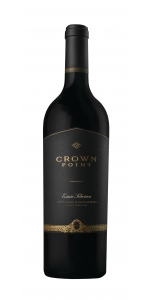
Crown Point Estate Selection is made from 75% Cabernet Sauvignon, 10% Merlot, 6% Petit Verdot, 6% Cabernet Franc, 3% Malbec.
The 2016 Crown Point Estate Selection exhibits a heady aromatic array of baking spices, ripe red and black fruits, with deep intonations of earth and minerals. The palate is elegant and bright, with appealing acids and nuanced notes of savory mocha and dried herbs. Polished and seamless, the tannins finish with a comet-like trail of textural opulence highlighted by glossy flavors of baked berry pie and warm toast. Recommended drinking window: now through 2030s.The 2016 Estate Selection is representative of all five red Bordeaux varieties. The selection process starts in the vineyard and continues on through the winemaking process: only the best lots make the final blend. All blocks were harvested & fermented separately. The individual components were blended after 12 months in barrel. Total time in 225 liter French oak barrels was 26 months.
Review:
Deeply colored, the 2016 Estate Selection checks in as 75% Cabernet Sauvignon, 10% Merlot, 6% Petit Verdot, 6% Cabernet Franc, 3% Malbec that was brought up 26 months in 75% new French oak. Deeply colored, it has a smoking good bouquet of crème de cassis, smoke tobacco, lead pencil, camphor, and hints of chocolate. This gives way to a powerful, opulent Cabernet Sauvignon that has plenty of sweet tannins, a layered, multi-dimensional texture, no hard edges, and an awesome finish. I’d happily put this beauty in a lineup of top Napa Valley Cabernet Sauvignon and blends.
-Wine Enthusiast 97 Points
There’s an impressive amount of complexity on the nose of this bottling by winemaker Adam Henkel, from crushed graphite and concentrated black strawberry to cinnamon pastry, licorice and a brush of herbs. The sip is intense, with leathery but chiseled tannins presenting flavors of charred black currant, licorice, black olive, dried flower and white pepper
-Jeb Dunnuck 97 Points
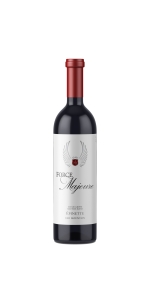
Force Majeure Epinette is made from 46% Merlot, 35% Cabernet Franc, 16% Cabernet Sauvignon, 3% Petit Verdot.
Epinette is Force Majeure's Right-bank Bordeaux-inspired blend, and was named after an avenue in Libourne (France) that leads to Pomerol and Saint-Émilion, the home of Merlot and Cabernet Franc. Epinette is also the name of a musical instrument akin to a piano, as well as a word for pine tree, which is a fitting nod to their home in Washington state.
The wine itself is a blend of primarily Merlot and Cabernet Franc, with smaller amounts of Cabernet Sauvignon and Petit Verdot, proportions of which change depending on the vintage. The Merlot and Cabernet Franc are grown in lower areas of the vineyard with deep, well-drained soils, much less rocky than the soils of our Rhone varietals.
Review:
"I loved the 2016 Epinette from barrel, and it certainly doesn't disappoint from bottle. Sporting a deep purple color as well as a huge bouquet of blackcurrants, black cherries, smoked earth, chocolate, and cedary spice, this flamboyant, powerful beauty hits the palate with loads of fruit, has sweet tannins, no hard edges, building tannins, and a huge finish. It's one seriously pleasure-bent effort that has another 10-15 years of prime drinking." - Jeb Dunnuck (April 2019), 96+ pts
Very aromatic wine, strawberry and raspberry nose. Fresh, fruity and well balanced on the palate.
Press out of the Cabernet, fermentation in regulated stainless steel tanks at low temperature. Early release.
This wine is excellent as an apetizer and pairs well with a range of dishes.
The Chateau Suau Estate
Hidden behind a row of 100-year-old oaks, Chateau Suau was once the hunting lodge of the Duc d'Epernon. It was restored in the 16th century and in 1687, during the reign of Louis XVI, the chateau was owned by the Suau family of Capian. Monique Bonnet purchased the Château in 1986. She lends her impeccable style and elegance to this Bordeaux estate that represents a great value in today’s French wine market.
Important changes have been implemented at Chateau Suau since 2008 :
1/ A change in the AOC. From the 2008 vintage on, Chateau Suau's « Premieres Cotes de Bordeaux » will now be known as « Cotes de Bordeaux and « Cotes de Bordeaux -Cadillac ».
There will no longer be « Premières Cotes de Bordeaux »
Château Suau will use the appellation "Cadillac" on its labels due to its area of production. This "village" appellation lends itself to its enduring notoriety and the image that it represents. As with its namesake, the luxury Cadillac, this wine is the "Cadillac" of wines!
As a result of these changes, all the labels and packaging have been redesigned to reflect the new appellations. These labels will be a reflection of the strong and symbolic identity with Cadillac. This AOC is made with a rigorous set of specifications, which allow it to be named after the village of Cadillac.
Chateau Suau Tradition "Premieres Cotes de Bordeaux" becomes Chateau SUAU Cotes de Bordeaux
Chateau Suau Prestige "Premieres Cotes de Bordeaux" becomes Chateau SUAU Cotes de Bordeaux - Cadillac
2/ Since 2008, Chateau Suau has been converting its vineyard to organic agriculture techniques. Certified by Ecocert, sensitive to environmental problems and consumer-concerns, this healthy, progressive and sensitive conversion will be completed in the year 2012. This action also stays true to Chateau Suau's history for exceptional quality as it was once the home of Joseph Guenant, Vice President of the Agricultural Society.
Chateau Suau is one of the first vineyards of Bordeaux to start its ISO 14 001 certification. This process begins by implementing an EMS, Environnemental Management System (SME in French) of the wines of Bordeaux, intiated by our CIVB. The EMS aims to reduce the impact of wine production on the environment while improving overall productivity.
This environmental management tool integrates both energy consumption, the sorting and recycling of waste, methods of pest control, cropping patterns, health and safety of employees, residents and consumers.....We feel that these changes complement perfectly with our approach to an organic farming culture.
The Chateau Suau Vineyard
The vineyard is situated in the Cotes de Bordeaux-Cadillac appellations, and encompasses 65 hectares (160.55 acres) of red grapes: 10% Cabernet Franc, 55% Merlot and 35% Cabernet Sauvignon; and 7 hectares (17.3 acres) of white grapes: 50% Sémillon, 30% Sauvignon, and 20% Muscadelle. The vines, planted in gravel and clay "terroir", benefit from favorable south-south east facing slopes and plateaus.
The vineyard is farmed with the culture raisonnée method, in conversion to an organic farming. The soil has a gravel and clay base. The red wines are aged in a combination of French oak barrels. No oak is used for the dry white wine produced.
My First comment tasting this wine is "wow!" It's delicious; our flagship wine at Paradigm and it delivers. Dense, deep, ripe aromas of black berry and black cherry-like fruit layered with caramel and toastiness from a nice mix of French Oak barrels. Flavors coat the palate with matching notes in a classic Cabernet Sauvignon presentation. One of our best Cabs to date!
Paradigm Cabernet Sauvignon is made from 96% Cabernet Sauvignon, 3% Merlot , 1% Petit Verdot
Review:
"Owned and managed by the Harris family, Paradigm winery produced its first vintage in 1991 in Oakville with winemaker Heidi Barrett. A self-contained winery estate with 50 acres of vineyards, Paradigm maintains a hands-on approach to all winemaking and vineyard operations. The 2015 Cabernet Sauvignon consists of 89% Cabernet Sauvignon, 6% Merlot, 3% Petit Verdot and 2% Cabernet Franc, and is aged in both new and used French oak for 20 months, then aged a further 20 months in bottle before release. The total production for this vintage was 5,544 bottles." Blind tasted by Dave Allen, Stephen Brook, Terry Kandylis (at Decanter Magazine's December 2019 Californian Cabernet 2015 Panel Tasting, London, 17 Sep 2019)
- Decanter 95 Points
When we set out to produce Pinot Noir at Donelan Family Wines, we wanted to make a wine that embraces our favorite aspects of great Pinot from Sonoma County. The journey has taken us to the Two Brothers Pinot Noir where we believe terroir and technique have met at a beautiful crossroads. The composition of the Two Brothers wine is rooted heavily in Bennett Valley and Russian River Valley lending spice and earth to the nose, while the Sonoma Coast fruit gives an aromatic lift to the wine and brings length to the palate.
Named after siblings Tripp and Cushing Donelan, the Two Brothers Pinot Noir has become a fan favorite of our customers. It’s an extremely versatile wine. For one, it’s ready to drink upon release, but will also age beautifully for years if you throw a few bottles in your cellar. Our preferred food pairing with the Two Bros is always a game bird. Turkey, wings, quail, dove, or duck recipes are all super complimentary with this Pinot Noir’s dark fruit, spice, and freshness. We tend to recommend this wine for Thanksgiving every year.
Aromas recall a bouquet of rose petals and gingersnaps. A full, fleshy mouth-feel on the mid-palate with a beautiful fruit composition of plum sauce, cranberries, and fresh flowers.
Review:
Always a super-expressive wine, and in 2023 it truly delivers, showing pure, vibrant red fruit laced with brown baking spices and smoky clove. The palate is beautifully deep and penetrating, carrying impressive flavour intensity through to a long, mineral-driven, medium-bodied finish. Apple-skin tannins and savoury brown spice notes linger effortlessly, giving the wine both grip and persistence. Two Brothers is sourced from prime vineyard sites across Sonoma County, including Mardikian, Devoto, Bucher and Klopp in the Russian River Valley, along with Henry David Vineyard in Bennett Valley. The wine undergoes native fermentation, with 39% new French oak, and is aged for 17 months, incorporating approximately 16% whole clusters. - Jonathan CRISTALDI"
Decanter (January 5th 2026), 95 points



