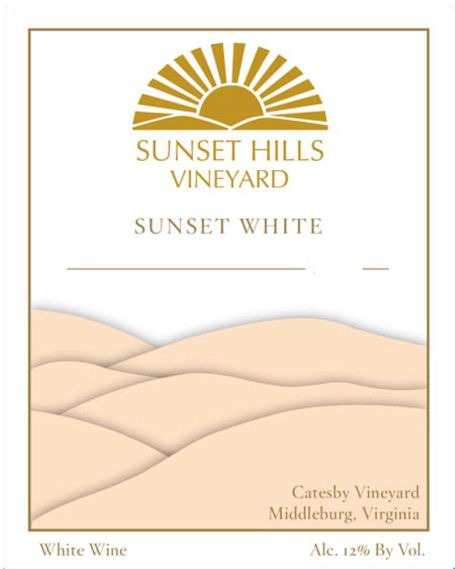
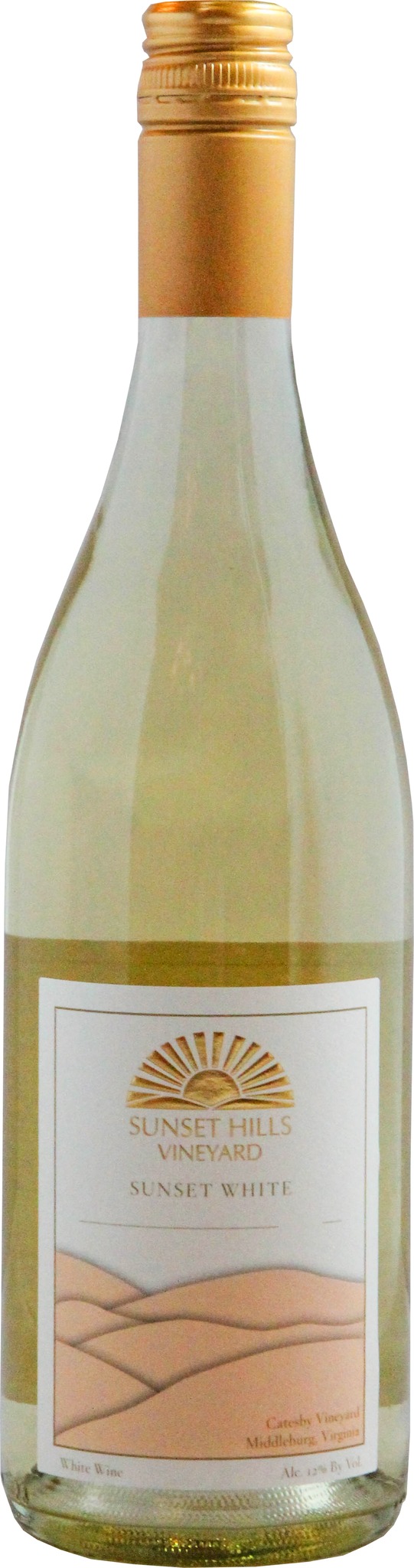
" We don't sell the wine without touching the vine "
| Country: | United States |
| Region: | Virginia |
| Winery: | Sunset Hills |
| Grape Type: | Traminette |
| Organic: | Yes |
| Vintage: | 2017 |
| Bottle Size: | 750 ml |

The 2021 Shafer Hillside Select is crafted exclusively from grapes grown on Shafer's rugged hillside vineyards, where steep, rocky soils push the vines to produce low yields of intensely concentrated fruit. The unique terroir, combined with Napa Valley's hallmark climate of warm, sunny days and cool nights, contributed to a vintage with exceptional structure, lush tannins, and deep, vibrant color. The 2021 growing season exemplified these conditions, allowing the grapes to mature beautifully by early September, resulting in a wine with refined, pure aromas and flavors that reflect the richness and elegance of the vineyard.
Review:
-The Wine Independent 100 Points
-Jeb Dunnuck 97-99 Points
-Joe Czerwinski (Robert Parker) 99 Points
-Decanter World Wine Awards 99 Points

Davila M100 White Blend Rias Baixas 2022 is made from Albariño, Caíño Blanco and Loureiro.
Adegas Valmiñor farms the O Rosal valley at the Atlantic edge of Rías Baixas, and the Davila range is where the winery showcases the native grapes of that corner of Galicia. The M100 is an O Rosal blend built around Albariño, rounded out with Caíño Blanco and Loureiro from the estate's older parcels.
The Albariño is cold-macerated and barrel-fermented in large French oak, aged three months on its lees with bâtonnage, then blended with the Caíño Blanco and Loureiro and given further time in tank. It is a richer, more structured Rías Baixas white — ripe orchard fruit and subtle spice over a firm mineral spine, deep and expressive on the palate.
Pairs beautifully with richer seafood, white meats, and creamy dishes.

Buccella Cuvee Katrina Eileen Napa Valley is made from 100% Cabernet Sauvignon.
Named after our first-born daughter, Cuvée Katrina Eileen is primarily composed of fruit from a vineyard in the Western Hills of Yountville, where yields are miniscule. The extremely rocky soil of the vineyard produces concentrated clusters of perfectly ripened Cabernet Sauvignon. In German, the name “Katrina” represents purity and fittingly, this wine is made entirely from the Cabernet Sauvignon grape, providing a pure expression of this decadent varietal. It also reflects our daughter’s personality with flavors that are complex, unreserved and expressive.
Always a 100% Cabernet blend, our 2017 Cuvée Katrina Eileen is an opulent and mouth-enriching wine. Captivated by the inky-black color, luscious scents of dark espresso and cinnamon stick leap out, along with powerful elements of graphite and cassis. Remarkably rich and seamless, while boasting flavors of blueberry compote, dark chocolate and black raspberries, this is a compelling and luxurious wine focused upon velvety texture, silky tannins and incredible length. An intentional breadth on the palate and length in the finish are hallmarks of this wine.

Force Majeure Epinette is made from 46% Merlot, 35% Cabernet Franc, 16% Cabernet Sauvignon, 3% Petit Verdot.
Epinette is Force Majeure's Right-bank Bordeaux-inspired blend, and was named after an avenue in Libourne (France) that leads to Pomerol and Saint-Émilion, the home of Merlot and Cabernet Franc. Epinette is also the name of a musical instrument akin to a piano, as well as a word for pine tree, which is a fitting nod to their home in Washington state.
The wine itself is a blend of primarily Merlot and Cabernet Franc, with smaller amounts of Cabernet Sauvignon and Petit Verdot, proportions of which change depending on the vintage. The Merlot and Cabernet Franc are grown in lower areas of the vineyard with deep, well-drained soils, much less rocky than the soils of our Rhone varietals.
Review:
-Jeb Dunnuck 95 Points
-Anthony Mueller (Robert Parker) 94 Points

Force Majeure Parvata is made from 69% Mourvedre, 21% Syrah, 10% Grenache (2016) / 43% Mourvedre, 25% Grenache, 23% Syrah, 4% Cinsault, 5% Counoise
Parvata means “mountain” in sanskrit, and is the name for this southern Rhône-inspired blend, grown mostly in the sandy, loamy soils of the lower section of the Red Mountain vineyard, which bring to the wine a good degree of finesse and high-toned aromatic notes, white pepper, dried herbs and grapefruit peel.
Review:
-Jeb Dunnuck 95 Points
-Anthony Mueller (Robert Parker) 95 Points

La Despensa Boutique Pool Blend 75% Cinsault, 15% Pais, 5% Marsanne and 5% Roussanne.
A genuinely unique wine - La Despensa is the only producer of Cinsault in Colchagua and Pais from this valley is also extremely rare! The Cinsault and the 2 whites come from a new vineyard planted in 2017 and the Pais from a 150 year old, dry-farmed vineyard in Pumanque about 20 minutes from the winery that they run themselves organically. The Cinsault and Pais give notes of raspberry and strawberry and the white Roussanne and Marsanne a little mouthfeel and a hint of tropical fruit.
Organically grown grapes (not certified) from our own vineyard in Santa Ana, and Pumanque in the Colchagua Valley. Irrigated as sparingly as possible via drip irrigation (dry-farming for the 150 year old Pais). Hand harvested and sorted personally by me in the vineyard (I personally check every single bunch), then destemmed with the crusher removed from the destemmer. Grapes are fermented in open top bins and concrete tank and blended immediately after pressing. MLF occurs with the wine already blended. Wines are racked in November and again in January before being bottled after about 10 months ageing in 50% neutral oak barrels and 50% Flextank.
Versatile, goes well with beef, chicken, pasta, great for Summer BBQs
Review:
-Robert Parker's Wine Advocate 90 Points
Pear, Pink Lady apple, and honeysuckle plant. A hint of sweetness to balance the acidity. Overall and super light wine!
Traminette, one of the hybrid grapes we grow is stellar in the vineyard. Picked early to avoid any overwhelming aromatics. It is consistent and produces a crisp, light wine.Handling: Hand-picked, chilled, destemmed. Skin: None. Fermentation 100% stainless steel. 10 - 15 years old vines.
Sunset Hills Vineyard, nestled in the foothills of the Blue Ridge Mountains, produces award winning, 100% Virginia wines from our Amish restored, historic winery. From the planting of the first vines in 1999, Mike and Diane Canney, owners of Sunset Hills Vineyard, had a vision of making fine wine of the highest quality in a manner which was gentle on the land. That vision is reflected in the sustainable farming practices employed today.
The original Sunset Hills was a very large and beautiful farm that later became Reston Virginia. Diane and I used to work very long hours in office buildings in Reston, looking out over the scenic landscape, dreaming that one day we would have a beautiful farm like that. Years later, after searching to find the perfect place for our vineyards and winery, Diane and I bought our first farm. Each evening, we would watch the sun set over the Blue Ridge mountains, talking about what grapes to plant, where to plant them and how we would do whatever it took to maximize quality. In 1999, the first vineyard was planted and we needed a name. We knew it could only have the name of the farm we had admired years before. Today, many of our customers and friends enjoy our wines on the 150 yr old farm, and enjoy watching the sun set over mountains. Sunset Hills Vineyard has been the perfect name!
After graduating from UVA in 2011, it was Corry’s love of travel that first led her to the wine industry. She soon found herself working the harvest in far off places like New Zealand, Australia, South Africa, and France, with a few closer to home in Oregon and Virginia. She called both King Family and Blenheim Vineyards in Charlottesville home for a while, working harvests and spending time in the lab learning the ins and outs on winemaking, but it was her stretch in Oregon that showed her this wasn’t just a job, but a way of life. Although she’s been tempted by opportunities in Sonoma, CA, her desire to start her career as a winemaker in her home state of Virginia has kept her planted close to home. It excites her that Virginia is still in the early experimental phase of winemaking, and she really believes in the quality of wine that can be crafted here. She’s already experimenting in the cellar, and we can’t wait to see the fruits of her labor as they unfold in the future. If she’s not drinking a Virginia Chardonnay, you’ll most likely find her with a glass of Pinot Noir in her hand. When she’s not in the cellar, she’s likely out hiking, playing her cello or gone for a run.
Vineyard names:
Sunset Hills (18 acres), 50 West (7 acres), Shenandoah Springs (23 acres), Sherman Ridge (13 acres), Catesby (17 acres).
Age of the vines: 1 - 20 years

“1752” is the name of the Damilano Barolo Cannubi Riserva, in honor of the year in which the historic bottle was first marked “Cannubi”. It still exists today perfectly conserved by the Manzone family in Bra, close to Barolo. The bottle is clearly marked as being of “1752” vintage, indicating that Cannubi historically precedes Barolo.
About the Vineyard:
The Cannubi Cru is in found within one of the 6 core zones which comprise a UNESCO heritage site in Italy. A mixture of Tortonian and Helvetian calcareous marl gives the grapes intense aromas of cherry, plum and tobacco, rose and violet in sequence. Its low potassium and high calcium/magnesium content offer the wine a fine and polished touch. The vineyard is located at about 270 m. a.s.l. and has a south-east sun exposure. Barolo Riserva Cannubi 1752 It is a small plot of about 2 hectares of Nebbiolo vines, currently between 30 and 50 years of age.
Tasting Notes:
Garnet ruby red in color, the bouquet is intense and balanced, with notes of violet, red fruit, cherry and plum, spices, liquorice, cocoa, leather and tobacco. Dry, robust, full-bodied, very persistent, rich and velvety
Food Pairing:
This wine is excellent with typical piedmontes pasta (tajarin, ravioli); perfect with red meat, braised and roast meat, game and absolutely ideal with all types of cheeses.
Review:
-James Suckling 100 Points

From the Adrianna Vineyard — Catena Zapata’s crown jewel, planted at nearly 5,000 feet in Gualtallary, high in the Tupungato district of Mendoza’s Uco Valley, and one of the highest-altitude vineyards in all of Argentina. Nicolás Catena named it for his youngest daughter, and the wine world has come to call it the Grand Cru of South America.
White Stones is a single parcel within Adrianna — a Vino de Parcela, a wine of one plot — named for the round, white calcareous river stones that litter its alluvial soil. Those stones, the thin mountain air and the cold Andean nights give this Chardonnay its signature: taut, saline and mineral-driven, with laser acidity and a long, chalky, almost Chablis-like finish. It is a wine of place before it is anything else.
Region
Mendoza is the heart of Argentine wine, a high desert in the rain shadow of the Andes where the vines live on Andean snowmelt and ripen under intense sunlight and wide day-to-night temperature swings. The Uco Valley is its coolest, highest and most exciting frontier, and Gualtallary — a rocky, limestone-rich zone above Tupungato — sits near its upper edge. The combination of altitude, poor stony soils and cold nights preserves a freshness and tension that lower, warmer sites simply cannot match.
Winery Info
Founded in 1902, Bodega Catena Zapata is one of Argentina’s founding wine families. It was Nicolás Catena Zapata who, through the 1980s and ’90s, bet that world-class wine could be grown at extreme altitude in the Andean foothills — a conviction that reshaped Mendoza and restored Malbec as a fine-wine grape. Today his daughter, Laura Catena — a physician who founded the Catena Institute of Wine — leads the family’s relentless research into high-altitude terroir. The Adrianna Vineyard is the fullest expression of that life’s work.
Review:
-James Suckling 99 Points