
" We don't sell the wine without touching the vine "
| Country: | Italy |
| Regions: | Tuscany Brunello di Montalcino |
| Winery: | Nardi |
| Grape Type: | Sangiovese |
| Organic: | Yes |
| Vintage: | 2019 |
| Bottle Size: | 750 ml |

.
Intense ruby red color. Aromas characterized by hints of ripe red fruits, and hints of spices. On the palate it is warm, soft, and full with strong but velvety integrated tannins. Good persistence.
Pairs with meat, cheese, and game.

Poggio Nardone Brunello di Montalcino is made from 100 percent Sangiovese Grosso.
The rich nose displays scents of spices combined with aromas of small red ripe fruits, blackberry and blueberry.
Well structured, determined and elegant, with round and silky tannins. Very nice finish.
Alcoholic fermentation was done in tank, malolactic fermentation in oak barrels. Wine was then aged for 3 years in French oak barrels.
Review:
Powerful and classic, it alternates in the best way the floral features of magnolias, gardenias and hawthorn with fruity notes reminiscent of plums, pressed blueberries and lemon juice. Medium-full body, smooth and relaxed in the sip, it closes harmonious and balanced. How beautiful! Better from 2024.
Raffaele Vecchione - WinesCritic.com 94 Points

This is a 6 pack with 2 bottles each from vintages from 2013, 2015, and 2016.
***Tenimenti Angelini Val di Suga Vigna Spuntali Brunello di Montalcino 2016:
The 2016 Vigna Spuntali Brunello di Montalcino is the most brooding of the lineup from Val di Suga and is sourced from the southwest of the region on sandy soils. There are aromatics of black raspberry, licorice, menthol, sage, cinnamon, and iron-rich earth. Its Mediterranean influence is felt on the palate with ripe black cherry, dried herbs, and sun-baked earth. This is the fullest bodied and most savory of the Val di Suga lineup, with more roundness and grip. Its structure will benefit from cellaring for several years and will be great drinking over the next 20 years or more. 2026-2040.
-Jeb Dunnuck 96 Points
***Tenimenti Angelini Val di Suga Vigna Spuntali Brunello di Montalcino 2015:
The 2015 Vigna Spuntali Brunello di Montalcino is more introverted on first opening, with notes of black plum, licorice, dried Mediterranean herb, and sun-baked earth. On the palate, it offers a tart dried fruit character, with a building tannin structure that finishes with tomato leaf, and bitter herbs. The most rustic and burly of the wines in the lineup of the 2015 Val di Suga vintage, it will benefit from allowing some time in cellar to see how this matures and its tarriness develops. Drink 2026-2036
-Jeb Dunnuck 94 Points
***Tenimenti Angelini Val di Suga Vigna Spuntali Brunello di Montalcino 2013:
Plenty of spices and fresh herbs on the nose, such as dried rosemary and nutmeg, to match the underlying dried redcurrants and cranberries. Full-bodied with plenty of concentration, but still shows a very sturdy, tannin backbone and punchy acidity, to drive this through to a long finish. Drink in 2021.
-James Suckling 94 Points

Capanna Brunello di Montalcino Riserva is made from 100 percent Sangiovese.
TYPE: DOCG
BLEND: 100% Sangiovese carefully selected in the oldest vineyards and only of the best harvests.
VINIFICATION:
Alcoholic fermentation with maceration of the skins (30-35 days) at a controlled temperature and spontaneous malolactic fermentation, both in truncated cone-shaped Slavonian oak vats.
AGEING:
In Slavonian oak casks of 10 to 25 hl for over 40 months; followed by ageing in bottles for at least 15 months.
NOTES:
Colour: deep ruby red, strong, lively.
Bouquet: very intense and complex, fruity and spicy, with red fruit, jam and liquorice shades; great prospects of future development.
Taste: great structure in the acid-tannin components, well supported by the soft ones; extremely persistent.
Food pairings: roast red meats, game and very aged cheeses.
Review:
Bright ruby in the glass. First impact is low key, with red cherry, leather, tobacco, fresh violet and balsamic notes. The attack is velvety, with a full body, lifted acidity and dense, ripe tannins. Character emerges from the glass, meaty and bloody. Thick, dry finish that’s fierce. Drink or hold
-James Suckling 95 Points

Collemattoni Brunello di Montalcino is made from 100 percent Sangiovese.
Color: brilliant red with burgundy reflects; Bouquet: penetrating with memories of wild black fruits, black cherry and noble wood; Taste: warm, dry and persistent
Coming from a parcel with 10-15 year old vines planted in sandy clay and marl soils.
Harvest is 100% destemmed with a soft pressing, fermentation in stainless steel tanks at controlled temperature of 28-30°C, pumping over for the first week of maceration followed by skin-contact maceration for 20-25 days with rack and return technique (delestage).
Malolactic fermentation completed.
Wine is slightly filtered before bottling.
Review:
This is a really balanced and pretty young Brunello with dark-cherry and citrus character on both the nose and palate. It’s medium-bodied with integrated tannins and a beautiful, succulent finish. Nicely done. Drinkable now, but better in two or three years.
-James Suckling 95 Points

Collemattoni Brunello di Montalcino Riserva is made from 100 percent Sangiovese.
Intense ruby red with brilliant burgundy reflects in color. Reminiscent of wild black fruits, vanilla and spices on the nose and dry, warm, slightly austere but velvety in the palate.
This wine comes from the oldest vineyard of Collemattoni: Fontelontano. Less than half hectare. It's one of the few Single Vineyard Brunello di Montalcino riserva.
Coming from a parcel with 15-18 year old vines planted in sandy clay and marl soils.
Harvest is 100% destemmed with a soft pressing, fermentation in stainless steel tanks at controlled temperature of 28-30°C, pumping over for the first week of maceration following by skin-contact maceration for 20-25 days with rack and return technique (delestage).
Malolactic fermentation completed. The delestage and the pumping over are then spaced out along the process.
Wine is slightly filtered before bottling.
Review:
This is intense with aromas of dried cherries, sweet licorice, cloves, crushed walnuts and hints of chocolate and undergrowth. Full-bodied, deep and structured with taut, tightly packed tannins. Long and persistent. Drink or hold.
-James Suckling 94 Points
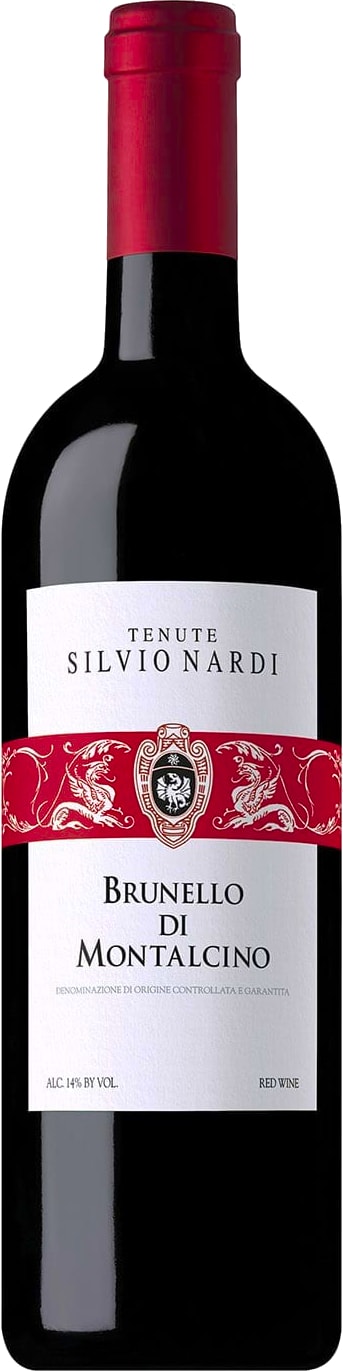
Tenute Silvio Nardi Brunello di Montalcino is made from 100 percent Sangiovese.
Quite intense ruby red color with garnet highlights. Intense and complex aromas at the nose, rich in ripe fruits, spices and toasted notes. Smooth and bodied at the palate, with great persistence, elegant and wide concentration. Tannins are dense and velvety.
Reviews:
Blackberry, black-truffle and black-cherry aromas follow through to a medium body with juicy fruit and a long, flavorful finish. Polished, pretty tannins here. Nicely crafted. Drink after 2026.
-James Suckling 94 Points
In the bottle with the burgundy-colored label, the Tenute Silvio Nardi 2019 Brunello di Montalcino is a layered and generous wine with black fruit, cherry, spice and a hint of Provençal mixed herbs on black olive. There are further hints of underbrush, crushed slate, petrichor from schistic soils, and toasted almond that adds some sweetness from French oak. The tannins are velvety and soft, but this wine is regularly balanced throughout. It's well made in an ample production of 150,000 bottles.
- Robert Parker's Wine Advocate 94 Points
A spicy version, whose black pepper and Szechuan peppercorn notes highlight the core cherry and strawberry flavors. Underbrush and iron accents also enter the mix, while this stays balanced and long as the tannins leave their grip on the finish.
-Wine Spectator 94 Points
When Silvio Nardi purchased the Casale del Bosco estate in 1950, Montalcino was a little, rural village, the powerful Consorzio del Vino Brunello wasn’t yet an idea, and Nardi was the first "foreigner" to invest in Montalcino (he was from Umbria). Today, Montalcino is a renowned wine community with many international investors, and the 36 vineyard plots of Tenute Silvio Nardi extend east and west of the town on three separate estates. Since 1990, Silvio Nardi’s youngest daughter, Emilia Nardi, has focused on vineyard development and produced wines of depth that are profound expressions of the land they come from.
Silvio Nardi's youngest daughter, Emilia Nardi, has focused on vineyard development and produced wines of depth that are profound expressions of the land they come from.
Silvio Nardi’s father, Francesco Nardi, was a pioneer in the manufacture of agricultural tools in Umbria. In 1950 Silvio Nardi purchased the Casale del Bosco estate in Montalcino, Tuscany, and in 1958 produced his first bottles of Brunello di Montalcino. The family's deep ties to agriculture and the optimistic atmosphere of Montalcino in the late postwar years focused Nardi’s determination to produce a natural product of tradition and excellence. In 1962, he purchased the esteemed Manachiara estate, and in 1972, the Castello di Bibbiano estate.
In 1966, Brunello di Montalcino was among the first eight Italian wine producing zones to be designated a Denominazione di Origine Controllata (DOC). In 1967, Nardi was among the first members of the Consorzio del Vino Brunello, a voluntary association of producers who were determined to sustain and improve the quality of the wines of their zone as they gained prestige. In 1980, Brunello di Montalcino became the first Italian wine to receive Denominazione di Origine Controllata e Garantita (DOCG) status. The producers' awareness of the importance of astute viticultural practices and improved fermentation and maturation techniques led to a revolution in the 80s, with the development of more sophisticated viticultural and winemaking concepts. Brunello began to express its full potential.
Silvio Nardi focused on his vineyards, taking advantage of wine growing and winemaking technology and pursuing his belief in the importance of specific terroir. The result was that in the 1980s, Casale del Bosco and its Brunello were among Montalcino's best. A new generation’s leadership began in 1991 when Silvio’s daughter Emilia Nardi took over winery management and spearhead new projects of clonal research and phenological ripeness. Like her father, Emilia is focused on highlighting terroir in the wines. The exceptional 1995 vintage was the introduction for Manachiara, a "cru" created from a specially-vinified selection of the finest grapes from the single vineyard of that name.

Mordoree Chateauneuf-du-Pape La Reine des Bois is made from 80% Grenache, 10% Mourvèdre, and the rest equal parts Syrah and Vaccarèse .
This premium cuvee - whose name means "Queen of the Woods" - is from 65-year-old vines, planted on Villafranchian-era terrasses. Yield is 30 hl/ha.
Deep ruby red; opaque. Aromas of red fruits change to wooden touches of leather, black truffles and coffee. Fat, concentrated and full flavored with a very long liquoriced and fruity finish.
Review:
The 2022 Châteauneuf du Pape Cuvée De La Reine Des Bois is based on 75% Grenache, 10% each Syrah and 10% Mourvèdre, and the rest Counoise and Vaccarèse. It's not massive yet just exudes class and elegance, with both red and black fruits that give way to more spice, peppery garrigue, and leather, with classic background licorice and black olive notes. Medium to full-bodied, beautifully balanced, and elegant, with silky tannins, this brilliant Châteauneuf du Pape will evolve for two decades.
Number 36 in Dunnuck's Top 100 and 97 Points
"Huge and powerful, but so fresh. This has great driving intensity, with even bigger, more structural tannins than the domaine’s other cuvée. A rampaging Châteauneuf that will take time to settle, and will always be wild. Long, vibrant and chiselled. An absolute beast. Mordorée has been massive but overripe in the past; it's still massive but with this vintage the ripeness is more controlled, and it has transformed into something extraordinary. Fermented and aged 80% in stainless steel, the rest in old barrels. - Matt WALLS"
- Decanter Magazine (September 17th 2023, Part of Châteauneuf-du-Pape 2022: Report and top-scoring wines), 98 pts
Collemattoni Brunello di Montalcino is made from 100 percent Sangiovese.
Color: brilliant red with burgundy reflects; Bouquet: penetrating with memories of wild black fruits, black cherry and noble wood; Taste: warm, dry and persistent
Coming from a parcel with 10-15 year old vines planted in sandy clay and marl soils.
Harvest is 100% destemmed with a soft pressing, fermentation in stainless steel tanks at controlled temperature of 28-30°C, pumping over for the first week of maceration followed by skin-contact maceration for 20-25 days with rack and return technique (delestage).
Malolactic fermentation completed.
Wine is slightly filtered before bottling.
Review:
This is a really balanced and pretty young Brunello with dark-cherry and citrus character on both the nose and palate. It’s medium-bodied with integrated tannins and a beautiful, succulent finish. Nicely done. Drinkable now, but better in two or three years.
-James Suckling 95 Points

Poggio San Polo Podernovi Brunello di Montalcino is made from Sangiovese.
Intense ruby red in color with garnet hues, clear and glossy. The bouquet exhibits typical aromas of violets and small red berries. Subtle nuances of forest undergrowth, aromatic wood, a touch of vanilla and jammy mixed fruit then give way to subtle hints of coffee. This Brunello is intense, persistent, broad and heady. Full-bodied and warm on the palate, with a densely-woven texture and robust body, it has a persistent finish with well-rounded tannins. The particular features of the terroir at San Polo produce a Brunello with a capacity for lengthy aging, while patient cellaring enhances the wine during ageing in the bottle.
Review:
Lovely purity of fruit with ultra fine tannins and depth, finesse and complexity. Black cherries, cedar and some flowers. It’s full-bodied with very fine tannins that drive the finish. Give it a year or two to open more, but already so enticing. Drink or hold.
-James Suckling 96 Points
The San Polo 2015 Brunello di Montalcino Riserva (with 8,000 bottles produced) is a textured wine with hearty fruit and touches of smoked meat and spice. At its core, the wine offers dark fruit, blackberry and ripe plum. The rich fruitiness of the wine cedes to campfire ash, mahogany and furniture wax. These results are sultry and even a bit flashy, with distant background tones of teriyaki and plum sauce. The wine is fermented in cylindrical oak fermenters and aged in oak for three years. We'll see this bottle hitting the market sometime after February 2021.
-Wine Advocate 95 Points

Chavy-Chouet Volnay 1er Cru Sous La Chapelle is made from 100 percent Pinot Noir.
Total acreage for this wine: 0.1 hectare (0.25 acres)Planting density: 10 000 vines per hectares
Age of the vines: 10 years
At the bottom of the slope in the heart of Volnay, this plot lies on clay-sand soil.
Volnay is located on the steep sloping hill of Chaignot in the Côte de Beaune, where the southeast facing vines have been valued for centuries. These vineyards have been valued and exploited for centuries. Long before the French Revolution, the harvests of Volnay went to the Knights of Malta, the Abbeys of Saint-Andoche d’Autun and Maizières, or to the Dukes of Bourgogne and their successors, the Kings of France.
Volnay has a reputation for being among the most delicate, feminine of the Bourgogne wines. Limestone soil dominates the area, with deeper, gravelly soils at the foot of the slope, where Chavy Chouet’s vines are located.
This Volnay is full of character; broad and fruity. Smooth and elegant tannins make it a feminine wine, marked by aromas of black berries and leather.

Shibumi Knoll Pinot Noir Sonoma Coast is made from 100 percent Pinot Noir, 20 percent in new French Oak.
Review:
“Moving to the reds, the 2021 Pinot Noir Sonoma Coast comes from the Riddle Vineyard in Sonoma and spent 10 months in 20% new French oak. Black raspberries, sappy herbs, spring flowers, and some black tea notes all give way to a medium-bodied, elegant, vibrant Sonoma Pinot Noir with supple, fine-grained tannins and a great finish. It will age, but it's too good to resist today.”
Jeb Dunnuck, 96 points

W & J Graham's Vintage Port is made from 35% Touriga Nacional, 47% Touriga Franca and various others.
It is with great pleasure that Graham's announces the declaration of the 2000 Vintage, a wine that has been deemed to meet our very exacting standards, and one that shows every promise of living up to the reputation of the very best Vintage ports that the Twentieth Century provided.
This is a landmark wine for Graham's, not only being the first Vintage of a new millennium, but being the first Vintage wine to enjoy the extraordinary results achieved by the new robotic 'lagares' at Malvedos in the inaugural year of our remodelled winery. Significant also has been the decision to include a rather larger proportion of mature Touriga Francesa and Touriga Nacional from Vila Velha, a classic riverside Quinta a short distance downstream from Malvedos, and some spectacular old vine lots from Vale de Malhadas in the Upper Douro. These wines each from family-owned Quintas have been used to reinforce the predominant component from Malvedos and the traditional excellence of the Rio Torto lots from Lages, to produce a rounded and even blend in the hallmark rich Graham style.
Picking began at Malvedos on September 22nd and the last lagar was run off on October 10th, an unusually short and compact Vintage. Fruit arrived in good condition although yields were less than three quarters of a kilogram per vine, and the juice to skin ratio well below normal. 2000 was a year noted for a very low average yield across the Douro, and with the grapes unusually lacking in liquid, the extra amount of treading work required made it an ideal time to employ our new, tireless, mechanical treaders alongside the two original 1890 stone lagares still worked by human feet. It was evident early on in the Vintage from the colour and aroma of the fermenting musts that we were looking at a spectacular year, and after the usual waiting period of sixteen months or so to see how the lots would develop, we have now made our final selection and assembled the final blend.
The blend displays many of the typical Graham aromas of ripe plum and 'esteva' (gum cistus) and is pleasantly smooth on the palate despite its youth. It is full and rich in the mouth with fresh blackberry and red plum notes. Despite the hallmark Graham sweetness in the mouth the finish is long and clean.
As with all Graham Vintages, this is a wine made to last for years and the patience of laying down the wine for fifteen to twenty years will certainly be rewarded.

Patricia Raquin Santenay 1er Cru Beaurepaire is made from 100 percent Chardonnay.
The animals shown on the label are dogs. The breed is called Borzoi, also called "Russian Wolfhound", which means "fast" in Russian. Patricia and Alain are proud owners of 2 Borzois and they designed this label so that the dogs will be guardian of the vaulted ageing cellar inside their house.
The Santenay Santenay is coming from the Premier Cru called Beaurepaire.
The wine is showing a great pale yellow color with gold highlights. The nose is very delicate displaying aromas of white blossoms with just a hint of oak. In the mouth, the wine is very soft with a great deal of minerality, superb length and a tangy finish.

The Barossa has a core of traditional growers of German Silesian descent, dating back five generations, staunchly continuing on the traditions of their forebears. Occasionally one or two parcels of fruit of overwhelming quality come over the weighbridge; this is such an example. This wine is sourced from up to 70-year-old, low-yielding shiraz vines from a selection of historical grower vineyards at Tappa Pass and Light Pass, growing in low-fertility Neoproterozoic soils more than 542 million years old, that range from red-brown earths to terra rossa. These vineyards provide shiraz fruit from both the Eden and Barossa Valleys of the Barossa zone, vinified in traditional open-top fermenters. Matured in 24% new and 76% seasoned French hogsheads for 18 months prior to blending and bottling.
Deep crimson with violet hues. Vibrant aromas of blueberry, blackberry, Satsuma plum and raspberry with hints of anise, crushed marjoram, cardamom, violets and cedar. The palate is rich, plush, and complex, with juicy blueberry and mulberry, spicy blackberry paste, and layers of fine velvety tannins creating incredible depth and length.
Review:
This was an excellent vintage in the Barossa and this exceptional wine from 70-year-old low yielding vines is a beautiful expression of the season. Dark plummy dark chocolate characters with a dry dusty complexity. The palate is sublimely integrated and balanced, exhibiting poise and style. The sweet fruit on the middle palate is complemented by the minerally oyster shell edge. Terrific wine.
-Wine Pilot 96 Points



