
" We don't sell the wine without touching the vine "
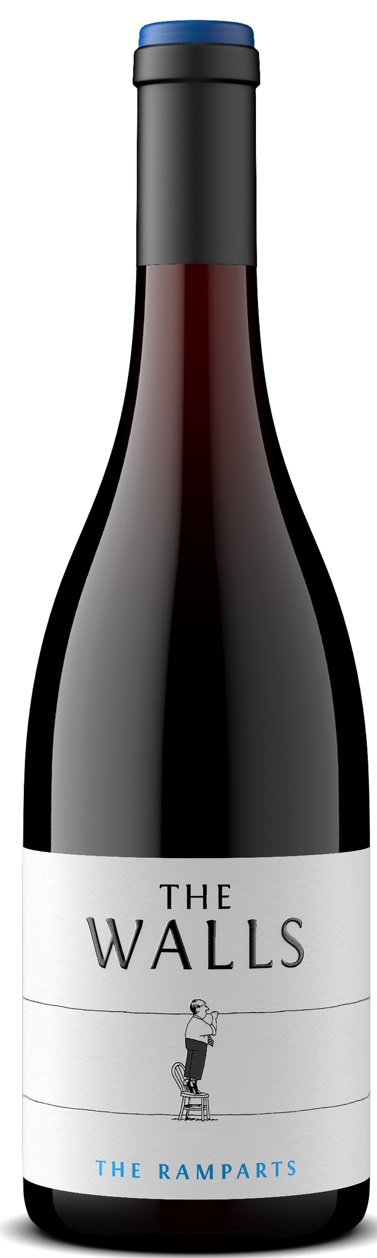
| Country: | Portugal |
| Regions: | Washington Washington (Red Mountain) |
| Winery: | The Walls |
| Grape Type: | Touriga Nacional |
| Organic: | Yes |
| Vintage: | 2020 |
| Bottle Size: | 750 ml |

The Walls Curiositas Cabernet Sauvignon is made from 100% Cabernet Sauvignon.
The Walls Cabernet Sauvignon comes from a variety of vineyards in the Red Mountain AVA providing structure and power on the nose and palate. Extremely aromatic and super silky tannins – loads of freshness, energy, full spectrum and super complex, with that great combination of weightlessness but great texture and length.
Review:
Coming from Red Mountain and 83% Cabernet Sauvignon and 17% Cabernet Franc brought up in 80% new French oak, the 2020 Cabernet Sauvignon Curiositas offers more red and black fruits to go with classic Red Mountain minerality, notes of graphite and tobacco, full-bodied richness, and building, firm, yet ripe tannins. It's going to need 3-5 years of bottle age, but it’s a classic expression of this terroir.
- Jeb Dunnuck 94-96 Points

The Prisoner Wine Company The Prisoner Red Blend is made from a blend of Zinfandel, Cabernet Sauvignon, Petite Sirah, Syrah, and Charbono.
Bright aromas of ripe raspberry, vanilla, and coconut give way to flavors of fresh and dried blackberry, pomegranate, and vanilla, which linger harmoniously for a smooth and luscious finish.The Prisoner Red Blend was inspired by the wines first made by the Italian immigrants who originally settled in Napa Valley. The Prisoner is now the most recognized red blend, leading the resurgence of interesting blends by incorporating Zinfandel with the unlikely mix of Cabernet Sauvignon, Petite Sirah, Syrah, and Charbono.
On the nose, dried blackberry, dried açai berries, and hints of cedar and tobacco leaf are accented by sweet spices of clove, cinnamon, and nutmeg. Flavors of ripe dark cherry, blackberry coulis, and hints of anise linger harmoniously for a soft, vibrant finish balanced by ripe tannins.
Chef Brett recommends pairing The Prisoner Red Blend with Kalbi Short Ribs or Chicken Mole Tostada.
Vineyards: When you outgrow winemaking tradition, you must forge your own path. And we did. The Prisoner exists because of the collaboration with our growers, many of which have been with us since the very beginning—from the Solari Family Vineyard in Calistoga, where old school sensibilities meet new techniques, to the Korte Ranch in St. Helena, a vineyard whose diligence outlasted the Prohibition and has sustained four generations.

Booker Vertigo Red Blend is made from 7% Syrah, 32% Mourverde, 9% Grenache, 7% Petite Syrah, 5% Tannat.
Vertigo is our Syrah-heavy "G-S-M". It is spicy, structured, and always performs. The name is a nod to the steepness of the hillside on our estate where we grow the fruit for this wine. Starts with aromas of spice, dark chocolate and soft purple fruits on the nose. The palate surprises you with a touch of cayenne amongst juicy ripe fruit. We recommend making this your BBQ staple. Pair with pork ribs, bourbon chicken, or “bring on the bacon” to quote our tasting room team!
Review:
Deep and brooding nose with dark cherries, grilled meat. Slightly reductive, with flinty crushed stones, sweet dark cherries, cocoa powder. Crunchy, bright and juicy palate full of blue and black berries. Really tight but caressing. Drink now or hold.
- James Suckling 95 Points

Mascot is a small-production label founded by Will Harlan in Napa Valley. The wines under this label are made from the younger vines of Harlan Estate, BOND, and Promontory, but The Mascot bottles share an exclusive preview at the development of their estates. Founded as an initial experiment to see what the young vines were capable of producing, the wines were initially only shared with close friends and family. By 2008, Will officially released the first vintage to the public since production had increased significantly. They create just one wine made from Cabernet Sauvignon, and the bottle is aged for five years before release. Assembled into a single, youthful expression, this wine shares a glimpse into the evolution and pedigree of its parent estates.
Tasting Notes:
A mild winter with scant rainfall introduced the 2020 growing season. Conditions remained pleasantly even-keeled throughout the spring, except for some light precipitation in March. It is worth noting that decades of research and steady viticultural progress have enabled our vines to begin achieving tannin and textural ripeness earlier in the season, and this fact—along with the drought conditions experienced in preceding years—led to one of the earliest picking windows in our history. This development proved crucial to the 2020 vintage, when we were fortunate to have fully completed our harvest before the Glass Fire began in late September. A vibrant purity manifests within this vintage’s generosity, which advances without excess of weight or volume. Aromas of gentle red fruit give way, eventually, to a savory darkness and finely wrought core. An effortless, structural tension transforms into a silky softness on the palate that envelopes The Mascot’s inner depth and dimension. The 2020 vintage resonates rather than roars: its intricate threads of tannin, acidity, and nuance interweave to form a complete expression that shimmers with sensory detail.

Pioneiro Red Wine Vinho Regional Peninsula de Setubal is made from 60% Castelao (also known as Periquita), 30% Aragones and 10% Syrah
Aged 5 months in French oak barrels
The story of this wines begun more than a century ago, with the pioneering dream of Venâncio da Costa Lima: to bring good wines to every corner of Portugal. Pioneiro wine brand was created to pay homage to his vision.
What's Unique? Pioneiro (meaning “pioneer” in Portuguese) wine vintage style label pay homage to the founder’s dream, dating back to 1914. But in a relaxed, casual way, typical of this wine producer mood.
Intense garnet color, complex nose with touches of ripe fruit, jam and spices, full-bodied flavor and a very balanced finish.
Castelao: as the most widely-grown red grape variety in Portugal it is still often referred to in Portuguese as "Periquita" or "Joao de Santarem", although that name is legally owned by José Maria da Fonseca in the Setúbal Peninsula outside of Lisbon. It is highly adaptable to different climatic conditions and its remarkable versatility enables winemakers to make a range of wines – from the easy drinking and quaffable reds and rosados to the powerful and intense reds perfectly suited to lengthy cellaring. Castelão comes into its own and is most expressive in the Sétubal Peninsula, where it makes meaty and intense wines with aromas of red berries and blue flowers that marry well with the deft use of oak.
Made from 15 year old vines planted on sandy soils.
Classic vinification at controlled temperature (25 °C) with prolonged maceration for phenolic extraction. Wine went through malolactic fermentation.
It was aged 5 months in French Oak barrels.
Wine was slightly filtered before bottling to avoid sedimentation in the bottle and to ensure stability.
Pasta, Cheese, red meat and game.

Robert Mondavi Winery The Estates Red Blend is made from 49% Cabernet Franc, 47% Cabernet Sauvignon, 4% Petit Verdot.
Robert Mondavi’s vision was to elevate Napa to the world stage. In celebration of his achievement, our Napa Tier wines are sourced from distinctive vineyards throughout the Napa Valley and truly emulate a classic Napa Valley style.
Aromas of blackberry, cherry, toasted almond, bay leaf and mocha. Luscious ripe cherry and cassis, with savory notes of dried herbs and toast. Rich, weighty, and mouth-coating, with classic fine To Kalon tannins.
Review:
This has a pretty fragrance of violets, green peppercorns, salted olives, blackcurrants and black raspberries. Creamy, salted dark chocolate and praline to follow. Medium-to full-bodied with fine-grained tannins. Delicious and superbly balanced. 50% cabernet franc, 47% cabernet sauvignon and 3% petit verdot.
-James Sucking 94 Points
The 2019 Red Blend Estate comes all from the To Kalon Vineyard and is close to an even split of Cabernet Franc and Cabernet Sauvignon. It's a clear step up over the base Red Blend and offers terrific, full-bodied aromas and flavors of darker fruits, dark chocolate, violets, and a kiss of spring flowers. With silky tannins, terrific balance, and outstanding length, it's going to evolve for 15 years or so.
-Jeb Dunnuck 94 Points
The Walls Stanley Groovy Portuguese Red Blend is made from 37% Touriga Nacional | 16% Cabernet Sauvignon| 13% Tinta Roriz | 13% |Tinta Cao, 9% Souzão | 4% Mourvédre | 4% Grenache | 4% Counoise
The Walls 2021 Stanley Groovy Red Wine Blend was fermented in concrete and open and closed-top stainless steel tanks. Cold soaks for up to 5 days. Maceration ran 18 to 38 days. 100% free-run juice. Aged in 20% new French oak large format vessels. This is a Portuguese-varietal-dominant wine that is currently sourced from the Red Mountain AVA. STANLEY GROOVY is the character displayed on The Walls wines’ labels and the embodiment of our explorative and curious nature.
“The Walls” is what the locals call the Washington State Penitentiary, Walla Walla’s least talked about but perhaps most notorious landmark, and one that loomed just down the street from where our first wines were made. Since 1886, the “Walls” or “Concrete Mama” has surreptitiously presided over the ebb and flow of this little town, lives frozen inside while outside, growth and progress eddy past.
This contradiction is also a personal one as walls have become metaphors in all of our lives — we put up walls to protect our hearts, we toil within the walls of work constraints, we build walls to defend what’s important to us. Nevertheless, as we build walls we’re also always looking for ways we can tear them down. Wine is the river that can overflow, subvert and topple these walls. It is a powerful force in bringing people together and building true community, capturing and preserving memories of time, places and people.

Luis Canas Reserva Seleccion de la Familia Rioja is made from 85% Tempranillo and 15% Cabernet Sauvignon
Aged for 20 months in new oak barrels - 50% French 50% American.
45 years old vines
Alcohol: 14,5º
Total acidity: 5,73 g./l.
Volatile acidity: 0,73 g./l.
PH: 3,53
Free SO2: 28 mg./l.
Reducing sugars: 1,3 g./l.
The “family reserve” from one of Rioja Alavesa’s most enduring family-run wineries. Wines destined to be the Reserva de la Familia label are made from a selection of grapes from old vines, those which combine a series of characteristics such as good orientation and exposure to the sun, and a poor soil which ensures low yields.
This wine is one of very few Rioja wines to blend Cabernet Sauvignon with Tempranillo. Bodegas Luis Cañas was granted permission by the D.O.Ca. to plant this variety as an experiment in the early 1980s.
Tasting notes
A brilliant garnet color with cherry hints on the edges.
The nose offers a complex variety of aromas that combine to bring an intense and sophisticated wine. Initially we can find very ripe berry fruits, smoky notes, raisins and liquor. After a certain amount of aeration, the cinnamon and jam notes appear and, with a little more time, the roasted and spiced aromas are noticed more clearly.
The palate is full, with a good presence of tannins, although these are offset by the glycerine like character, resulting in a fleshy sensation. Long lasting and lingering finish.
Winemaking and aging:
The grapes were cold macerated for 72 hours upon arrival at the winery. They underwent fermentation at 26º C in sealed cement tanks under constant thermal control, with the must pumped over daily. With the paste devatted by gravity, spontaneous malolactic fermentation took place after 45 days.
The wine was aged for 20 months in 50% medium toasted American and 50% French oak barrels. The barrel ageing not only adds tannins from the wood, but stabilizes the wine naturally. After the final racking, it was clarified in tanks with a small amount of natural egg white, decanted after 30 days and bottled directly without any type of filtration. Because this wine’s evolutionary cycle is quite slow, only corks of the highest quality available were used to ensure that it could be prolonged for several years.
Review:
Including 15% Cabernet Sauvignon, the Tempranillo-dominated 2019 Rioja Reserva Selección de la Familia is a crème de la crème selection that was aged 20 months in oak. Its deep purple hue is followed by a sensational nose of ripe black and blue fruits, cedarwood, graphite, smoked tobacco, and chocolate. This carries to a full-bodied Rioja with a powerful, layered mouthfeel, ripe yet building tannins, and serious length on the finish.
-Jeb Dunnuck 95 Points

Thibaut-Janisson Blanc de Chardonnay is made from 100% Chardonnay
Appellation 100% Virginia
Winemaking Notes The grapes are handpicked in small baskets late August and are gently pressed as whole clusters. After a settling of 24 hours, the juice is inoculated with selected Champagne yeast and ferments in stainless steel tanks at low temperature. Once the fermentation is over, the wine ages on the fine lees until the spring of the following year. The blend is then put together and cold-stabilized prior to bottling. The bottling occurs in the spring when the cellar temperature is conducive to a second fermentation in the bottle. The now sparkling wine will age on the yeast for over 24 months. At disgorging, a small amount of dosage liquor is added in order to balance the natural acidity.
Clean, crisp and refreshing! With scents of white flowers, apples and pears. This sparkling wine is elegant and complex with vibrant aromas, and fine active streamers. The depth of complexity is elegant and the intricate nuances of the terroir fill the nose and stimulate the palate. It’s full of youthful, bright and alert acidity.

Alain Jaume Domaine du Clos de Sixte Lirac is made from 50% Grenache, 35% Syrah, 15% Mourvedre
An intense red garnet color. On the nose, aromas of red and black ripe fruit (kirsch and wild blackberry). The mouth is full, with aromas of blackcurrant liqueur and spice. Tannins are both harmonious and elegant thanks to the fleshiness of the wine. Hints of licorice and vanilla on the finish, which gives the wine length and complexity.
Soil type LIRAC vineyard is facing Chateauneuf du Pape, opposite side of the Rhône river. As showed by the picture and following geologist George Truc, soils are almost similar in both side. They are marked by the violence wrought by the Rhone river. It consists of a layer of marine molasses of the Miocene period covered by alpine alluvium. The presence of a great number of rounded stones known as "galets" in the earth is evidence of the time when the Rhone, then a torrent, tore fragments of rock from the Alps and deposited them on the plain. LIRAC is one of the up-coming best area from the southern Rhône valley, as it delivers outstanding wines. Winemaking & ageing Traditional wine-making in stainless still vats. Hand sorted bunches, crushed and destemmed grapes. Fermentation temperature : 30°C. 18 days of vatting with pigeages.
Review:
"I love the dark and meaty aromas of this Lirac, which also has an herbal freshness and just a hint of bitter chocolate. Medium- to full-bodied with licorice and restrained forest berry fruit on the velvety palate. Extremely well-balanced finish. From organically grown grapes. Drink or hold."
- James Suckling (April 2024), 92 pts



