" We don't sell the wine without touching the vine "
| Country: | France |
| Region: | Burgundy |
| Winery: | Patricia Raquin |
| Grape Type: | Chardonnay |
| Vintage: | 2020 |
| Bottle Size: | 750 ml |
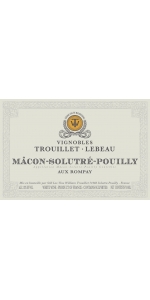
Trouillet Lebeau Macon Solutre Pouilly is made from 100 percent Chardonnay.
The Macon-Solutre-Pouilly is produced from the 2 hectare-parcel called "Au Rompay", which is the highest of the estate, located at the southern tip of the Mâconnais in the Mont Pouilly, across the famous Solutré Rock. The grapes are usually harvested in the very last days, bringing freshness and minerality to the wine.
The nose opens generously with sweet notes of candied and citrus fruits. The maturity and ripeness of the fruit combine with an aromatic freshness and a real delicacy in the mouth. The wine is structured, but still lively on the finish.
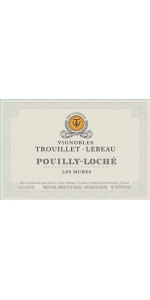
Trouillet Lebeau Pouilly-Loche Les Mures is made from 100% Chardonnay.
Pouilly Loché is the smallest appellation in the Mâconnais (33 hectares). The climate called "Les Mures" is located on a hillside, facing east, overlooking the Saône Valley at an altitude of 250 meters, in the village of Loché, 5 kilometers south-east of Mâcon. Loché has been a site devoted to vines since the Roman times. Excavations during the construction of the TGV station, which puts this vineyard 1 hour 40 minutes from Paris and Geneva, revealed the foundations of a large villa. Thereafter, the vine flourished under the influence of the monks of Cluny, who are reminded of the magnificent 12th century octagonal bell tower behind which the rocks of Solutré and Vergisson stand out.
The wine offers delicate and precise aromas of ripe yellow fruits. Dense, fleshy and fruity in the mouth with a fresh menthol finish.
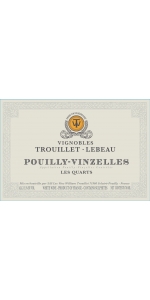
Trouillet Lebeau Pouilly-Vinzelles Les Quarts is made from 100 percent Chardonnay.
The wine comes from a very small parcel located in the climate of "Les Quarts" benefiting from an eastern exposure that is perfectly suited to Chardonnay, allowing early harvests and giving rich and powerful wines. Neighboring the archaeological complex of Solutré, the Vinzelles appellation is based on the same Jurassic (Bathonian and Bajocian) rocks that crown the Mâconnais mountains.
Rich aromas of peach, apricot and grapefruit, evolving with age towards fresh almond, hazelnut, honey, quince or toasted bread. This Pouilly-Vinzelles "Les Quarts" balances its natural minerality with fatness and opulence.
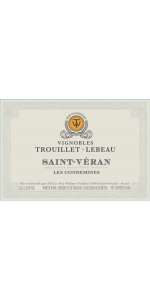
Trouillet Lebeau St. Veran Les Condemines is made from 100 percent Chardonnay.
The wine comes from 70-year-old vines that are ideally located on a south-facing slope in the village of Leynes, on a clay-limestone terroir. Aged 100% in Burgundy barrels, offering a fruity, powerful and charming wine. Beautiful expressive aromas of ripe yellow fruits. Rich, generous, full, crisp and well-balanced on the palate.
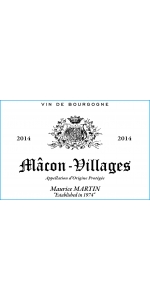
Maurice Martin Pouilly-Fuisse is made from 100 percent Chardonnay.
Fruity and floral aromas intertwined with vanilla and toasty notes. Harmonious, well balanced and elegant wine.
The grapes for this wine is coming from 2 famous part of the Maconnais' region: Vergisson and Solutré, famous for their Rocks. Hence, the minerality is coming from these rocky soils.
The wine went through malolactic fermentation.
It has been gently filtered before bottling.
Excellent with white meats and fish.
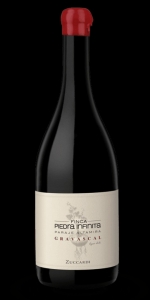
Familia Zuccardi 'Finca Piedra Infinita' Gravascal is made from 100 Malbec.
WINE DATA:
Grape Composition: 100% Malbec
Appellation: Finca Piedra Infinita, IG Paraje Altamira,Valle de Uco, Mendoze
Vinification: Manually selected grapes, filling of tanks by gravity. Fermentation with native yeasts in concrete vessels without epoxy. Aging in concrete vessels. The 2020 was a very particular vintage, characterized by limited yields and a high speed of maturity, which made it one of the fastest and most challenging on record.
In the search for the purest expression of the identity of Finca Piedra Infinita vineyard, we reached this small plot of 0.73 hectares. Located on its north-east side, it shows the typical facet of Paraje Altamira soil, with large gravels and granite stones covered with calcareous material at a depth of 50 cm.
Altitude: 3,609 feet above sea level
Soil Type: Short alluvial soil covered with calcareous materials
Alcohol: 14% Total Acidity: 5.6g/l
TASTING NOTES:
Color: Bright ruby color
Aroma: Dark berries, black olive tapenade, and iron
Flavor: Rich on the palate, with firm tanins
Trouillet Lebeau Macon Solutre Pouilly is made from 100 percent Chardonnay.
The parcel is the highest of the estate, located at the southern tip of the Mâconnais in the Mont Pouilly, across the famous Solutré Rock. The harvest is usually carried out in the very last days of the harvest campaign, which gives wines of freshness and minerality.
The nose opens generously with sweet notes of candied and citrus fruits. The maturity and ripeness of the fruit combine with an aromatic freshness and a real delicacy in the mouth. The wine is structured, but still lively on the finish.
Maison Patricia Raquin is a negociant based in Savigny-les-Beaunes in the heart of Burgundy. Patricia and her husband, Alain, have been in the business for decades and they have developed some incredible relations with producers all over Burgundy. The selection process is quite similar to what we would do with our own brand Rubus. Most of the wines come from incredible vineyard sites and from growers are associated with outstanding quality. The dogs shown on the labels are Borzois, which means 'fast' in Russian. They are also called Russian Wolfhounds; a breed similar to greyhounds. Patricia and Alain are proud owners of 2 Borzois, who, as depicted on the label, guard their vaulted aging cellar inside their house.
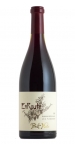
EnRoute Winery Les Pommiers Pinot Noir is made from 100 percent Pinot Noir.
Aromas of fresh raspberry compote are complemented by notes of baking spice, and fresh rain on a forest floor. Generous-yet-soft strawberry preserve flavors expand on the palate, with elegant, silky tannins. A mouthwatering acidity glides across the finish.
Review:
This is a lovely, complex Pinot Noir from a premium Russian River Valley venue that is surprisingly priced more reasonably than lesser wines from the region. It is slightly gamey on the nose and on the palate in the varietal style with dark Bing cherry flavors, and is smooth and almost creamy in texture and taste with mild tannins and a long, haunting finish. In the cellar, it profited from two weeks of skin contact and received a modest oak treatment — standard with many California Pinots — of about 10 months in oak, 30% of it new.
-Roger Morris Wine Review Online 94 Point
Wonderful aromas of wild berries, fresh rose petals and herbs de Provence. Bright and fresh on the palate, with flavors of cranberries, Bing cherries and delicate sweet and savory spices. Medium-bodied with a long, aromatic finish and gentle tannins.
-James Suckling 93 Points