
" We don't sell the wine without touching the vine "
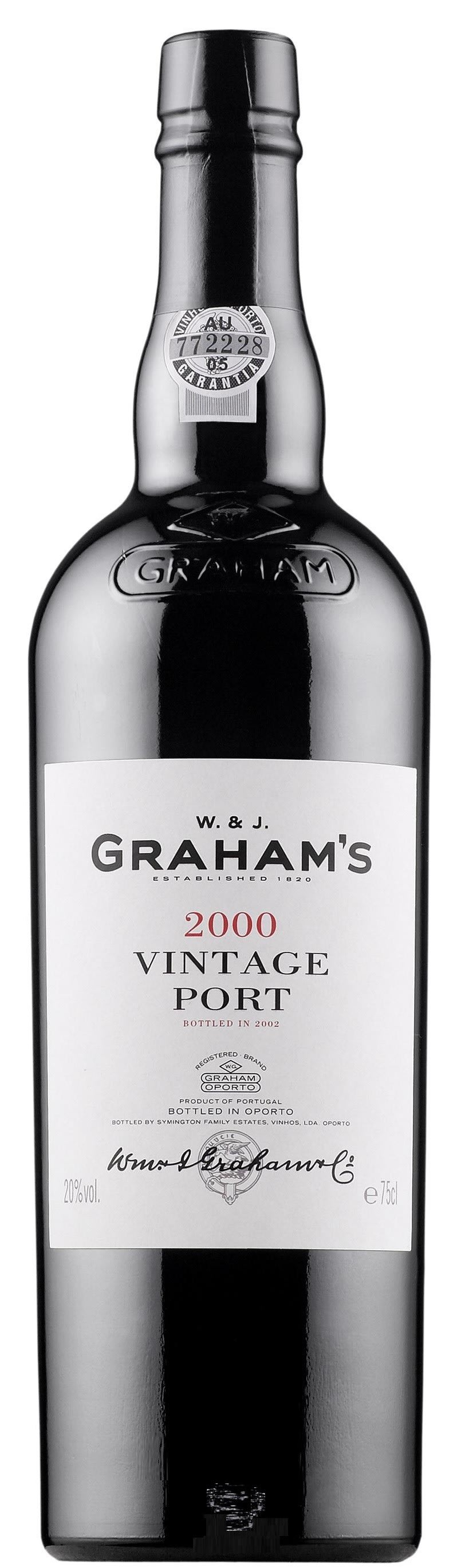
| Country: | Portugal |
| Region: | Douro |
| Winery: | W & J Graham's |
| Grape Type: | Touriga Nacional |
| Organic: | Yes |
| Vintage: | 2000 |
| Bottle Size: | 750 ml |
The Stone Terraces 2021 Vintage Port has incredibly fresh and lifted aromas with the hallmark tropical fruit character. The wine is concentrated whilst being supremely refined with polished tannins and taut acidity combining to deliver sublime elegance and balance.
Review:
What a polished and beautifully structured vintage port with ultra-fine tannins that run the length of the wine. It’s medium-bodied with a terrific intensity and brightness. Seems slightly drier than normal for a Graham’s vintage. Fantastically fine tannins. Black berries and tangerines with other tropical fruits. Hints of nuts at the end. Racy and muscular.
-James Suckling 95 Points
Clear and deep ruby in color, lightening at the rim, with light staining in the glassand moderately thick tears. Medium intensity on the nose with rich red plum, blackberry jam, cocoa powder, and savory tea leaf. A vein of earthy minerality brings complexity to juicy fruit and autumn spice. Oak lends warm vanilla, caramel, and allspice. Dry and full-bodied with intense, youthful red fruit on the palate. Bing cherry and blackberry notes are layered with leather, espresso, and nutmeg, and the long finish is accented with well-integrated tannin and an element of acidity that keeps the wine from being heavy.
The bold fruit and spice character of this 2022 Reserve Cabernet Sauvignon would pair perfectly with balsamic braised beef with creamy parmesan polenta, or an earthy, complex dish such as eggplant moussaka.
Review:
Here is a big, powerful Cabernet that pushes the envelope. The 2022 vintage was another drought year, and Paso Robles experienced late season heat waves. Made from 100% Cabernet that was aged for 21 months in French oak, 50% of it new, it clocks in at 15.5 % alcohol. However, when tasted blind, it offers an aroma of ultra-ripe black berries, chocolate, and spices that by the final swirl is absolutely gorgeous. Full-bodied with very juicy black fruit flavors and spice backed up by toasty oak, it all holds together seamlessly thanks to integrated tannins. The finish ends on a light toasty oak note. The real challenge is to pair it with a comparably robust main course.
-Wine Review Online 93 Points

Smith Woodhouse Vintage Port 1991 has been pulled from a Gentleman's cellar, all wines from this cellar have been purchased by the owner either from the importer or direct from winery. They stayed in his cellar until being moved to the Timeless Wines warehouse.
Force Majeure Epinette is made from 46% Merlot, 35% Cabernet Franc, 16% Cabernet Sauvignon, 3% Petit Verdot.
Epinette is Force Majeure's Right-bank Bordeaux-inspired blend, and was named after an avenue in Libourne (France) that leads to Pomerol and Saint-Émilion, the home of Merlot and Cabernet Franc. Epinette is also the name of a musical instrument akin to a piano, as well as a word for pine tree, which is a fitting nod to their home in Washington state.
The wine itself is a blend of primarily Merlot and Cabernet Franc, with smaller amounts of Cabernet Sauvignon and Petit Verdot, proportions of which change depending on the vintage. The Merlot and Cabernet Franc are grown in lower areas of the vineyard with deep, well-drained soils, much less rocky than the soils of our Rhone varietals.
Review:
"The 2018 Epinette is the Merlot-dominated release from this team, and it's 79% Merlot, 8% Cabernet Sauvignon, 8% Cabernet Franc, and 5% Petit Verdot, all from the estate vineyard on Red Mountain. Lots of smoky black cherry and darker currant fruits as well as notes of chocolate, graphite, lead pencil, and chalky minerality emerge from the glass, and this full-bodied beauty is beautifully textured, with a stacked mid-palate, velvety tannins, and a blockbuster finish. It's up with the finest Merlots in the New World and will drink brilliantly for at least a decade, if not longer."
- Jeb Dunnuck (May 2021), 97 pts
Force Majeure Epinette is made from 79% Merlot, 8% Cabernet Sauvignon, 8% Cabernet Franc, and 5% Petit Verdot .
Epinette is Force Majeure's Right-bank Bordeaux-inspired blend, and was named after an avenue in Libourne (France) that leads to Pomerol and Saint-Émilion, the home of Merlot and Cabernet Franc. Epinette is also the name of a musical instrument akin to a piano, as well as a word for pine tree, which is a fitting nod to their home in Washington state.
The wine itself is a blend of primarily Merlot and Cabernet Franc, with smaller amounts of Cabernet Sauvignon and Petit Verdot, proportions of which change depending on the vintage. The Merlot and Cabernet Franc are grown in lower areas of the vineyard with deep, well-drained soils, much less rocky than the soils of our Rhone varietals.
Review:
The 2018 Epinette is the Merlot-dominated release from this team, and it's 79% Merlot, 8% Cabernet Sauvignon, 8% Cabernet Franc, and 5% Petit Verdot, all from the estate vineyard on Red Mountain. Lots of smoky black cherry and darker currant fruits as well as notes of chocolate, graphite, lead pencil, and chalky minerality emerge from the glass, and this full-bodied beauty is beautifully textured, with a stacked mid-palate, velvety tannins, and a blockbuster finish. It's up with the finest Merlots in the New World and will drink brilliantly for at least a decade, if not longer.
Previously known as Grand Reve, Force Majeure has skyrocketed to the top of the pyramid in Washington State, in no small part due to their talented winemaker, Todd Alexander, who moved from Bryant Family in Napa to Washington State to focus on this estate. While the focus is on their Red Mountain Vineyard, they make a bevy of world-class wines from throughout the Columbia Valley. Anyone doubting the quality coming from Washington State these days owes it to themselves to try these wines.
-Jeb Dunnuck 97 Points
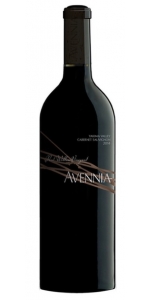
Avennia Red Willow Cabernet Sauvignon is made from 100% Cabernet Sauvignon.
The Red Willow Cabernet is a true blockbuster.
Coming from one specific block of 30 year old vines at this iconic vineyard, then strictly barrel selected, this is the essence of powerful, old vine Washington Cabernet. After all of our efforts promoting the idea of the Bordeaux blend, it would take a pretty compelling argument to suspend that idea and make a 100% varietal Cabernet. In 2016 Red Willow provided us with just that. Each time we tasted it in the barrel, the belief grew that this was something special. Something we can't make every year. In the end we were won over, and decided to make a limited amount of this wine. But don't be fooled, as this too is a blend and a selection. Each year as we are tasting the grapes as harvest approaches, we notice that the vines near the bottom of this long, steep west-facing slope, are a little different. The vines at the bottom are in a little richer soil, and get a little more water, so we pick them separately, sometimes even a week or ten days apart, and keep them separate in barrel.
This wine is all from the top of the vineyard, with its lower yield and poorer soils giving more concentration and interest. Then further, nearly every combination of new and used French oak barrels were trialed to find the best blend. It's not enough just to use the four best barrels, but to trial each combination to see how they complement each other. For a wine with this much mass, 100% new French oak was used for the first time at Avennia. It is a wine that needs a little cellaring to start, but should last a very long time.
Review:
The flagship Cabernet, the 2018 Cabernet Sauvignon Red Willow Vineyard is all varietal, from old vines in a great vineyard in Yakima Valley, that spent 20 months in 80% new French oak. It reveals a deep purple hue as well as a backward, brooding nose of smoked blackcurrants, tobacco, scorched earth, and violets. It has beautiful richness yet takes plenty of coaxing to open up. On the palate, it's medium to full-bodied and has a nicely textured, balanced mouthfeel, plenty of tannins, and outstanding length. It's mostly potential at this point and is going to benefit from at least 4-5 years of bottle age, but my money is on it having 20+ years of prime drinking.
-Jeb Dunnuck 96 Points
W & J Graham's Vintage Port is made from 35% Touriga Nacional, 47% Touriga Franca and various others.
It is with great pleasure that Graham's announces the declaration of the 2000 Vintage, a wine that has been deemed to meet our very exacting standards, and one that shows every promise of living up to the reputation of the very best Vintage ports that the Twentieth Century provided.
This is a landmark wine for Graham's, not only being the first Vintage of a new millennium, but being the first Vintage wine to enjoy the extraordinary results achieved by the new robotic 'lagares' at Malvedos in the inaugural year of our remodelled winery. Significant also has been the decision to include a rather larger proportion of mature Touriga Francesa and Touriga Nacional from Vila Velha, a classic riverside Quinta a short distance downstream from Malvedos, and some spectacular old vine lots from Vale de Malhadas in the Upper Douro. These wines each from family-owned Quintas have been used to reinforce the predominant component from Malvedos and the traditional excellence of the Rio Torto lots from Lages, to produce a rounded and even blend in the hallmark rich Graham style.
Picking began at Malvedos on September 22nd and the last lagar was run off on October 10th, an unusually short and compact Vintage. Fruit arrived in good condition although yields were less than three quarters of a kilogram per vine, and the juice to skin ratio well below normal. 2000 was a year noted for a very low average yield across the Douro, and with the grapes unusually lacking in liquid, the extra amount of treading work required made it an ideal time to employ our new, tireless, mechanical treaders alongside the two original 1890 stone lagares still worked by human feet. It was evident early on in the Vintage from the colour and aroma of the fermenting musts that we were looking at a spectacular year, and after the usual waiting period of sixteen months or so to see how the lots would develop, we have now made our final selection and assembled the final blend.
The blend displays many of the typical Graham aromas of ripe plum and 'esteva' (gum cistus) and is pleasantly smooth on the palate despite its youth. It is full and rich in the mouth with fresh blackberry and red plum notes. Despite the hallmark Graham sweetness in the mouth the finish is long and clean.
As with all Graham Vintages, this is a wine made to last for years and the patience of laying down the wine for fifteen to twenty years will certainly be rewarded.
William and John Graham founded their firm in Porto in northwest Portugal to trade in textiles. In 1820 they accepted twenty-seven barrels of Port as payment of a debt. The two brothers decided then to devote their energies to making the best Port wines from the Douro Valley: and so the Graham’s Port house was born.
The Graham family already had extensive business interests overseas, both in their native Scotland and in India. They were considered by one contemporary historian to be, ‘among the merchant princes of Great Britain’.
The story of two families across three centuries. For almost two hundred years W & J Graham’s has been an independent family business renowned for producing the finest Port wines.
Graham’s has always been a pioneer. Graham's was one of the first Port companies to invest in its own vineyards in Portugal’s Douro Valley in 1890 and is now at the cutting edge of innovation in winemaking techniques. Today, five Symington cousins share responsibility for every aspect of the company and personally make the Graham’s wines. They too have been involved with Port and the Douro for many generations, with ancestry dating back to the mid-17th century.
Graham’s first harvest under the ownership of the Symington family was extremely auspicious, with Graham’s 1970 Vintage Port being declared. The 1970 is thought by many to be one of the greatest wines of that century.
Nearly an hundred years after their ancestor AJ Symington left Graham’s to set up on his own as a Port producer, the family’s relationship with this Port house came full circle.
Besides the family’s other Port marques, Graham’s is the only remaining British Port company independently owned by a single family. This ensures that every aspect in the making of Graham’s Ports is controlled and cared for intimately.
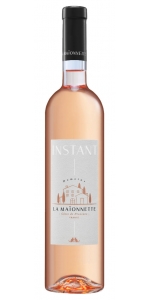
Domaine La Maionnette Rose Cotes de Provence is made from 60% Syrah, 20% Cinsault and 20% Grenache.
The plots of Domaine de la Maïonnette benefit from a clay-limestone soil and are located on a plateau surrounded by hundred-year-old oaks. Bordered by the Provencal scrubland, the vineyard enjoys a dry climate typical of the region.
An emblematic cuvée of the estate, this Cotes de Provence rosé reveals concentrated aromas of citrus fruits and white flowers, and a beautiful structure. The fresh palate brings out sweet candy notes, gooseberry and litchi, and delivers bright acidity and ample length on the finish.
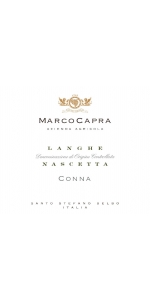
Marco Capra Langhe Nascetta is made from 100% Nascetta - 15 years old - 1.73 acres
Aged 6 months in stainless steel vats
The name "CONNA" is a sweet nickname after his wife Monica.
Bright straw yellow with greenish hues, with an intense and interesting perfume of grapefruit, apple and aromatic herbs. Floral, fresh, focused, good acidity. Refreshing and bright, full bodied with an aromatic persistence, it is savory and tasty on the palate with a smoothness that enhances the rich character of the wine
Altitude: 400 m above sea level.
Soil composition: lime and sand.
Plant density: 5000 vines / hectare.
Cultivation system: traditional Guyot.
Yield per hectare: 6 tons.
After a short period of maceration on skins, the grapes are soft pressed. The clear must obtained ferments slowly in stainless steel vats at a controlled temperature of 16-17°C. The wine spends a long period of time on the fine lees, with frequent “batonnage”
Ideal with apetizers, shellfish and other fish dishes.
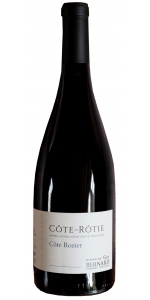
Guy Bernard Cote Rotie Cote Rozier is made from 100 percent Syrah.
A deep color, an intense nose where we can easily recognize the notes of small red and black fruits (crushed strawberry, blackcurrant), the spices (licorice, cinnamon) come to complete this already very complex nose. On the palate, this wine surprises by its amplitude, the notes of black cherries, toast and caramel are very pleasant and announce a big potential of ageing. Powerful and delicate, this Côte Rôtie is already pleasant and promises a good potential to cellar 5 to 15 years.
With red meats, big game, lamb or roasts. To be served between 16 and 18°C.
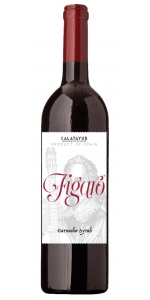
Figaro Tinto Calatayud is 100% Garnacha, made from a selection of the best grapes grown in the oldest vineyards. While not truly an "oaked wine", a short stay in oak barrels provides a nice spicy flavor boost.
Tasting notes: Bright violet. Dark berry and cherry aromas show a jammy aspect. Supple and gently sweet, with good lift to its black raspberry and boysenberry flavors. Smooth and broad on the finish, leaving behind a hint of spiciness. Extremely easy to drink and an excellent value.
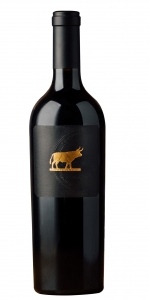
Irresistible ripened plums and opulent dusty blackberries lift the senses, alluring the nose to tertiary notes of delicate florals and intriguing mineral edges. Balance is the defining quality of this wine; even in its youth, 2021 Black Label is resolutely complete from beginning to end. Every element is in place, as dimpled yet silky tannins unfold with grace and finesse, revealing a core of power and depth. Broad strokes of black mulberries, crème de cassis, and juniper accelerate through the mid-palate with captivating width and focus. This thrilling dance culminates in a stunning finish of opulent and elegant dark fruits that persist with each sip, leaving an indelible impression of the near-perfect growing season that shaped the Fortuna Vineyard—full of power and sinue—and Leopoldina Vineyard—full of poise and intention—in the 2021 vintage.
"Stunning stuff, the 2021 Cabernet Sauvignon Black Label offers a full-bodied, deep, majestic style as well as beautiful aromatics of cr me de cassis, violets, flowers, and nicely integrated background oak. It has ultra-fine tannins, flawless balance, and a regal, age-worthy style that has so much to love. It, however, is not going to be for the instant gratification crowd and this actually shut down pretty quickly with air. I would hide bottle for 4-6 years and it s going to cruise over the following two decades in cold cellars."
- 97 Points Jeb Dunnuck
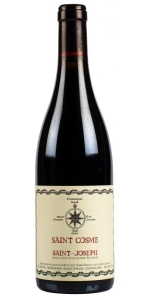
Louis Barruol describes the microclimate of the vineyard Malleval as “very cold” which allows the grapes to retain acidity and showcase the floral aromas of the local Sérine variety. Aromas and flavors of blackberries and wild strawberries are accented by notes of peppercorns, tobacco, peonies, and violets.
Syrah, with its deep flavors and firm tannins, is a natural match for grilled or smoked meat and dishes featuring herbs, roasted mushrooms, and onions. Seared venison or beef with black pepper and thyme or a Moroccan tagine of pigeon or chicken are complimented by the spicy characteristic of Syrah.
Review:
This rich and impeccably balanced Gigondas has everything we look for in the wines of this appellation. What a wide spectrum of aromas with everything from raspberry to candied orange, plus a slew of delicate spicy notes and fresh Mediterranean herbs. I love the interplay of richness, fine tannins and lively acidity on the generous, but not expansive palate. Very long, refined finish. From organically grown grapes. Drink or hold.
-James Suckling 94 Points
Powerful, with steeped plum and cherry coulis merging with potpourri and charred garrigue on a ripe, lush palate. Packs a wall of iron that provides a ballast for the ripe fruit, while refined tannins build in intensity. Long and complex, with a gorgeous expression of place. Grenache, Mourve`dre, Syrah and Cinsault.
Wine Spectator 94 Points
Tinel Blondelet Pouilly-Fume Genetin is made from 100 percent Sauvignon Blanc.
The soil is made of "caillottes" (limestone stones).
"Genetin" is a name given in homage to the original name for Sauvignon Blanc: Muscat Genetin. The Genetin bottling is normally reserved for the most powerful Cuvées in the winery. No oak.
Produced from 25 year-old vines coming from the Villiers limestone terroir, situated in Bouchot.
Traditional vinification in thermo-regulated stainless steel tanks. Following a gentle pressing the juice is then fermented at controlled temperatures before being left to mature on its fine lees to gain extra depth and concentration before bottling in the next spring.
Matured on fine lees bringing finesse to the wine and bottled late in order to let all its roundness evolve.
Yield: 55 hl/ha
A golden colored and mineral wine with elegance and finesse. Can be cellared for 2-3 years.
A mineral-laced smoky accent and citrus aromas. Elegant and powerful on the palate.
Food pairing: shellfish, goat cheese such as “Crottin de Chavignol”. Perfect also as an aperitif.
Review:
- Wine & Spirits (Regional Tasting Report, Spring 2022), 91 pts
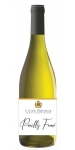
Shirley & David Maudry Pouilly-Fume Cuvee Prestige is made from 100 percent Sauvignon Blanc.
Delicate nose of vanilla dominated by citrus fruits such as grapefruit and pineapple. In the mouth, this wine has a nice balance between fruit, minerality and acidity with a long finish.
RS: <1g/L
TA: 4.5g/L
Pairing: Aperitif, fish, seafood, oysters, white meats, spicy dishes and Asian cuisine.



