" We don't sell the wine without touching the vine "
| BUY MORE! SAVE MORE! | ||||||||||||||||||||
|
| Country: | France |
| Region: | Alsace |
| Winery: | Wolfberger |
| Grape Type: | Gewurztraminer |
| Vintage: | 2023 |
| Bottle Size: | 750 ml |
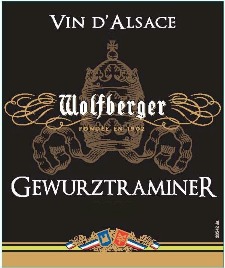
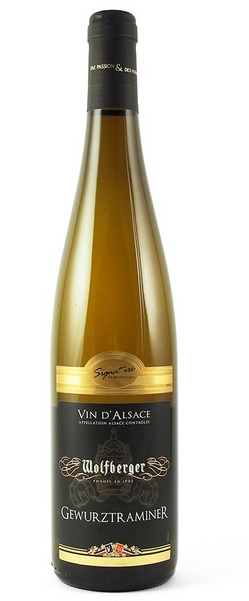
Wolfberger Alsace Gewurztraminer is made from 100 percent Gewurztraminer
Very aromatic, with rose petal, peach and honeysuckle aromas. Full bodied, bright, zesty and crisp, this wine is extravagant and extroverted.
This wine has been awarded with silver and gold medal on a regular basis for the last decade.
The Wolfberger Estate
Wolfberger is a union of producers located in Eguisheim, south of Colmar. The city was also the home of Pope Leo IX, the Reformer (Pope from 1048 – 1054 A.D.). The winery was founded in 1902 when a group of wine-growers in Eguisheim decided to join forces to create one of the first cooperatives in Alsace. The cave counts 800 members today. Wolfberger combines tradition and constant innovation to elaborate high quality wines and preserve their typicity.
The resident oenologist at Wolfberger is Bertrand Praz. A young but extremely capable winemaker, he learned his craft at the famous Dijon wine school and from working at the Mumm Champagne House. He has taken huge strides in raising the quality level here. They also take their evaluative wine tasting very seriously and have a highly efficient set-up for tasters. The amphitheatre style classroom has individual wine-tasting desks each with light, spit bowl and automatic water faucet.
"This huge cooperative with more than 800 members makes charming crémant sparklers and clean varietals at a bargain price." - Anthony Dias Blue's Pocket Guide to Wine 2006
"An Alsatian cooperative located just south of the town of Colmar, these are tasty, fairly priced, dry white wines from a region that could use some help." - Wine Advocate (Aug. 2010)
Wolfberger is the rare example, in the wine world, of bigger actually being better.
The Wolfberger Vineyard
With 1300 hectares (3,211 acres), 500 hectares of which are in and around Eguisheim, there is a lot of raw material for a specialty importer to choose from. Pinot Blanc has been known in Alsace since the 16th century. Today it covers 22% of the vineyards and is the second most important variety after Riesling. It succeeds well in most soils and enjoys the dry microclimate of the area. The grapes are gathered in vineyards situated above Eguisheim and in surrounding villages. Rangen is the most southerly vineyard in Alsace and belongs to the towns of Thann and Vieux-Thann. This mountainside vineyard ranges from 340 to 470 m in altitude, and its slopes are extremely steep (up to 85%), with dark, stony soil, where harvesting resembles mountain climbing because the grape-pickers work from top to bottom, secured with harnesses and ropes. The grapes are brought down on sledges. The river Thur which flows at its base helps to preserve it from spring frosts. From the geological point of view, Rangen is immediately adjacent to the main Vosges fault and lies on the Devonian-Carboniferous volcano-clastic base. This gives a siliceous rock, more or less coarse sand, with acid and basic minerals, fertilizing elements for the soil: Ca, K, Mg, Mn, Fe, F, P, S, with trace elements. Rangen is the only vineyard

Wolfberger Riesling Muenchberg Grand Cru is made from 100 percent Riesling.
The Muenchberg facing south terroir located in the commune of Nothalten benefits from a unique microclimate. From the 12th century, the Cistercian monks started cultivating the stony and sandy soils formed by volcanic sediments of 250 million years old. Hence the name of the terroir meaning “monks’ mountain”.
This volcanic stony, sandy soils absorb and retain the sunshine heat. They provide excellent drainage and rapid warming, as the ground in this small valley is protected from the rain. The Muenchberg terroir is perfectly suited for Riesling. The nobility of the varietal is due to its late-ripening character and a rare, real fullness from the exceptional terroir which, while unfertile, helps the vines produce fewer grapes with high concentration of flavors.
This Riesling Grand Cru Muenchberg shows a pale yellow color and gold tints. The nose develops complex citrus aromas, verbena and a mineral character. On the palate the wine is dense, fresh, full-bodied and sophisticated with elegant acidity. The finish develops refined bitterness, citrus peels flavors and a touch of salinity.
This Grand Cru matches well seafood, bass with sauce, sea bream with fennel, dry goat’s cheese, roasted poultry with Riesling sauce.

Wolfberger Alsace Grand Cru Hengst Gewurztraminer is made from 100 percent Grand Cru Gewurztraminer.
Hengst means stallion in alsatian.
Floral nose, yellow fruits, sweet spices. The mouth is ample with the same aromatic.
Tangential filtration before bottling.Vinification in stainless steel tanks at 16°C then aging on fine lees until spring of the following year.
Full-bodied cheese (munster, époisses), curry, dessert with fresh fruit

Wolfberger Alsace Edelzwicker is made from 40 % Pinot Blanc, 30% Riesling, 15% Gewurztraminer and 15 % Muscat
Edelzwicker has a nose of grilled almonds and walnuts, with a light floral hint following. The first sip shows its true character: fresh and lemony with vegetal, herbaceous flavor. It is round and easy drinking, not overpowering and finishes clean.
Each grape variety is harvested individually in early or mid-October on the most suitable date for each vineyard.
It is a good companion for food without ever dominating it. In Alsace it is served by the glass or in large jugs to partner regional specialties. In general Edelzwicker goes well with fresh salads, cold or warm starters, but also with oysters, mussels and seafood. It should always be served chilled, around 10 ° C.

Wolfberger Alsace Grand Cru Riesling Rangen de Thann is made from 100 percent Riesling.
Mineral, spicy, minty with some eucalyptus notes, tropical fruits, grapefruit. Balanced and exotic in the finish, with long lasting flavors.
The Rangen Grand Cru is located in Thann, deep in the south of Alsace. Its particular soil is made of volcano-clastic rocks that drink up the heat of the day and send it back out again at night. The composition of the soil allows the roots of the vines to drink deeply from the mineral-rich sub-soil. Its southern exposure has the advantage of refreshing, drying winds in case of dampness. The high slopes are quite steep, reaching 68% in some places, requiring that the harvest be done by abseiling or roping down. Perfect for aging, these wines will reveal even more qualities after several years in the cellar.
Pair with Serve with fish, seafood, sushi, sashimi, goat cheese, vegetarian food.
Review:
"Aromas shimmy out of the glass. An enticing haze of petrol is lifted by lime and grapefruit zest, as well as pineapple. The texture of this wind is smooth and heavy, but the acidity and citrus notes bring freshness and light. A long finish carries just a hint of menthol. - LAYLA SCHLACK"
- Wine Enthusiast (November 2021), 93 pts
Wolfberger Alsace Grand Cru Riesling Rangen de Thann is made from 100 percent Riesling.
Mineral, spicy, minty with some eucalyptus notes, tropical fruits, grapefruit. Balanced and exotic in the finish, with long lasting flavors.
The Rangen Grand Cru is located in Thann, deep in the south of Alsace. Its particular soil is made of volcano-clastic rocks that drink up the heat of the day and send it back out again at night. The composition of the soil allows the roots of the vines to drink deeply from the mineral-rich sub-soil. Its southern exposure has the advantage of refreshing, drying winds in case of dampness. The high slopes are quite steep, reaching 68% in some places, requiring that the harvest be done by abseiling or roping down. Perfect for aging, these wines will reveal even more qualities after several years in the cellar.
Pair with Serve with fish, seafood, sushi, sashimi, goat cheese, vegetarian food.

Wolfberger Alsace Pinot Blanc is 100 percent Pinot Blanc
This clean and crisp style of wine displays delicate peach aromas with a hint of almonds. Smooth on the palate, it is balanced, with a creamy texture and a clean finish.

Wolfberger Alsace Pinot Gris is made from 100 percent Pinot Gris.
Powerful and well structured wine. Round, rich, offering fruity aromas, toasty and spicy notes.
Excellent as an aperitif, it also pairs well with poultry, game and numerous cheeses.

Argot Simpatico Ranch Chardonnay is made from 100 percent Chardonnay.
Powerful aromas of key-lime, white flowers, orange blossoms and a fierce, flinty, sauvage note define a wildly complex nose. Once in the mouth, gracefully pronounced textures coat the palate delivering an exotic interpretation of cool-climate Chardonnay character — lime peel, orange blossom, ginger and clove —lingerings deep into a vibrant finish.
Planted 1978. Shallow volcanic soils on the gently-sloped, south-facing foothills of Bennett Peak on Bennett Valley’s floor. One of California’s coolest Chardonnay vineyards. In the final year of 3-year draught cycle, Simpatico Ranch saw its earliest ever harvest and smallest crop, exposing a reserve of exoticism and minerality previously untapped. A watershed vintage for both the vineyard, and appellation. Night harvested by hand on 9/16, whole-cluster pressed direct to barrel; no settling to ensure maximum lees contact. Barrel fermented on heavy lees. Malolactic fermentation. 16 months in French oak, 50% new. Finished 2 months in steel tank, low Sulphur during barrel elevage.
Review:
The 2021 Chardonnay Simpatico Ranch needs a lot of swirling before it shoots from the glass with notes of lemon tart, orange blossoms, candied ginger, and fresh nectarines with hints of crushed rocks, struck flint, and nutmeg. The medium to full-bodied palate delivers amazing tension, with tight-knit citrus and spice layers and a fantastically well woven satiny texture, finishing long and layered. "We only get about 1.5 tons per acre here," said owner/winemaker Justin Harmon. "This comes from old vines on AXR rootstock."
-Wine Independent 97 Points

Siegel San Elias Chardonnay is made from 100 percent Chardonnay.
This Chardonnay has a light yellow color with green highlights. The nose shows fresh and intense tropical fruit aromas of pineapple, citrus, herbs and a touch of honey. On the palate it is lush, smooth and well-balanced with good acidity and lovely tropical fruit flavors.