
" We don't sell the wine without touching the vine "
| Country: | United States |
| Region: | Washington |
| Winery: | Abeja |
| Grape Type: | Chardonnay |
| Vintage: | 2016 |
| Bottle Size: | 750 ml |

Lismore Chardonnay Reserve made from 100 percent Chardonnay.
A careful selection of the best of the vintage that exemplifies the extraordinary terroir of Lismore. This Reserve Chardonnay shows intense citrus, stone fruit, jasmine and walnut layered with honey and vanilla carried by a distinct minerality and crisp acidity with a lingering citrus finish.
Wine Made in the Soil
The vineyards are planted in decomposed shale over clay at 300 meters in the foothills of the Sonderend Mountain Range. A low mean February temperature lends to an extended ripening period that can put harvest 3-4 weeks later than traditional wine growing regions in South Africa. The intense citrus notes and the lingering finish are consistent trademarks of Lismore's specific terroir. The restrained minerality of the Chardonnay is a clear indication of the cool climate in which it is grown.
Wine of Origin "Greyton" has been designated by SAWIS recognizing the special terroir of this region.
Delightful with warm curries which lift the aromatics or a traditional pairing of smoked salmon highlighting the fresh acidity.
Review:
100% Chardonnay matured in Burgundian oak (33% new) for 11 months. This Reserve Chardonnay shows intense citrus, stone fruit, jasmine and walnut layered with honey and vanilla carried by a distinct minerality and crisp acidity with a lingering citrus finish.
-Karen McNeil 95 points

Crown Point Estate Selection is made from 75% Cabernet Sauvignon, 10% Merlot, 6% Petit Verdot, 6% Cabernet Franc, 3% Malbec.
The 2016 Crown Point Estate Selection exhibits a heady aromatic array of baking spices, ripe red and black fruits, with deep intonations of earth and minerals. The palate is elegant and bright, with appealing acids and nuanced notes of savory mocha and dried herbs. Polished and seamless, the tannins finish with a comet-like trail of textural opulence highlighted by glossy flavors of baked berry pie and warm toast. Recommended drinking window: now through 2030s.The 2016 Estate Selection is representative of all five red Bordeaux varieties. The selection process starts in the vineyard and continues on through the winemaking process: only the best lots make the final blend. All blocks were harvested & fermented separately. The individual components were blended after 12 months in barrel. Total time in 225 liter French oak barrels was 26 months.
Review:
Deeply colored, the 2016 Estate Selection checks in as 75% Cabernet Sauvignon, 10% Merlot, 6% Petit Verdot, 6% Cabernet Franc, 3% Malbec that was brought up 26 months in 75% new French oak. Deeply colored, it has a smoking good bouquet of crème de cassis, smoke tobacco, lead pencil, camphor, and hints of chocolate. This gives way to a powerful, opulent Cabernet Sauvignon that has plenty of sweet tannins, a layered, multi-dimensional texture, no hard edges, and an awesome finish. I’d happily put this beauty in a lineup of top Napa Valley Cabernet Sauvignon and blends.
-Wine Enthusiast 97 Points
There’s an impressive amount of complexity on the nose of this bottling by winemaker Adam Henkel, from crushed graphite and concentrated black strawberry to cinnamon pastry, licorice and a brush of herbs. The sip is intense, with leathery but chiseled tannins presenting flavors of charred black currant, licorice, black olive, dried flower and white pepper
-Jeb Dunnuck 97 Points

Our organically farmed high-density Estate parcel sits at the top of the ridge amongst the diverse coastal forest. Although the soil is sandy, there’s a vein of clay in the subsoil that holds winter rain and allows us to dry-farm the vines. The tight spacing keeps the clusters and soil shaded during the summer heat, which allows the fruit to retain all the nuance of the site. The wine produced here has a character - a signature - all to itself and cannot be replicated elsewhere; it's the antithesis of fruity, forward, easy-to-understand Californian Chardonnay. The grapes are small with thick skins, producing a high level of fruit extract, which translates to deep texture and structure in the wine itself. Concentration allied to freshness is the essence of this wine, and it ages beautifully in bottle for ten to twelve years.
The wine’s aromas and flavors are incredibly complex and diverse, akin to citrus oil, preserved lemon, sage, fennel and caraway. The wine is deep, powerful, and layered with oyster shell freshness cutting through the natural density. Lemongrass, spearmint, and grapefruit power the finish, which pulsates with intensity. You could decant this for an hour before serving to hasten its development. Drink between 2025 and 2030. Serve no cooler than 55º F.
Review:
From a site surrounded by dense forest on two sides, the 2022 Chardonnay DuMOL Estate Vineyard is a bright straw hue and has a more vibrant aromatic nose of fresh mint, bright lime, flint, crushed stones, and white peach. Medium to full-bodied, it boasts a remarkably firm structure with a bit of tannin, a chalky texture, and a savory slanting profile, and it’s long and persistent on the finish. It has an assertive but crystalline feel and a crunchy brightness. It demands a bit of time. Drink 2025-2035.
-Jeb Dunnuck 96 Points

Mt Monster Chardonnay is made from 100 percent Chardonnay.
Gentle pressing and free run juices create the base of this wine.
Traditionally Mt Monster Chardonnay is 100% fermented and matured in stainless steel, this receives some lees contact to add texture and complexity to the palate, but essentially this wine is pure Chardonnay fruit.
Review & Tasting notes:
Bright straw color, with hints of lime green. Fresh figs and melon, with vibrant lemon citrus fruit. The nose also shows some yeast complexity from extended lees contact. Fresh tangy melon fruit flavors, & a clean acid finish. Although it may benefit from up to 2 years maturation in bottle, this wine is best consumed when young and fresh.
- Australian Wine Showcase (December 2016), 94 pts

Paul Hobbs Edward James Estate Chardonnay Russian River Valley is made from 100 percent Chardonnay.
This small five-acre estate named after Paul's great-grandfather, Edward James, rewards us with a chardonnay that is pale straw in color with inviting aromas of lemon zest, red apple skin, gardenia, and honeysuckle. A creamy mouthfeel on the palate evolves into poached pear, ginger spice, and brioche that come together with a crunchy acidity and lively finish.
Review:
The 2022 Chardonnay Edward James Estate was named after Paul’s grandparents on his father’s side and originates in a vineyard planted entirely to Hyde Wente clone of Chardonnay. It was raised in French oak for 18 months on the lees. In the glass, it’s highly expressive and layered with aromas of toasted spice, incense, honeysuckle, quince, and preserved citrus. Medium to full-bodied, it has a fantastic, long, supple texture with a linear, crystalline feel, great, evenly fresh acidity, and a salty, mouthwatering finish. This is my favorite of the white wines at this tasting. Drink 2025-2037.
-Jeb Dunnuck 97 Points

Paul Hobbs George Menini Estate Chardonnay is made from 100 percent Chardonnay.
Located on the southwestern edge of the Russian River Valley appellation in an area known as the Sebastopol Hills, this Chardonnay from George Menini Estate displays pale straw in color and boasts an elixir of white and yellow florals, tart yellow apple, bartlett pear, and baking spice. A precise yet supple wine with notes of juicy Gravenstein apple, vibrant sea salt, and crushed rock, complemented by a cool-climate zing of acidity. An impressive level of complexity for a young vineyard.
Review:
The 2022 Chardonnay George Menini Estate comes from the Sebastopol Hills, where this vineyard was once an old apple farm. In the glass, it pours a bright silver/yellow color and is lifted and fresh on the nose, opening to notes of wet stone, dewy citrus blossoms, almonds, and fresh pear. Elegant and medium-bodied, it’s long on the palate, with delicate floral notes and hints of lemon curd through the finish. Drink 2025-2037. 675 cases were produced.
Jeb Dunnuck 95 Points
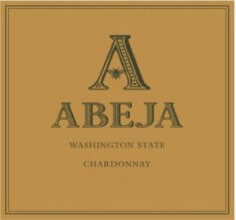
Abeja Chardonnay Washington State 2013 is 100 percent Chardonnay
This Chardonnay has the essence of a freshly baked lemon meringue pie, green apple, and Bartlett pear. It is both dense and bright, with a hint of vanilla and cinnamon coming from its time in barrel. Aromas are so much related to experiences. It is a wine that is in the traditional Abeja style, with superb polish, complexity, and balance, yet with a light touch at 13.5 percent alcohol.
The Abeja Winery
The Abeja Winery sits at the base of the Washington Blue Mountains, just east of Walla Walla, on a farm estate over 100 years old.
Ken and Ginger Harrison spent 35 years in Portand, Oregon before their strategic move to Walla Walla. The growing climate was ideal for Cabernet Sauvignon, Ken’s preferred varietal, which made this the perfect location for Abeja Winery. Ken focused on growing and producing, while Ginger operated the Harrison’s Inn.
In 2002, Ken and Ginger met the perfect additions to their Abeja Winery team, John Abbott and Molly Galt. Hailing from the Napa Valley since college, John worked at Pine Ridge and Acacia Winery. He and Molly later began Canoe Ridge Vineyard in Walla Walla. Molly handled all of the marketing and public relations and John was the winemaker for almost ten years.
When choosing a name for their vineyard, they wanted to represent a period of farming that had respect for the environment and close connection to the earth. The word “Abeja” is Spanish for bee. The simplistic nature and beauty of the word complimented their “farm softly” style. The honeybee is the ultimate symbol for their way of life because honeybees are so impacted by how one farms and yet very important to an ample and robust style of agriculture. The Abeja Winery truly strives to make a difference by minimizing impact and nurturing the land. Abeja vineyards are certified sustainable farming by organizations such as LIVE, Salmon Safe, and Vinea.
Some wines from Abeja Winery:
Any Abeja wines we have in stock are listed below, if you don’t see the wine you are looking for please don’t hesitate to ask for it.

Loring Cooper Jaxon Pinot Noir is made from 100% Pinot Noir
Aged 10 Months in French Oak (15% New)
A special blend in honor of Cooper Jaxon Loring - the next generation of Loring. We don't limit the wine to any
specific AVA, but rather look for a blend that is big, bold, and super tasty!
Juicy and vibrant, with aromas of raspberry puree, blackberry and spring flowers.
Vines are planted on Arroyo Seco Sandy Loam soils on the following vineyard sites: Rancho La Viña, Kessler-Haak, Clos Pepe, John Sebastiano, Aubaine, Rosella's and Sierra Mar.
Vinification is traditionnal with minimal intervention.
Wine went thought Malo-Lactic fermentation and was bottled without filtration.
pH 3.61
Clones: Pisoni, 113, 115, 667, 777, 23
Pairs well with steak and lamb, spicy foods & mild cheeses.
Review:
"This fun and whimsical label from Brian Loring delivers his rich style of Pinot Noir at an affordable price, offering aromas of black cherry, forest herbs, damp sage and crushed slate. The palate is earthy, offering flavors of dark berry, fennel frond, roasted meat and clove. Matt Kettmann"
- Wine Enthusiast (June 2019), 92 pts - Editors' Choice

Ruffino Alauda Toscana IGT is made from 40% Cabernet Franc, 35% Merlot, 25% Colorino.
An elegant, full-bodied wine, Alauda is a harmonious sum of its parts. Rich with varietal flavors of plum and cherry from the Merlot and layered with ripe berry flavors from the Cabernet Franc, and unique balsamic and dark chocolate notes from the Colorino. The extended oak aging process integrates the blend while providing tertiary flavors of sweet spice and soft, elegant tannins for a lingering finish. This wine will age gracefully for decades.

Thorn Clarke Varietal Collection Pinot Gris is made from 100 percent Pinot Gris.
We believe that exceptional wines are created in the vineyard and that we are custodians, rather than creators of quality. Six generations of rich viticultural and geological family history has gone into creating these wines, which truly showcase the best of the Barossa & Eden Valley.
Pale straw in color with quartz green hues at the edge. A classic Pinot Gris style with lifted nashi pear, apples and nougat aromas. The palate is a textural, medium weight style with juicy pome fruits and zesty lime and grapefruit. A refreshing style with a subtle texture and long, fruit driven finish.



