" We don't sell the wine without touching the vine "
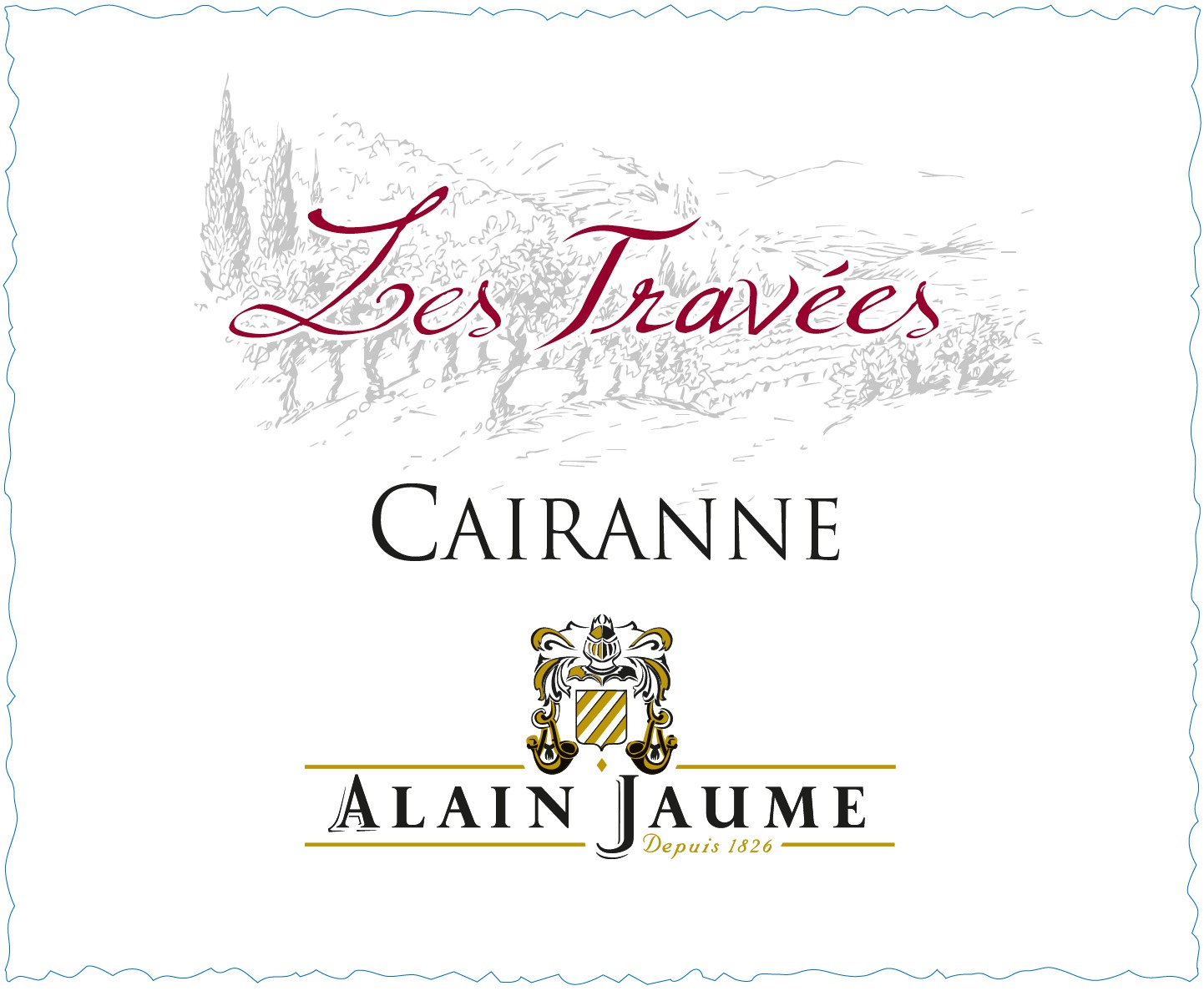
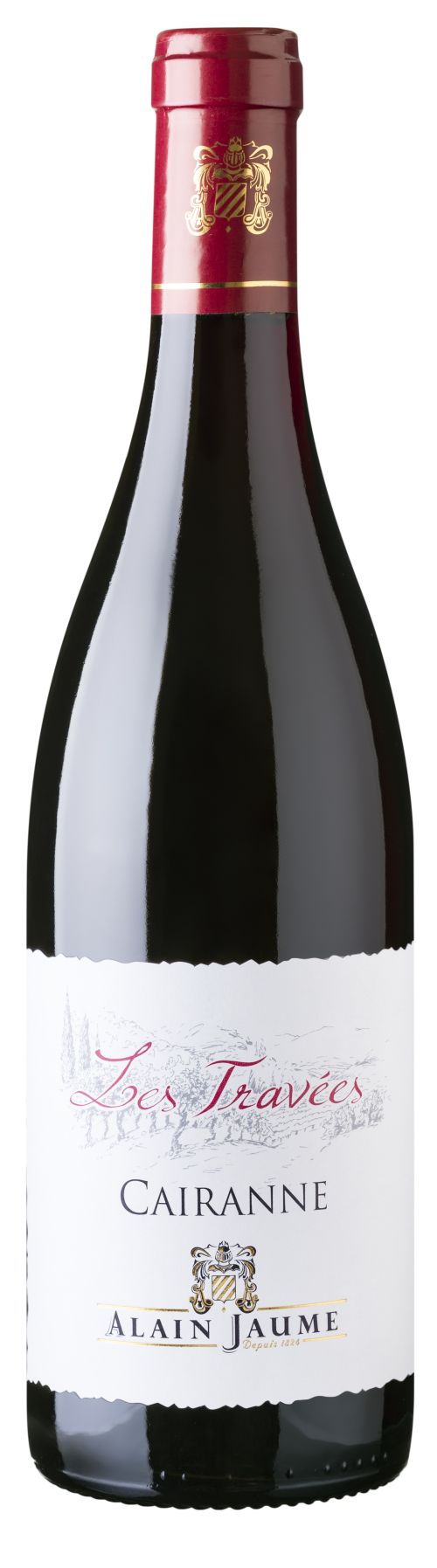
Alain Jaume Cairanne Les Travees is made from 65% Grenache, 35% Syrah, 5% Mourvèdre.
Our selected vines for this cuvée are on slopes facing south.
.
The wine delivers an intensive nose, with loads of black fruits.
Starting full and concentrated, with silky tannins, the mouth reveals blackcurrant and a cherry fruit typicity.
It finishes with typical notes of pepper and earth.
Enjoy with roasted lamb or braised or BBQed pork. gpoes also very well with mild cheese, such as brie or camenbert.
Alain Jaume Rasteau Les Valats is made from 80% Grenache, 10% Syrah, 10% Mourvedre planted on clay and stones based soil.
Located in the northern part of the Vaucluse, the soils are mostly on slopes with limestone and rocks, at medium altitude (until 350 meters).
Grapes usually ripeness in late September. The soils are poor and the Mediterranean climate allows to produce concentrated and well balanced grapes. The place is well-known for producing wines with strong identity.
From the Cotes du Rhone Villages classification, RASTEAU has been upgraded to Cru level since the 2009 vintage.
The wine shows a deep red garnet color and a nose of fresh red berries. On the palate, the richness of the fruit and tannins harmonizes with the roundness of the wine. The finish is long, with spicy and mineral notes. Complete and authentic.
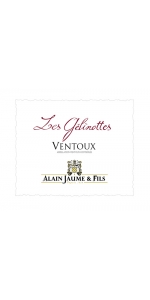
Alain Jaume Ventoux Les Gelinottes is made from 50% Grenache and 50% Syrah
The colour is intense, purple-tinged garnet. The aromatic range of the nose goes from fresh berries to black fruit (blackcurrant, blackberry). The palate is full-flavoured, with very soft tannins and aromas of the fruit already mentioned. This is a gorgeous style of wine, fruity driven, for every day drinking...anytime !
Soil types
The wine is produced from hilly vineyards that are mainly planted on sandy and clay soils. They are located on the East side of the Rhone valley, in the Vaucluse area. Welcome to the foothills of the well known “Mont Ventoux” Mountain.
Winemaking and aging
Stainless steel fermentaion at cool temperature to preserve the fruits and typicity. Bottling 8 months after the harvest.
Goes well with quite a lot of food such as Pizza, Pasta, hamburger, mild cheese or even on its own.
Alain Jaume Ventoux Les Gelinottes is made from 50% Grenache and 50% Syrah
The colour is intense, purple-tinged garnet. The aromatic range of the nose goes from fresh berries to black fruit (blackcurrant, blackberry). The palate is full-flavoured, with very soft tannins and aromas of the fruit already mentioned. This is a gorgeous style of wine, fruity driven, for every day drinking...anytime !
Soil types
The wine is produced from hilly vineyards that are mainly planted on sandy and clay soils. They are located on the East side of the Rhone valley, in the Vaucluse area. Welcome to the foothills of the well known “Mont Ventoux” Mountain.
Winemaking and aging
Stainless steel fermentaion at cool temperature to preserve the fruits and typicity. Bottling 8 months after the harvest.
Goes well with quite a lot of food such as Pizza, Pasta, hamburger, mild cheese or even on its own.
Alain Jaume Bellissime Cotes du Rhone Rose is made from 50% Grenache Noir, 25% Cinsault, 20% Syrah and 5% Mourvedre
Salmon-pink color, clear and brilliant. The nose is fruity and spicy, reminiscent of wild strawberry and fine Provencal spices. The palate is full, well-balanced and fruity, with a long, fresh finish. A beautiful and delicate rosé.
A part is drawn off the skins with short maceration and the other part is from direct press. Fermentation in stainless steel at cool temperature. Bottling 5 months after harvest.
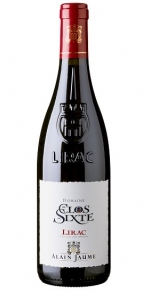
Alain Jaume Domaine du Clos de Sixte Lirac is made from 50% Grenache, 35% Syrah, 15% Mourvedre
An intense red garnet color. On the nose, aromas of red and black ripe fruit (kirsch and wild blackberry). The mouth is full, with aromas of blackcurrant liqueur and spice. Tannins are both harmonious and elegant thanks to the fleshiness of the wine. Hints of licorice and vanilla on the finish, which gives the wine length and complexity.
Soil type LIRAC vineyard is facing Chateauneuf du Pape, opposite side of the Rhône river. As showed by the picture and following geologist George Truc, soils are almost similar in both side. They are marked by the violence wrought by the Rhone river. It consists of a layer of marine molasses of the Miocene period covered by alpine alluvium. The presence of a great number of rounded stones known as "galets" in the earth is evidence of the time when the Rhone, then a torrent, tore fragments of rock from the Alps and deposited them on the plain. LIRAC is one of the up-coming best area from the southern Rhône valley, as it delivers outstanding wines. Winemaking & ageing Traditional wine-making in stainless still vats. Hand sorted bunches, crushed and destemmed grapes. Fermentation temperature : 30°C. 18 days of vatting with pigeages.
Alain Jaume Cairanne Les Travees is made from 65% Grenache, 35% Syrah, 5% Mourvèdre.
Our selected vines for this cuvée are on slopes facing south.
The wine delivers an intensive nose, with loads of black fruits.
Starting full and concentrated, with silky tannins, the mouth reveals blackcurrant and a cherry fruit typicity.
It finishes with typical notes of pepper and earth.
Enjoy with roasted lamb or braised or BBQed pork. gpoes also very well with mild cheese, such as brie or camenbert.
The Alain Jaume Winery
Established in 1826 in the Northern part of Chateauneuf du Pape, the Alain Jaume Winery boasts both the exceptional terroir of the Southern Rhone Valley and a long line of dedicated winemakers. Alain Jaume works in accordance with certified organic agricultural practices for both the Grand Veneur and Clos de Sixte vineyards. They strive to let the true terrior be expressed in their wines.
The principal winemaker is Alain Jaume. His sons Sebastien and Christophe are both heavily involved with the winery in sales and marketing and winemaking respectively. The Alain Jaume winery consists of 40 acres in Chateauneuf du Pape, 50 acres in Lirac, and 75 acres of Cotes du Rhone vines. The family produces wines under two labels: Domaine Grand Veneur and Alain Jaume.
In 1320 Pope Jean XXII planted the first vines of Chateauneuf-du-Pape, but it was only in 1360 that the wines of the region first gained fame. Oddly, the wine that gave Chateauneuf-du-Pape its original reputation was the White and not the Red. The white wine was a favorite of Pope Innocent VI. The Domaine dates back to 1826, having been founded at that time by Mathieu Jaume. Since 1979, Alain Jaume has run the Domaine and now has the help of his two sons: Sebastien and Christophe.
"Popes throughout history have liked their juice, and when the papal see moved to Avignon in the 13th century, that juice was Chateauneuf-du-Pape ("the pope's new castle") made from grapes grown nearby in the Southern Rhône. The castle is a ruin now, the papal court long gone back to Rome, but the wines that bear the pope's coat of arms emblazoned on the bottle are still produced more or less according to the long-standing recipe. Not every winemaker uses all 13 of the grapes in the proscribed blend, though. At Domaine Grand Veneur, an estate that dates to 1826, Alain Jaume and his sons Sebastien and Christophe emphasize Grenache blended with Syrah and Mourvèdre."
- Los Angeles Times
"Improved Chateauneuf with very accomplished, stylish reds since the late 1990s; also very good Vacqueyras and Cotes-du-Rhône Villages." - Anthony Dias Blue's pocket guide to wine 2006
"Grand Veneur is one of the most brilliant estates in Chateauneuf du Pape as well as the force behind the negociant wines sold under the Alain Jaume label. Virtually everything they produce has merit. Some of this estate’s 2009 red wines are just hitting the market as they are bottled early to preserve their fruit and freshness. I can’t say enough about the job Alain Jaume’s two sons, Sebastian and Christophe, have done with this estate. The impeccable attention to detail in the vineyards, the meticulous vinification, and the careful bottling benefit every consumer." - Wine Advocate (#190, August 2010)
"Great bargains continue to emerge from Domaine Grand Veneur as well as from their negociant arm of the business, labeled Alain Jaume" - Wine Advocate (#195, June 2011)
"One of the best-run and highest quality estates of the Southern Rhone is Domaine Grand Veneur, now run by the younger generation of the Jaume family, Sebastien and Christophe. The brothers have done a fabulous job taking over for their quality-oriented father, Alain. These are their less expensive wines, but I will follow up later this year with my reviews of their 2010 Chateauneuf du Papes as well as the 2011s, which I have not yet tasted. They have certainly gotten a good start on their 2011 less expensive Cotes du Rhone selections. The Jaumes are some of the finest practitioners of white winemaking in the Southern Rhone and showcase that with their least expensive offerings, which are creative blends that over-deliver." - Wine Advocate (Issue #201, June 2012)
Some wines by Alain Jaume Winery:
Any Alain Jaume wines we have in stock are listed below, if you don’t see the wine you are looking for please don’t hesitate to ask for it.
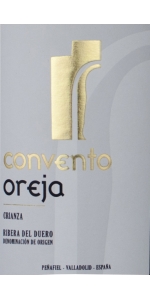
Convento Oreja Ribera del Duero Crianza is made from 100 percent Tempranillo.
Bright cherry color. On the nose you will find plenty of fruit aromas, well balanced as well as some reminiscences of spices that are appreciable. The oak presence gives elegant hints of black chocolate and vanilla. On the palate, the wine is very smooth and well balanced with the right amount of acidity. Fresh, long lasting and elegant.
The wine went through malolactic fermentation. The wine was aged 12 Months in French Oak barrels. Before bottling, the wine was slightly filtered.
Review:
A bouquet of Luxardo cherry, blackberry preserves and lavender wafts from the glass. Surprisingly juicy on entry, this wine has flavors of pomegranate, ripe cherry, orange zest, dried thyme, dark chocolate and violet. Opulent tannins build in volume and then recede into a finish that is filled with bright fruit notes. — Mike DeSimone
- Wine Enthusiast (June/July 2023), 94 pts
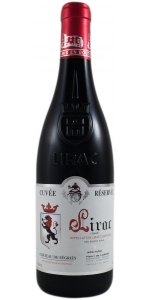
Segries Lirac Rouge Cuvee Reservee is made from 50% Grenache, 30% Syrah, 10% Cinsault, 10% Mourvèdre
Dark garnet in color. Expressive Red fruits and spicy. Sweet tannins and good length
Ageing up to 10 years
Vineyards Clay and limestone Area: 24 hectares Age of Vines: 80 years Yeild: 24 Hl/Ha Production: 570 Hl Harvest and VInification Harvest by hand and 100% destemmed. Maceration for 21 days in cement tank - Fermentation with controlled temperature at Château de Ségriès.
Pairs well with Stews, Grilled meats, Game, Various cheeses
Grace Town Old Vine Zinfandel Lodi is amde from 98% Old VIne Zinfandel + 2% Cabernet Sauvignon.
Ruby red in color, with red fruit, raspberry, and spice on the nose. This wine is medium in body, with notes of ripe cherry, cedar box, cinnamon, anise, black pepper, and hint of smoke on the palate. It has a long, silky finish.
Pioneiro Red Wine Vinho Regional Peninsula de Setubal is made from 60% Castelao (also known as Periquita), 30% Aragones and 10% Syrah
Aged 5 months in French oak barrels
The story of this wines begun more than a century ago, with the pioneering dream of Venâncio da Costa Lima: to bring good wines to every corner of Portugal. Pioneiro wine brand was created to pay homage to his vision.
What's Unique? Pioneiro (meaning “pioneer” in Portuguese) wine vintage style label pay homage to the founder’s dream, dating back to 1914. But in a relaxed, casual way, typical of this wine producer mood.
Intense garnet color, complex nose with touches of ripe fruit, jam and spices, full-bodied flavor and a very balanced finish.
Castelao: as the most widely-grown red grape variety in Portugal it is still often referred to in Portuguese as "Periquita" or "Joao de Santarem", although that name is legally owned by José Maria da Fonseca in the Setúbal Peninsula outside of Lisbon. It is highly adaptable to different climatic conditions and its remarkable versatility enables winemakers to make a range of wines – from the easy drinking and quaffable reds and rosados to the powerful and intense reds perfectly suited to lengthy cellaring. Castelão comes into its own and is most expressive in the Sétubal Peninsula, where it makes meaty and intense wines with aromas of red berries and blue flowers that marry well with the deft use of oak.
Made from 15 year old vines planted on sandy soils.
Classic vinification at controlled temperature (25 °C) with prolonged maceration for phenolic extraction. Wine went through malolactic fermentation.
It was aged 5 months in French Oak barrels.
Wine was slightly filtered before bottling to avoid sedimentation in the bottle and to ensure stability.
Pasta, Cheese, red meat and game.
Xavier Vignon Beaumes de Venise Rouge is made from 60% Grenache Noir, 15% Syrah , 15% Mourvèdre and 10% Cinsault.
Thanks to the altitude all the grape varieties have been vinified together. The altitude vines have brought enough acidity to proceed with a burgundy style ageing with 50% in barrels of 3 to 5 years and 50% in stainless steel tanks.
It's full-bodied and lush, with waves of black cherries, hints of stone fruit and nuances of allspice, pepper and licorice on the long finish.
Pairs with roasted pigeon with wild basil - Rack of lamb with thyme - Pork ribs with a barbecue sauce - Peking duck - Wild boar braised in beer
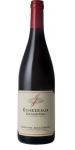
Domaine Jean Grivot Echezeaux Grand Cru is made from 100 percent Pinot Noir.
Domaine Jean Grivot is among the great names in Burgundian wine. Étienne Grivot and his wife Marielle took over from Étienne’s father Jean Grivot in 1987. The vineyards are densely planted and farmed organically “sans certification” while the aim in the cellar is for balance and clear expression of terroir.
Jean Grivot’s 15.5 hectares spread across 22 appellations with vineyards in the communes of Vosne-Romanée, Vougeot, Chambolle-Musigny, and Nuits-Saint-Georges. Besides the three grand crus, there are 8 premier crus including the much lauded Les Beaux Monts and Suchots in Vosne-Romanée. The grapes are completely de-stemmed and fermentation is spontaneous.
About the Vineyard:
Echézeaux grand cru is a large vineyard of 38 hectares divided into 11 individual climats. Grivot’s parcel is in the climat of Les Cruots and lies at the southern end of Echézeaux near the premier cru of Les Suchots. A good Echézeaux should have rich fruit, considerable earthiness, and be very complete on the palate.
Tasting Notes:
The wine shows aromas and flavors of red berries, herbs, and purple flowers. The palate is rich with ripe fruit and medium weight with bright acidity and fine tannins. Aging in 40-70% new Burgundian pièce brings notes of vanilla, toast, and baking spices.
Food Pairing:
Red Burgundy might be the world’s most flexible food wine. The wine’s high acidity, medium body, medium alcohol, and low tannins make it very food-friendly. Red Burgundy, with its earthy and sometimes gamey character, is a classic partner to roasted game birds, grilled duck breast, and dishes that feature mushrooms, black truffles, or are rich in umami.
Review:
A very elegant expression of Echezeaux, with a velvety black plum and rose petal fruit. There is a lovely freshness and so much finesse that the tannin and structure might surprise you at the end. This has the substance to age for decades. Produced from a 0.84ha parcel in Cruots next to Comte Liger-Belair. The vines were planted in 1954 and the destemmed fruit was gently fermented.
This is pure, racy and enticing, hosting aromas and flavors of black currant, blackberry, violet and iron. This is about finesse, grace and precision balance, with saturated fruit flavors persisting on the superlong aftertaste. Needs a decade in the cellar.
-Wine Spectator 97 Points
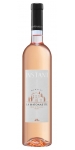
Domaine La Maionnette Rose Cotes de Provence is made from 60% Syrah, 20% Cinsault and 20% Grenache.
The plots of Domaine de la Maïonnette benefit from a clay-limestone soil and are located on a plateau surrounded by hundred-year-old oaks. Bordered by the Provencal scrubland, the vineyard enjoys a dry climate typical of the region.
An emblematic cuvée of the estate, this Cotes de Provence rosé reveals concentrated aromas of citrus fruits and white flowers, and a beautiful structure. The fresh palate brings out sweet candy notes, gooseberry and litchi, and delivers bright acidity and ample length on the finish.