" We don't sell the wine without touching the vine "
| Country: | France |
| Regions: | Rhone Condrieu |
| Winery: | Alain Jaume |
| Grape Type: | Viognier |
| Vintage: | 2020 |
| Bottle Size: | 750 ml |

Alain Jaume Saint Joseph La Butte d'Or is made from 100 percent Syrah.
The wine comes from vineyards that are sourced from the south of the appellation and located on hillsides that enjoy a east and southeast exposure. On the nose, this wine reveals aromas of pepper and jammy red fruits. In the mouth, it is balanced, ample and intense, offering beautiful tannins on the long lasting finish. A wine of character that can be cellared up to 8 years.
Manual harvest, selection of healthy and ripe grapes. Total destemming. Cold pre-fermentation maceration 5 to 6 days. Aged in oak barrels with 10% new oak.
Review:
-Josh Raynolds (Vinous) 92 Points

Alain Jaume Domaine du Clos de Sixte Lirac is made from 50% Grenache, 35% Syrah, 15% Mourvedre
An intense red garnet color. On the nose, aromas of red and black ripe fruit (kirsch and wild blackberry). The mouth is full, with aromas of blackcurrant liqueur and spice. Tannins are both harmonious and elegant thanks to the fleshiness of the wine. Hints of licorice and vanilla on the finish, which gives the wine length and complexity.
Soil type LIRAC vineyard is facing Chateauneuf du Pape, opposite side of the Rhône river. As showed by the picture and following geologist George Truc, soils are almost similar in both side. They are marked by the violence wrought by the Rhone river. It consists of a layer of marine molasses of the Miocene period covered by alpine alluvium. The presence of a great number of rounded stones known as "galets" in the earth is evidence of the time when the Rhone, then a torrent, tore fragments of rock from the Alps and deposited them on the plain. LIRAC is one of the up-coming best area from the southern Rhône valley, as it delivers outstanding wines. Winemaking & ageing Traditional wine-making in stainless still vats. Hand sorted bunches, crushed and destemmed grapes. Fermentation temperature : 30°C. 18 days of vatting with pigeages.
Review:
" . — Anna-Christina CABRALES"-Wine Enthusiast 91 Points

Alain Jaume Gigondas Terrasses de Montmirail is made from 65% Grenache the rest Syrah, Mourvèdre by less than 15%.
Deep red garnet color. Aromas of ripe and black fruits. On the palate the wine is rich, powerful and harmonious - well balanced with wild berry and pepper dominating.
Soil types
Located in and around the famous area called “Dentelles de Montmirail”, the landscape typicity is made by a rocky bar (between 100 and 600 meters high). Soils are made of clay and sand with limestone. The “Dentelles” appeared thanks to the pressure between the Pyrenees and Alps mountains. This is a land of predilection to produce both powerful and fresh wines. Nights are cooler and the grapes ripeness usually comes in late September.
Winemaking & aging
Traditional wine-making in stainless and concrete vats. Crushed and destemmed grapes. Average of 18 days of vatting with pigeages. Ageing in vats mostly and oak barrels. Bottling after 12 – 14 months.
Review:
-Wine Enthusiast 92 Points
-Antonio Galloni's Vinous 91 Points

Alain Jaume Bellissime Cotes du Rhone Rose is made from 50% Grenache Noir, 25% Cinsault, 20% Syrah and 5% Mourvedre
Salmon-pink color, clear and brilliant. The nose is fruity and spicy, reminiscent of wild strawberry and fine Provencal spices. The palate is full, well-balanced and fruity, with a long, fresh finish. A beautiful and delicate rosé.
A part is drawn off the skins with short maceration and the other part is from direct press. Fermentation in stainless steel at cool temperature. Bottling 5 months after harvest.

Alain Jaume Cairanne Les Travees is made from 65% Grenache, 35% Syrah, 5% Mourvèdre.
Our selected vines for this cuvée are on slopes facing south.
.
The wine delivers an intensive nose, with loads of black fruits.
Starting full and concentrated, with silky tannins, the mouth reveals blackcurrant and a cherry fruit typicity.
It finishes with typical notes of pepper and earth.
Enjoy with roasted lamb or braised or BBQed pork. gpoes also very well with mild cheese, such as brie or camenbert.
Review:
-James Suckling 92 Points
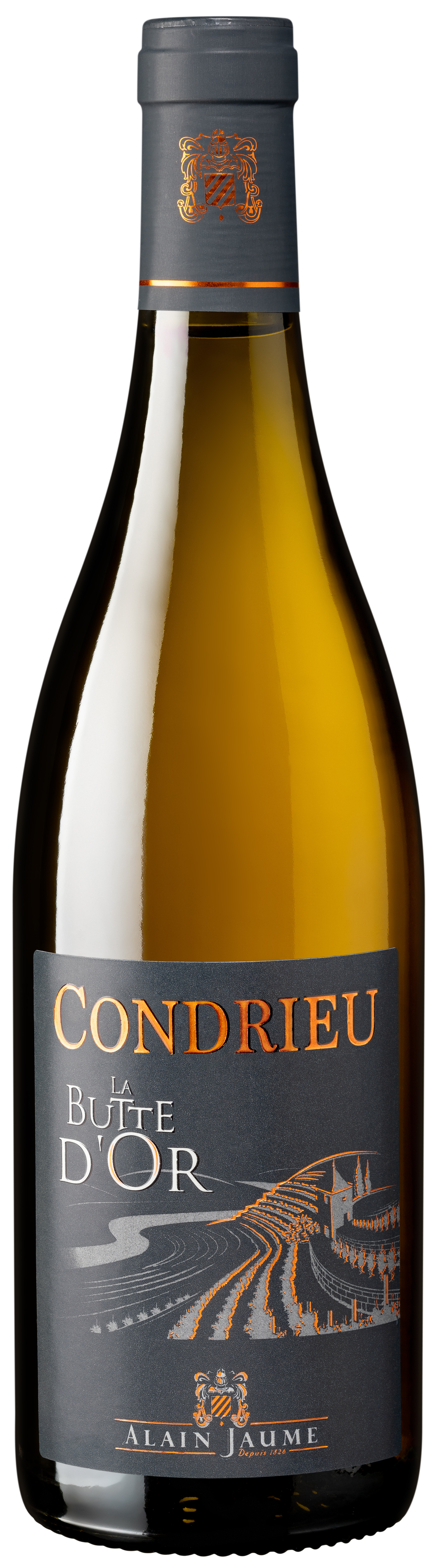
Alain Jaume Condrieu La Butte d'Or is made from 100 percent Viognier.
The wine comes from vineyards planted on hillsides and soils that are covered with granite. The east and south-east exposures offer an environment where the Viognier expresses the best of its aromatic potential. La Butte d'Or Condrieu shows a golden yellow color, a complex nose of exotic fruits and hints of apricot. The palate exhibits some brioche notes that mingle with the delicate flavors of white peach and apricot compote. This Condrieu reveals its typical racy character with a long and fine finish.
Manual harvesting of the grapes at moderate maturity to maintain a white wine with intense but balanced and fresh aromas. Fermentation on the lees at 15 ° C for 10 months in fine-grained oak barrels. 10% of new barrels maximum. Stirring of the lees once a week.
Enjoy up to 5 years with fish dishes with sauce, terrine of foie gras, veal with cream, mushrooms, soft cheeses.
The Alain Jaume Winery
Established in 1826 in the Northern part of Chateauneuf du Pape, the Alain Jaume Winery boasts both the exceptional terroir of the Southern Rhone Valley and a long line of dedicated winemakers. Alain Jaume works in accordance with certified organic agricultural practices for both the Grand Veneur and Clos de Sixte vineyards. They strive to let the true terrior be expressed in their wines.
The principal winemaker is Alain Jaume. His sons Sebastien and Christophe are both heavily involved with the winery in sales and marketing and winemaking respectively. The Alain Jaume winery consists of 40 acres in Chateauneuf du Pape, 50 acres in Lirac, and 75 acres of Cotes du Rhone vines. The family produces wines under two labels: Domaine Grand Veneur and Alain Jaume.
In 1320 Pope Jean XXII planted the first vines of Chateauneuf-du-Pape, but it was only in 1360 that the wines of the region first gained fame. Oddly, the wine that gave Chateauneuf-du-Pape its original reputation was the White and not the Red. The white wine was a favorite of Pope Innocent VI. The Domaine dates back to 1826, having been founded at that time by Mathieu Jaume. Since 1979, Alain Jaume has run the Domaine and now has the help of his two sons: Sebastien and Christophe.
"Popes throughout history have liked their juice, and when the papal see moved to Avignon in the 13th century, that juice was Chateauneuf-du-Pape ("the pope's new castle") made from grapes grown nearby in the Southern Rhône. The castle is a ruin now, the papal court long gone back to Rome, but the wines that bear the pope's coat of arms emblazoned on the bottle are still produced more or less according to the long-standing recipe. Not every winemaker uses all 13 of the grapes in the proscribed blend, though. At Domaine Grand Veneur, an estate that dates to 1826, Alain Jaume and his sons Sebastien and Christophe emphasize Grenache blended with Syrah and Mourvèdre."
- Los Angeles Times
"Improved Chateauneuf with very accomplished, stylish reds since the late 1990s; also very good Vacqueyras and Cotes-du-Rhône Villages." - Anthony Dias Blue's pocket guide to wine 2006
"Grand Veneur is one of the most brilliant estates in Chateauneuf du Pape as well as the force behind the negociant wines sold under the Alain Jaume label. Virtually everything they produce has merit. Some of this estate’s 2009 red wines are just hitting the market as they are bottled early to preserve their fruit and freshness. I can’t say enough about the job Alain Jaume’s two sons, Sebastian and Christophe, have done with this estate. The impeccable attention to detail in the vineyards, the meticulous vinification, and the careful bottling benefit every consumer." - Wine Advocate (#190, August 2010)
"Great bargains continue to emerge from Domaine Grand Veneur as well as from their negociant arm of the business, labeled Alain Jaume" - Wine Advocate (#195, June 2011)
"One of the best-run and highest quality estates of the Southern Rhone is Domaine Grand Veneur, now run by the younger generation of the Jaume family, Sebastien and Christophe. The brothers have done a fabulous job taking over for their quality-oriented father, Alain. These are their less expensive wines, but I will follow up later this year with my reviews of their 2010 Chateauneuf du Papes as well as the 2011s, which I have not yet tasted. They have certainly gotten a good start on their 2011 less expensive Cotes du Rhone selections. The Jaumes are some of the finest practitioners of white winemaking in the Southern Rhone and showcase that with their least expensive offerings, which are creative blends that over-deliver." - Wine Advocate (Issue #201, June 2012)
Some wines by Alain Jaume Winery:
Any Alain Jaume wines we have in stock are listed below, if you don’t see the wine you are looking for please don’t hesitate to ask for it.

Wolfberger Alsace Grand Cru Riesling Rangen de Thann is made from 100 percent Riesling.
Mineral, spicy, minty with some eucalyptus notes, tropical fruits, grapefruit. Balanced and exotic in the finish, with long lasting flavors.
The Rangen Grand Cru is located in Thann, deep in the south of Alsace. Its particular soil is made of volcano-clastic rocks that drink up the heat of the day and send it back out again at night. The composition of the soil allows the roots of the vines to drink deeply from the mineral-rich sub-soil. Its southern exposure has the advantage of refreshing, drying winds in case of dampness. The high slopes are quite steep, reaching 68% in some places, requiring that the harvest be done by abseiling or roping down. Perfect for aging, these wines will reveal even more qualities after several years in the cellar.
Pair with Serve with fish, seafood, sushi, sashimi, goat cheese, vegetarian food.
Review:
-Wine & Spirits Magazine 93 Points

Paul Hobbs George Menini Estate Pinot Noir is made from 100 percent Pinot Noir.
Brilliant ruby red in the glass, the 2022 vintage follows the color with matching aromas of wild mountain strawberry, raspberry, and cherry infused with hints of black tea. On the palate, this wine has the texture of thick satin, evolving seamlessly with subtle energy and pleasant tension. Elegant, fine-grained tannins run through a lingering, juicy finish.
Review:
Wow, a super well-structured, vital wine with oodles of generous black fruit flavors on a firm frame that will help it age well and improve with time. Black cherries, blackberries, blueberries, forest floor nuances and a slight smoky, stemmy character from using mostly Calera-clone grapes, with 15% whole clusters and 30% new French oak. Great interplay between layered fruit and a fresh, crunchy texture. Drinkable now, but best from 2030.
-James Suckling 98 Points & #54 in Top 100

Luis Canas Reserva Seleccion de la Familia is made from 85% Tempranillo and 15% Cabernet Sauvignon.
The family reserve from one of Rioja Alavesa's most enduring family-run wineries, drawn from a selection of old-vine grapes chosen for good orientation, sun exposure and poor soils that keep yields low. It is one of very few Riojas to blend Cabernet Sauvignon with Tempranillo — Bodegas Luis Canas was granted permission by the D.O.Ca. to plant the variety as an experiment in the early 1980s.
Brilliant garnet with cherry hints at the rim. A complex nose of very ripe berry fruit, smoky notes, raisin and liqueur, opening with air to cinnamon, jam and, in time, roasted and spiced aromas. The palate is full, with a good presence of tannins offset by a glycerine-like, fleshy character; long, lingering finish.
Winemaking: 72-hour cold maceration, fermentation at 26°C in sealed cement tanks under thermal control with daily pump-overs; spontaneous malolactic after devatting by gravity. Aged 20 months in 50% medium-toast American and 50% French oak, then clarified with a little natural egg white, decanted, and bottled unfiltered under the highest-quality corks.
Review:
"Made from Tempranillo and 15% Cabernet Sauvignon, the 2020 Rioja Reserva Seleccion de la Familia is supple, textured, and complex, with an unmistakable herbaceous note…"
- Jeb Dunnuck, 93 points