" We don't sell the wine without touching the vine "
| Country: | France |
| Regions: | Rhone Tavel |
| Winery: | Alain Jaume |
| Grape Type: | Grenache |
| Vintage: | 2019 |
| Bottle Size: | 750 ml |

Alain Jaume Bellissime Cotes du Rhone Rose is made from 50% Grenache Noir, 25% Cinsault, 20% Syrah and 5% Mourvedre
Salmon-pink color, clear and brilliant. The nose is fruity and spicy, reminiscent of wild strawberry and fine Provencal spices. The palate is full, well-balanced and fruity, with a long, fresh finish. A beautiful and delicate rosé.
A part is drawn off the skins with short maceration and the other part is from direct press. Fermentation in stainless steel at cool temperature. Bottling 5 months after harvest.

Alain Jaume Cairanne Les Travees is made from 65% Grenache, 35% Syrah, 5% Mourvèdre.
Our selected vines for this cuvée are on slopes facing south.
.
The wine delivers an intensive nose, with loads of black fruits.
Starting full and concentrated, with silky tannins, the mouth reveals blackcurrant and a cherry fruit typicity.
It finishes with typical notes of pepper and earth.
Enjoy with roasted lamb or braised or BBQed pork. gpoes also very well with mild cheese, such as brie or camenbert.
Review:
-James Suckling 92 Points
Alain Jaume Cairanne Les Travees is made from Grenache, Syrah and Mourvèdre.
The selected vines for this cuvée sit on south-facing slopes in Cairanne, one of the southern Rhône's finest villages.
The wine delivers an intense nose of black fruit. Full and concentrated on the palate with silky tannins, it reveals blackcurrant and cherry before a finish carrying the pepper and earthy notes typical of Cairanne. Enjoy with roasted lamb, braised or grilled pork, or a mild cheese such as brie or camembert.
Review:
-Jeb Dunnuck 90 Points

Alain Jaume Rasteau Les Valats is made from 80% Grenache, 10% Syrah, 10% Mourvedre planted on clay and stones based soil.
Located in the northern part of the Vaucluse, the soils are mostly on slopes with limestone and rocks, at medium altitude (until 350 meters).
Grapes usually ripeness in late September. The soils are poor and the Mediterranean climate allows to produce concentrated and well balanced grapes. The place is well-known for producing wines with strong identity.
From the Cotes du Rhone Villages classification, RASTEAU has been upgraded to Cru level since the 2009 vintage.
The wine shows a deep red garnet color and a nose of fresh red berries. On the palate, the richness of the fruit and tannins harmonizes with the roundness of the wine. The finish is long, with spicy and mineral notes. Complete and authentic.
Review:
-Jeb Dunnuck 88 Points

Alain Jaume Ventoux Les Gelinottes is made from 50% Grenache and 50% Syrah
The colour is intense, purple-tinged garnet. The aromatic range of the nose goes from fresh berries to black fruit (blackcurrant, blackberry). The palate is full-flavoured, with very soft tannins and aromas of the fruit already mentioned. This is a gorgeous style of wine, fruity driven, for every day drinking...anytime !
Soil types
The wine is produced from hilly vineyards that are mainly planted on sandy and clay soils. They are located on the East side of the Rhone valley, in the Vaucluse area. Welcome to the foothills of the well known “Mont Ventoux” Mountain.
Winemaking and aging
Stainless steel fermentaion at cool temperature to preserve the fruits and typicity. Bottling 8 months after the harvest.
Goes well with quite a lot of food such as Pizza, Pasta, hamburger, mild cheese or even on its own.
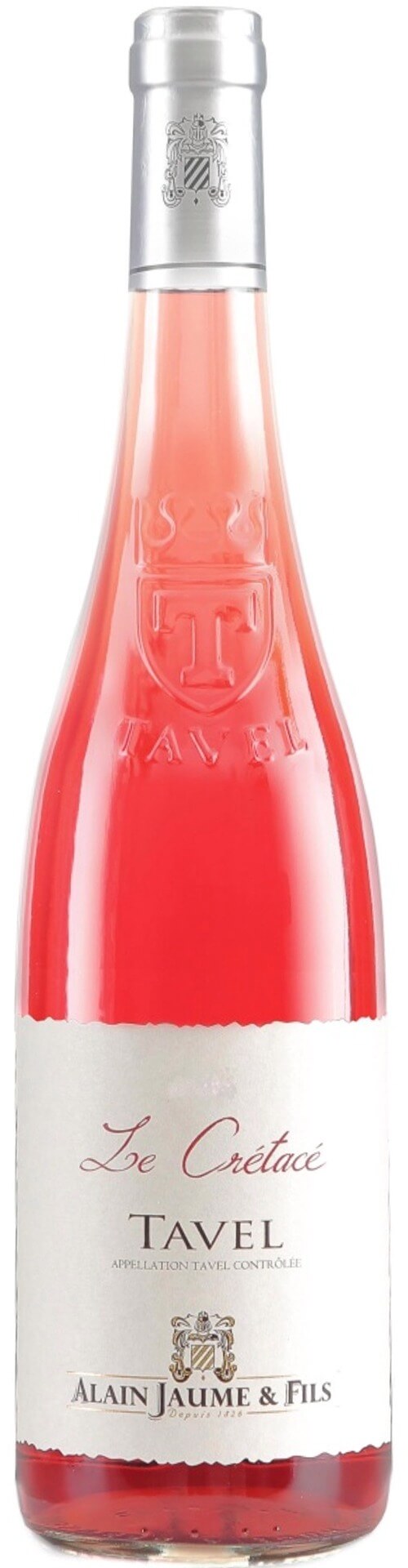
Alain Jaume Tavel Rose Le Cretace is made from 60% Grenache, 30% Syrah and 10% Mourvedre
Rosé de saignée (bleed technique) with a vibrant ruby color, complex and elegant, notes of crushed strawberries and rose petals.
Tavel Le Cretace Rose gives up vibrant wild strawberry, watermelon, crushed flowers and hints of spice to go with a medium-bodied, layered and seamless profile on the palate. A classic rose from this appellation, enjoy this beauty with food over the coming year or two.
Pair with roasted and/or spicy Turkey, sushi, seafood and grilled fish, asian food.
Review:
"This impeccably run estate makes great wines from throughout the Rhône Valley, and their rosés are always terrific. The 2019 Tavel Le Crétacé has a complex bouquet of wild strawberries, cherry blossoms, and spring flowers. This carries to a medium-bodied Tavel that has terrific overall balance, a clean, refreshing texture, and a crisp finish. It’s a richer, balanced, dry rosé geared for the dinner table. I’d be happy to have it on my table any time over the coming 6-12 months."
- Jeb Dunnuck (March 2020), 91 pts
- Wine Enthusiast (September 2020), 91 pts
"Lean and focused, the Le Crétacé rosé from Tavel reveals pomegranate and red cherry skin on the nose. Distinctly dry on the palate with a firm acidic backbone, pure flavors, and a lingering finish. A superb pairing with roast salmon. A blend of 60% Grenache, 30% Syrah and 10% Mourvèdre made saignée method with no malo. 14.5% alc"
- International Wine Review (May 2020), 91 pts
"Brilliant orange-pink. Mineral- and spice-inflected raspberry and blood orange aromas are complemented by a suave lavender nuance. Smooth and focused on the palate, offering concentrated red berry and citrus fruit flavors braced by a spine of juicy acidity. Shows excellent tenacity on the mineral-tinged finish, which leaves a hint of candied flowers behind. All stainless steel. - Josh Raynolds" - Antonio Galloni's Vinous (June 2020), 91 pts
The Alain Jaume Winery
Established in 1826 in the Northern part of Chateauneuf du Pape, the Alain Jaume Winery boasts both the exceptional terroir of the Southern Rhone Valley and a long line of dedicated winemakers. Alain Jaume works in accordance with certified organic agricultural practices for both the Grand Veneur and Clos de Sixte vineyards. They strive to let the true terrior be expressed in their wines.
The principal winemaker is Alain Jaume. His sons Sebastien and Christophe are both heavily involved with the winery in sales and marketing and winemaking respectively. The Alain Jaume winery consists of 40 acres in Chateauneuf du Pape, 50 acres in Lirac, and 75 acres of Cotes du Rhone vines. The family produces wines under two labels: Domaine Grand Veneur and Alain Jaume.
In 1320 Pope Jean XXII planted the first vines of Chateauneuf-du-Pape, but it was only in 1360 that the wines of the region first gained fame. Oddly, the wine that gave Chateauneuf-du-Pape its original reputation was the White and not the Red. The white wine was a favorite of Pope Innocent VI. The Domaine dates back to 1826, having been founded at that time by Mathieu Jaume. Since 1979, Alain Jaume has run the Domaine and now has the help of his two sons: Sebastien and Christophe.
"Popes throughout history have liked their juice, and when the papal see moved to Avignon in the 13th century, that juice was Chateauneuf-du-Pape ("the pope's new castle") made from grapes grown nearby in the Southern Rhône. The castle is a ruin now, the papal court long gone back to Rome, but the wines that bear the pope's coat of arms emblazoned on the bottle are still produced more or less according to the long-standing recipe. Not every winemaker uses all 13 of the grapes in the proscribed blend, though. At Domaine Grand Veneur, an estate that dates to 1826, Alain Jaume and his sons Sebastien and Christophe emphasize Grenache blended with Syrah and Mourvèdre."
- Los Angeles Times
"Improved Chateauneuf with very accomplished, stylish reds since the late 1990s; also very good Vacqueyras and Cotes-du-Rhône Villages." - Anthony Dias Blue's pocket guide to wine 2006
"Grand Veneur is one of the most brilliant estates in Chateauneuf du Pape as well as the force behind the negociant wines sold under the Alain Jaume label. Virtually everything they produce has merit. Some of this estate’s 2009 red wines are just hitting the market as they are bottled early to preserve their fruit and freshness. I can’t say enough about the job Alain Jaume’s two sons, Sebastian and Christophe, have done with this estate. The impeccable attention to detail in the vineyards, the meticulous vinification, and the careful bottling benefit every consumer." - Wine Advocate (#190, August 2010)
"Great bargains continue to emerge from Domaine Grand Veneur as well as from their negociant arm of the business, labeled Alain Jaume" - Wine Advocate (#195, June 2011)
"One of the best-run and highest quality estates of the Southern Rhone is Domaine Grand Veneur, now run by the younger generation of the Jaume family, Sebastien and Christophe. The brothers have done a fabulous job taking over for their quality-oriented father, Alain. These are their less expensive wines, but I will follow up later this year with my reviews of their 2010 Chateauneuf du Papes as well as the 2011s, which I have not yet tasted. They have certainly gotten a good start on their 2011 less expensive Cotes du Rhone selections. The Jaumes are some of the finest practitioners of white winemaking in the Southern Rhone and showcase that with their least expensive offerings, which are creative blends that over-deliver." - Wine Advocate (Issue #201, June 2012)
Some wines by Alain Jaume Winery:
Any Alain Jaume wines we have in stock are listed below, if you don’t see the wine you are looking for please don’t hesitate to ask for it.

The Tempest was one of the first wines, and the first Proprietary Blend, we produced. At the time, it seemed almost uncanny that we were able to access three grape varietals at the same time from the same vineyard; it was blind luck or perhaps the proverbial “perfect storm.” The resulting wine reflected a fierce determination to brave the storm as well as a new desire to realize the possibilities of Merlot. The Tempest is still made with outstanding grapes, from vineyards such as Blair in Calistoga and cooler sites like Farella and Orchard. Predominantly Merlot with lesser amounts of Cabernet Sauvignon depending on vintage, The Tempest is a roiling cauldron of fresh red and blue fruit and silky tannins – a wine that shows what Merlot can be in the right hands, from the right vineyards.
Red fruit; silky tannins; more approachable in its youth
Review:
-Wine Independent 96 Points

Opus One 2023 is made from Cabernet Sauvignon.
Opus One was founded in 1979 as a partnership between Baron Philippe de Rothschild of Chateau Mouton Rothschild and Napa Valley pioneer Robert Mondavi, a meeting of two great winemaking cultures with a single ambition: a Bordeaux-style blend to stand among the finest wines in the world. From the heart of the Oakville district, every acre of the estate is farmed with meticulous, parcel-by-parcel attention under winemaking director Michael Silacci, and the fruit is shaped into one flagship wine each vintage.
The 2023 comes from a cool, balanced Napa growing season and is a classic, finesse-driven Opus One, aged in French oak and built for decades in the cellar.
Review:
The 2023 Opus One is a super classic wine. Brisk acids, fine tannins and lifted aromatics signal an Opus One of exquisite finesse and class. Red/purplish fruit, mint, orange peel and chalk are all woven together in a fabric of nearly indescribable class. The 2023 floats on the palate with understated finesse and lightness, but it's not light in any way. This is class personified.
-Antonio Galloni, Vinous 98 Points
The bouquet is utterly enticing, offering cool blue-fruit notes and a dusting of cocoa-powder freshness that stirs anticipation for the first sumptuous sip. On the palate, satiny richness unfolds, imbued with crunchy red cherry and juicy blackberry fruit, alongside refined sagebrush and tobacco nuances. There is a sense of intricately fine-knit tannins – compact yet impressively integrated at this youthful stage – framed by subtle, refined oak spice. The finish is long and mineral, marked by graphite and a touch of black sea salt. The wine was fermented entirely with native yeasts in stainless steel, with a portion aged in amphora in this vintage, before maturing for 19 months in 95% new French oak. The blend is rounded out by small additions of Malbec and Petit Verdot. In 2023, the vines were farmed regeneratively for the first time, with harvest completed by mid-October.
-Decanter 98 Points