" We don't sell the wine without touching the vine "
| Country: | France |
| Region: | Bordeaux |
| Winery: | Chateau des Landes |
| Grape Type: | Sauvignon Blanc |
| Organic: | Yes |
| Vintage: | 2019 |
| Bottle Size: | 750 ml |
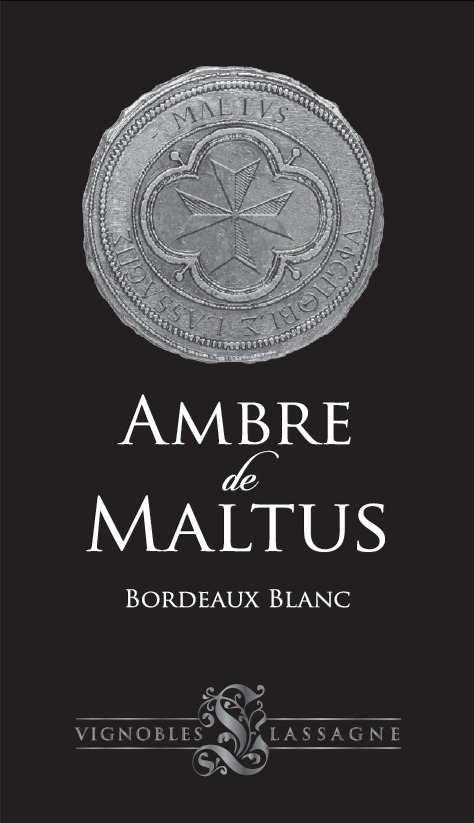
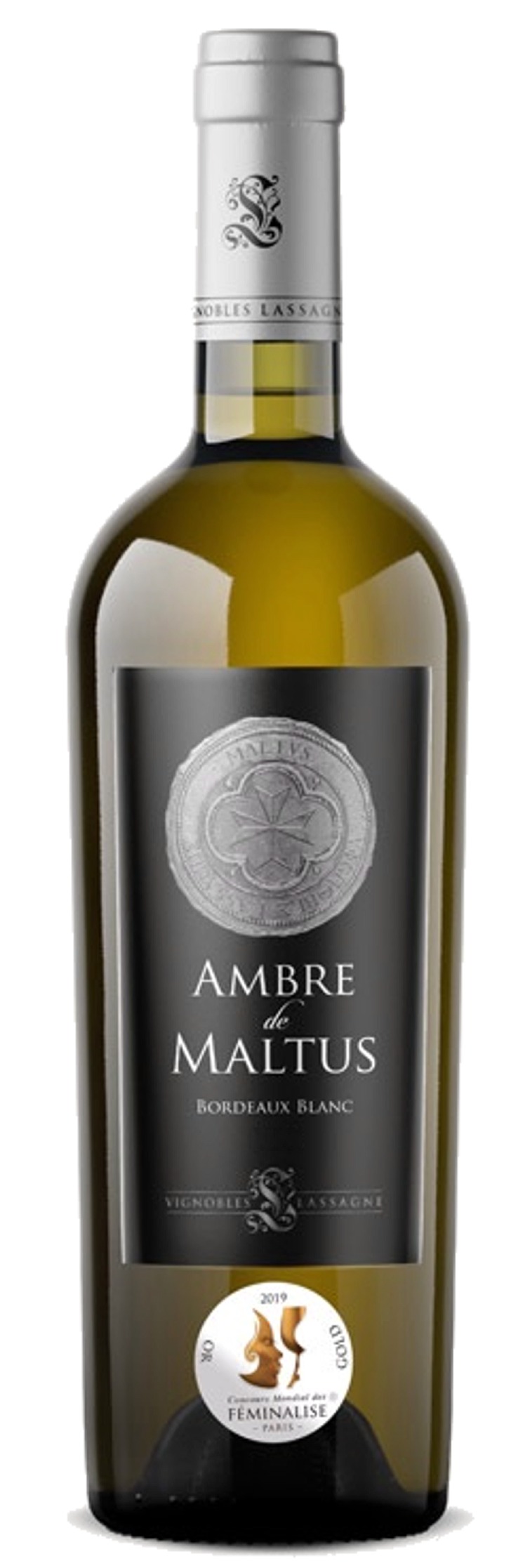
Ambre de Maltus Bordeaux Blanc is made from 70% Sauvignon Blanc, 30% Sémillion.
Malolactic fermentation.
The wine was aged in French Oak barrels for a few month (between 6 and 8 months depending on the barrel's toastiness and cooper)
Delicious with grilled fish or grilled vegetables
Ambre de Maltus Bordeaux Blanc is made from 70% Sauvignon Blanc, 30% Sémillion.
Malolactic fermentation.
The wine was aged in French Oak barrels for a few month (between 6 and 8 months depending on the barrel's toastiness and cooper)
Delicious with grilled fish or grilled vegetables
Larroque Bordeaux Blanc is made from 73% Sauvignon Blanc and 27% Colombard.
No oak.
Color : Pale yellow with green tints.
Nose : Complex aromas of white flowers, exotic fruits, citrus and boxwood, with a touch of minerality.
Mouth : Aromatic, with a nice richness and freshness. Predominant flavors of tart, crisp fruit.
Marie-Christine, the daughter of Henri Ducourt, purchased this prestigious left-bank property in 1979, which lies on the border of the Graves appellation.
The 60-hectare vineyard was rapidly replanted and the château building, which dates from 1348, was restored.
Our family now produces three different-colored wines there: red, white and rosé.
Grown on loamy-clay soil.
Harvest : Machine harvesting in the cool, early morning
Maceration : Skin-contact maceration for several hours, depending on ripeness, and pressing
Fermentation : Beginning of the cold alcoholic fermentation (12°C / 53°F) then an increase in temperature to finish the fermentation at 20°C / 68°F.
Enjoy this wine as an aperitif or during the meal with fish, seafood or chicken salad.
Larroque Bordeaux Blanc is made from 73% Sauvignon Blanc and 27% Colombard.
No oak.
Color : Pale yellow with green tints.
Nose : Complex aromas of white flowers, exotic fruits, citrus and boxwood, with a touch of minerality.
Mouth : Aromatic, with a nice richness and freshness. Predominant flavors of tart, crisp fruit.
Marie-Christine, the daughter of Henri Ducourt, purchased this prestigious left-bank property in 1979, which lies on the border of the Graves appellation.
The 60-hectare vineyard was rapidly replanted and the château building, which dates from 1348, was restored.
Our family now produces three different-colored wines there: red, white and rosé.
Grown on loamy-clay soil.
Harvest : Machine harvesting in the cool, early morning
Maceration : Skin-contact maceration for several hours, depending on ripeness, and pressing
Fermentation : Beginning of the cold alcoholic fermentation (12°C / 53°F) then an increase in temperature to finish the fermentation at 20°C / 68°F.
Enjoy this wine as an aperitif or during the meal with fish, seafood or chicken salad.
Larroque Bordeaux Blanc is made from 73% Sauvignon Blanc and 27% Colombard.
No oak.
Color : Pale yellow with green tints.
Nose : Complex aromas of white flowers, exotic fruits, citrus and boxwood, with a touch of minerality.
Mouth : Aromatic, with a nice richness and freshness. Predominant flavors of tart, crisp fruit.
Marie-Christine, the daughter of Henri Ducourt, purchased this prestigious left-bank property in 1979, which lies on the border of the Graves appellation.
The 60-hectare vineyard was rapidly replanted and the château building, which dates from 1348, was restored.
Our family now produces three different-colored wines there: red, white and rosé.
Grown on loamy-clay soil.
Harvest : Machine harvesting in the cool, early morning
Maceration : Skin-contact maceration for several hours, depending on ripeness, and pressing
Fermentation : Beginning of the cold alcoholic fermentation (12°C / 53°F) then an increase in temperature to finish the fermentation at 20°C / 68°F.
Enjoy this wine as an aperitif or during the meal with fish, seafood or chicken salad.
Larroque Bordeaux Blanc is made from 73% Sauvignon Blanc and 27% Colombard.
No oak.
Color : Pale yellow with green tints.
Nose : Complex aromas of white flowers, exotic fruits, citrus and boxwood, with a touch of minerality.
Mouth : Aromatic, with a nice richness and freshness. Predominant flavors of tart, crisp fruit.
Marie-Christine, the daughter of Henri Ducourt, purchased this prestigious left-bank property in 1979, which lies on the border of the Graves appellation.
The 60-hectare vineyard was rapidly replanted and the château building, which dates from 1348, was restored.
Our family now produces three different-colored wines there: red, white and rosé.
Grown on loamy-clay soil.
Harvest : Machine harvesting in the cool, early morning
Maceration : Skin-contact maceration for several hours, depending on ripeness, and pressing
Fermentation : Beginning of the cold alcoholic fermentation (12°C / 53°F) then an increase in temperature to finish the fermentation at 20°C / 68°F.
Enjoy this wine as an aperitif or during the meal with fish, seafood or chicken salad.
Ambre de Maltus Bordeaux Blanc is made from 70% Sauvignon Blanc, 30% Sémillion.
Malolactic fermentation.
The wine was aged in French Oak barrels for a few month (between 6 and 8 months depending on the barrel's toastiness and cooper)
Delicious with grilled fish or grilled vegetables
Chateau des Lande Estate
Château des Landes was created in 1952 by Paul Lassagne, Nicolas' grandfather. He started with only 2 hectares and grew to 7 hectares in 1979.
His son, Daniel, came along and bought more vineyards surrounding the cellar and he managed to grow to 27 hectares in almost 20 years.
In 2001, Nicolas, came aboard and decided to continue on the family tradition bringing his expertise and his knowledge.
Nicolas is now in charge of the Estate and he manage 27.2 hecatres of vineyards (68 hectares).
27.2 hectares (68 acres) of vineyard with a density of 5,500 vineplants per hecatres ( 2,217 vineplants per acre).
The average age of the vine is 30 years.
The soil is mostly a mix of Clay and limestone, while the subsoil is white clay.
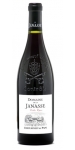
Domaine de la Janasse Chateauneuf-du-Pape Cuvee Vieilles Vignes is made from 65% Grenache, 20% Mourvèdre, 10% Syrah, 5% divers.
In contrast to Chaupin, which is made from old-vine Grenache on sandy soils, the cuvée Vieilles Vignes is from old vines of Grenache, Mourvedre, Syrah along with smaller percentages of other permitted varieties that are grown in these old vineyards. The wine is sourced from 4 terroirs: pebbly clay, sand, gravelly red clay and sandy limestone. Vieilles Vignes is always the most powerful and concentrated Châteauneuf-du-Pape cuvée made at Domaine de la Janasse.
Review:
The advantages of old vines are perhaps most evident in the more difficult vintages (whether hot and dry or cool and rainy). The 2021 Chateauneuf du Pape Vieilles Vignes is a strong effort, delivering supple, velvety waves of ripe black cherries and black raspberries. Medium to full-bodied, it's rich and concentrated without seeming at all heavy or unbalanced, finishing long and juicy. It's approximately 75% Grenache, 15% Mourvèdre, 5% Syrah and 5% other varieties, keeping in mind that up to 15% of the old Grenache vines are actually Clairette Rose.
-Wine Advocate 96 Points
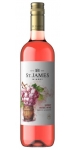
Dive into St. James Winery's Sweet Rose - it's a fruit party in a glass. Velvety smooth, it's sweet but not overpowering, ending with a jammy finish that makes you want more. This wine is your go-to for relaxing or celebrating good times with friends and family.
Crafted from estate grown grapes grown in Welch's vineyard cooperative of 700 family farmers