
" We don't sell the wine without touching the vine "
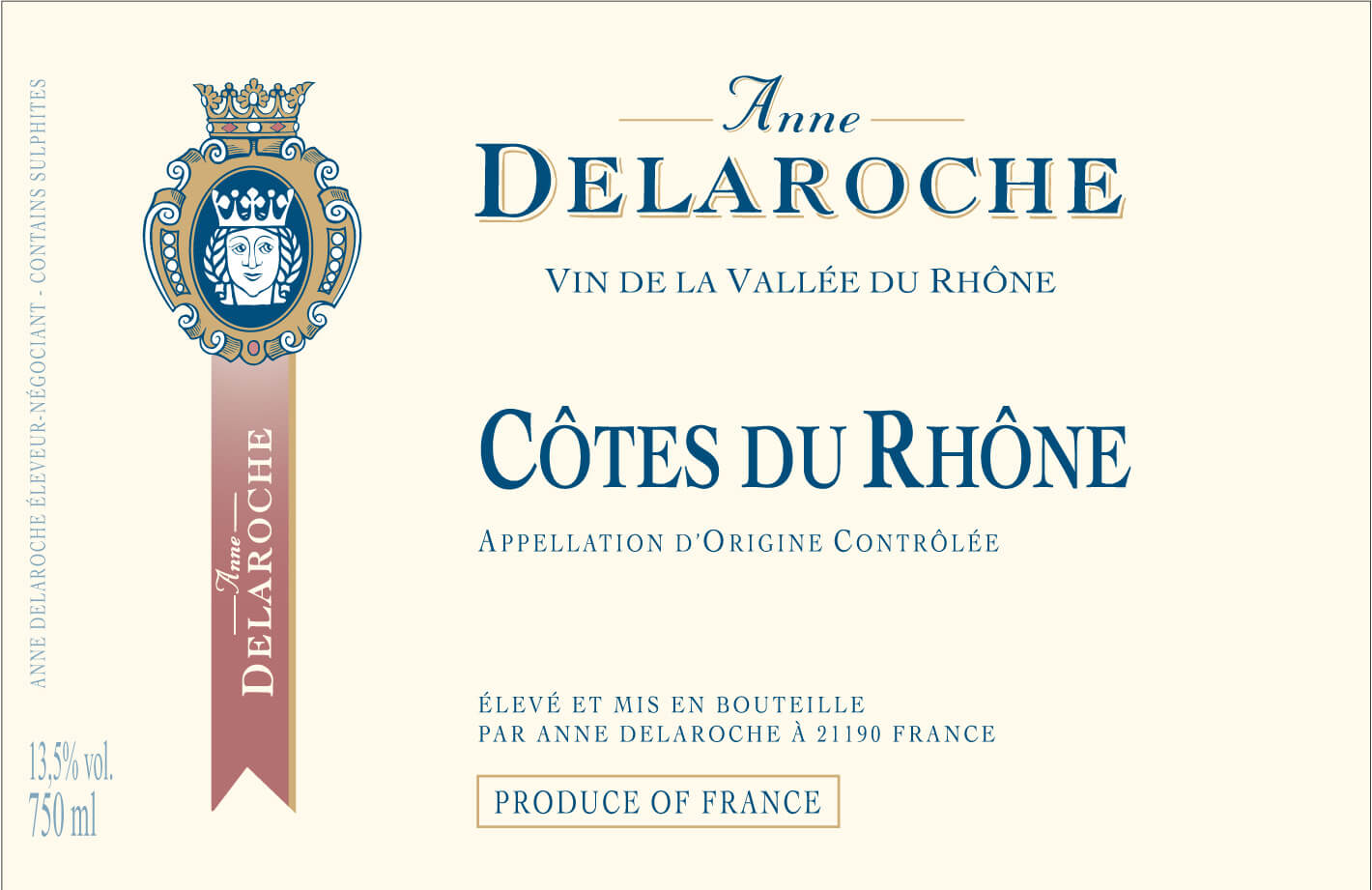
| Country: | France |
| Region: | Rhone |
| Winery: | Anne Delaroche |
| Grape Type: | Syrah |
| Vintage: | 2016 |
| Bottle Size: | 750 ml |
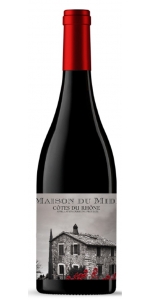
Maison du Midi Cotes-du-Rhone Rouge Vielles Vignes is 80% Grenache, 10% Syrah and 10% Mourvedre.
This ruby red colored wine with purple glints develops red fruits aromas and spicy overtones. In the mouth, this wine is smooth and its supple structure emphasizes aromas. Fruitforward and easy drinking wine showing light spices and silky tannins. A perfect everyday wine.
This delicious juicy wine can be enjoyed now with steak frites, any Mediterranean dishes, pizzas, grilled chicken and cheese.
Alain Jaume Cotes Du Rhone Rouge Haut de Brun is made from 60% Grenache, 30% Syrah, 10% Cinsault
The colour is purple-tinged garnet.The aromatic range of the nose goes from fresh berries (wild raspberry, blackcurrant, blackberry) to spices.The palate is big and full-flavoured, with silky-smooth tannins and aromas of the fruit already mentioned. The finish introduces touches of liquorice and pepper. A Côtes du Rhône with great complexity for an every day drinking.
A classic Rhône to drink between 1 and 4 years. Best poured at 17°C.
Traditional wine making and ageing is performed in vats only. Bottling after 10-12 months.
Ideal throughout the meal, but particularly with poultry and other white meats, as well as mild cheeses.
Alain Jaume Cotes Du Rhone Rouge Haut de Brun is made from 60% Grenache, 30% Syrah, 10% Cinsault
The colour is purple-tinged garnet.The aromatic range of the nose goes from fresh berries (wild raspberry, blackcurrant, blackberry) to spices.The palate is big and full-flavoured, with silky-smooth tannins and aromas of the fruit already mentioned. The finish introduces touches of liquorice and pepper. A Côtes du Rhône with great complexity for an every day drinking.
A classic Rhône to drink between 1 and 4 years. Best poured at 17°C.
Traditional wine making and ageing is performed in vats only. Bottling after 10-12 months.
Ideal throughout the meal, but particularly with poultry and other white meats, as well as mild cheeses.
Chateau Cabrieres Cotes du Rhone Rouge Vieilles Vignes is made from 50% Grenache and 50% Syrah.
Château Cabrières’ Côtes du Rhône vineyard is located south of Orange, on the edge of Châteauneuf-du-Pape. The area of the vineyard is 1.53 hectares. The soil is comprised of clay-limestone mixed with pebbles.
Bright cherry red color with an expressive red fruit nose (strawberry and raspberry). Soft tannins in mouth, with freshness and spices. This CDR tastes like a baby Châteauneuf-du-Pape!
Pairs with charcuterie, pizza, pasta and mild cheeses.
Chateau Cabrieres Cotes du Rhone Rouge Vieilles Vignes is made from 50% Grenache and 50% Syrah.
Château Cabrières’ Côtes du Rhône vineyard is located south of Orange, on the edge of Châteauneuf-du-Pape. The area of the vineyard is 1.53 hectares. The soil is comprised of clay-limestone mixed with pebbles.
Bright cherry red color with an expressive red fruit nose (strawberry and raspberry). Soft tannins in mouth, with freshness and spices. This CDR tastes like a baby Châteauneuf-du-Pape!
Pairs with charcuterie, pizza, pasta and mild cheeses.
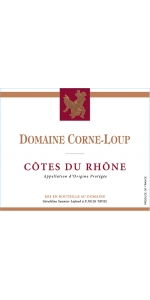
Corne Loup Cotes du Rhone Rouge is made from 50% Grenache, 40% Syrah and 10% Mourvedre.
Color: dark red ruby.
Aromas: red berries, truffles and spices.
Flavors: complex and rich. It shows red and black fruits, with an herbal spice type of aromas coming from the surrounding vegetation (Garrigue).
The average age of the vines is 40 years. (The oldest vines are 80 years old). Yield: 40 hl/ha The soil is mainly sandy marl and small pebble stones.
Lamb, duck, turkey, red meat, game and cheese.
Anne Delaroche Cotes du Rhone Rouge Bejot is made from 50% Syrah, 40% Grenache, 10% Mourvèdre
Clear ruby wine with overtones of red berry fruits. Round and supple with smooth aftertaste. A good all round red wine for meat courses, poultry and light cheeses. Best drunk now while fresh with good keeping up to 4 years.
Serve at 14°C (57°F).
Currently in organic conversion (they should be certified within the next years).
This Estate is located in the GARD department near Pont Saint Esprit (10 miles North-West of Orange).
The Estate is working with Organic method but it is not certified yet.
56 Ha grown organically since March 2009 (in conversion).
Part of the vineyard is plowed with horses.
4 varietals are produced: 29 Hectares (72 acres) of Syrah, 22 Hectares (54.5 acres) of Grenache, 3 Hectares (7.5 acres) of Mourvèdre and 2 Hectares (5 acres) of Carignan.
Mechanical harvest.
Yields: 48 hectoliters per Hectares.
Average age of the vines : 30 years old.
The vineyard is situated in an archeological site that has revealed many artifacts dating back from the 4th Century.
Continuum Red Blend 2021 is made from 45% Cabernet Sauvignon, 35% Cabernet Franc, 11% Merlot, 9% Petit Verdot.
A vintage set apart for its perseverance and resilience, the 2021 Continuum is one of refined concentration – a resounding expression of both measured intensity and enduring vibrancy. This is a multi-layered magnificent vintage that reveals floral notes, with black cherry and wild foraged mixed berries throughout. One can perceive the chemise, sage, and bay giving a gorgeous savory expression, reflective of the natural environment that surrounds the Sage Mountain Vineyard. 2021 is a wine of incredible complexity and nuance – a wine for the ages.
WINEGROWING- Continuum is estate grown on our Sage Mountain Vineyard. It’s location, high on Pritchard Hill along the eastern ridge above Oakville, overlooks Napa Valley and the San Francisco Bay. The rocky, volcanic soils of the site focus the vine’s energy keeping yields low yielding fruit of depth and complexity. 38 acres of mature estate vineyard, planted in 1991 and 1996, with additional plantings in 2004, 2010, together comprise 38 distinct vineyard blocks. Cabernet Sauvignon, Cabernet Franc, Petit Verdot, and Merlot are grown from 1300 to 1600 feet in elevation, on western and southern facing aspects with slight northern and eastern slopes in places. This diversity of plantings on our volcanic soils are the essence of the complexity of Continuum.
PRODUCTION- Continuum is 100% estate grown, produced and bottled. All fruit is selectively hand-harvested at night. The fruit is then sorted before and after de-stemming, and gravity fed into French oak or concrete tanks. A threeday cold soak is followed by fermentation, receiving three to four pumpovers daily, and délestage two to three times in total during the most active period. The wine remains on skins in tank for 20 to 40 days. All lots are then drained, basket pressed, and transferred with lees for malolactic fermentation and aging. Continuum spent 22 months in barrel. 63 percent of French oak barrels were new and 35 percent were once used. A single concrete amphora was also used for aging. The wine clarified slowly and settled naturally in our cold barrel room, was racked sparingly and bottled without fining or filtration. Each vineyard lot was tasted and carefully considered many times to assemble the blend. TASTING NOTES- Continuum shows energy and verve. The wine expresses purity and precision, with high tone aromatics of red and blue fruit, deep plum and rose oil. This vintage shows an approachable nerve of the land in the refined mineral quality on the palate. The surrounding native vegetation of bay and sage is evidenced in an earthy, savory profile. This is a shimmering, silky and harmoniously integrated wine with densely packed fine grain tannins.
DECANTING- For the fullest sensory experience we encourage decanting to allow the wine to breathe before serving. Decanting awakens the wine’s more purely fragrant expression and enhances the suppleness of the palate. Continuum is accessible and enjoyable upon release; however extended aging will be richly rewarded.
Review:
This note is written before the final blend of the 2021 Continuum. Deep purple-black in color, it hits the ground running with an intense nose of red and black currant preserves, lilacs, baker's chocolate, and graphite, leading to an undercurrant of black olives and red loam. On the medium to full-bodied palate it is very lively, grainy and super-concentrated, finishing long and shimmery.
-Wine Independent 98-100 Points
The 2021 Continuum is a blend of 45% Cabernet Sauvignon, 35% Cabernet Franc, 11 % Petit Verdot, and 9% Merlot. Deep garnet-purple colored, notes of black cherries, warm cassis, and plum preserves storm from the glass, giving way to nuances of dark chocolate, violets, and Sichuan pepper. The full-bodied palate is fabulously concentrated and yet so energetic, delivering firm, finely grained tannins and wonderful freshness, finishing long and perfumed. Wow.
-Wine Palate 100 Points
This is so aromatic with blackcurrant, blackberry, graphite, iron, pine bark and orange peel. Hints of wild sage and peppermint. Seductive perfumes. Full-bodied with extremely well-integrated tannins that have great length. Elegant firmness at the finish. The quality of the tannins is some of the best I have had in a young Continuum. Seamless silk. Great finish. 45% cabernet sauvignon, 35% cabernet franc, 11% merlot and 9% petit verdot. Best after 2027.
-James Suckling 99 Points
Far Niente Post & Beam Napa Cabernet Sauvignon is made from 91% Cabernet Sauvignon, 6% Merlot, 1% Malbec, 1% Petit Verdot
At Post & Beam, we make wines of pure expression, built on generations of hands-on experience producing acclaimed Cabernet Sauvignon and Chardonnay. Backed by the expertise and legacy of Far Niente Wine Estates, we use time-honored techniques to make exceptional wines that can be enjoyed upon release. Our expertise of winemaking at the highest level has enabled us to create wines that seamlessly unite tradition and modernity.
The 2023 Post & Beam Cabernet Sauvignon opens with expressive aromas of red fruit, cassis, and blackberry jam, accented by hints of cedar and graphite. On the palate, the wine is youthful and vibrant, showing polished tannins and a core of dark fruit that brings both weight and freshness. Notes of brambly berry, mocha, and subtle spice carry through a long, mouth-coating finish, highlighting the vintage's balance and structure.



