
" We don't sell the wine without touching the vine "
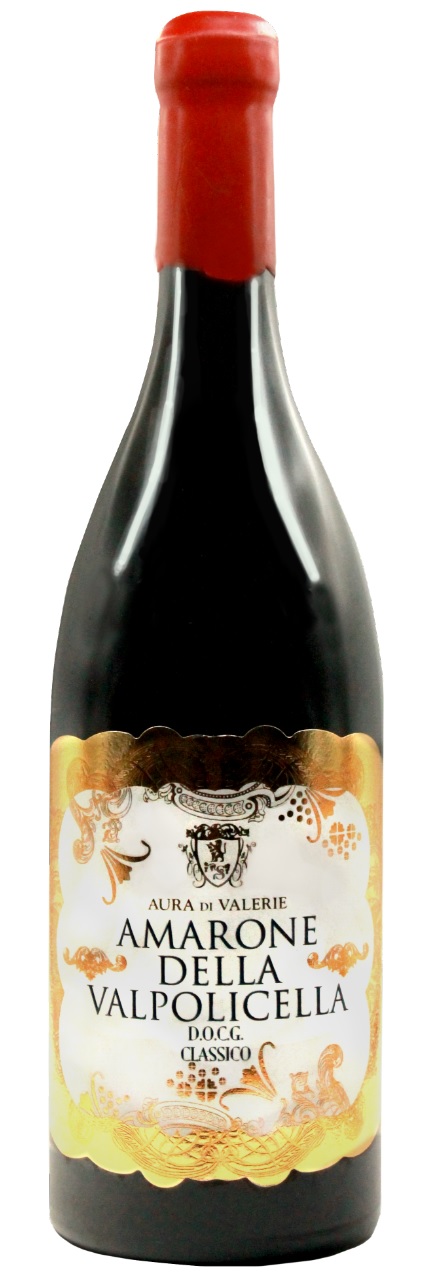
| Country: | Italy |
| Region: | Veneto |
| Winery: | Aura Di Valerie |
| Grape Type: | Corvina |
| Organic: | Yes |
| Vintage: | 2017 |
| Bottle Size: | 750 ml |
The first kosher Amarone! Amarone undergoes a very unique process prior to fermentation. In late October, grapes are harvested and allowed to dry for around 120 days. Known as the “appassimento” technique, the drying process traditionally occurs on straw mats or in temperature controlled drying chambers. This process helps concentrate the juices and increases skin contact, giving the wine a very ripe, full-bodied flavor. There is no other wine like it! The unique flavors of Amarone, including dark chocolate, coffee, dark fruit and light notes of cherry, pair beautifully with steak, stews, and bold cheeses.
The color is deep bright, ruby red with a violet edge. Powerful bouquet and intense aromas of cherry, ripe plum, toasted almond, and vanilla. A full bodied wine with round and rich flavor.
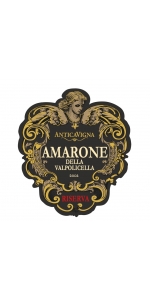
Antica Vigna Amarone della Valpolicella Riserva is made from 65% Corvina, 20% Rondinella, 10% Corvinone, 5% Merlot.
Amarone DOCG has maintained unchanged its typicality, so that “the essence of the territory” of Valle di Mezzane and Cazzano di Tramigna powerfully emerges. Rich in color, firmly structured but with fresh notes.
WINEMAKING AND AGING:
Manual harvest early October with selection of the best bunches.
Drying: natural drying in fruit cellar for 3/4 months with a sharp drop in weight of around 30%.
Vinification: soft crushing of destemmed grapes in the months of January and February.
Fermentation: at a controlled temperature of 18/21°C. Fermentation time: about 30 days
Aging:· 80% in oak barrels for 30 months of which 2/3 in American and French barriques, half of which are used for the second and third time, 1/3 in large
THE TERRITORY:
Geographical location: Tenuta di Mezzane, Tenuta di Cazzano di Tramigna
Height: 350/400 meters asl
Exposure: south
Soil type: limestone
Vineyard training system: guyot and pergola
Vine planting year: from 1972 to 2009
Vine density: 4,000 to 5,400 vines per hectare Vineyard management: sustainable agriculture and great attention to natural
cycles
Pairs well with grilled and roasted meats, as well as cheese.
Timeless Notes:
Dark cherry in color, firm on the palate with a vibrant acidity underbelly. Thought lush on the palate the flavors are complex and elegant from entry to mid-palate with hints of currant and wild berries. The finish brings in a touch of tobacco and leather notes ,classic examples of this region, with more ripe fruit flavors that linger on long strain tannin finish. Complex with depth and elegance on the palate. This one is drinking now, but can handle more time in the cellar with ease. An excellent value in the Riserva category.
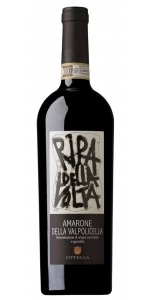
Ripa Della Volta Amarone della Valpolicella 70% Corvina, 20% Corvinone, 5% Oseleta and 5% Spigamonte.
The vineyards are located at an elevation of 300-600 metres above sea level, with a south-southwesterly exposure. Training system: Guyot.
It features an intense red color with garnet highlights. The nose offers up a rich variety of aromas with fruity notes of cherries, morello cherries and plums, spices and hints of chocolate. It is round and caressing with soft, mellow tannins balanced by excellent acidity that enhances its drinkability and ageing potential.
It is a wine with a marked personality, great finesse, elegance, and extraordinary longevity.
It pairs well with main dishes such as game and roasts, but also cured meats and mature cheese.
Review:
Strong, dark ruby with a light garnet edge. Intense and very clearly defined nose with notes of ripe plums, dark forest raspberries and some tobacco in the background. Round on the palate with plenty of supple tannin, pleasantly dry, firm pressure in the finish.
-Falstaff 92 Points
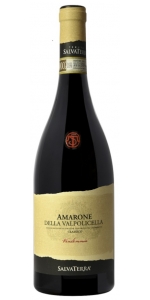
Salvaterra Amarone della Valpolicella Classico is made from 65% Corvina, 20% Corvinone, 10% Rondinella, 5% Oseleta.
Perfume of cherries, cocoa, tobacco and black pepper. On the palate it is complex and deep, elegant and robust at the same time, harmonious and with an excellent tannin.
Amarone della Valpolicella Classico is "the essence of the territory", structured but also fresh at the same time.
Pairs with red meats, aged cheese, dark chocolate, cigars.
Review:
Abundant lively red cherries, plums and mellow milk choolate with a energetic and powerful structure, an elegant frame of velvety tannins and an attractive balsamic finish.
-Decanter 96 Points
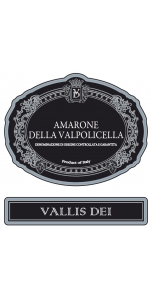
Cantina di Verona Amarone Valpolicella Vallis Dei is made from 65% Corvina Veronese, 30% Rondinella, 5% Molinara
Color: deep ruby red
Nose: Dried prune and blackberry with hints of vanilla and spice
Mouth: It is generously structured and velvety.
Yield: 8000 kg of grapes per hectar – after which the grapes are dried “appassimento”
Grapes are raisin-dried for at least 4 months after harvesting, losing at least 40% of their weight. It is made from selected grapes which are left to dry on racks in specially ventilated rooms until the end of winter.
Fermentation temperature between 18° and 22°C
Maceration time: 20 days
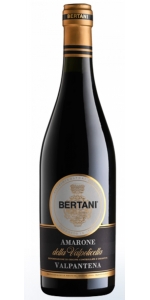
Bertani Valpantena Amarone is made from 80% Corvina Veronese, 20% Rondinella.
The best grapes are selected so that only the healthiest and ripest bunches are sent to the drying rooms in the historic winery at Grezzana, where they are laid out in single-layer crates. In mid- January, the grapes are destemmed and crushed, then fermentation starts, at first at a temperature of 39°F- 41°F, which then reaches 72°F in the final stages.
WINEMAKING
The vines are vertical-trellised and Guyot-trained, with a planting density of 2024 plants per acre. Hand harvest is carried out in the middle of September.
This amarone is produced in the Valpantena hills, north of Verona. The soils are calcareous-marl in the east and calcareous-clay in the west, rich in iron.
TERROIR & VINTAGE NOTES
Bertani’s impact on Veneto wine making, particularly in Amarone production, is so considerable that ‘Bertani’ and ‘Amarone’ are nearly synonymous. Their 150+ year history is dotted with groundbreaking initiatives and royal accreditation. While respectful of their past, Bertani strives towards innovation, using progressive techniques and equipment allied with extensive experience and a deeply felt respect for tradition to provide wines of uncompromising quality.
On the nose, marked and intense aromas of very ripe cherries, sour cherries, spicy and nutty notes typical of the Valpantena. Good follow-through of red fruits on the palate, with supple tannins to give depth. This full bodied wine pairs well with rich dishes, mature cheeses and strong-flavored meats.
The first kosher Amarone! Amarone undergoes a very unique process prior to fermentation. In late October, grapes are harvested and allowed to dry for around 120 days. Known as the “appassimento” technique, the drying process traditionally occurs on straw mats or in temperature controlled drying chambers. This process helps concentrate the juices and increases skin contact, giving the wine a very ripe, full-bodied flavor. There is no other wine like it! The unique flavors of Amarone, including dark chocolate, coffee, dark fruit and light notes of cherry, pair beautifully with steak, stews, and bold cheeses.
The color is deep bright, ruby red with a violet edge. Powerful bouquet and intense aromas of cherry, ripe plum, toasted almond, and vanilla. A full bodied wine with round and rich flavor.
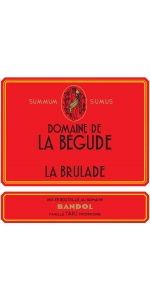
Begude Bandol Rouge La Brulade is made from 95% Mourvedre and 5% Grenache.
"La Brulade" is the name of a select slope located at an altitude of 400 meters overlooking the Mediterranean sea between La Baie d'Amour (the town of La Ciotat) in the South and La Sainte Baume in the North. This is one of the highest parcels in the Bandol appellation.
The wine is only produced in exceptional vintages. This carefully selected blend is made of 95% Mourvedre and 5% Grenache, aged in large French oak barrels for 24 months.
The wine shows a deep purple color. It is fresh and fruity on the nose with intense garrigue aromas. Structured, elegant and well-balanced on the palate with strong tannins. Licorice, ripe black fruits, garrigue flavors and some peppery freshness on the finish.
The 35-year old grapes are grown on clay and limestone soils and are farmed organically. Yield is very low - 15hl/ha. The grapes are harvested manually.
Winemaking: Double selection, destemming, crushing before skin contact fermentation. No filtration. Aging for 24 months in French oak casks (600L).
Grilled meat (lamb, beef, boar), Mediterranean cuisine, spicy dishes.
Review:
"Complex nose with deep black berry fruits, spice and hints of polish. Really lovely texture with layers of creamy red and black fruits, spices and powerful but super fine tannins. Great expression of the appellation; powerfully long."
- Decanter World Wine Award 2020 - 97 pts & Platinum Medal
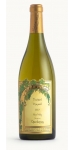
Nickel & Nickel Truchard Vineyard Chardonnay is made from 100 percent Chardonnay.
The 2023 Nickel & Nickel Truchard Chardonnay opens with enticing aromatics of tropical fruit, tangerine, and a hint of honeysuckle. On the palate, it presents a bright and vibrant profile, with a natural lift from its fresh fruit flavors and lively acidity. The tropical and citrus notes are complemented by a subtle brioche character, while the oak imparts a pleasant roundness, bringing balance and weight to the wine.
Review:
The freshness and pure fruit flavors of this generous wine ring clear as a bell. Crisp green apples, Bosc pears and subtle oak spices like vanilla bean and toasted almonds fill the palate. While medium-bodied, it feels full and generous and has a lingering finish. Drink now or hold.
-James Suckling 94 Points
Winemaker Joe Harden ages his Truchard Vineyard Chardonnay for 10 months in 30% new French oak, with minimal stirring and no malolactic fermentation, allowing for a slightly more pronounced oak presence. Truchard, one of Carneros' most esteemed sites, is characterised by rolling hills with ideal sun exposure and cooling breezes. Harden sources fruit from eight distinct blocks across the vineyard’s expansive 109 hectares, with harvests spanning roughly a month. Among the selections is Clone 809, a Muscat clone that adds floral aromatics and a touch of baking spice. The Truchard Chardonnay exhibits a silky texture on the palate, layered with citrus peel and tropical hints of apricot and peach. A rich spine of acidity is further heightened by vivid mineral tension, creating a wine that is both racy and rich. Elegantly balanced, it’s a delightful sipper with impressive depth and vibrancy.
-Decanter 94 Points
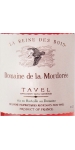
Mordoree Tavel Rose Reine des Bois is made from 60% Grenache, 15% Clairette, 10% Syrah, 10% Cinsault, 5% Bourboulenc (biodynamically farmed on a rocky/sandy plateau over clay).
This wine comes from a parcel planted on a pebbled soil covered with stones, whose geology is typical of the grands crus from the Rhone Valley (a base made of marine molasse from the Miocene period covered with an alpine diluvium from the Villafranchian period). 100 % destemming, cold maceration during 48 h., pneumatic pressing, fermentation at 18° C.
To pair with: roasted and or spicy chicken, duck, goose, fish soup, white meat, seafood and a lot of fishes (tuna, John Dorry, red mulet, etc...).Quite all Asian cuisine. Dishes with garlic, dishes with tomatoes.
In the glass the wine is deeply colored pink, almost orange/salmon. Complex aromas of white flowers, raspberry, pomegranate, strawberry, minerals, and citrus rise from the glass. Palate is full-bodied and voluptuous yet retains elegance while delivering great fruit intensity balanced by minerals and citrus. Light tannins appear mid-palate and carry through to the finish, giving it serious structure. Fresh, complex, and very long on the finish. Overall, powerful, textured, and food-driven — a “serious” Tavel that can age 1–5 years. Best enjoyed from June/July 2026 onward.



