" We don't sell the wine without touching the vine "
| Country: | France |
| Region: | Burgundy |
| Winery: | Pernot Belicard |
| Grape Type: | Chardonnay |
| Organic: | Yes |
| Vintage: | 2022 |
| Bottle Size: | 750 ml |

Bachelet Bertrand Chassagne Montrachet Rouge is made from 100 percent Pinot Noir.
The Chassagne-Montrachet appellation is originally better known for its white wines, but also produces high quality red wines. The complexity of the terroir allows both varieties to thrive side by side.
The wine is produced from vineyards located in the villages of Les Lombardes and Les Benoites that benefit from iron rich clay soils. A ruby garnet color, and an expressive nose of spices and red fruits that echo on the palate.
Pairs well with a nice cut of red meat.
Bachelet Bertrand Chassagne Montrachet Rouge is made from 100 percent Pinot Noir.
The Chassagne-Montrachet appellation is originally better known for its white wines, but also produces high quality red wines. The complexity of the terroir allows both varieties to thrive side by side.
The wine is produced from vineyards located in the villages of Les Lombardes and Les Benoites that benefit from iron rich clay soils. A ruby garnet color, and an expressive nose of spices and red fruits that echo on the palate.
Pairs well with a nice cut of red meat.

Bachelet Bertrand Santenay Blanc is made from 100 percent Chardonnay.
Tasting Notes:
The Santenay Blanc comes from a parcel that is 1.2 hectares in size (3 acres) in the village called “En Charron”, at around 300 meters above sea level, with excellent sunshine and thin limestone soil, guaranteeing great aromatic finesse.
The wine shows a beautiful golden color, a fresh and slightly roasted nose combining lemon and lime aromas with a hint of vanilla. On the palate, almond and toasted hazelnut flavors, along with notes of white flowers and vanilla nuances.
-150x300.jpg "Bachelet Bertrand Maranges Blanc 1er Cru Fussiere 2022")
Bertrand Bachelet Maranges Blanc 1er Cru La Fussiere is made from 100 percent Chardonnay.
The Maranges appellation is the youngest of the Côte de Beaune family, making its debut in May 1989. It spans three villages, namely Dezize-lès-Maranges, Cheilly-les-Maranges and Sampigny-les-Maranges. Several hills and slopes make up this appellation, all south/south-east-facing, at an altitude of between 200 and 400 metres. The Maranges 1ers Crus are spread over seven distinct villages.
'La Fussière' is the main village of the Maranges appellation and is located in the Cheilly and Dezize-les-Maranges areas.
This wine has a pale gold robe, with plenty of sparkle. At first, the nose evokes notes of white flowers, like acacias, then the second nose delivers a flinty, slightly buttery aspect. Plenty of versatility and subtlety on the palate, with floral notes.
A good accompaniment to a cold starter or fish. Try with a slightly sharp hard cheese, such as Cantal or Gouda, to draw out its natural vivacity.

Bertrand Bachelet Chassagne Montrachet Premier Cru Morgeot is made from 100 percent Chardonnay.
The Chassagne-Montrachet appellation is located in the southern part of the Côte de Beaune and produces mainly white wines.
'Morgeot' is located in the south of the village, characterized by compact limestone soil containing iron oxide, which gives the soil its particular red-brown color.
The wine offers a golden color, a subtle nose of white flowers and honey notes. Full-bodied and well-structured on the palate.
The softness of the Chardonnay on the palate makes an interesting pairing with cooked foie gras; it also sits well with lobster, spiny lobster, or even morel mushroom dumplings or Bresse chicken in a cream sauce.

Bertrand Bachelet Maranges Rouge is made from 100 percent Pinot Noir.
The Maranges appellation is the youngest of the Côte de Beaune family, making its debut in May 1989. It spans three villages: Dezize-les-Maranges, Cheilly-les-Maranges and Sampigny-les-Maranges. Several hills and slopes make up this appellation, that are south/south-east-facing. This appellation produces mainly red wines comprising 95% of total production.
Bertrand Bachelet Maranges is produced from two villages, Aux Artaux and En Crevèches, both situated in the Cheilly-les-Maranges area. The vineyards spreads over 1.42 hectare (3.50 acres).
The wine offers a deep red color with purplish highlights, a powerful nose with aromas of raspberries, blackcurrants, and small red candied fruits. A silky texture, fresh and elegant on the palate.
Ideally paired with red meat or a more exotic dish, such as nems, grilled ribs or braised pork.
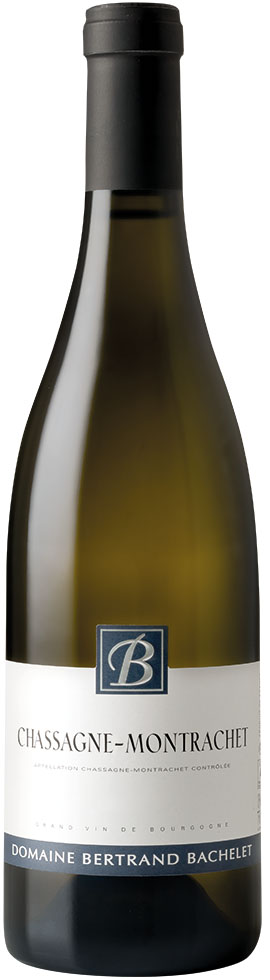
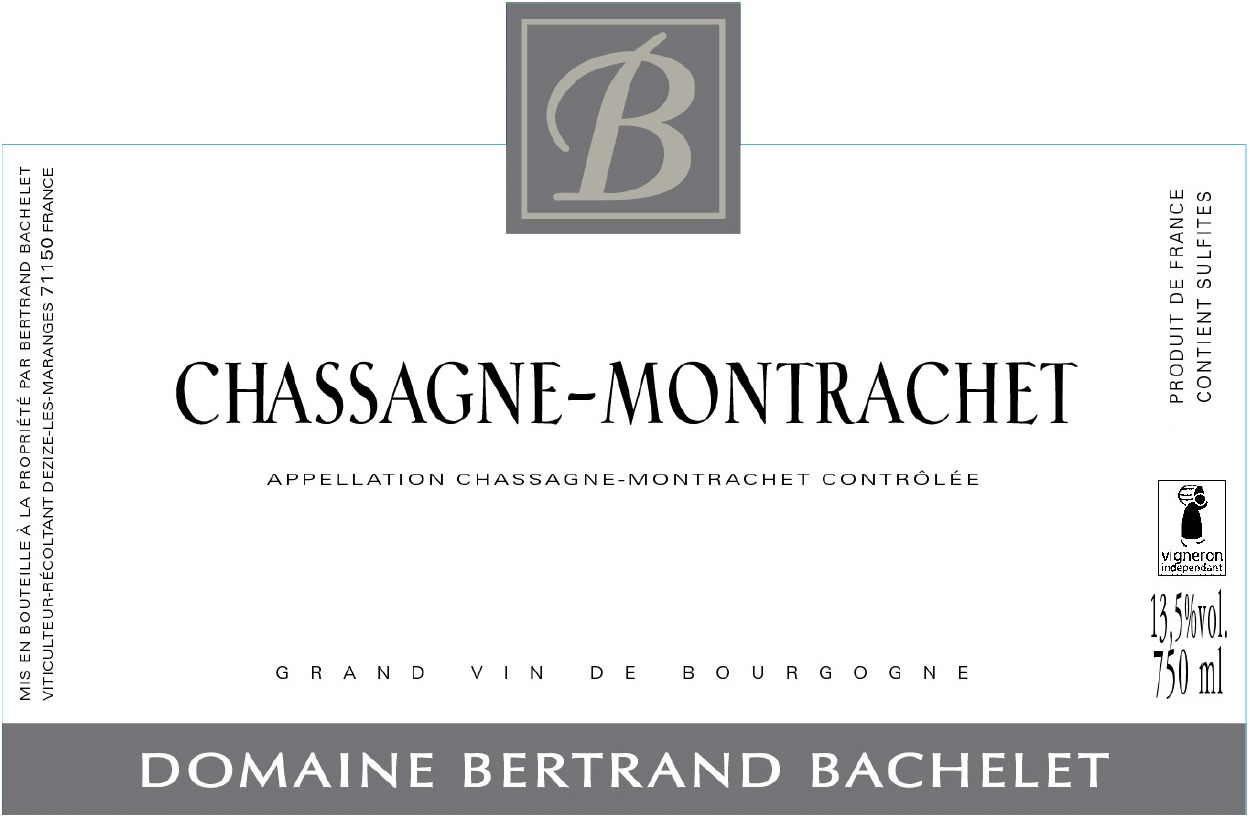
Bertrand Bachelet Chassange Montrachet Blanc is made from 100 percent Chardonnay.
The Chassagne-Montrachet appellation is located in the southern part of the Côte de Beaune and produces mainly white wines. The vineyard faces east, with varied soil types, characterized by the presence of iron oxide, which gives a red-brown color to the soil.
Bertrand Bachelet Chassagne-Montrachet is produced from two villages, La Canière and Les Lombardes.
The wine offers a golden color, a soft, floral nose with spicy notes. On the palate, the wine is ample and harmonious, combining freshness and tension.
Pairs well with fish (especially salmon) or white meat in sauce (poultry, veal).
This small six-hectare domaine located in the heart of Puligny-Montrachet is making rapid strides. Philippe Pernot (a scion of the Paul Pernot dynasty) launched the Pernot-Belicard label in 2009 after marrying Miss Belicard, daughter of Mr Belicard (who owned vineyards in Puligny-Montrachet). In the vineyards, Philippe cultivates the soils, de-buds aggressively and takes pains to retain his old vines in good health. The grapes are harvested by hand, with Philippe typically among the earlier pickers in the village. Since 2014, there's more sorting, the grapes passing over a shaker table before being whole cluster pressed. Initially, the wines were bottled to make room for the new vintage, but Philippe, evidently an inquiring mind, felt that something was missing: now, the wines stay in barrel until August, but spend an additional three to six months in temperature controlled stainless steel tanks with the fine lees. The result are wines that are more integrated and complete. These are already very good wines, and Philippe possesses some enviable parcels, but it is his desire to refine and improve that marks this out as an estate to watch.

Chavy Chouet Puligny Montrachet Les Enseigneres is 100 percent Chardonnay
100% Chardonnay, aged in 100% new French oak, displaying delightful, crisp, mineral aromas intertwined with toasty and vanilla notes. The result is a well balanced and harmonious Puligny of great finesse.
Aged in 100% New French oak
The Enseigneres is the most renowned of the Puligny-Montrachet villages, thanks to its exceptional geographical and geological location, along with its close neighbors Bienvenues-Batard-Montrachet and Batard-Montrachet.
Displaying delightful, crisp, mineral aromas intertwined with toasty and vanilla notes. The result is a well-balanced and harmonious Puligny-Montrachet of great finesse and good ageing potential.

Chavy-Chouet Bourgogne Blanc Femelottes is made form 100 percent Chardonnay.
This is a charming, rich, focused and delightful white. Medium-bodied with a smooth texture, the wine has a fresh backbone of acidity, clean apple and citrus flavors, and an excellent balance. A most refreshing quaff and one that is great value. A delicate, expressive wine of exceptional quality.
The grapes from this wine are grown from the Puligny-Montrachet area. (either outside of the AOC limit or with younger vines).
The grapes from this wine are grown from the Puligny-Montrachet area. (either outside of the AOC limit or with younger vines).
Aged 10 months in oak barrels (10% new, the rest in 2-3 year old barrels).

Dark ruby color. Aromas of cherry, currant, vanilla bean and hint of tar. Full-bodied, with flavors of cherries, cocoa powder and oak. A touch of sweetness on entry with a little bit of air with soft tannins that are starting to integrate well.
The latest step in the project is Vinsacro (formerly Valsacro) Dioro. The earlier Valsacros were made from a field selection of the older vineyards. Now, thanks to the new facility Amador has been able to build an upmarket version of Vinsacro (formerly Valsacro) with a four-stage selection process that includes an initial field selection of the fruit followed by a second table selection as the grapes come into the winery. After fermentation wine from selected tanks is transferred to new French oak barrels for 12-14 months of barrel age. Finally, the best barrels are set aside for Dioro and the remainder used to "upgrade" the normal Vinsacro.
Vinsacro Dioro is a blend of grapes from 100+ year old "vidau" vineyards where many varieties were planted together in the same plot.
Today the grapes are harvested and vinified separately. The final blend depends on the vintage but typically it's Tempranillo (50%), Garnacha (20%) and remaining 30% is a mix of mainly Graciano (10%) & Mazuelo (10%) with a little of Monastrell (5%) & Bobal (5%).
Review:
"The 2019 Vinsacro Dioro Selección is a Vidau field blend sourced from Monte Yerga in Rioja Oriental. Aged for 18 months in French and Eastern European oak barrels, it is only released after five years in the cellar. Dark garnet in color, time in the glass reveals soy sauce, bay leaf and thyme notes, along with black fruit and chutney-like undertones. Dry and rich on the palate, it flows with softened tannins and a clingy mouthfeel, lingering long with an impression of tomato leaf. This is a complex, nuanced and solar red that will warmly captivate your palate."
- Antonio Galloni's Vinous (April 2024), 94 pts

"Sous la Velle" takes its name from its location 'under the village' of Saint Romain. The vineyards enjoy a steep and south facing exposure, planted on marl scree with the vines taking root in the limestone and offering a beautiful minerality to the wine. The nose expresses small red and black fruits, blackcurrant, cherry, raspberry and violet. The mouth provides a rich, supple and elegant wine with a good structure, pure fruit and vibrant acidity.
After destalking the grapes, the juice, skin and pulp are put into the vat for cold maceration. It lasts from 15 to 18 days. The alcoholic fermentation will follow, lasting from 5 to 6 days. These steps may be punctuated by push-downs. Aging in oak for 12 months.
Pork Filet Mignon, Pike Perch, Tomme de Morvan Cheese.

Louis Jadot Nuits Saint George is made from 100 percent Pinot Noir.
The Nuits-Saint-Georges A.C. wines are produced on land delimited by the parishes of Nuits-Saint-Georges and Premeaux-Prissey. The soils are basically composed of limestone and marl. A perfect exposure to the east gives the capacity to produce splendid wines. The grapes bear small little dark red berries. The bunches are destemmed; they macerate in open vats during 4 weeks helping this subtle terroir to reveal itself. After devatting, the wines are aged in oak barrels during 18 months.
Pairs with roasted salmon, roasted chicken, grilled red meat : beef, lamb chops, osso bucco, stew, ragout, bœuf bourguignon, duck, partridge, quail, deer, young wild boar, teppanyaki beef, mashed potatoes with salted butter, Cîteaux, Mont d’Or.
Review:
"A dark, blackberry- and black cherry–laced red, with earth and iron accents, a reserved character and a dense structure. Oak spice elements emerge on the lingering finish. Best from 2022 through 2033. 400 cases imported."
-Wine Spectator 90 Point

Matheus Piesporter Goldtropfchen Riesling Kabinett is made from 100 percent Riesling.
This Goldtröpfchen ranks as an unofficial "Grand Cru" delivering light floral and fresh Kabinett style wines.
Their later harvest wines, Spatlese and Auslese, tend toward apricot flavors, honeyed notes and superb intensity. All grapes are grown on Devonian slate.
Enjoy with slightly spiced sushi or moderately spicy Indian cuisine such as chicken Vindaloo.

Robert Mondavi Winery Napa Red Blend is made from 74% Cabernet Sauvignon, 13% Cabernet Franc, 9% Merlot, 4% Petit Verdot.
Robert Mondavi’s vision was to elevate Napa to the world stage. In celebration of his achievement, our Napa Tier wines are sourced from distinctive vineyards throughout the Napa Valley and truly emulate a classic Napa Valley style.
Nearly half of this year’s blend is sourced from the deep, well-drained soils of Oakville, which provides gorgeously dark, supple wines with fine tannins. Stags Leap District, Oak Knoll, Yountville, and Rutherford also find their place in the bottle, with the varying mesoclimates and soils of these vineyards integrating seamlessly into a 100% Napa Valley blend.
Review:
"Dominated by 80% Cabernet Sauvignon with smaller percentages of the other Bordeaux red grapes, this wine speaks of heritage and prestige. Broad, silky, and powerful, the graceful liquid is enhanced by dark chocolate, white pepper, black plum, violets, and sweet earth."
-Meridith May, Tasting Panel, January/February 2023 Pts. Tasting Panel

Jean Reverdy Sancerre Blanc is 100% Sauvignon Blanc
Single vineyard. Vinification: cold fermentation in stainless steel tank, no oak, no malolactic fermentation.
Sweet, fruity and clean. White flowers (acacia, jasmine) and citrus fruits aromas. Perfectly balanced.
A delicious wine, perfect with fish dishes, especially salmon, and a local goat cheese Crottin de Chavignol.