" We don't sell the wine without touching the vine "
| BUY MORE! SAVE MORE! | ||||||||||||||||||||
|
| Country: | France |
| Region: | Bordeaux |
| Winery: | Vignobles Rodet Recapet |
| Grape Type: | Sauvignon Blanc |
| Vintage: | 2021 |
| Bottle Size: | 750 ml |
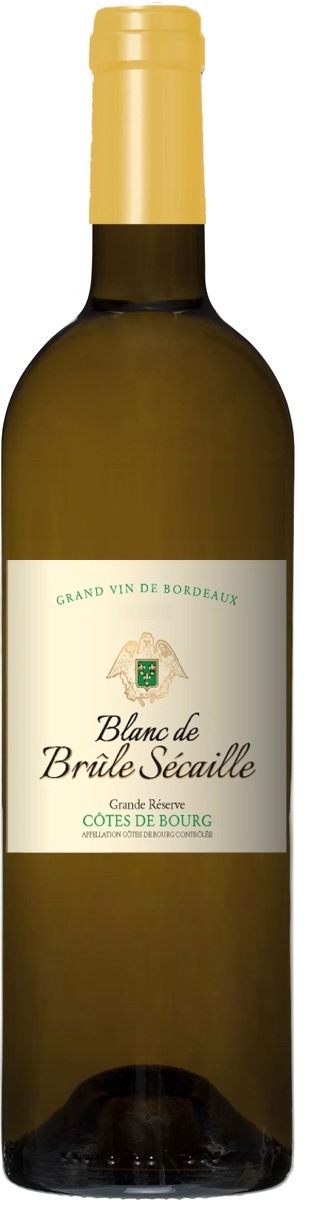
Brulesecaille Blanc Grande Reserve is made from 75% Sauvignon Blanc, 25% Sauvignon Gris.
Average age of the vines is 25 years.
Manual harvest from September 19th-20th 2016.
Direct press at low pressure (whole cluster) with low amount of SO2, settling at 10°C.
Addition of yeast and alcoholic fermentation in casks 400 liters.
Raised on the lees for 6 months with regular batonnage (stirring of the lees).
Bottling in april 2017.
Fish, seafood, white meats, fine goat cheeses.
Vignobles Rodet Recapet Estate Vignobles Rodet is owner of Château Brulesecaille and Château La Gravière in the Cotes de Bourg AOC. Jacques is a viticulture engineer (graduated from Bordeaux Science Agro) specialized in Nature Protection and focuses viticulture. Guillaume (graduated from DUAD Bordeaux) oversees vinification operations in the cellar. Jacques believes in using more natural methods to encourage ripening; he utilizes canopy mangement techniques, removes leaves and thins bunches as necessary. In September 2016 the estate received High Environnemental Value level 3 Certification. This covers mainly four key areas : biodiversity conservation, plant protection strategy, optimized management of fertilization and water management.
Date Founded: 1840 Owner: Martine and Jacques RODET Winery Philosophy: Making great wines, using both modern winemaking and traditional viticulture. In 1924, The RÉCAPET family bought Château BRULESÉCAILLE. In 1974, the estate was handed down from M. Pierre RÉCAPET to his daughter and son in law, Martine and Jacques RODET. It is now included in a structure named G.F.A. RODET RECAPET. Winery Acreage: 74 acres (30 hectares) Winery Production: 12,000 / 9L cases Varietals Produced: 54% Merlot 25% Cabernet Sauvignon 9% Cabernet Franc 4.5% Malbec 7.5% Sauvignon Blanc and Gris Winemaker: Jacques RODET (graduate agricultural engineer) and his son Guillaume. Located in the heart of the Côtes de Bourg region, BrûleSécaille is a 28 hectare vineyard classed "Cru Bourgeois" since 1868.
The name ‘Brulesécaille’ derives from Gascon; “Bruler” means “to burn” and “sécaille” is from the latin “secare” meaning “to cut”. According to tradition, we burn the cut vine branches during pruning. Brulesécaille is situated on a clay limestone outcrop. This particular soil composition dominates the Dordogne valley and allows excellent drainage in winter and spring. The vines enjoy excellent sun exposure, encouraging consistent ripening vintage after vintage.
Because the vineyard survived the particularly hard winter frosts of 1945, 1956 and 1991, there are some significant older vines, up to seventy-five years old. Château BruleSécaille : 23 ha Château La Gravière : 5 ha Château YON St Christophe : 2 ha Every care is taken by Jacques RODET (graduate agricultural engineer) to respect nature, maintaining a biological balance from growth to harvesting in particular by thinning out leaves and excess grapes in order to produce a natural wine. The grapes are picked by hand. Great care is taken with the manual picking over, de-stemming and crushing. The wine needs a long fermentation and maceration period (3 to 5 weeks) in stainless steel tanks, controlled by an automatic temperature monitoring system, to ensure a rich full-bodied wine.

Thomas Sancerre Rose is made from 100% Pinot Noir.
Vines are 20-55 years old.
Terroir (soil type) is a blend of "Caillottes" and "Terre Blanche".
Everything is machine harvested (which means it is 100% destemmed).
50% Direct press + 50% Saignée (bled) with 12-24 hours of skin contact maceration.
The alcoholic fermentation is done in temperature controlled stainless steel tanks.
Right before bottling, the wine is fined with Bentonite (very light filtration with oenologic clay).
Tasting Notes:
Light, bright pink. Redcurrant, strawberry and chalk on the nose, with a touch of singed orange gaining strength with air. Dusty red fruit and citrus flavors are braced by tangy minerality, which adds lift and cut. Uncompromising in the best way, finishing with excellent clarity and echoes of lemon and orange zest.
Food pairings:
This is a very versatile wine. You can have it on its own in the summer time as an apéritif. But it is also excellent with Hors d'Oeuvres and terrines. It will compliment any white meat dish and poultry. You can also enjoy it with salmon or exotic food (slightly spicy sushi).

Lady Hill Pinot Gris Willamette Valley is made from 100% Pinot Gris.
An aromatic procession of passionfruit and Meyer lemon embraces the delicate floral side of honeysuckle and white flowers. Bright flavors of citrus rind and white peach are highlighted with a crisp minerality. The mouthfeel indicates almost no malolactic conversion, showcasing the crisp refreshing acidity of Granny Smith apples.
Finn Hill Vineyard and Bellevue Cross sit on opposite sides of the Yamhill-Carlton and McMinnville AVAs, but offer a very similar profile of bright citrus and a grassy herbaceousness. Delicately pressed into a stainless steel tank, the juice was inoculated with a commercial yeast bred to enhance fruity and floral aromatic esters. 2 neutral French oak barrels from Bellevue Cross were blended into the remaining stainless portion to balance any tight acidity the wine was showing.
Pair with sushi, goat cheese, and every salad imaginable from a classic Greek horiatiki to its grainy cousin tabbouleh.

Under the stewardship of winemaker Lynzee Schatz, Chronos wines are crafted for lovers of the Okanagan Valley terroir. World class quality with depth, complexity, and command of detail. The production of Chronos is precise and unrushed with a connection to the finest winemaking traditions around the world. Raise a glass of Chronos to inspire your most delightful and soul-stirring moments.
Produced from Dragon Mountain Vineyard, the wine is named after the Ogopogo -mythical lake monster. Grown overlooking Okanagan Lake.
The wine opens with notes of Granny Smith apple and stone minerality, followed by citrus and melon. On the Palate, it shows expressive flavors of pear, peach blossom, melon and lemon with a wonderfully long finish.

Inviting aromas of mint, marshmallow and Asian pear pull you into this drink. Surprisingly dry, this Nigori (cloudy) style sake has a rich, chewy texture. The intriguing mid palate features mint, white chocolate, and tart cherries. The finish belies our expectations with an elegant, softness of minerals that settles in a dry finish.
Pair with roast duck, dry-rub ribs, full flavored country pate, and fruit and nut desserts of light sweetness.
Mildly ripe Coulommiers or Brie, Italian Raschera.

2021 Rossj-Bass displays the main features of the vintage well, with intense fruit concentration and floral notes. The nose shows ripe citrus notes of lemon peel and orange evolving into tropical fruits. The richness of the nose and the same notes are reflected on the palate, where remarkable acidity balances the fruit concentration. The wine is rich, full-bodied and creamy, with a long finish.
Review:
The 2021 Gaja Rossj-Bass starts off with very, crisp, green fruit and much more Sauvignon Blanc dominant aromas of grassy, bright, fragrant green apple and green pepper - all very bright and cheerful. Then Chardonnay seems to take over in the medium-full bodied and pleasing creamy texture of the wine. This is balanced again by the tangy, juicy acidity of Sauvignon. This is very elegant blend of Sauvignon Blanc aromas and zestiness and the textural comfort of Chardonnay. The name Rossj is a nickname of Angelo Gaja’s second daughter, Rossanna.
-Wine Independent 94 Points

Royet Bourgogne Blanc Hautes Cotes de Beaune is made from 100 percent Chardonnay.
brilliant light yellow color - mineral and white flower profile on the nose, round and delicate on the palate with fresh fruit, mineral tension and light bitters on the finish giving the wine great length.

La Grande Cuvee du Chateau Vermont Blanc is made from 70% Sauvignon Blanc and 20% Semillon and 10% Sauvignon Gris.
Traditional blend of "Grand Vin Blanc de Bordeaux", a beautiful wine vinified and matured in barrels. Fine wine, elegant and well-balanced; dominated by Sauvignon (fruitiness), with vanilla notes coming from the oak aging. This wine has beautiful structure and very long-lasting aromas and flavors, providing great aging potential.
Perfect with dish of fish in sauce, scallops, langoustine, and cheeses.
Review:
Some passion fruit, green apple and green mango on the nose, following through to a pure but creamy palate with chalky acidity and elegant citrus and stone-fruit flavors. Drink now."

This is a 9 liter imperial also called a Salmanazar .
Roland Champion Champagne Blanc de Blanc Grand Cru 2014 is made from 100% Grand Cru Chardonnay from the chalky soils of Chouilly.
This Champagne is full of elegance and finesse. Very complex nose, with a bouquet of aromas dominated by honey, brioche and notes of dried fruits, hazelnuts and sweets. Perfectly matured.
Manual harvest; then pressing immediately to avoid oxidation & preserve quality. Free run juice only. Aged six years on the lees.
It matches magnificently with foie gras!
Review:
"Based in Chouilly on the Côte des Blancs, it is obvious this producer will have a Blanc de Blancs Champagne. And very good it is, with some age after six years on lees while still having freshness, crisp acidity and a tight, steely edge. The bottling will benefit from further aging, and it will be at its best from 2022. - ROGER VOSS"
- Wine Enthusiast (December 2020), 92 pt

The House of Trouillard has incredible holdings on the Côtes de Blancs. The vineyard's rating average 94-95, just one of the reasons the Blanc de Blancs has such incredible raciness and elegance. It is a Cuvée of eleven different Crus in the Reims Mountain, the Côtes de Blancs and the Sézannaise region and is the specialty of the house.
Trouillard Blanc de Blancs Brut NV is made of 100% Chardonnay with a green-gold color, characteristic of Chardonnay, and with fine persistent bubbles. This wine has an aroma that jumps out of the glass and is very inviting. On the nose there are seductive scents of warm almond croissant and honey, lightened by some floral notes. Crisp and refreshing in the mouth and lively with a very refined fruitiness and a touch of smokiness typical of wines from the Côtes des Blancs. The elegance and subtlety of the Chardonnay are to be especially appreciated as an aperitif, and nicely accompanies shellfish and fish.
It has become the favorite of those who know Champagne Trouillard.
Reviews:
"A blend of grapes from the Aube and the Marne Valley, this ripe wine shows the structure of Pinot Noir. The fruit's richness balances the low dosage to give an almost bone-dry wine that is full, fruity and that could age further in bottle. - ROGER VOSS"
- Wine Enthusiast (December 2019), 91 pts
"Aromatic, offering ripe fruit and yeast notes, this is backed by firm acidity, with a lively bead and flavors of Golden Delicious apple, white peach, ginger and whole-grain toast. Drink now through 2018. 2,500 cases made. –AN"
Wine Spectator (Web Only 2013), 90 pts
- Chardonnay du Monde 2012, SILVER MEDAL
This all Chardonnay Champagne is sourced from eleven different crus. It offers a fragrant bouquet of orchard fruit with hints of toasted grain and lemon zest. On the palate, there’s good textural richness and attractive apple and pear complemented by a smoky mineral note. But what we like most about this Blanc de Blancs is its outstanding sense of freshness. 100% Chardonnay aged 2+ years on the lees; 7-8 g/L RS" - - I-WineReview (Champagne: Diversity and Change, January 2020), 91 pts

Brulesecaille Rouge Sans Soufre Ajoute is made from 50% Merlot and 50% Malbec.
Deep purple color, powerful nose of blackcurrant and floral as well. Full on the palate with soft and ripe tannins with a fresh aromatic return.
Aging potential 5 years.
Pairs with boeuf Bourguignon, grilled vegetables and strong cheeses.

All older vintage wines have been purchased from a single collectors cellar. Pictures can be requested before shipment.

Klipsun Cabernet Sauvignon Red Mountain is made from 84% Cabernet Sauvignon, 4% Merlot, 4% Malbec and 8% Syrah.
The 2017 vintage started out with a cool, wet winter, with significantly above average snowfall in eastern Washington. Red Mountain had a 24% increase in rainfall in 2017 over the 10 year average. Going into spring, the cool trend continued. As a result, bud break at Klipsun was behind the historical average and significantly behind the most recent warm vintages of 2013 2016. Bloom was also slightly delayed. Because of the cool weather, set was lighter than usual which translated into significantly less fruit in 2017.
The early part of the summer saw average temperatures followed by above average temperatures in July and August. As a result, he at accumulation was a bit above average for the season, despite the cool start. And because of the smaller than normal yield, harvest began right on schedule, perhaps even a bit early for some of the whites. In the second half of September, when Klipsun traditionally harvests all the reds, the temperatures cooled considerably, which delayed ripening. This allowed for luxurious amounts of hang time without the threat of increased sugar accumulation, stretching harvest into the first week of October. A s a result, all fruit going into the 2017 Klipsun Cabernet Sauvignon could be picked at perfect sugars levels with great fruit maturity and flavors. Overall, the quality of t he 2017 harvest is as high as the 2016. However, the style is slightly different. The 2017 wine has a firmer structure, more spice & mocha in the nose and will take a few mo re years than the 2016 to reach a perfect balance between fruit and tannin.
Review:
The 2017 Cabernet Sauvignon Red Mountain is composed of 84% Cabernet Sauvignon, 4% Merlot, 4% Malbec and 8% Syrah, which immediately emanates with aromas of dark roasted espresso bean, toasted oak, dried tobacco and dusty black fruit tones of cassis, currant and blackberries covered in dark cocoa powder. Full-bodied, generous in complexity and still tight in the mouth, the wine unpacks layers of cedar and vanilla tones with dusty purple flowers and bitter dark chocolate across the mid-palate, giving way to fine-grained tannins that will loosen with time. As the wine sits on the palate, the 100% French oak regimen is on full display for all to see. The wine lingering long and continues to evolve in the mouth, ending with a drying finish that highlights the oak and terroir. It’s still a baby, and I would keep it in the cellar for another few years before popping the cork—this will effortlessly coast for more than a decade. The 2017 vintage marks the second release of this wine, with 6,300 bottles produced. It comes from its namesake vineyard, first planted in 1984 on Red Mountain. I’m keeping my eye on this producer. I’m impressed, and even though the oak may be a bit much at the moment, it's still delicious. - Wine Advocate 94+ Points

Average age of the vines: 30 years old (between 20 and 60 years old). Skin contact maceration: between 2 and 5 days depending on the parcels.
Beaujolais-Nouveau has been very popular with almost every Thanksgiving dish - from turkey to ham, green beans to mashed potatoes, and gravy to cranberry sauce.
The Beaujolais Villages Nouveau is deeper red, with flavors reminiscent of strawberries and roses, plus a mineral component. Fragrant and medium bodied; refreshing with a tart finish. Beaujolais Villages Nouveau is meant to be consumed young, within 5-7 months.
Beaujolais Nouveau originated about a century ago as a 'vin de l'année' - a cheap and cheerful drink produced by locals to celebrate the end of the harvest season. The Beaujolais AOC was established in 1937, and after WWII, the wine was sold outside of the area. By the 1970's, Beaujolais Nouveau day was a national event.
he region of Beaujolais is 34 miles long from north to south, and 7 to 9 miles wide. There are nearly 4,000 grape growers who make their living in this picturesque region just north of France's third largest city, Lyon.
The Gamay grapes that go into Beaujolais Nouveau are handpicked, as are all the grapes in the Beaujolais. Beaujolais & Champagne are the only vineyards where hand harvesting is mandatory. Gamay (Gamay noir Jus Blanc) is the only grape permitted for Beaujolais.
Beaujolais Nouveau cannot be made from grapes grown in the 10 crus (great growths) of Beaujolais; only from grapes coming from the appellations of Beaujolais and Beaujolais-Villages. Approximately 1/3 of the entire crop of the Beaujolais region is sold as Beaujolais Nouveau.
Nouveau is made with carbonic maceration, or whole-berry fermentation. This technique preserves the fresh, fruity quality of the grapes without extracting bitter tannins from the grape skins.