
" We don't sell the wine without touching the vine "
| Country: | France |
| Region: | Mendoza |
| Winery: | Bressia Winery |
| Grape Type: | Malbec |
| Vintage: | 2011 |
| Bottle Size: | 750 ml |

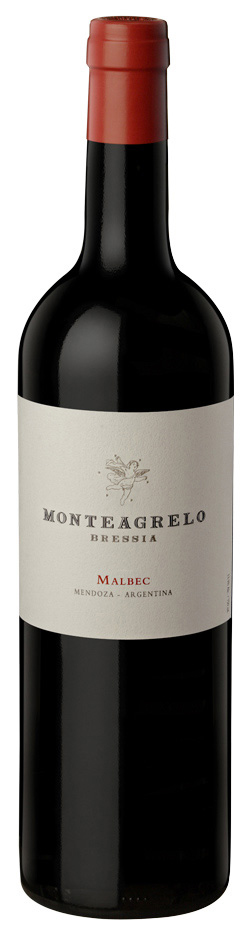
Bressia Monteagrelo Malbec is made from 100 percent Malbec.
Aged in French oak barrels for 12 months. No filtration and no fining.
Bressia Monteagrelo combines the soul of each varietal, its intimate relationship with the origin and its deep roots with a unique terroir in the world...Monteagrelo is our family of wines and, as in any family, each one expresses their own identity and varietal personality that makes them unforgettable and unrepeatable." - Walter Bressia
Monteagrelo Malbec is sourced from vineyards in Tupungato, La Consulta & Agrelo. Planted 6,500 plants per hectare.
Attractive and intense red-colored wine with purple tones. It exhibits ripe red and black fruit aromas, mixed with vanilla, chocolate and coffee nuances. Good concentration, great structure, delicate tannins and a long, harmonious finish.
Review:
"The 2020 Malbec Monteagrelo was aged for 12 months in French oak. Purple in the glass. The intense aromas feature plum liqueur, cassis and hints of blackberry in an oaky, cigar box frame. The palate is broad and full-bodied with a channeled but voluminous, grippy flow. - Joaquín Hidalgo"
- Antonio Galloni's Vinous (January 2023), 92 pts

All older vintage wines have been purchased from a single collectors cellar. Pictures can be requested before shipment.
All older vintage wines have been purchased from a single collectors cellar. Pictures can be requested before shipment.

This vineyard is situated at over 3,000 feet in altitude in Valle de Uco, and the vines are over seventy years old. This light soil is sandy with some silt, is very permeable and has boulders and a broken layer of limestone at a depth of 2.5 feet. Traditional irrigation is fed by water from the Andes Mountains. Temis has the coldest climate of all Alta Vista’s terroirs. Nights are quite cool and days are warm and soft, with constant breezes that help to keep the vines and grapes healthy. The grapes have a slow, gradual cycle of ripeness that is balanced and ideal. Planted in 1942, the selection massale vines are characterized by small clusters with small, compact grapes.
Review:
There’s a touch of bark, grilled Mediterranean spice savoriness to the rich but fresh blackberries, salted black plums and graphite notes. Pretty saline and flavorful on the palate. The tannins are powerful yet fine-grained. A structured and characterful malbec from old vines in El Cepillo.
-James Suckling 94 Points

Avatar Malbec is 100% Malbec.
Aged in 100% French Oak barrels for 4 months and then 6 months in the bottle beofre release
Presents a vibrant red color with glints of bordeaux. Great aromatic intensity. It expresses in a very fresh way, with red fruits and a remarkable sweetness. In the mouth it’s balanced with round and sweet tannins, rich and with a marked acidity.
Coming from Agrelo district.
Average of the vines is 25 years old.
Soil type: Alluvial and sandy soils with a big amount of rocks just besides the Mendoza river. This is one of the most prestigious terroirs in Argentina.
Winemaking: Crushing, destemming and maceration pre-fermentative at 11ºC for 24 hours. Alcoholic fermentation in tanks. 4 weeks of skin contact maceration. Aged in French oak barrels for 4 months, Malolactic fermentation in contact with fine lees.
Wine was slightly filtered before bottling.
Avatar Malbec is 100% Malbec.
Aged in 100% French Oak barrels for 4 months and then 6 months in the bottle beofre release
Presents a vibrant red color with glints of bordeaux. Great aromatic intensity. It expresses in a very fresh way, with red fruits and a remarkable sweetness. In the mouth it’s balanced with round and sweet tannins, rich and with a marked acidity.
Coming from Agrelo district.
Average of the vines is 25 years old.
Soil type: Alluvial and sandy soils with a big amount of rocks just besides the Mendoza river. This is one of the most prestigious terroirs in Argentina.
Winemaking: Crushing, destemming and maceration pre-fermentative at 11ºC for 24 hours. Alcoholic fermentation in tanks. 4 weeks of skin contact maceration. Aged in French oak barrels for 4 months, Malolactic fermentation in contact with fine lees.
Wine was slightly filtered before bottling.
Aged in French oak barrels. No filtration and no fining. This wine is a blend from five parcels.
Monteagrelo Malbec is an attractive and intense red colored wine with purple tones.
It exhibits ripe red and black fruit aromas mixed with vanilla, chocolate and coffee nuances. Good concentration, great structure, delicate tannins, and a long, harmonious finish
Review:
"The outstanding 2011 Malbec Monteagrelo was aged in French oak and bottled without fining or filtration. Its dark purple color is followed by notes of chocolate, espresso, blackberries and black raspberries. Medium to full-bodied with excellent concentration, sweet tannin and an impressive finish, it should drink well for 5-7 years.
A new estate for me, Bodega Bressia-s proprietor, Walter Bressia, has been in the Argentine wine trade for nearly three decades. My favorite of Bressia-s three white wines, the 2010 Lagrima Canela ($50 a bottle) was too expensive to be included in this report, but it-s a killer wine. A barrel-fermented blend of 70% Chardonnay and 30% Semillon, it is a rich, textured, honeyed effort displaying notes of figs, melons, mangoes and other tropical fruits. I tasted two other Bressia wines that were priced too high for this report, the 2009 Profundo (50% Malbec, 30% Cabernet Sauvignon and 10% each Merlot and Syrah); ($40.00; 92 points) and the prodigious 2009 Conjuro (50% Malbec, 30% Cabernet Sauvignon and 20% Merlot); ($120.00; 96 points).
- Robert Parker's Wine Advocate (Issue #208, August 2013), 90 pts
The Bressia Winery
The patriarch of the Bressia Winery family is Walter Bressia. He has worked in the wine business in Argentina for nearly 30 years. Walter’s knowledge and skill shine through in the Bressia wines. From 1998 to 2003, Walter was the winemaker for Bodega Vistalba and Viniterra. In 2003, Walter and his family began their own winery. The Bressia Winery family includes wife Marita, daughter Marita, and son, Walter Jr. The Bressia Winery has been producing some of Argentina’s finest wines with only the highest quality technology and a hands-on approach to each and every product. The Bressia Winery incorporates the “Vinos de Autor” concept. This translates to “Author’s wines”, or personalized, high quality wines. The Bressia Winery boasts 320 oak barrels, all nearly new French and American oak. (60% French, 40% American).
The Bressia Vineyards
The Bressia Winery land measures 20 hectares (49.40 acres). The varietals established are Malbec, Cabernet Sauvignon, Merlot, Pinot Noir, Chardonnay, and Sauvignon Blanc. A sparkling Malbec is also in the works for the Bressia Winery.
Some wines by Bressia Winery:
Any Bressia wines we have in stock are listed below, if you don’t see the wine you are looking for please don’t hesitate to ask for it.

Saumaize Michelin Macon Vergisson Sur Roche is made from 100 percent Chardonnay.
Harmonious, fresh and clean aromas of fresh apple, lemon, orange blossom, white flower. Pure, crisp, silky and fine texture. Ripe fruit flavors and good acidity.

Chateau Cabrieres Cotes du Rhone Rouge Vieilles Vignes is made from 50% Grenache and 50% Syrah.
Château Cabrières’ Côtes du Rhône vineyard is located south of Orange, on the edge of Châteauneuf-du-Pape. The area of the vineyard is 1.53 hectares. The soil is comprised of clay-limestone mixed with pebbles.
Bright cherry red color with an expressive red fruit nose (strawberry and raspberry). Soft tannins in mouth, with freshness and spices. This CDR tastes like a baby Châteauneuf-du-Pape!
Pairs with charcuterie, pizza, pasta and mild cheeses.



