" We don't sell the wine without touching the vine "
| Country: | Argentina |
| Region: | Mendoza |
| Winery: | Bressia Winery |
| Grape Type: | Malbec |
| Vintage: | 2016 |
| Bottle Size: | 750 ml |

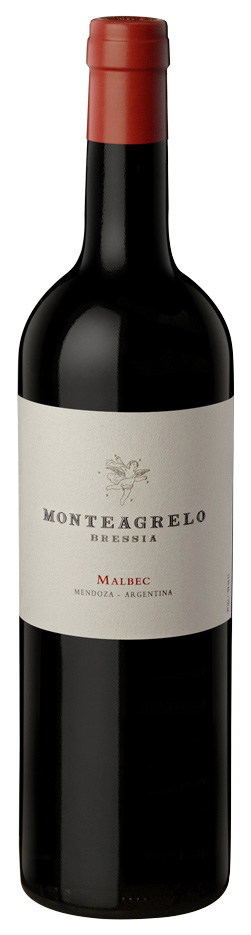
Bressia Monteagrelo Malbec is made from 100 percent Malbec.
Aged in French oak barrels for 12 months. No filtration and no fining.
Bressia Monteagrelo combines the soul of each varietal, its intimate relationship with the origin and its deep roots with a unique terroir in the world...Monteagrelo is our family of wines and, as in any family, each one expresses their own identity and varietal personality that makes them unforgettable and unrepeatable." - Walter Bressia
Monteagrelo Malbec is sourced from vineyards in Tupungato, La Consulta & Agrelo. Planted 6,500 plants per hectare.
Attractive and intense red-colored wine with purple tones. It exhibits ripe red and black fruit aromas, mixed with vanilla, chocolate and coffee nuances. Good concentration, great structure, delicate tannins and a long, harmonious finish.
Review:
"The 2020 Malbec Monteagrelo was aged for 12 months in French oak. Purple in the glass. The intense aromas feature plum liqueur, cassis and hints of blackberry in an oaky, cigar box frame. The palate is broad and full-bodied with a channeled but voluminous, grippy flow. - Joaquín Hidalgo"
- Antonio Galloni's Vinous (January 2023), 92 pts

Crown Point Estate Selection is made from 75% Cabernet Sauvignon, 10% Merlot, 6% Petit Verdot, 6% Cabernet Franc, 3% Malbec.
The 2016 Crown Point Estate Selection exhibits a heady aromatic array of baking spices, ripe red and black fruits, with deep intonations of earth and minerals. The palate is elegant and bright, with appealing acids and nuanced notes of savory mocha and dried herbs. Polished and seamless, the tannins finish with a comet-like trail of textural opulence highlighted by glossy flavors of baked berry pie and warm toast. Recommended drinking window: now through 2030s.The 2016 Estate Selection is representative of all five red Bordeaux varieties. The selection process starts in the vineyard and continues on through the winemaking process: only the best lots make the final blend. All blocks were harvested & fermented separately. The individual components were blended after 12 months in barrel. Total time in 225 liter French oak barrels was 26 months.
Review:
Deeply colored, the 2016 Estate Selection checks in as 75% Cabernet Sauvignon, 10% Merlot, 6% Petit Verdot, 6% Cabernet Franc, 3% Malbec that was brought up 26 months in 75% new French oak. Deeply colored, it has a smoking good bouquet of crème de cassis, smoke tobacco, lead pencil, camphor, and hints of chocolate. This gives way to a powerful, opulent Cabernet Sauvignon that has plenty of sweet tannins, a layered, multi-dimensional texture, no hard edges, and an awesome finish. I’d happily put this beauty in a lineup of top Napa Valley Cabernet Sauvignon and blends.
-Wine Enthusiast 97 Points
There’s an impressive amount of complexity on the nose of this bottling by winemaker Adam Henkel, from crushed graphite and concentrated black strawberry to cinnamon pastry, licorice and a brush of herbs. The sip is intense, with leathery but chiseled tannins presenting flavors of charred black currant, licorice, black olive, dried flower and white pepper
-Jeb Dunnuck 97 Points

Justin Vineyards & Winery Isosceles Reserve is made from 86% Cabernet Sauvignon, 6% Merlot, 4% Cabernet Franc, 3% Malbec and 1% Petit Verdot
Dark, ruby/purple core with a medium intensity rim and moderately stained tears. Complex and very aromatic with black cherry, cassis, toasty vanilla, cinnamon, cedar, graphite, oak, dusty leaf notes, star anise and red licorice. Full bodied, with ripe black fruit of cherry, currant and berry with baking spice on entry. The mid-palate features sustained fruit with sweet tobacco, leather, vanilla and licorice, and mouth coating tannins that balance its full fruit character through a very long, fresh and beautifully balanced finish that evolves with a complex mix of fruit, spice and savory elements.
The 2016 ISOSCELES Reserve is a bold, but balanced wine that pairs nicely with rich meat dishes like slow cooked stews and braises, but shines beautifully with a simple grilled ribeye steak.
Review:
Clean lines of blackberry jam, charred toast and crushed slate make for a focused nose in this reserve blend of 86% Cabernet Sauvignon, 6% Merlot, 4% Cabernet Franc, 3% Malbec and 1% Petit Verdot. It is very dense and thick on the palate, where mocha, caramel, loamy earth and dark berry flavors align into an lusciously rich yet elegantly dry experience.
-Wine Enthusiast 95 Points

Long Shadows Pirouette Meritage is made from 68% Cabernet Sauvignon 15% Merlot 8% Petit Verdot 6% Cabernet Franc 3% Malbec
Philippe Melka, named one of the top nine winemakers in the world by Robert Parker, used small lots from Washington State's finest vineyards to craft this enticing red blend.
Like the last several growing seasons, 2016 was another hot year that required extra care in the vineyards. Building on the success of our canopy managment program over the last few vintages, we worked with growers throughout the season to encourage growth of the canes and outside foliage to protect against the sun while opening up the fruit zone for even maturation. Warm temperatures in the fall hastened ripening, but the Columbia Valley's cool autumn nights protected the grapes' acidity, yielding bright, vibrant wines that will drink well in their youth but also promise to bring enjoyement to those who cellar.
A variety of fermentation methods were used to enhance complexity and richness in this classic Bordeaux blend. Hand-harvested Cabernet was fermented in 400L French oak barrels that were gently rolled throughout fermentation to integrate the oak with refined, dark fruit flavors and give the wine its silky mouthfeel. All other varieties were fermented in traditional stainless steel tanks, with select lots enjoying longer skin contact to enhance the wine's dark color and mid-palate. The finished wine was aged 22 months in French oak barrels (75% new) before bottling unfiltered and unfined.
Review:
"The 2016 Pirouette is made by Philippe Melka and it's a total blockbuster based on 68% Cabernet Sauvignon, 15% Merlot, and the palate Petit Verdot, Cabernet Franc, and Malbec that was fermented in barrel and aged 22 months in 75% new oak. Crème de cassis, blackberries, toasted spices, cedar, and forest floor notes all emerge from this deep, rich, opulent red that has sweet tannins, a thrilling texture, no hard edges, and a monster finish. This is another best-to-date from this estate and it's an awesome wine." -Jeb Dunnuck 97 Points

M by Michael Mondavi Red Blend is made from 58% Cabernet Sauvignon, 30% Cabernet Franc, 5% Merlot, 5% Petit Verdot and 2% Malbec, Only 16 barrels produced.
M starts with Cabernet Sauvignon vines planted to Cabernet Clone 4 on 110R rootstock, which produces structured fruit with ample tannins and acid to balance the concentrated dark fruit flavors. In order to perfect his process, Rob Mondavi, Jr. consulted with viticulturist Danny Schuster to help unlock the secrets of his family’s Animo Vineyard. Rob and Danny harness an organic natural approach to the vineyard that exemplifies the beautifully, unique attributes of this site.
Linear and precise, the 2016 M by Michael Mondavi opens with expressive aromas of quince, plum, juniper, cassis, blackberry & dark roasted coffee beans. With time and swirls of air, notes of dried rose petals, coriander, cinnamon and clove develop. This wine enters the palate with subtle tannins at first, and soon broadens into a silky expanse of vanilla bean, cocoa, roasted dates, black cherry, and orange blossom tea. The evolution of flavors continues with candied figs, bramble-berry, and cocoa covered strawberries. Enticing and enjoyable now, additional cellaring will surely allow further detail and refinement to develop. Blend: 58% Cabernet Sauvignon, 30% Cabernet Franc, 5% Merlot, 5% Petit Verdot, 2% Malbec
Review:
Linear and precise, the 2016 M by Michael Mondavi opens with expressive aromas of strawberry, plum, juniper, cassis, blackberry & dark roasted coffee beans. With time and swirls of air, notes of dried rose petals, coriander, cinnamon and clove develop.
96 Points - James Suckling

All older vintage wines have been purchased from a single collectors cellar. Pictures can be requested before shipment.
Bressia Monteagrelo Malbec is made from 100 percent Malbec.
Aged in French oak barrels. No filtration and no fining.
Monteagrelo Malbec is an attractive and intense red colored wine with purple tones.
It exhibits ripe red and black fruit aromas mixed with vanilla, chocolate and coffee nuances. Good concentration, great structure, delicate tannins, and a long, harmonious finish
Review:
"Wines from Vista Flores, in the Tunuyán area, tend to be riper, with less sharpness and minerality than other high elevation zones. We’re not really sure why, we only go by the wines we’ve tasted from there, like this Monteagrelo which, despite the name, comes from viñeyards in Vista Flores. This wine shows good ripeness, flavors of sweet red fruit, but is not as it was a decade ago in Vista Flores. Today, the new generation blends this sweetness with fresh tense acidity that changes the profile, without losing the essence."
- Descorchados 2018, 92 pts
The Bressia Winery
The patriarch of the Bressia Winery family is Walter Bressia. He has worked in the wine business in Argentina for nearly 30 years. Walter’s knowledge and skill shine through in the Bressia wines. From 1998 to 2003, Walter was the winemaker for Bodega Vistalba and Viniterra. In 2003, Walter and his family began their own winery. The Bressia Winery family includes wife Marita, daughter Marita, and son, Walter Jr. The Bressia Winery has been producing some of Argentina’s finest wines with only the highest quality technology and a hands-on approach to each and every product. The Bressia Winery incorporates the “Vinos de Autor” concept. This translates to “Author’s wines”, or personalized, high quality wines. The Bressia Winery boasts 320 oak barrels, all nearly new French and American oak. (60% French, 40% American).
The Bressia Vineyards
The Bressia Winery land measures 20 hectares (49.40 acres). The varietals established are Malbec, Cabernet Sauvignon, Merlot, Pinot Noir, Chardonnay, and Sauvignon Blanc. A sparkling Malbec is also in the works for the Bressia Winery.
Some wines by Bressia Winery:
Any Bressia wines we have in stock are listed below, if you don’t see the wine you are looking for please don’t hesitate to ask for it.

Ziata Pinot Noir Russian River Valley is made from 100% Pinot Noir.
Vineyard Notes
Green Valley is tightly delineated geographically and climatically, and is the most consistent Sonoma Coast appellation in terms of soil, climate and flavor profile. Two factors, in particular, make it ideal for Pinot Noir. First, the predominant soil type is Goldridge, which with its excellent drainage and low fertility, curtails the vine’s vigor. This results in fewer clusters but of better quality. Second, its elevation and cool coastal climate mean a smaller swing between and day and night temperatures, and its overall cooler daytime temperatures allow for a longer growing season to bring out the full potential of the fruit.
Tasting Notes
This silky Pinot Noir opens with aromas of fresh strawberry, cherry, raspberry and plum, warmed by notes of spice, forest floor and cedar. The wine is fresh and balanced on the palate, with fruit and beautifully integrated oak flowing into a long, juicy finish.
Production Notes
This was the third year of drought, but well-timed watering in the vineyard ensured ample growth and cluster development. Rolling heat spells prior to harvest were kept in check by cool nights, courtesy of the nearby Pacific Ocean. This diurnal range resulted in a medium-bodied, juicy gem of a Pinot Noir.

Thierry Mortet Gevrey Chambertin Vigne Belle is made from 100 percent Pinot Noir.
The wine is produced from 20 different parcels (3 hectares total). The soils are a mix of clay and silt.
The age of wines varies between 15 to 60 years.
Yield: 45 hl/ha
Production: 15,000 bottles on average.
Manual harvest with a selection of the grapes; sorting table; 100% destemming; maceration for 15 days, cold stabilization for 4-5 days; M-L.; racking twice a day. Fermentation in stainless steel tanks for 4 months. Aging in oak barrels for 12 months (new and 1 or 2 year old barrels). Kieselguhr filtration before bottling.
The wine offers a subtle and complex nose. It displays a sweet and delicate mouthfeel. Very nice wine with black fruit aromas. Dense, good concentration. Good length and well integrated oak.