
" We don't sell the wine without touching the vine "
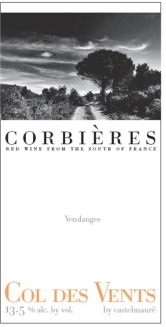
Castelmaure Col des Vents Corbieres is made from 50% Carignan, 30% Grenache, 15% Syrah and 5% Cinsault.
"Col des Vents" means "Windy Mountain Pass" as it is quite windy and located at the foothills of the Pyrenees mountains.
Originally, the label was a replicate of a Max Savy's painting.
Brambly berry, cherry and raspberry, spices, black pepper ... all are present in this authentic French country wine. There are also some aromas of Garrigue (Rosemary, thyme and lavender) giving a minty, herbal notes, that are quite refreshing as well.
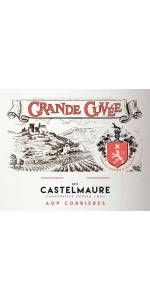
Castelmaure Grande Cuvee Corbieres Rouge is made from 50% Grenache (30 year old) and 50% Syrah (30 year old)..
In the early 1990’s, Castelmaure began experimenting with a Prestige Cuvée of Corbières. This wine has become known as “Grande Cuvée” and is made with the help of the winemaking team of Tardieu-Laurent.
Vinification: destemming, pneumatic press, end of fermentation at 25 degrees C; two racking; aging in tank then in 220 Liter Bordeaux barrels for 10-12 months. Egg fining, slight filtration..
Deep and intense color, powerful aromas of dark berry fruit, prune and coffee nuances, and a persistent finish.
Vineyards: planted on 50% Schist and 50% limestone soils.
-150x300.jpg "Castelmaure Cuvee N°3 Corbieres 2022")
Castelmaure Cuvee N°3 Corbieres is made from 70% Syrah, 28% grenache and 2% Carignan
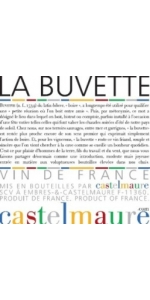
Castelmaure La Buvette is made from 60% Grenache, 40% Carignan
Vinification: Grenache - destemming in low temperature, short maceration..
Carignan - carbonic maceration.
Fining, filtration, cold stabilization.
A purple color, intense aromas of strawberry and cassis. Fresh and fruity in the mouth with silky smooth tannins. Great as an aperitif, it also pairs well will grilled meats, salads.

La Despensa Boutique Colchagua Cabernet Sauvignon-Marselan is made from 75% Cabernet Sauvignon and 25% Marselan
A different take on Chilean Cabernet, with grapes from a high-alitude vineyard in the foothills of the Andes, where Summer temperatures never exceed 30C/85F. The grapes ripen over a longer growing season and the higher levels of UV help fix color and flavor profile. This is a fresher take on Cabernet Sauvignon when compared to the typical highly concentrated Cabs that are considered the standard from Chile. The Marselan (from our own vineyard in Santa Ana) adds structure and tension to the wine and also an even more intense color. Expect fresh and recently ripened blackberries and red currants.
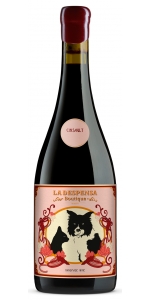
La Despensa Boutique Cinsault is made from 100% Cinsault.
A genuinely unique wine - they are the only producers of Cinsault in Colchagua! From a new vineyard planted in 2017, the team at La Despensa thinks they’ve hit the jackpot with this variety in this valley. Much more structure, color and intensity than the typical Chilean Cinsaults from further south, this is an easy drinking but serious version of this wonderfully fruity variety!
Review:
"Apparently the first and only Cinsault from Colchagua, the 2021 Boutique Cinsault was produced with vines planted in 2017 and worked organically (but is not certified), and it's much darker and more structured than the examples from the south. It fermented in concrete with selected yeasts and went through malolactic in stainless steel and then 60% of the volume matured in used barriques for six months. It has 13.5% alcohol and kept good freshness, and it's varietal, balanced and easy to drink but not banal. 1,200 bottles were filled in March 2022. - Luis Gutiérrez"
- Robert Parker's Wine Advocate (April 2023), 91 pts
Castelmaure Col des Vents Corbieres 2011 is made from 50% Carignan, 35% Grenache, 15% Syrah.
Brambly berry, cherry and raspberry, spices, black pepper … all are present in this authentic French country wine. There are also some aromas of Garrigue (Rosemary, thyme and lavender) giving a minty, herbal notes, that are quite refreshing as well. The wine is a perfect match with a nice rosemary marinated roasted lamb
"My favorite of this trio is the least-oaked example, the 2011 Corbieres Col des Vents (50% Carignan and the rest Grenache and Syrah) displaying classic southern France notes of garrigue, wild herbs, sweet red and black currants, dusty, loamy soil and incense. The complex aromatics are followed by a fleshy, lush, velvety-textured, medium-bodied wine with loads of fruit and personality. This excellent Corbieres should drink nicely for another 2-3 years. "
- Robert Parker's Wine Advocate (Issue #208, August 2013), 89 pts
"Dried beef and smoked cherry flavors are dominant in this full-bodied red. Sanguine notes linger on the minerally finish, which features plenty of spice, tannins and acidity. Drink now through 2016. 25,000 cases made. –KM"
- Wine Spectator (October 15th 2013), 88pts.
The S.C.V Castelmaure Estate
S.C.V. Castelmaure was founded in the 1920’s and today consists of 65 members, of which 15 bring 85% of the production. The winery is located in the unofficial Corbieres cru site of Durban (there are 11 unofficial Cru’s in Corbieres), which will become soon an official Cru together with Boutenac and Alaric. The Serre mountain in the south protects the little plateau of Castelmaure from the off weather patterns of the Mediterranean sea.
Patrick de Marien, the president of the cave, and Bernard Pueyo, the director, work in conjunction with Tardieu/Laurent in trying to produce wines of higher quality each year.
The S.C.V Castelmaure Vineyard
The AOC Corbieres was created in 1985 and measures 23,000 hectares (56,810 acres). The appellation requires a minimum of two grapes in a wine blend.
The co-op farms 350 hectares (868 acres) around the tiny hamlet of Embres et Castelmaure. The 760 parcels are inspected and the characteristics recorded on computer. Each parcel is supervised individually by a technician who dedicates his time to this task. They have re-learned to prune, plough, check yields, sort, select, with a permanent focus on the respect of the environment. All the grapes are harvested by hand. In the cellar, vats hygiene, temperature control, ultramodern pressing contribute to a better expression of the terroir.
Castelmaure produces 90% red wine of which 80% is A.O.C. Corbieres.
The soil is made of schist, limestone, alluvial river wash and argilo-calcaire.
“1752” is the name of the Damilano Barolo Cannubi Riserva, in honor of the year in which the historic bottle was first marked “Cannubi”. It still exists today perfectly conserved by the Manzone family in Bra, close to Barolo. The bottle is clearly marked as being of “1752” vintage, indicating that Cannubi historically precedes Barolo.
About the Vineyard:
The Cannubi Cru is in found within one of the 6 core zones which comprise a UNESCO heritage site in Italy. A mixture of Tortonian and Helvetian calcareous marl gives the grapes intense aromas of cherry, plum and tobacco, rose and violet in sequence. Its low potassium and high calcium/magnesium content offer the wine a fine and polished touch. The vineyard is located at about 270 m. a.s.l. and has a south-east sun exposure. Barolo Riserva Cannubi 1752 It is a small plot of about 2 hectares of Nebbiolo vines, currently between 30 and 50 years of age.
Tasting Notes:
Garnet ruby red in color, the bouquet is intense and balanced, with notes of violet, red fruit, cherry and plum, spices, liquorice, cocoa, leather and tobacco. Dry, robust, full-bodied, very persistent, rich and velvety
Food Pairing:
This wine is excellent with typical piedmontes pasta (tajarin, ravioli); perfect with red meat, braised and roast meat, game and absolutely ideal with all types of cheeses.
Review:
Boussey Savigny les Beaune is made from 100 percent Pinot Noir.
The grapes for this wine arecoming from 3 different parcels of Savigny les Beaune loctaed in these 3 different lieux-dits: Les Saucours, les Petits Liards and Les Fourches.
The wine shows aromas of Red fruits with floral notes. It is elegant with a very pleasant long finish.



