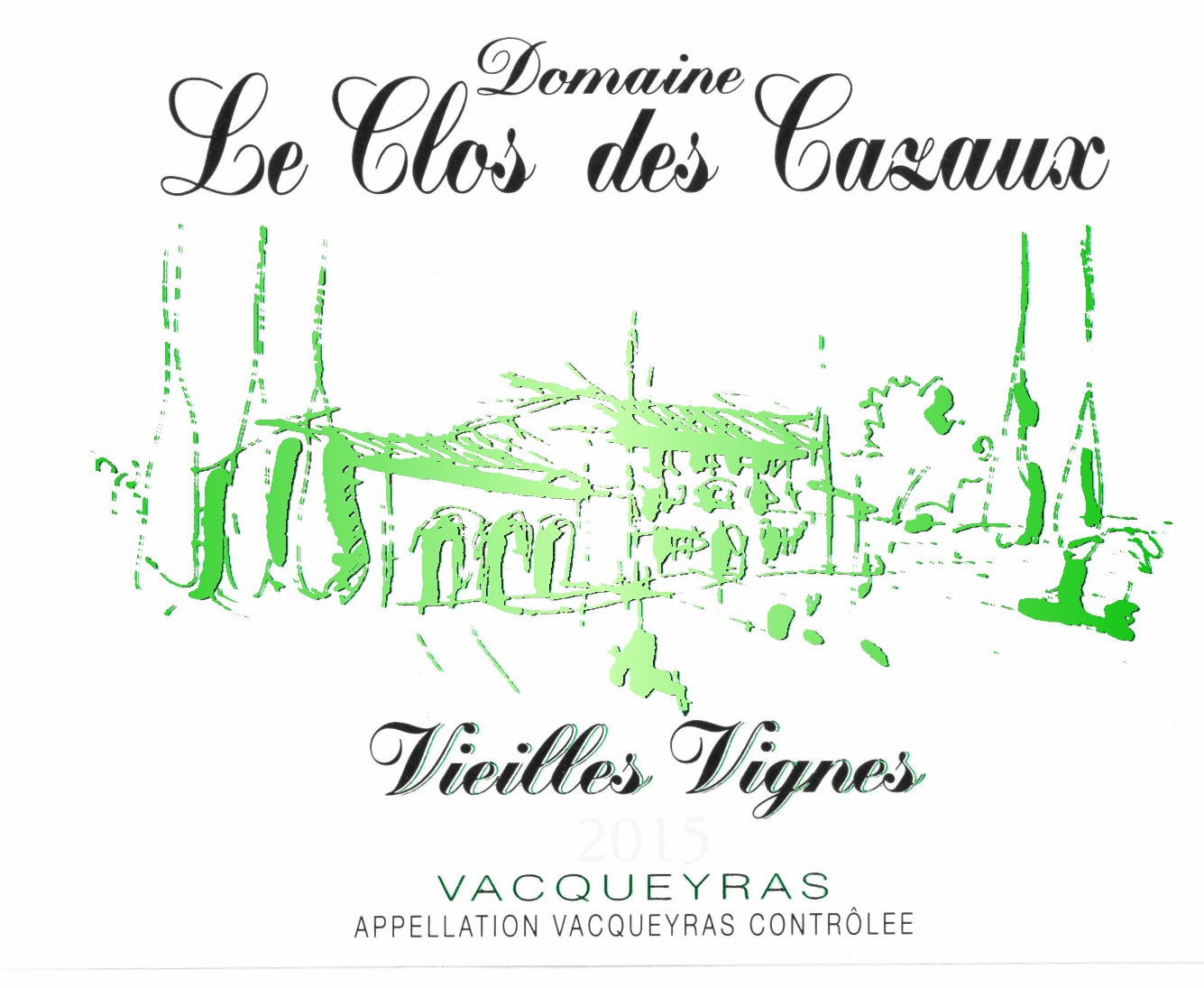
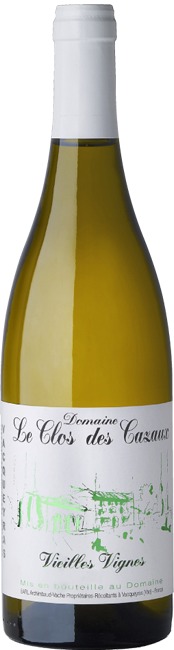
" We don't sell the wine without touching the vine "
| Country: | France |
| Region: | Rhone |
| Winery: | Clos des Cazaux |
| Grape Type: | Clairette |
| Vintage: | 2017 |
| Bottle Size: | 750 ml |
Cazaux Vacqueyras Blanc Vieilles Vignes 50% Clairette, 30% Roussanne and 20% Viognier
The wine has a beautiful golden color.
The aromas are rich and
exotic with mango, almonds, toast, lemon, pineapple white flowers and
papaye. These aromas will develop to honey, butter and pear after ageing
for a few years.
The finish is long, citrusy and toasty.
Terroir: Slopes of sandy soil or grey limestone.
Yield: 25 -30 hl/ha
Age of the vines: 70 years old minimum. The oldest are around 90 years old.
The
grapes are pressed pneumatically after a few hours contact with the
skins.The must is kept at 20°c during the alcoholic fermentation to
optimise the aromas and respect the wine’s suppleness.
Barrel fermented an aged in 228-liter French Oak barrel for 12 months with regular stirrings of the lees.
MaloLactic Fermentation also in barrel.
Enjoy this wine with rich dish, river fish or poultry cooking in creamy sauce. Delicious with a mushroom risotto.
Cazaux Vacqueyras Blanc Les Clefs d'Or is made from 50% Clairette, 30% Roussanne and 20% Grenache Blanc.
A wine with lively acidity, expressive aromas of fennel and white flowers. It is long and full in the mouth with minty and anisy aromas mixed with white peach flavors. Refreshing and mineral character.
Clairette grapes are green harvested to concentrate and harmonize aroma. Each grape varietal is hand picked separately. Pressing with skin contact at low temperature. Aged 12 months in stainless steel tank. (No oak)
Enjoy this wine with all sorts of fish starters, squid salad with olive oil and basil. A must try with fresh oysters.
Review:
"Exotic citrus, pineapple, baking spices, and minty flower notes emerge from the 2023 Vacqueyras Les Clefs D'Or Blanc, a medium-bodied, juicy, lively, balanced white that has the vintage's ripe yet pure, layered, focused style. It's incredibly well done and worth your time and money."
- Jeb Dunnuck (April 1st 2025), 92 pts
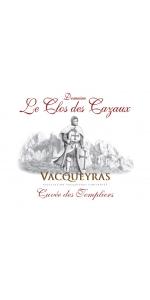
Cazaux Vacqueyras Cuvee des Templiers is a blend of 50% Syrah, 50% Grenache.
The Syrah vines are situated on the sandy, grey clay slopes of Vacqueyras near the estate. They are facing east west, so the sun warms the grapes early in the morning allowing a considerable synthesis of sugars. The sandy soil is poor giving a reduced yield. The resulting wine is very fruity with strong persistent aromas of red fruits, spices and violets brought by the Syrah. Intense black cherry, blackberry, blueberry and cherry flavors. Explosive fruit tannins give the sweet, creamy flavors structure and focus, bright and uplifting on the finish.
Enjoy this wine when young with grilled beef and bearnaise sauce, lamb and thyme. After 7-10 years excellent with game meats.
Review:
"Very dark in the glass. A spicy nose full of cardamom and cumin. Full-bodied but not overly. Feels rounded and powerful, but has seen no oak. Quite extracted, this certainly needs time but promises some future complexity. - Matt WALLS "
- Decanter (October 1st 2022), 91 pts
Cazaux Vacqueyras Cuvee des Templiers is a blend of 50% Syrah, 50% Grenache.
The Syrah vines are situated on the sandy, grey clay slopes of Vacqueyras near the estate. They are facing east west, so the sun warms the grapes early in the morning allowing a considerable synthesis of sugars. The sandy soil is poor giving a reduced yield. The resulting wine is very fruity with strong persistent aromas of red fruits, spices and violets brought by the Syrah. Intense black cherry, blackberry, blueberry and cherry flavors. Explosive fruit tannins give the sweet, creamy flavors structure and focus, bright and uplifting on the finish.
Enjoy this wine when young with grilled beef and bearnaise sauce, lamb and thyme. After 7-10 years excellent with game meats.
Review:
"Very dark in the glass. A spicy nose full of cardamom and cumin. Full-bodied but not overly. Feels rounded and powerful, but has seen no oak. Quite extracted, this certainly needs time but promises some future complexity. - Matt WALLS "
- Decanter (October 1st 2022), 91 pts
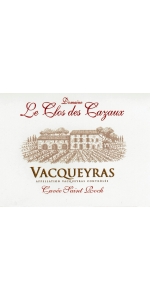
Cazaux Vacqueyras Rouge Cuvee Saint Roch 70% Grenache, 25% Syrah and 5% Mourvedre.
Deep color. Intense and persistent red fruits, such as strawberry and black cherry. Expressive and delicate at the same time. The finish is long and the tannins are quite round and well balanced.
Grapes are hand picked, destemmed 100% but not crushed. About 20 days fermentation according to vintage. Aged in stainless steel tanks for 12 months and an additional 12 months in enamel coated concrete tank. No fining, light filtration.
Enjoy this wine with meat cooked in red wine sauce (such as Boeuf Bourguignon).
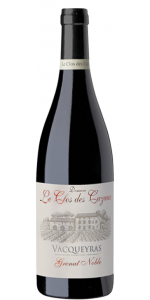
Cazaux Vacqueyras Rouge Grenat Noble 100% Grenache.
This wine is the result of extraordinary weather conditions. The first cuvée was produced in 1992 when violent storms and floods affected the region (especially Vaison la Romaine). The following days were radiant and accompanied by Mistral winds. We could then continue to harvest or more precisely harvest what remained of a rotten crop - but a noble rotten crop!
Following our first involuntary test of 1992, we wanted to reproduce this wine but we had to wait until 1995 to isolate the parcels that were capable of producing this noble rot. Unfortunately, the "noble" phenomenon does not occur every year despite late harvests (October 15).
The resulting wine is offers aromas of small red berries (cherries, raspberries), liquorice, fig, honey, fruit brandy and plum. It is elegant, supple and smooth on the palate with a firm, generous and suave structure. A beautiful length on spices and cherry.
This Grenache nectar marries will with dishes such as pan-fried foie gras in honey and fig preserve, leg of lamb with preserved fruits accompanied by local cereal "epautre" or other sweet and sour dishes.
Cazaux Vacqueyras Blanc Vieilles Vignes 50% Clairette, 30% Roussanne and 20% Viognier
The wine has a beautiful golden color.
The aromas are rich and
exotic with mango, almonds, toast, lemon, pineapple white flowers and
papaye. These aromas will develop to honey, butter and pear after ageing
for a few years.
The finish is long, citrusy and toasty.
Terroir: Slopes of sandy soil or grey limestone.
Yield: 25 -30 hl/ha
Age of the vines: 70 years old minimum. The oldest are around 90 years old.
The
grapes are pressed pneumatically after a few hours contact with the
skins.The must is kept at 20°c during the alcoholic fermentation to
optimise the aromas and respect the wine’s suppleness.
Barrel fermented an aged in 228-liter French Oak barrel for 12 months with regular stirrings of the lees.
MaloLactic Fermentation also in barrel.
Enjoy this wine with rich dish, river fish or poultry cooking in creamy sauce. Delicious with a mushroom risotto.
The Domaine Le Clos des Cazaux Estate
The Domaine was founded in 1905 by Gabriel Archimbaud and is now run by Maurice Vache and his two sons Jean-Michel and Frederic. The Archimbaud and Vache families are among the oldest ones in Vacqueyras. The oldest part of the property dates back to the 12th century and belonged to "Les Chevaliers de l'Ordre des Templiers" (the Templar Knights). An ancient Moorish Tower sits on the property, the Tower of Sarrasine in ruins.
The Domaine Le Clos des Cazaux Vineyard
The estate spreads over 40 hectares (98.8 acres) of vineyard land:
- 25 ha in Gigondas. The quality of the soil is outstanding and the sun exposure is optimal due to the special location of the vineyard, surrounded by the rocky massif of the "Dentelles de Montmirail", upon which is built the Sarrasine tower.
- 15 ha in Vacqueyras, on sandy-clayey and sunny slopes.
The vineyards are planted to 60% Grenache, 30% Syrah and 10% Mourvedre. The vines are 40-50 year old. The annual production is 8,800 to 10,000 cases. The average yield is 28 hl/ha.
The vines are cultivated with utmost respect to the environment. Only Bordeaux mixture (antifungal agent consisting of a solution of copper sulfate and quicklime) and sulfur is used in the phytosanitary (pertaining to the health of plant) and vineyard treatment. At all times, the vineyards are manually tended, including manual harvest. To ensure optimal quality, only the best grapes are selected during a green harvest in Summer which eliminates at least 20% of the production.
Each grape variety is picked at its optimum maturity and vinified separately. Syrah is usually harvested first, followed by Grenache and then Mourvèdre. The whole clusters are placed into specially equipped bins having a screw in the bottom that allow the grapes to fall into the tanks without any crushing. This near carbonic fermentation period depends on the grape varieties and the conditions. When the fermentation is complete, the varietal wines are blended together (typically in November).
The maturation takes place first in stainless steel tanks for the juice to settle, then in concrete or enamel tanks. The wines mature in the cellars for at least 2 years before bottling. There is no fining, and only a light filtration to limit the natural deposit on the bottle.
O'Shaughnessy Estate Napa Valley Cabernet Sauvignon is made from 89% Cabernet Sauvignon, 3% Malbec, 3% Petit Verdot, 3% St. Macaire, 1% Cabernet Franc, and 1% Carmenère.
Blended from our three Estate vineyards in arguably the three best appellations within the Napa Valley: Howell Mountain, Mt. Veeder and Oakville. Howell Mountain gives us structure and ripe red fruit, while Mt. Veeder adds an extra punch of tannins along with savory mineral driven qualities, Oakville balances out the mountains with its silky texture and pure fruit. This Cabernet is deep ruby red with an opaque center. Bold aromas of aged leather, black currant, and rum raisin, creating a layered and complex bouquet. A luxuriously sweet and rich entry, unfolding with ripe blackberry and velvety cocoa powder. The texture is smooth yet structured, balanced by moderate tannins and a medium level of acidity, leading to a long, elegant finish.
Review:
Based on 89% Cabernet Sauvignon, 3% Malbec, 3% Petit Verdot, 3% St. Macaire, 1% Cabernet Franc, and 1% Carmenère and aged two years in French oak (60% new, 40% second year), the 2022 Cabernet Sauvignon offers blackcurrants, scorched earth, iron, sappy herbs, and tobacco. It's rich and medium to full-bodied, nicely concentrated, and has a layered, textured mouthfeel, ripe underlying tannins, and outstanding length. I slightly prefer the overall structure and balance here to the Mt. Veeder bottling, but both are successful 2022s with 10-12 years of longevity.
-Jeb Dunnuck 93 Points
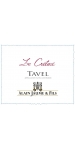
Alain Jaume Tavel Rose Le Cretace is made from 60% Grenache, 30% Syrah and 10% Mourvedre
Rosé de saignée (bleed technique) with a vibrant ruby color, complex and elegant, notes of crushed strawberries and rose petals.
Tavel Le Cretace Rose gives up vibrant wild strawberry, watermelon, crushed flowers and hints of spice to go with a medium-bodied, layered and seamless profile on the palate. A classic rose from this appellation, enjoy this beauty with food over the coming year or two.
Pair with roasted and/or spicy Turkey, sushi, seafood and grilled fish, Asian food.