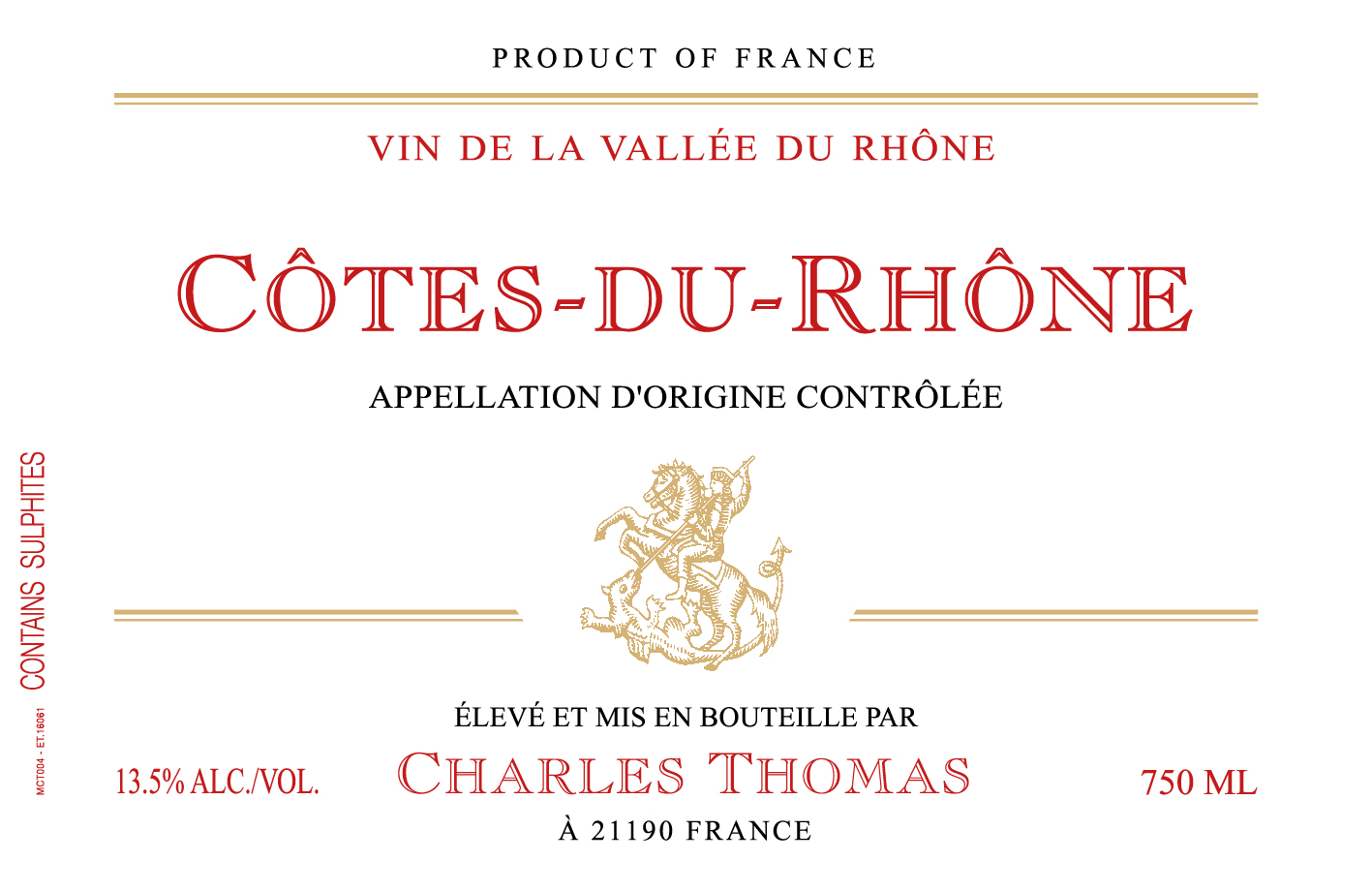
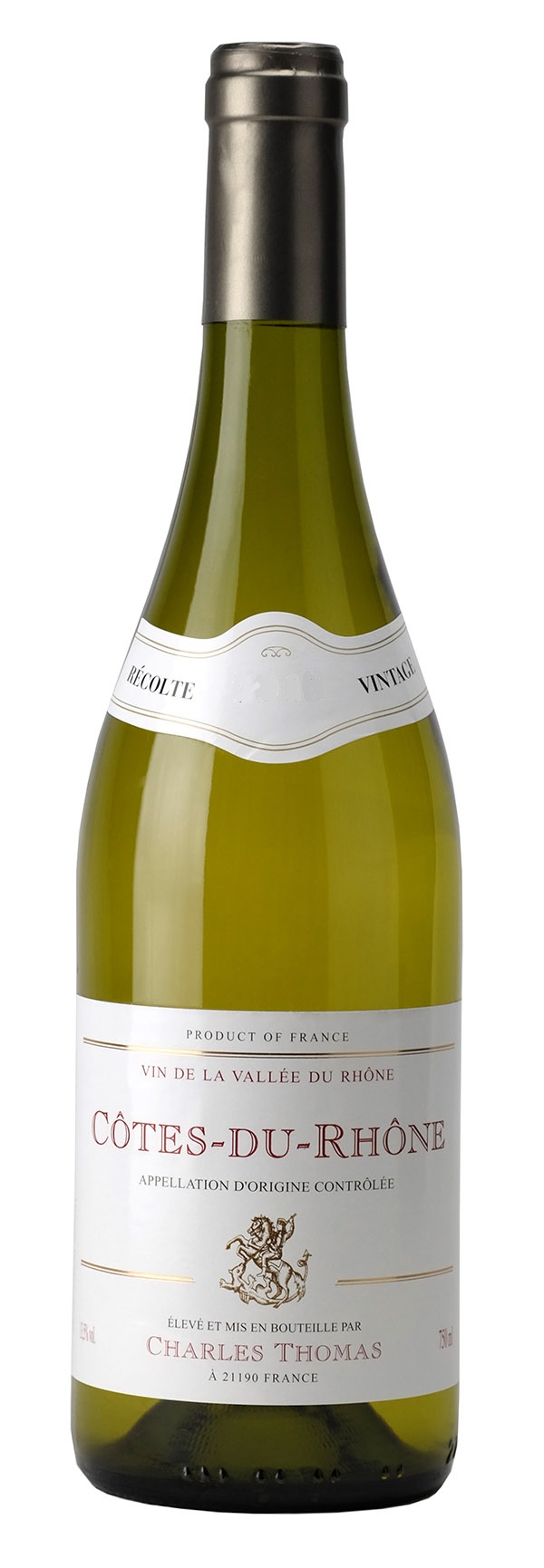
" We don't sell the wine without touching the vine "
| Country: | France |
| Region: | Rhone |
| Winery: | Charles Thomas |
| Grape Type: | Viognier |
| Vintage: | 2021 |
| Bottle Size: | 750 ml |
Grand Veneur Cotes Du Rhone Blanc is made from 50% Viognier, 30% Clairette, 20% Roussanne.
Pale yellow colour, brilliant with a gold tinge. Primary aroma of flowers and stone fruit. On the palate, the fruit is immediately present with touches of almond and white peach. A slight liveliness appears in the finish, which creates a perfect balance for the natural generosity of this wine.
To consume young in order to preserve the fruitness typicity. Could age 2-3 years
Direct press, fermentation in temperature controlled stainless-steel vats. Early bottling 6 months after harvest.
Excellent with fish, seafood.
Grand Veneur Cotes Du Rhone Les Champauvins Blanc is made 100% Viognier. Located in the area known as "Les Champauvins", close to Domaine Grand Veneur. The soils are clay-sand and limestone. They enable the white grape varieties to ripen slowly, thus preserving their excellent aromatic finesse.
A great Viognier, conceived and produced with finesse and freshness in mind. Bright, limpid pale yellow color. Intense, delicate nose of floral and white-fleshed fruit aromas. Fresh, mineral and airy on the palate. White peach and pear aromas are the most expressive. The fruity characters are long-lasting, evolving into notes of apricot after a few hours' aeration.
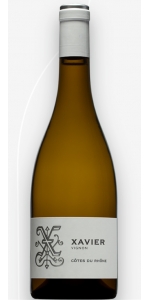
Xavier Vignon Cotes du Rhone Blanc is 40% Viognier, 30% Grenache, 20% Roussane, & 10% Picpoul.
From Vienne to Avignon, the Côtes du Rhône appellation is one of the largest in the french vineyard.
Around 6% of the area is dedicated to the production of grapes from varieties that can be vinified as white wine.
Brilliant yellow with gold highlights.
Suave and generous taste. Long saline finish with good acidity.
Perfumes of yellow fruit, citrus, white flowers with mineral notes.
A fresh, fruity and mineral wine that pairs best with French onion soup, green vegetables, risottos, light pastas and goat cheese.

Xavier Vignon Extra white Côtes-du-Rhône NV is 40% Clairette, 30% Grenache Blanc, 20% Roussanne and 10% Picpoul.
Traditional vinification. A very long fermentation lasting several months (6 to 8 months) to allow the yeasts to release more aromatic compounds, followed by immersion in Vinarium®.
Aged in Vinarium® for 24 months: a truncated wooden vat designed to hold and immerse 5 barrels. In this way, the CO2 produced by the Intra becomes the natural preservative for the Extra.
Pale and clear yellow.
Subtly oaked with hints of toasted bread, notes of honey mixed with pear.
Fresh and lively attack, well-balanced acidity and long lemony finish on the palate.
Pairs well with fresh cheese., sushi and pesto pastas.
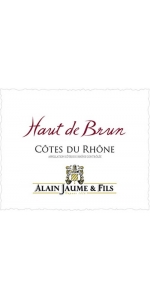
Alain Jaume Cotes Du Rhone Rouge Haut de Brun is made from 60% Grenache, 30% Syrah, 10% Cinsault
The colour is purple-tinged garnet.The aromatic range of the nose goes from fresh berries (wild raspberry, blackcurrant, blackberry) to spices.The palate is big and full-flavoured, with silky-smooth tannins and aromas of the fruit already mentioned. The finish introduces touches of liquorice and pepper. A Côtes du Rhône with great complexity for an every day drinking.
A classic Rhône to drink between 1 and 4 years. Best poured at 17°C.
Traditional wine making and ageing is performed in vats only. Bottling after 10-12 months.
Ideal throughout the meal, but particularly with poultry and other white meats, as well as mild cheeses.
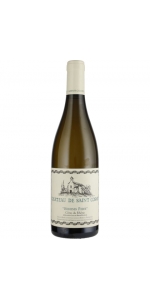
At Saint Cosme, their white wine traditions are as important and time-honored as the reds. The Clairette grape variety has found the ideal place to express itself in the cool, limestone valley of Saint Cosme. Produced by massal selection from the Le Poste vinevard, the Clairette for Hominis Fides thrives in Miocene limestone sand. Its aromas of fennel and grapefruit usher in its finely textured palate, imparting it with substantial agability.
Charles Thomas Cotes du Rhone Blanc 70% Grenache Blanc, 15% Roussanne, 10% Marsanne, 5% Viognier
Bright yellow in color. The nose has a nice aromatic expression with white peach, apricot, candied lemon and lime notes. The palate is tasty and has a great generosity, a nice sweep on the attack and a crispy and acidulous finish.
Traditional vinification. The grapes are pressed upon their arrival in the winery. Low temperature fermentation in thermo-regulated stainless steel. Each grape variety is vinified separately and then assembled before ageing.
Excellent wine for an aperitif. It pairs perfectly with grilled fish, platters of seafood and shellfish. It also goes well with simple dishes: pizzas, salads, tabbouleh or steamed vegetables. Cheeses: Goat cheese, Blue cheese and hard cheese such Comté.
The Charles Thomas Estate
This Estate is located in the GARD department near Pont Saint Esprit (10 miles North-West of Orange).
The Charles Thomas Vineyard
56 Ha grown organically since March 2009 (in conversion).
Part of the vineyard is plowed with horses.
4 varietals are produced: 29 Hectares (72 acres) of Syrah, 22 Hectares (54.5 acres) of Grenache, 3 Hectares (7.5 acres) of Mourvedre and 2 Hectares (5 acres) of Carignan.
Mechanical harvest.
Yields: 48 hectoliters per Hectares.
Average age of the vines : 30 years old.
The vineyard is situated in an archeological site that has revealed many artifacts dating back from the 4th Century.
SALE!
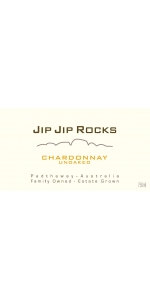
Jip Jip Rocks Chardonnay is made from 100 percent unoaked Chardonnay.
Light yellow with a pale straw hue. A classic nose of lemon, fresh stonefruit and melon. The palate is clean and fresh with mineral characters underpinning ripe pineapple and lime flavours. This wine will age beautifully over the next 4-5 years.
Winemaking report: Gentle pressing and free run juices create the base of this wine. Traditionally Jip Jip Rocks Chardonnay is a 2/3 blend fermented and matured in stainless steel and 1/3 fermented in stainless steel, which receives extended lees contact to add texture and complexity to the palate.
Review:
Attractively fruited and fragrant, the wine shows golden peach, baked fig, vanilla and lemon peel aromas on the nose, followed by a succulent palate that’s creamy and lingering. Beautifully styled and highly enjoyable. At its best: now to 2023. AU$23.00. Dec 2019.
-Wine Orbit 92 Points
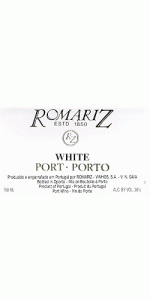
Romariz White Port is a blend of wines from the Arinto, Boal, Codega, Esagna CAO, Folgasao, Gouveio, Viosinho, and Rabigato grapes grown in the Douro. This is aged in oak for three years. Aromas of fruit cocktail, round and full, orange-nutty undertone, strong flavored and sweet. Refreshing summertime drink on ice.
FOOD MATCH: Served alone for after-dinner sipping.

Bright golden color, balanced acidity and sweetness. Taste of cinnamon, vanilla, liquorice and clay. Pleasant finish with bitter herbs.
In 1904 Cherubino Valsangiacomo produced the first vermouth bottle, afther 100 years, the fifth generation of the Valsangiacomo familly STILL making it with the ancestral formula devised by Benedetto Valsangiacomo.
White Vermouth, flavored fortified white wine base, together with aromatic mediterranean herbs such as fennel, chamomille and tyme, sweeted with sugar, and grape must caramel.
Ideal as an aperitif, on the rocks with an lemon slice. Also very good with cured and pickled products.
Arzuaga Ribera del Duero Crianza 95% Tempranillo and 5% Cabernet Sauvignon.
Dark cherry color with purple highlights. Powerful nose and high aromatic diversity of ripe red and black fruits, spicy and balsamic notes, and a roasted finish. Soft and mellow in the mouth with a great fruitiness and length.
Review:
This is a big wine with alluring aromas of cedary oak and black fruit. Ripe palate of black berries, some dark chocolate and integrated, polished oak. Long spicy finish. Classy Ribera. -Decanter 95 Points
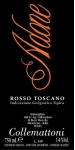
Collemattoni Adone Rosso Toscano is made from 95% Sangiovese and 5% Merlot
ruby red in color, bouquet of violet, cherry and blackberry, pleasant, dry and well balanced mouthfeel.
Coming from a parcel with 5-8 year old vines planted in sandy clay and marl soils.
Harvest is 100% destemmed with a soft pressing, fermentation in stainless steel tanks at controlled temperature of 28-30°C, maceration for 10 days.
Malolactic fermentation completed.
Wine is slightly filtered before bottling.