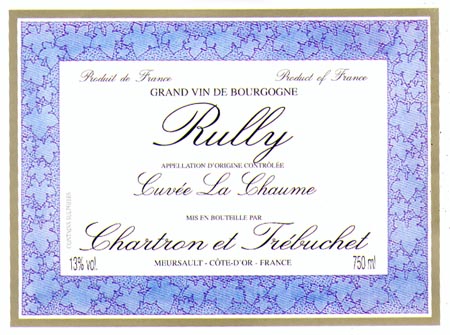
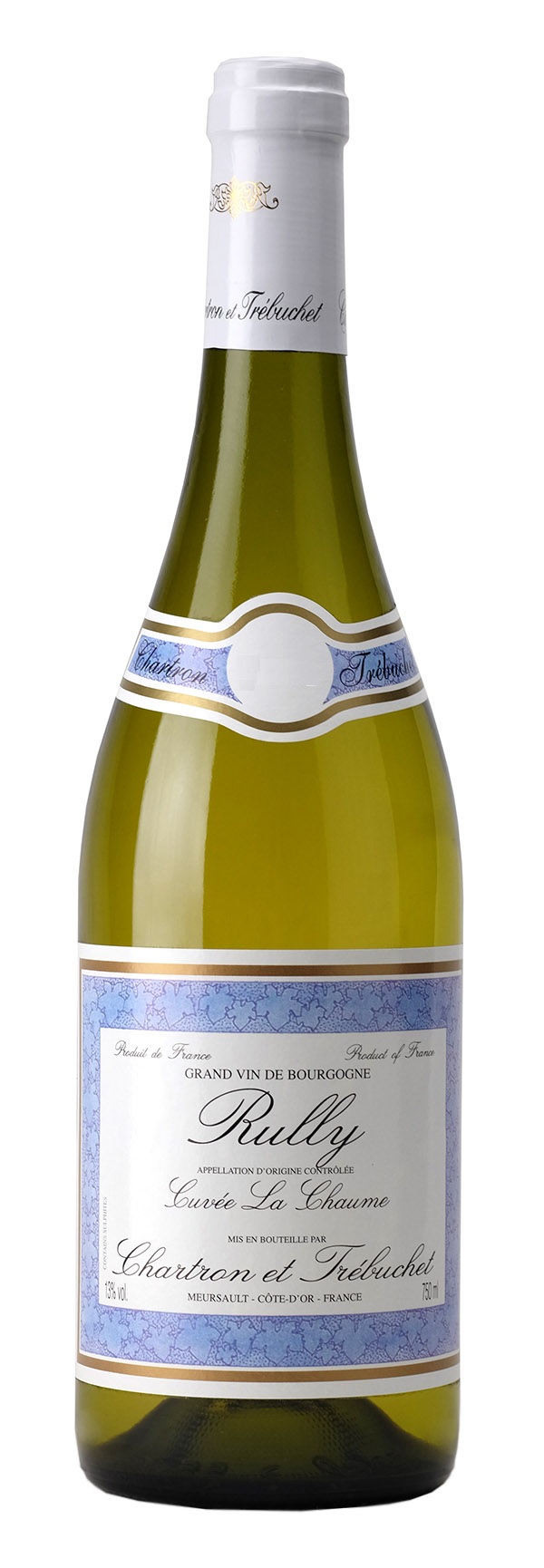
" We don't sell the wine without touching the vine "
| Country: | France |
| Region: | Burgundy |
| Winery: | Chartron et Trebuchet |
| Grape Type: | Chardonnay |
| Vintage: | 2015 |
| Bottle Size: | 750 ml |

La Rioja Alta Gran Reserva 904 is made from 90% Tempranillo, 10% Graciano
The 2015 Gran Reserva 904 Tinto offers great aromatic complexity, with notes of wild strawberry, red cherry, plum, blackberry and cranberry combined with aromas of tobacco, brioche, ground coffee, caramel, cedar and cinnamon blossom. The alcohol and acidity are elegantly balanced on the palate and its polished, gentle tannins and freshness provide a smooth and refined mouthfeel. Fine, delicate and very long aftertaste, that will continue to be rounded with time in the bottle, making this new Gran Reserva 904 a wine with great cellaring potential.
Especially recommended with all kinds of meat and stews, seasoned fish and desserts with chocolate or red fruit toppings. Perfect as an after-dinner drink.
Review:
A perfumed nose of plums, mulberries, mushrooms, caramel, sweet tobacco and sweet spices. Full-bodied with velvety, fine tannins and lively acidity. Balanced and supple with a creamy texture. Delicate and precise with a long, polished finish.
- James Suckling 97 Points

Cellier du Chateau de la Chaume Bourgogne Chardonnay is 100% Chardonnay.
Clear yellow color.
Aromas of white flowers, honeysuckle, leme tree and dried fruits.
The palate is rich and balanced, with good acidity and nice minerality.
Good length to the finish, pair with fish in creamy sauce, white meats and fine cheeses.

Chaume Bourgogne Rouge Pinot Noir 2022 is made from 100% Pinot Noir.Color: bright ruby red
Bouquet: blackcurrant, raspberry and hints of blackberry
Bouche / Palate: smooth attack, balanced, fine tannins and smooth finish
Butterflied lamb, char-grilled steak, venison. Dishes like cassoulet or duck with olives if they're more rustic. Roast goose.

Cellier du Chateau de la Chaume Petit Chablis is made from 100 percent Chablis.
Color: Pale yellow
Bouquet: White flowers, honeysuckle, linden tree and dried fruits.
Palate: Very pleasant, balanced with tension and nice minerality
Drink as an Aperitif or pair with fish, shellfish.

All older vintage wines have been purchased from a single collectors cellar. Pictures can be requested before shipment.

Royet Rully Blanc Clos de Bellecroix is made from 100% Chardonnay.
Intense light yellow color - nose evokes ripe yellow fruit, with a hint of fresh wood and vanilla - round, gourmet palate with hints of smoke and vanilla.
Pair with white meat or fish with cream sauce, foie gras.
The village of Rully is situated in the Côte Châlonnaise North West of Chalon-sur-Saône. The parcel "La Chaume" is located South of the village.
The vineyards are facing South and located between 300 and 350 meters above sea level. Average age of the vines is 35 years. The vines are cultivated using integrated viticulture.
Plantating: 10,000 vines / hectare. Yield: 55 hectoliters / hectare.
A subsoil of clay and limestone is covered by a very stony top soil.
Golden yellow color with green highlights. The wine is a pure expression of the Côte Chalonnaise: minerality with chalky notes, freshness with a great acidity holding together the finish, elegance with orange blossom and hawthorn notes.
Traditional vinification. The grapes are pressed immediately upon arrival at the winery in pneumatic presses. The alcoholic fermentation is carried out in oak barrels, 20% new oak.
The wine is aged for 12 months in oak barrels with regular stirring to gain depth and complexity.
Marries perfectly with tender meat, freshwater fish, saltwater fish in white sauce, hot shellfish, poultry in a beautiful creamy sauce (eg stew) and frog legs. It can also be drunk as an aperitif. Hard cheeses: Comté, Beaufort, Emmental
The Chartron et Trebuchet Estate
Owners of Premiers and Grands Crus in Puligny-Montrachet since 1859 with the Domaine Jean Chartron, Jean-René Chartron founded the Maison Chartron et Trébuchet in 1984 with Louis Trébuchet, manager of a wine trading company.
Vincent Sauvestre acquired the company in 2004. His objective is to continue to promote the great white wines of Burgundy, whilst respecting and perpetuating the quality work achieved by Jean Chartron and Louis Trébuchet.
The Maison Chartron et Trébuchet specialises in producing great white Burgundy wines. The know-how of the winemakers begins with a radical selection of the very best plots: the highest-quality terroirs of the Côte are chosen and the grapes are carefully monitored throughout the ripening period. Grapes are hand-picked when the balance between acidity and sweetness is at its prime: the fruit must not be too ripe so that the full potential of the terroir is maintained, including its acidity, to ensure that the wines age properly. All of the winemaking is done in casks: the alcoholic fermentation is followed by malolactic fermentation. A proportion of 20 to 40% of new barrels is used, depending on the appellations and the vintage. Wines are left to age for 12 to 18 months depending on the appellations.
The Chartron et Trebuchet Vineyards
Chartron et Trébuchet's vineyards are all planted on Limestone and Clay based soils. In average, the age of the vines is 30 years old.

A barrel fermented, old vines Verdejo made in a style different from what we typically see in this white varietal. It has a remarkable complexity, resulting in the smoothness and depth of a high-end white. Very suitable for cellaring.
Golden yellow color with greenish reflections. Complex, toasty aromas of nuts & dried fruit. Large, creamy, spicy, balanced and voluminous.
Rice with fish, cooked seafood, grilled seafood, baked white fish.
"The eponymous 2020 Ossian was produced with Verdejo grapes from old, organically farmed vines around the village of Nieva (Segovia), a zone where phylloxera didn't reach. They consider 2020 their finest vintage to date, with a big change from 2018 and when they have achieved a much better understanding of their vineyards. It has notes of pit fruit and sweet spices, with good weight on the palate, moderate alcohol (13.5%) and ripeness and good freshness and balance. It's serious and with potential to develop in bottle. 80,000 bottles produced. - Luis GUTIERREZ"
- Robert Parker's Wine Advocate (January 31st 2023), 94 pts

Brize Clos Medecin Anjou Villages Rouge is made from 60% Cabernet Franc and 40% Cabernet Sauvignon.
This is the flagship of the Estate. Clos Medecin has been produced at the estate for 90 years. All the grapes for this wine come from a very special parcel. The wine offers red fruit aromas. It is fresh, round and ample in the mouth.