
" We don't sell the wine without touching the vine "
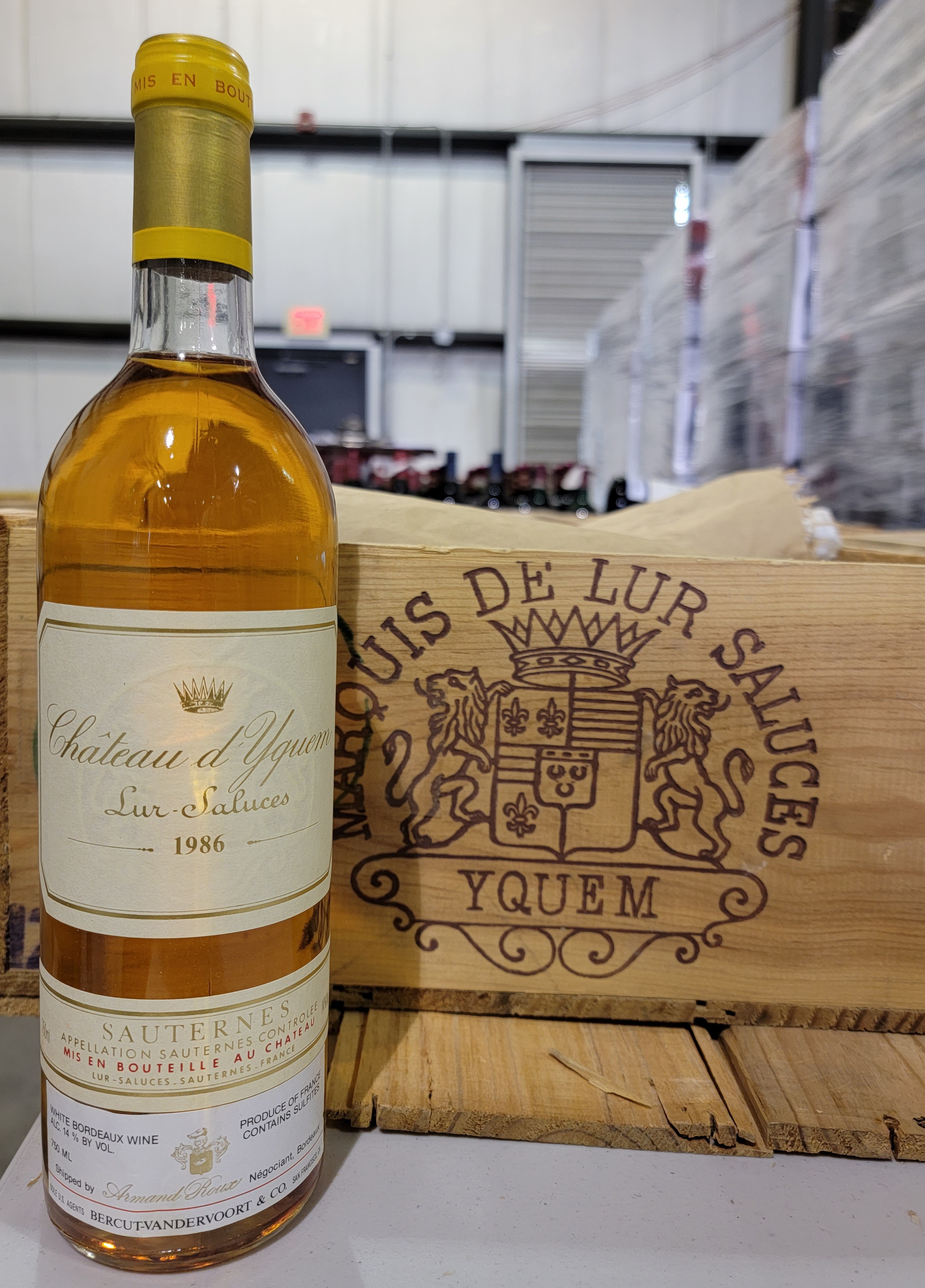
| Country: | France |
| Regions: | Bordeaux Sauternes |
| Winery: | Chateau d'Yquem |
| Grape Type: | Semillion |
| Organic: | Yes |
| Vintage: | 1986 |
| Bottle Size: | 750 ml |
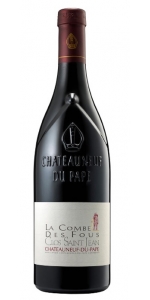
Clos Saint-Jean is a 41-hectare estate in Châteauneuf-du-Pape run by brothers Vincent and Pascal Maurel. Considered by many critics and wine-writers as the preeminent estate espousing the modern style of winemaking in Châteauneuf, this cellar is one of the oldest in the region, having been founded in 1900 by the greatgreat-grandfather of Vincent and Pascal, Edmund Tacussel. A short time after its founding and well before the AOP of Chateauneuf-du-Pape was created in 1923, Edmund began bottling estate wines in 1910.
The farming at Clos Saint-Jean is fully sustainable due to the warm and dry climate, which prevents the need for chemical inputs. Instead, Vincent and Pascal employ organic methods for pest control, mainly pheromones, to prevent pests from taking up residence in their vines, a process called amusingly enough in French, confusion sexuelle. The vines tended manually, and harvest is conducted in several passes entirely by hand.
Combe des Fous literally means, the hill of the fool. The hill, in this case, is located in the far southern reach of Le Crau which was left barren for many centuries because the layer of galets was so exceedingly deep that everyone assumed vines could never survive there. The fool in this situation is Edmund Tacussel, the great-great-grandfather of Vincent and Pascal Maruel who planted a Grenache vineyard on this site in 1905. That old-vine Grenache form the heart of this cuvée with a small amount of Syrah, Cinsault and Vaccarèse. La Combe des Fous is only made in the best vintages.
Review:
This has good concentration and energy to the dense core of dark fruit and bitter cherry, with great poise and elegance despite its ripeness (an impressive feat for the vintage). Guided by finely crushed mineral accents and tannins, this reveals pretty high-toned floral notes and leafy tobacco. Grenache, Syrah, Mourvedre, Cinsault, Vaccarese and Muscardin. Drink now through 2032. 900 cases made.
-Wine Spectator 95 Points
Chateau Castegens Cotes de Bordeaux Castillon is made from 80% Merlot, 18% Cabernet Franc and 2% Cabernet Sauvignon.
The wine boasts an intense, deep and lively red color. The nose offers black fruit, blackberry, cigar box, licorice, some delicate and integrated oak flavors as well. The mouth is full of fruit flavors, spice and fine toasty flavors. The structure is rich, but the tannins are well integrated already. The finish is long and a slight mintiness give the wine a great length and some purity.
Pairs great with meat and vegetables on the grill.
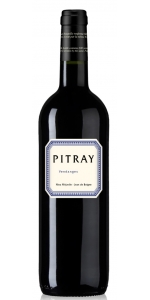
Chateau Pitray Castillon Cotes de Bordeaux Le Grand Vin is made from 90% Merlot and 10% Cabernet Franc.
Notes of candied fruit, dried figs, currants marked by their delicacy despite the sensation of great maturity. On the palate, we find this aromatic range with present but very velvety tannins.
Ageing: partially in new oak barrels, partially 1 and 2 years old barrels and stainless steel tanks.Vinification: thermo-regulated concrete tank.
2 other grape selection including one handed, before filling the tanks.
Harvest: last generation harvesting machine with on-board grape selection.
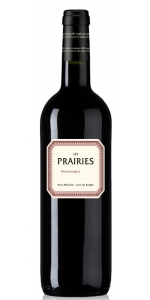
Chateau Pitray Castillon Cotes de Bordeaux Les Prairies is made from 75% Merlot, 23 % Cabernet Franc and 2 % Malbec.
Notes of ripe fruit and black tea leaves, it is a young but accomplished wine, ready to drink, whose tannins are already very well integrated.
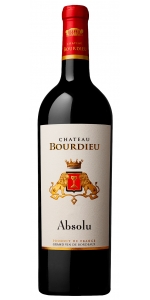
Chateau Bourdieu Absolu Blaye Cotes de Bordeaux is made from 79% merlot, 17% Cabernet Sauvignon, 4% Malbec.
When Luc Schweitzer was joined by his two sons Richard and Ludovic at the estate, he wanted to embrace this new chapter in the family history and launched in 2016 a special cuvée from Château Bourdieu called "Absolu". This top-of-the-range cuvée is the best of what their terroir has to offer. The 35 year-old facing south vines benefit from a meticulous care: regular maintenance of the soil, yield control, manual leaf stripping, sorting of the berries - all practices that ensure the quality of this great Bordeaux wine.
A deep garnet color with magnificent purple highlights. The nose is intense and full, revealing notes of ripe black fruits and subtle hints of vanilla and roasted coffee. Great structure with finesse and tannic density that brings depth and length to the mouth. The aromatic purity of the perfectly ripened grape varieties is magnified by the complex and subtle oak flavors.
Pair: Rib of grilled beef and tournedos Rossini - butter pan-fried beef filet served on a crouton, and topped with a hot slice of fresh foie gras.
Review:
"A rich, opulent wine, this is full of dark tannins and powerful fruit. It's a big wine, with licorice and dense wood flavors that give a smoky character and reflect some serious extraction. The wine needs to smooth out to showcase its concentrated richness. Drink from 2024. - Roger VOSS"
- Wine Enthusiast (May 2021), 91 pts

Chateau Cabrieres Chateauneuf du Pape Blanc Confidentiel is 50% Clairette and 50% Grenache Blanc.
Beautiful pale gold color with green reflections. The wine is clear and bright.
A nose of great finesse and richness, with hints of pear and citrus fruit. Racy and dense, with good persistence, this wine will develop nicely on the mineral side.
750ml bottles in stock, purchased from the original buyer and maintained in a state of the art cellar.
Romain-Bertrand de Lur-Saluces, Françoise-Joséphine's grandson, took his role as manager of Yquem very much to heart, rather than simply taking possession of the family estate, which had become mythical by this time. In 1855, in posthumous recognition of the tremendous accomplishments of "the lady of Yquem", the estate was designated the one and only premier cru supérieur in the famous classification made at the request of Emperor Napoléon III.
Yquem went through a long period of prosperity in the latter half of the 19th century. People all over Europe went to great lengths to search out the wine. Great Duke Constantine, brother of the Tsar of Russia, made the headlines by paying 20,000 gold francs for a barrel of Château d’Yquem – an unheard of price at the time. Japan, which opened up to foreign trade during the Meiji dynasty, also discovered the pleasures of Yquem. After Romain-Bertrand's death, his son, Marquis Amédée de Lur-Saluces, took over, followed by his younger brother, Eugène. This phase of Yquem's history ended with two dramatic events: the phylloxéra crisis and the First World War. In 1914, Yquem played a role in the war. The château was transformed into a military hospital while Marquis Bertrand de Lur-Saluces, son of Eugène, became an officer in the trenches, in keeping with the family tradition. At the end of the war, at age 30, he took over managing the estate and continued in this capacity for a momentous half-century. Bertrand was a man of character and a staunch guardian of the Yquem philosophy. He was opposed to chaptalisation and courageously defended the family estates, even during the dire recession of the 1930s. President of the Union des Crus Classés de la Gironde for forty years, he was instrumental in determining many legal aspects of the Sauternes appellation. He was also one of the leading proponents of château bottling to guarantee authenticity. An enlisted officer in the Second World War, Bertrand de Lur-Saluces was captured and held prisoner for two years. However, he was fortunate enough to return to his beloved estate as soon as he was freed. He did much to develop Château d'Yquem, particularly as regards its international impact, until his death in 1968.
Krug Grande Cuvée is born from the dream of one man, Joseph Krug, to craft the very best Champagne he could offer, every single year, regardless of annual variations in climate. Since 1843, the House of Krug has honoured this vision with each new Édition of Krug Grande Cuvée: the most generous expression of Champagne.
Review:
The NV Grande Cuvée 171ème Edition is a delightful blend of 45% Pinot Noir, 37% Chardonnay and 18% Pinot Meunier and boasts an attractive and captivating aroma of dried fruits, pastry, lemon oil, marzipan, spring flowers and ginger, with hints of almond and vanilla notes that become more pronounced over time. This medium to full-bodied wine is precise and well-structured, with a fleshy core of fruit and a sapid, incisive finish. Crafted around the 2015 vintage, the blend comprises 131 reserve wines from as far back as 2000 (42% of the total blend) and is expected to age beautifully over the next decade.
-James Suckling 99 Points
Thibeaud-Maillet Pomerol is made from 100 percent Merlot
Deep ruby with black rim. The nose is spicy, with blackberry, cherry, vanilla, chocolate and a delicate oak presence.
The wine is balanced, the tannins are present, but well integrated and round.
The finish is long and pleasant.
Harvest is done manually and the berries are selected with optical sorting before entering the cellar. Fermentations are carried out at controlled temperature with 3 to 4 weeks of skin contact. Once the malolactic fermentation is completed; the wines are put into barrels (50% new) and aged for 12 months. The estate uses three barrels from three different coopers: Vicard (Charentes)supplying most of the barrels with medium toast and a fine grain, Cadius from Burgundy supplies also fine grain/ medium toasts barrels and last but not least Sylvain, a local cooper is used for three barriques a year, those bring a bit more austerity but also a certain backbone to the blend.
Aged in French oak barrels for 15 months (50% new oak).
Delicious with grilled meat and grilled vegetables.
Review:
Spice, ripe cherry, dark plum, paprika and tobacco aromas. Medium- to full-bodied with tight-grained tannins, compact fruit and a long, firm finish. Drink from 2027.
-James Suckling 92 Points



