
" We don't sell the wine without touching the vine "

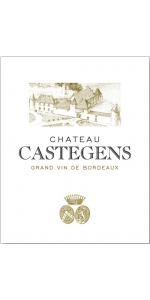
Chateau Castegens Cotes de Bordeaux Castillon is made from 80% Merlot, 18% Cabernet Franc and 2% Cabernet Sauvignon.
The wine boasts an intense, deep and lively red color. The nose offers black fruit, blackberry, cigar box, licorice, some delicate and integrated oak flavors as well. The mouth is full of fruit flavors, spice and fine toasty flavors. The structure is rich, but the tannins are well integrated already. The finish is long and a slight mintiness give the wine a great length and some purity.
Pairs great with meat and vegetables on the grill.
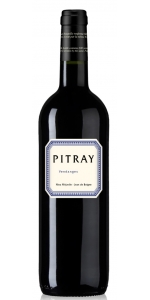
Chateau Pitray Castillon Cotes de Bordeaux Le Grand Vin is made from 90% Merlot and 10% Cabernet Franc.
Notes of candied fruit, dried figs, currants marked by their delicacy despite the sensation of great maturity. On the palate, we find this aromatic range with present but very velvety tannins.
Ageing: partially in new oak barrels, partially 1 and 2 years old barrels and stainless steel tanks.Vinification: thermo-regulated concrete tank.
2 other grape selection including one handed, before filling the tanks.
Harvest: last generation harvesting machine with on-board grape selection.
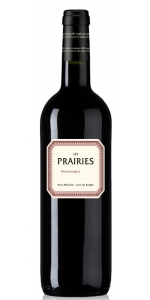
Chateau Pitray Castillon Cotes de Bordeaux Les Prairies is made from 75% Merlot, 23 % Cabernet Franc and 2 % Malbec.
Notes of ripe fruit and black tea leaves, it is a young but accomplished wine, ready to drink, whose tannins are already very well integrated.
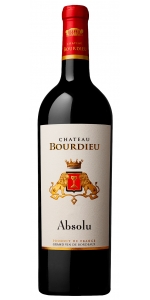
Chateau Bourdieu Absolu Blaye Cotes de Bordeaux is made from 79% merlot, 17% Cabernet Sauvignon, 4% Malbec.
When Luc Schweitzer was joined by his two sons Richard and Ludovic at the estate, he wanted to embrace this new chapter in the family history and launched in 2016 a special cuvée from Château Bourdieu called "Absolu". This top-of-the-range cuvée is the best of what their terroir has to offer. The 35 year-old facing south vines benefit from a meticulous care: regular maintenance of the soil, yield control, manual leaf stripping, sorting of the berries - all practices that ensure the quality of this great Bordeaux wine.
A deep garnet color with magnificent purple highlights. The nose is intense and full, revealing notes of ripe black fruits and subtle hints of vanilla and roasted coffee. Great structure with finesse and tannic density that brings depth and length to the mouth. The aromatic purity of the perfectly ripened grape varieties is magnified by the complex and subtle oak flavors.
Pair: Rib of grilled beef and tournedos Rossini - butter pan-fried beef filet served on a crouton, and topped with a hot slice of fresh foie gras.
Review:
"A rich, opulent wine, this is full of dark tannins and powerful fruit. It's a big wine, with licorice and dense wood flavors that give a smoky character and reflect some serious extraction. The wine needs to smooth out to showcase its concentrated richness. Drink from 2024. - Roger VOSS"
- Wine Enthusiast (May 2021), 91 pts
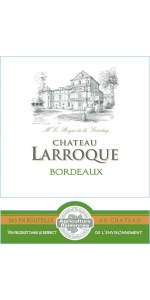
Larroque Bordeaux Blanc is made from 73% Sauvignon Blanc and 27% Colombard.
No oak.
Color : Pale yellow with green tints.
Nose : Complex aromas of white flowers, exotic fruits, citrus and boxwood, with a touch of minerality.
Mouth : Aromatic, with a nice richness and freshness. Predominant flavors of tart, crisp fruit.
Marie-Christine, the daughter of Henri Ducourt, purchased this prestigious left-bank property in 1979, which lies on the border of the Graves appellation.
The 60-hectare vineyard was rapidly replanted and the château building, which dates from 1348, was restored.
Our family now produces three different-colored wines there: red, white and rosé.
Grown on loamy-clay soil.
Harvest : Machine harvesting in the cool, early morning
Maceration : Skin-contact maceration for several hours, depending on ripeness, and pressing
Fermentation : Beginning of the cold alcoholic fermentation (12°C / 53°F) then an increase in temperature to finish the fermentation at 20°C / 68°F.
Enjoy this wine as an aperitif or during the meal with fish, seafood or chicken salad.
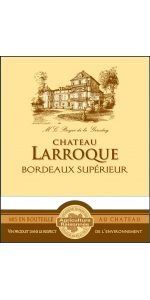
Chateau Larroque Bordeaux Superieur Rouge is a blend of 51% Merlot and 49% Cabernet Sauvignon.
Nose : Red fruits, almond and hazelnut, with a faint vanilla aroma.
Mouth : The silky, velvety attack reveals a pleasant, concentrated and well structured wine. It offers a combination of fruits pastes’ flavors, licorice and toasted notes, and an elegant finish.
The 60-hectare vineyard was rapidly replanted and the château building, which dates from 1348, was restored.
Our family now produces three different-colored wines there: red, white and rosé.
Fermentation : Alcoholic fermentation in thermo-regulated stainless steel vats at around 26°C / 78°F then a gentle vatting for 3 weeks at 30°C / 86°F. Running off and pressing,separation of the press and free-run juice. Malolactic fermentation in thermo-regulated stainless steel vats at around 18°C / 64°F
- 2017 Decanter World Wine Awards Decanter 95 Points
Color : Dark garnet hue
Marie-Christine, the daughter of Henri Ducourt, purchased this prestigious left-bank property in 1979, which lies on the border of the Graves appellation.
Grown on loamy-clay soil.
Macération : Pre-fermentation cold maceration of 24 to 48 hours
Enjoy this wine with charcuterie, roasted meats, BBQ, cheeses.
Domaine de la Janasse Chateauneuf-du-Pape Cuvee Vieilles Vignes is made from 65% Grenache, 20% Mourvèdre, 10% Syrah, 5% divers.
In contrast to Chaupin, which is made from old-vine Grenache on sandy soils, the cuvée Vieilles Vignes is from old vines of Grenache, Mourvedre, Syrah along with smaller percentages of other permitted varieties that are grown in these old vineyards. The wine is sourced from 4 terroirs: pebbly clay, sand, gravelly red clay and sandy limestone. Vieilles Vignes is always the most powerful and concentrated Châteauneuf-du-Pape cuvée made at Domaine de la Janasse.
Review:
The 2020 Châteauneuf Du Pape Vieilles Vignes also saw some stems (the estate started keeping some stems with the 2016 vintage) and was 75% destemmed, with the blend being 70% Grenache, 20% Mourvèdre, and the rest Syrah, Cinsault, and Terret Noir. As usual, it’s a more powerful, black-fruited wine comparted to the Cuvée Chaupin and has lots of crème de cassis, liquid violet, crushed stone, woodsmoke, and peppery herbs. It displays the vintage’s purity and freshness yet brings the concentration as well as the structure. I’ll be shocked if it’s not in the handful of top wines in the vintage.
-Jeb Dunnuck 96-98 Points
Marie Baron Coteaux du Giennois Blanc is made from 100 percent Sauvignon Blanc.
Coteaux du Giennois is an appellation in the upper Loire Valley, near Sancerre and Pouilly-Fumé. These hillside vineyards benefit from a continental climate with flint and limestone soils that give the wines their distinctive mineral character.
This wine presents a bright pale yellow color with aromas of citrus, white flowers, and flinty minerality. On the palate, it is crisp and vibrant with lively acidity, flavors of grapefruit and lemon, and a refreshing mineral finish.
Excellent with goat cheese, oysters, grilled fish, or fresh salads.



