" We don't sell the wine without touching the vine "
| Country: | France |
| Region: | Languedoc |
| Winery: | Chateau de Mus |
| Grape Type: | Syrah |
| Vintage: | 2016 |
| Bottle Size: | 750 ml |
Chateau de Saint Cosme Gigondas Le Claux is made from 95% Grenache, 5% Syrah.
Château de Saint Cosme is the leading estate of Gigondas and produces the benchmark wines of the appellation. The property has been in the hands of the Barruol family since 1490. Louis Barruol took over from his father in 1992 making a dramatic shift to quality and converting to biodynamics in 2010.
Château de Saint Cosme Gigondas Le Claux is the estate’s oldest vineyard and sits near the entrance to the winery. “It was first planted in 1870 following phylloxera. My uncles thought it wasn’t producing enough fruit and planned to uproot it in 1914,” says Louis Barruol, but “World War I interrupted that plan.”
The 1.8-hectare Le Claux—meaning “Clos” in old French—is a field blend of predominately Grenache. Louis Barruol believes 10% of the vineyard is from the original 1870 planting. Vines are replaced by massal selection and the average vine age is 60-years. The wine is made with whole cluster fermentation from indigenous yeasts, is aged in 20% new 228-liter barrels, and bottled without fining or filtration.
Tasting Notes
Brilliant violet color. Displays pungent, mineral- and spice-accented cherry, black raspberry, potpourri and licorice aromas, along with hints of savory herbs, vanillo and incense. Chewy and tightly focused on the palate, offering bitter cherry, dark berry and Moroccan spice flavors that unfurl slowly through the back half. It closes with firm tension, chewy tannins and excellent tenacity, leaving resonating cherry and floral notes behind. All barriques, a third of them new.
-Vinous 95-97 Points
Chateau de Saint Cosme Gigondas is made from 70% Grenache, 15% Mourvèdre, 14% Syrah, 1% Cinsaut.
The wine shows intense blackberry and fig fruit with licorice, violets, and charcoal on the finish. It is remarkably fresh and finessed given the sun and warmth of the southern Rhône. The unique micro-climate combined with 60-year-old vines and traditional winemaking make Château de Saint Cosme Gigondas the benchmark wine of the appellation.
Review:
Leading off the Gigondas, the base 2020 Gigondas has lots of black raspberry, ground pepper, and violets notes as well as a round, supple, silky style on the palate. It should be approachable on release, yet it has plenty of mid-palate depth as well as tannins, and I have no doubt it will evolve for 20 years if properly stored.
-Jeb Dunnuck 91-93 Points
Hominis Fides is typically the most elegant of Château de Saint Cosme’s three single-vineyard Gigondas. “Grenache grown in the sandy soil produces marvelously textured wines as well as extremely refined tannins; a very special and stylish wine,” says Louis Barruol. The wine features aromas and flavors of pepper, truffle, graphite, and smoke.
Grenache is the pale-colored, red-fruited, and potpourri-scented red grape variety of the southern Rhône and can be paired with both rustic and sophisticated dishes. Full-bodied Grenache-based wines are ideal with stews, braises, and grilled meats, while lighter versions can work well with dark fish and tomato-based dishes such as ratatouille.
Review:
Deep, vivid ruby-red. Intensely perfumed, mineral-tinged scents of medicinal cherry, redcurrant and cassis are complemented by suggestions of star anise, white pepper and pungent flowers. It offers densely packed bitter cherry, red berry liqueur, lavender and licorice flavors that open up very slowly with air. Extremely primary but highly promising, with a long, spice- and mineral-tinged finish shaped by youthfully firming tannins. Made with 100% whole clusters; raised in barriques, one-third of them new.
-Vinous 95-97 Points
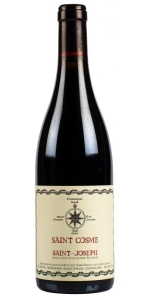
Louis Barruol describes the microclimate of the vineyard Malleval as “very cold” which allows the grapes to retain acidity and showcase the floral aromas of the local Sérine variety. Aromas and flavors of blackberries and wild strawberries are accented by notes of peppercorns, tobacco, peonies, and violets.
Syrah, with its deep flavors and firm tannins, is a natural match for grilled or smoked meat and dishes featuring herbs, roasted mushrooms, and onions. Seared venison or beef with black pepper and thyme or a Moroccan tagine of pigeon or chicken are complimented by the spicy characteristic of Syrah.
Review:
This rich and impeccably balanced Gigondas has everything we look for in the wines of this appellation. What a wide spectrum of aromas with everything from raspberry to candied orange, plus a slew of delicate spicy notes and fresh Mediterranean herbs. I love the interplay of richness, fine tannins and lively acidity on the generous, but not expansive palate. Very long, refined finish. From organically grown grapes. Drink or hold.
-James Suckling 94 Points
Powerful, with steeped plum and cherry coulis merging with potpourri and charred garrigue on a ripe, lush palate. Packs a wall of iron that provides a ballast for the ripe fruit, while refined tannins build in intensity. Long and complex, with a gorgeous expression of place. Grenache, Mourve`dre, Syrah and Cinsault.
Wine Spectator 94 Points
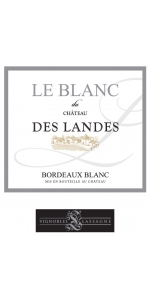
Le Blanc du Chateau des Landes Bordeaux Blanc is made from 50% Sauvignon Blanc and 50% Semillion.
Le Blanc du Chateau des Landes Bordeaux Blanc is a very fruity style of Bordeaux Blanc AOC. It has great aromatic intensity with white peach and citrus aromas.
No oak for this wine. The wine was aged on the lees for a few month in stainless steel tank.
Malolactic fermentation was completed as well in the process .
Excellent as an aperitif, it also goes very well with poultry and salads. If you have a chance to have access to fresh oyters, it is a great match as well.
The first vintage of this wine was made in 2018 as Nicolas Lassagne wanted to create an easy drinking wine that will be perfect as an aperitif in the summer time or to compliment salads and seafood in the winter time.
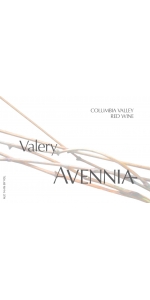
Avennia Valery Red Blend is made from 86% Merlot and 14% Cabernet Franc
Valery is named for the patron saint of wine in the St. Emilion region that inspired it.
We started with old vine Merlot from a stony block in the heart of the Yakima Valley and added complex, aromatic Cabernet Franc from the Horse Heaven Hills. The result is a balanced, complex wine with the elegance and ethereal perfume that this blend of two of Washington’s best varietals are known for.
The nose on this wine is very perfumed, almost exotic with notes of fresh violets, red plum, winter mint, fresh herbs and crushed limestone qualities. The palate is poised and balanced, with red fruits and mocha powder encapsulated in limestone. The finish lingers delicately, with the Cabernet Franc asserting a light tobacco and herb note, giving depth. A compelling wine that will continue to unwind for 7-10 years in the cellar.
Review:
"Brought up in 30% new French oak, the 2016 Valery (70/30 Merlot and Cabernet Franc) offers more black cherry and earthy, herbal notes as well as a medium-bodied, seamless, beautifully balanced style. It too shows a vibrant, fresh, yet concentrated style that has a Bordeaux feel in its weight and texture."
- Jeb Dunnuck (April 2019), 93 pts
"Good medium-dark red. Aromas of blueberry, mocha, licorice and violet are a bit darker than those of the 2015 version. Dense and penetrating, with wild flavors of dark berries, licorice and game given lift by rocky minerality and a minty nuance. Chris Peterson slightly acidified his Cabernet Franc from Champoux Vineyard, which he added to the wine for richness. This beauty may yet tighten up in the bottle.- Stephen Tanzer"
- Antonio Galloni's Vinous (November 2018), 92+ pts
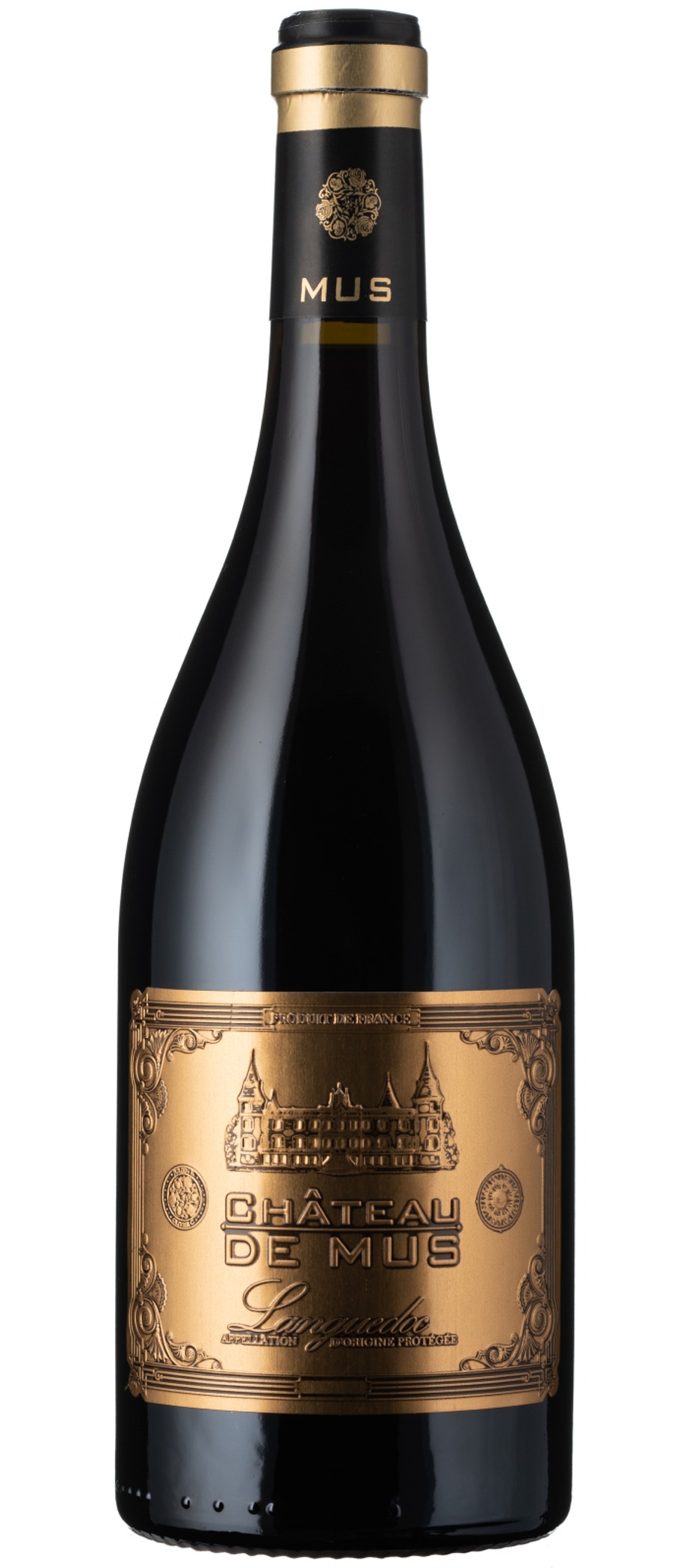
Chateau de Mus Languedoc Red Blend Gold Label is made 70% Syrah, 20% Grenache and 10% Mourvedre.
This wine has a nice dark ruby color, with aromas of red fruits and some florals and spicy notes. The tannins are soft and juicy, giving the wine a great richness and complexity.
Chateau de Mus Languedoc Red Blend Gold Label is made from grapes coming from several parcel planted 15 years ago on gravel soil, similar to the terroir found in the Graves' region of Bordeaux.
In order to achieve perfect ripeness, harvest were conducted quite late in the season as the producer is looking for a nice concentration of aromas and sugar. Then, the vinification was traditional, meaning the fermentation was done in concrete tank followed by a long ageing process, during 6-8 months. The Syrah and the Mourvèdre were aged in Oak barrels while the Grenache was aged in stainless steel tanks. The wine is a blend of 70% Syrah, 20% Grenache and 10% Mourvèdre.
This wine will be a great companion to grilled meat, grilled vegetables and cheese.
The Chateau de Mus is located in Murviel-Les-Beziers in the Languedoc region.It is home to a gorgeous Renaissance-style castle.
The Julien Family has been working hard in the vineyards, in the cellars, but they also have a restoration project for the chapel and the castle located on the property. Today, Yannick and Brice are representing the 5th generation of winemakers in the Family.
Date Founded: 2004
Dating back at least 800 BC, the Château de Mus represents one of the largest archaeological sites in Hérault, illustrating the prehistoric, Celtic, Roman, Greek and Etruscan ages. The estate was named after an ancient fortified place called « Murus » («city wall» in Latin), built up on a promontory over the Orb river. At MUS, a Romanesque church was built in 1070 (today its restoration is in progress) such as one of the six first castles of the area. Twice destroyed during the crusade against the Cathars in the 13th C. the former mansion was replaced in 1848 by a Renaissance-style castle, prefiguring the great times of the “wine chateaux” in Languedoc.
The JULIEN'S bought the CHATEAU DE MUS in 2004
The vineyard is planted to traditional grape varieties of the Languedoc’s AOP, Grenache, Syrah, Mourvèdre, Cinsault, in the estate’s AOP area, and also of a range of different French varieties planted in the Vin de Pays area, mainly Cabernet Franc, Cabernet Sauvignon, Merlot, Petit Verdot, Malbec, Pinot Noir, Tannat, Marselan, Muscat, Grenache Gris, Sauvignon blanc, Sauvignon, Vermentino, Viognier.
The winery is modern and the temperature controlled vinification is a huge part of the quality process. Concrete tanks, stainless steel and open top fermenters are used for almost all of their wines
La Despensa Boutique Cinsault is made from 100% Cinsault.
A genuinely unique wine - they are the only producers of Cinsault in Colchagua! From a new vineyard planted in 2017, the team at La Despensa thinks they’ve hit the jackpot with this variety in this valley. Much more structure, color and intensity than the typical Chilean Cinsaults from further south, this is an easy drinking but serious version of this wonderfully fruity variety!

Sainte-Marie Bourgogne Blanc Vieilles Vignes is made from 100 percent Chardonnay.
The wine has a perfect light yellow color with green hues. Nose of white flower, sweet spice and bitter orange. Fresh and delicious attack. It shows roundness and a slight buttery note with a very saline finish that makes you slightly salivate.
Excellent with Seafood, grilled fish, clams and oysters of course. Also great with goat cheese or Comté cheese.
Aged on lees for 6 months in stainless steel vats. Adjustment of sulphites at the end of MLF and before bottling. Filtration on earth then on 1.2µ cartridge after bonding with bentonite.Machine harvest, and direct pressing with a pneumatic horizontal press. Static settling. Alcoholic and malolactic fermentation in stainless steel vats with native yeast and bacteria.