" We don't sell the wine without touching the vine "
| Country: | France |
| Region: | Languedoc |
| Winery: | Chateau de Mus |
| Grape Type: | Syrah |
| Vintage: | 2015 |
| Bottle Size: | 750 ml |

Chateau de Beaucastel Chateauneuf-du-Pape Rouge is made from 30% each Grenache and Mourvèdre, with 10% each Counoise and Syrah, plus 20% other permitted varieties, including a healthy proportion of white grapes.
The story :
Château de Beaucastel has long been considered one of the great wines of France. It is unanimously renowned for its balance, elegance and ageing potential. Beaucastel has an extraordinary terroir at the Northern end of the appellation with heavy exposure to the Mistral. All 13 varieties of the appellation have been organically grown here since the sixties.
Location :
Châteauneuf du Pape, between Orange and Avignon, Château de Beaucastel red is a 70-hectare vineyard.
Terroir :
Château de Beaucastel is 110 hectares, with one single plot at the north of the appellation. The terroir is archetypal of the best terroirs in Châteauneuf: rolled pebbles on the surface, sand, clay and limestone deeper down. The vines are old and have been organically grown for 50 years, which has allowed the roots to grow exceptionally deep.
Beaucastel grows all thirteen grape varieties authorised by the appellation.
Ageing :
Each variety is harvested manually and separately. Vinification is completed in truncated oak barrels for the reductive grapes (Mourvèdre and Syrah) and in traditional tiled cement tanks for the oxidative grapes (such as Grenache). After the malolactic fermentations, the family blends the different varieties and then the wine ages in oak Foudres for a year before bottling.
Review:
deep, quite herbal expression, with liquorice and crushed blueberries to the cassis fruit. Full-bodied, powerfully fruited, dense and deep. Really mouthcoating, intense fruit. The tannins are ripe, fine and plentiful, all saturated in blackberry juice on a long finish. Certainly one of the more successful Châteauneufs this year. Will age well. A Mourvèdre-led expression of Beaucastel - it contains more than usual, at least 35% and probably more. Grenache and Cinsault fermented in cement, Syrah and Mourvèdre fermented in foudre. (MW) (9/2022)
-Decanter 96 Points

Chateau de Saint Cosme Gigondas Le Claux is made from 95% Grenache, 5% Syrah.
Château de Saint Cosme is the leading estate of Gigondas and produces the benchmark wines of the appellation. The property has been in the hands of the Barruol family since 1490. Louis Barruol took over from his father in 1992 making a dramatic shift to quality and converting to biodynamics in 2010.
Château de Saint Cosme Gigondas Le Claux is the estate’s oldest vineyard and sits near the entrance to the winery. “It was first planted in 1870 following phylloxera. My uncles thought it wasn’t producing enough fruit and planned to uproot it in 1914,” says Louis Barruol, but “World War I interrupted that plan.”
The 1.8-hectare Le Claux—meaning “Clos” in old French—is a field blend of predominately Grenache. Louis Barruol believes 10% of the vineyard is from the original 1870 planting. Vines are replaced by massal selection and the average vine age is 60-years. The wine is made with whole cluster fermentation from indigenous yeasts, is aged in 20% new 228-liter barrels, and bottled without fining or filtration.
Tasting Notes
Brilliant violet color. Displays pungent, mineral- and spice-accented cherry, black raspberry, potpourri and licorice aromas, along with hints of savory herbs, vanillo and incense. Chewy and tightly focused on the palate, offering bitter cherry, dark berry and Moroccan spice flavors that unfurl slowly through the back half. It closes with firm tension, chewy tannins and excellent tenacity, leaving resonating cherry and floral notes behind. All barriques, a third of them new.
-Vinous 95-97 Points

Graviere La Rouge Cuvee les Terrasses is made of 70% Merlot and 30% Cabernet Sauvignon
Deep red color with a narrow purple rim. Attractive aromas of ripe, juicy cherry and blackberry over spice, integrated toasted aromas. The palate is balanced and full-bodied with supple tannins, displaying rich cherry flavors combined with gentle toasting characters and a touch of spice. The finish is lasting with a bitter almond aftertaste.
Average age of the vines is 25 years.
Manual harvest from September 21th to October 7th 2015.
Upon arrival at the winery, only the best grapes were selected using a sorting table.
Skin contact maceration during 2 weeks in temperature controlled vats.
75% of the final wine was aged in stainless steel tanks with French oak staves and blended with 25% of wine aged in barrels.
Serve with red, white meats, poultry and fine cheeses.

Chaume Bourgogne Rouge Pinot Noir 2022 is made from 100% Pinot Noir.Color: bright ruby red
Bouquet: blackcurrant, raspberry and hints of blackberry
Bouche / Palate: smooth attack, balanced, fine tannins and smooth finish
Butterflied lamb, char-grilled steak, venison. Dishes like cassoulet or duck with olives if they're more rustic. Roast goose.

Chateau Arnauds des Bordeaux Rouge is made from 100% Merlot.
The wine shows a deep red purple color and intense aromas of black fruits (blackcurrant, black cherry) with hints of liquorice. Very fruity and well-balanced. It is powerful and well structured in the mouth with round and silky tannins, ripe flavors of black fruits. Strong and a slightly spicy finish.
Grapes are coming from 30 year old vines planted on gravelly soils.
The land benefits from sun exposure, warmth and humidity that are strong assets for the vine culture.
The wine pairs well with game meat and beef on the grill.
Chateau Arnauds des Bordeaux Rouge is made from 100% Merlot.
The wine shows a deep red purple color and intense aromas of black fruits (blackcurrant, black cherry) with hints of liquorice. Very fruity and well-balanced. It is powerful and well structured in the mouth with round and silky tannins, ripe flavors of black fruits. Strong and a slightly spicy finish.
Grapes are coming from 30 year old vines planted on gravelly soils.
The land benefits from sun exposure, warmth and humidity that are strong assets for the vine culture.
The wine pairs well with game meat and beef on the grill.
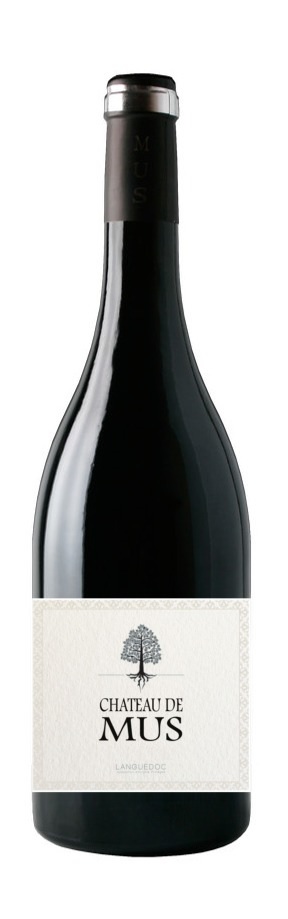
Chateau de Mus Languedoc Rouge La Source is made from 40% Syrah, 40% Grenache and 20% Mourvedre.
This wine has a nice dark ruby color, with aromas of red fruits and some florals and spicy notes. The tannins are soft and juicy, giving the wine a great richness and complexity.
Chateau de Mus Languedoc Rouge La Source is made from grapes coming from several parcel planted 15 years ago on gravel soil, similar to the terroir found in the Graves.
In order to achieve perfect ripeness, harvest were conducted quite late in the season as the producer is looking for a nice concentration of aromas and sugar. Then, the vinification was traditional, meaning the fermentation was done in concrete tank followed by a long ageing process, during 8-10 months, in stainless steel tanks.
Will be a great companion to grilled meat, grilled vegetables and cheese.
The Chateau de Mus is located in Murviel-Les-Beziers in the Languedoc region.It is home to a gorgeous Renaissance-style castle.
The Julien Family has been working hard in the vineyards, in the cellars, but they also have a restoration project for the chapel and the castle located on the property. Today, Yannick and Brice are representing the 5th generation of winemakers in the Family.
Date Founded: 2004
Dating back at least 800 BC, the Château de Mus represents one of the largest archaeological sites in Hérault, illustrating the prehistoric, Celtic, Roman, Greek and Etruscan ages. The estate was named after an ancient fortified place called « Murus » («city wall» in Latin), built up on a promontory over the Orb river. At MUS, a Romanesque church was built in 1070 (today its restoration is in progress) such as one of the six first castles of the area. Twice destroyed during the crusade against the Cathars in the 13th C. the former mansion was replaced in 1848 by a Renaissance-style castle, prefiguring the great times of the “wine chateaux” in Languedoc.
The JULIEN'S bought the CHATEAU DE MUS in 2004
The vineyard is planted to traditional grape varieties of the Languedoc’s AOP, Grenache, Syrah, Mourvèdre, Cinsault, in the estate’s AOP area, and also of a range of different French varieties planted in the Vin de Pays area, mainly Cabernet Franc, Cabernet Sauvignon, Merlot, Petit Verdot, Malbec, Pinot Noir, Tannat, Marselan, Muscat, Grenache Gris, Sauvignon blanc, Sauvignon, Vermentino, Viognier.
The winery is modern and the temperature controlled vinification is a huge part of the quality process. Concrete tanks, stainless steel and open top fermenters are used for almost all of their wines

Patrimony Caves des Lions is made from 65% Cabernet Sauvignon, 35% Cabernet Franc.
With an inky ruby color, the 2020 Caves des Lions offers elegant aromas of chocolate-covered espresso beans with nuanced layers of blueberries, savory notes of charcuterie, pipe tobacco, and woodsmoke. This festival of flavors continues on the palate with notes of fresh fruit, cayenne pepper, plum jam, and pomegranate. The bold tannins seamlessly balance the fresh and rounded acidity leading to an unwavering finish. This full-bodied and flawlessly intricate wine will surprise you now with its elegance, and later with its longevity.
Reviews:
"Inviting aromas of black and blue fruits with violets, cedar, crushed stones and graphite. A little minty, too. The impressive, compact tannin structure gives depth to the wine, so fine and polished with some chalky texture to it. Stony minerality. Power and delicacy, simultaneously. 65% cabernet sauvignon and 35% cabernet franc. Really long and precise."
-James Suckling 97 Points

Sequentis is a limited-edition Reserve Merlot that advances our devotion to Bordeaux varieties. The remarkable 2021 vintage opens with heady aromas of rose petal, plum, blackberry jam, cooked strawberry, ripe black cherry and baking spice. A medium-bodied mouthfeel floods the senses with extraordinary complexity, including layered flavors of pomegranate, raspberry, blackberry, coconut, tobacco and vanilla. Balanced acidity and fine tannins converge on a smooth, velvety finish.
Review:
The Daou hallmark of toasted pecan and walnut aromas show on the nose of this Merlot, which also offers ripe berry and toasted herb touches. The palate carries the savory, nutty tone as well, with dark cherry providing fruit and firm tannins holding strong. Drink now-2035.
-Wine Enthusiast 93 Points