
" We don't sell the wine without touching the vine "

All older vintage wines have been purchased from a single collectors cellar. Pictures can be requested before shipment.
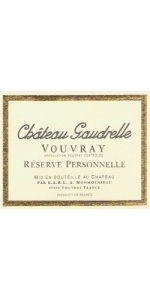
Chateau Gaudrelle Vouvray Reserve Personelle 2009 is 100 percent Chenin Blanc
Fine Chenin Blanc typicity, with aromas of ripe apples and honeyed notes. Rich, smooth, rounded palate with great structure and weight. Has the acidity to support ageing for 10 years.
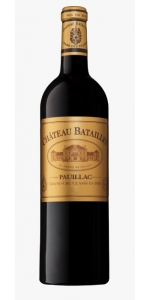
Chateau Batailley Grand Cru is made from 78% Cabernet Sauvignon, 19% Merlot, 2% Petit Verdot & 1% Cabernet Franc.
Château Batailley is a winery in the Pauillac appellation of the Bordeaux region of France. The wine produced at the estate was classified as one of eighteen Cinquièmes Crus (Fifth Growths) in the Bordeaux Wine Official Classification of 1855.
Garnet-purple colour. Rich and expressive nose, fruity with notes of spices, smoke and vanilla. On the palate, this wine is supple, round, well balanced, with good acidity, a nice fruitiness and nice notes of leather and cedar. Long elegant finish.
Review:
The 2010 Batailley repeated its magnificent showing when poured at the chateau. It has a detailed bouquet of blackberry and cedar, quite backward and seemingly having advanced lite since | tasted in in April 2016. The palate remains full of tension and brimming with energy, delivering classic cedar and tobacco notes toward the persistent finish. Batailley can produce wines that live many decades, and this is clearly one of them. Tasted at the property. Drink 2020-2050
- Neal Martin Vinous 95 Points
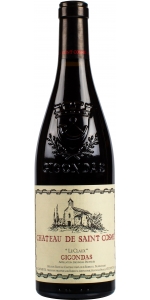
Chateau de Saint Cosme Gigondas Le Claux is made from 95% Grenache, 5% Syrah.
Château de Saint Cosme is the leading estate of Gigondas and produces the benchmark wines of the appellation. The property has been in the hands of the Barruol family since 1490. Louis Barruol took over from his father in 1992 making a dramatic shift to quality and converting to biodynamics in 2010.
Château de Saint Cosme Gigondas Le Claux is the estate’s oldest vineyard and sits near the entrance to the winery. “It was first planted in 1870 following phylloxera. My uncles thought it wasn’t producing enough fruit and planned to uproot it in 1914,” says Louis Barruol, but “World War I interrupted that plan.”
The 1.8-hectare Le Claux—meaning “Clos” in old French—is a field blend of predominately Grenache. Louis Barruol believes 10% of the vineyard is from the original 1870 planting. Vines are replaced by massal selection and the average vine age is 60-years. The wine is made with whole cluster fermentation from indigenous yeasts, is aged in 20% new 228-liter barrels, and bottled without fining or filtration.
Tasting Notes
Brilliant violet color. Displays pungent, mineral- and spice-accented cherry, black raspberry, potpourri and licorice aromas, along with hints of savory herbs, vanillo and incense. Chewy and tightly focused on the palate, offering bitter cherry, dark berry and Moroccan spice flavors that unfurl slowly through the back half. It closes with firm tension, chewy tannins and excellent tenacity, leaving resonating cherry and floral notes behind. All barriques, a third of them new.
-Vinous 95-97 Points
All older vintage wines have been purchased from a single collectors cellar. Pictures can be requested before shipment.
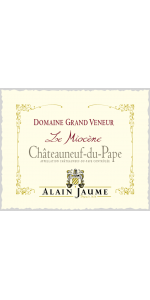
Grand Veneur Chateauneuf du Pape Rouge Le Miocene is made from 70% Grenache, 20% Syrah, 10% Mourvèdre .
An intense dark-ruby color. The nose develop aromas of ripe black fruit (such as blackberry), cherry and spice box. The palate reveals the presence of tannins, in high quantity and elegant. The finish is long and luxurious. This is the Châteauneuf du Pape expression, displaying all the characteristics of the terroir.
Soil type: Plots are located northern part of Châteauneuf du Pape and the vines are grown under organic process.The soil is marked by the violence wrought by the Rhone river. It consists of a layer of marine molasses of the Miocene period covered by alpine alluvium. The presence of a great number of rounded stones known as "galets" in the earth is evidence of the time when the Rhone, then a torrent, tore fragments of rock from the Alps and deposited them on the plain. The GRAND VENEUR cuvee will express year after year a great power and aromatic complexity.
Winemaking & ageing: Harvest is sorted by hand, destemmed and crushed. Fermentation temperature is controlled at 30°C. Vatting period of 18 to 20 days. Matured in vats and oak casks.
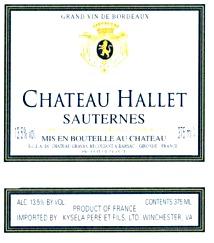
Chateau Hallet Sauternes 2010 is made from 100% Sémillon.
With delicate aromas of honey, citrus, crystallized fruit and acacia, it makes a good match not only for desserts, but also for foie gras, roasted meats and blue cheeses. It makes a delicious aperitif when served chilled.
"Bright, with very forward peach, green plum and verbena notes. Modestly sweet finish. Drink now. 800 cases made. –JM"
- Wine Spectator (Web Only 2011) - 87 pts
The Hallet Estate
Chateau Hallet is located in Sauternes, and is a Michel Bernard family rental system vineyard. This family also owns Chateau Gravas, Sauternes.
The Hallet Vineyard
The vineyard is 5 hectares (13 acres) total. The soil is a mix of clay and limestone. The 30 year-old vines are harvested by hand: the grapes are picked in successive passes. The wine matures in stainless steel tank and no oak is used.
The production is 1,250 cases / year on average.
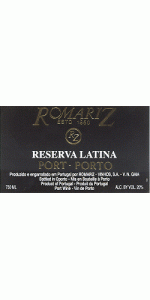
Romariz Latina Tawny Reserve is a carefully selected blend of seven to nine year old Tawny Ports are used for "Reserva Latina". The port was created for the Tawny loving Brazilian markets, Reserve of the Latin hence the name "Reserva Latina". This tawny port makes an ideal after dinner offering and a lovely companion to coffee and sweets. Nutty, raisin character, great length and finesse.
W & J Graham's Vintage Port is made from 35% Touriga Nacional, 47% Touriga Franca and various others.
It is with great pleasure that Graham's announces the declaration of the 2000 Vintage, a wine that has been deemed to meet our very exacting standards, and one that shows every promise of living up to the reputation of the very best Vintage ports that the Twentieth Century provided.
This is a landmark wine for Graham's, not only being the first Vintage of a new millennium, but being the first Vintage wine to enjoy the extraordinary results achieved by the new robotic 'lagares' at Malvedos in the inaugural year of our remodelled winery. Significant also has been the decision to include a rather larger proportion of mature Touriga Francesa and Touriga Nacional from Vila Velha, a classic riverside Quinta a short distance downstream from Malvedos, and some spectacular old vine lots from Vale de Malhadas in the Upper Douro. These wines each from family-owned Quintas have been used to reinforce the predominant component from Malvedos and the traditional excellence of the Rio Torto lots from Lages, to produce a rounded and even blend in the hallmark rich Graham style.
Picking began at Malvedos on September 22nd and the last lagar was run off on October 10th, an unusually short and compact Vintage. Fruit arrived in good condition although yields were less than three quarters of a kilogram per vine, and the juice to skin ratio well below normal. 2000 was a year noted for a very low average yield across the Douro, and with the grapes unusually lacking in liquid, the extra amount of treading work required made it an ideal time to employ our new, tireless, mechanical treaders alongside the two original 1890 stone lagares still worked by human feet. It was evident early on in the Vintage from the colour and aroma of the fermenting musts that we were looking at a spectacular year, and after the usual waiting period of sixteen months or so to see how the lots would develop, we have now made our final selection and assembled the final blend.
The blend displays many of the typical Graham aromas of ripe plum and 'esteva' (gum cistus) and is pleasantly smooth on the palate despite its youth. It is full and rich in the mouth with fresh blackberry and red plum notes. Despite the hallmark Graham sweetness in the mouth the finish is long and clean.
As with all Graham Vintages, this is a wine made to last for years and the patience of laying down the wine for fifteen to twenty years will certainly be rewarded.
Palacio de Fefinanes Albarino "III Ano" is made from 100 percent Albarino
The III Año shows all the expressiveness of the Albariño grape, with full nose of mature fruit and a mineral character. Complex and meaty with firm structure in the mouth, it promises a splendid evolution which will favor a long life for this elegant wine with personality.
Aged for 3 years on the lees in stainless steel tanks.
Wine is aged for a total of 6 months: 4 months in French and American Oak barrels. No new oak, only 1, 2 and 3 year old barriques. During these 4 months, wine is aged on the fine lees with frequent Batonnage (stirring of the lees) in order to get the most expressive notes from the Albarino varietal. Then, it is transfered into a stainless steel tank, which allows the oak aromas to be assimilated and integrated.
1583 is the birth date of the Viscount of Fefinanes, Gonzalo Sarmiento Valladares, builder of the Castle of Fefinanes, in Cambados. They wanted to pay tribute to their ancestor with this wine that managed to reach a perfect harmony between the fruitiness of the Albarino grape and the complexity brought by the oak aging.
Excellent with shellfish, grilled or stewed fish, white meats, poultry



