" We don't sell the wine without touching the vine "
| BUY MORE! SAVE MORE! | ||||||||||||||||||||
|
| Country: | France |
| Regions: | Rhone Chateauneuf du Pape |
| Winery: | Grand Veneur |
| Grape Type: | Grenache |
| Organic: | Yes |
| Vintage: | 2023 |
| Bottle Size: | 375 ml |
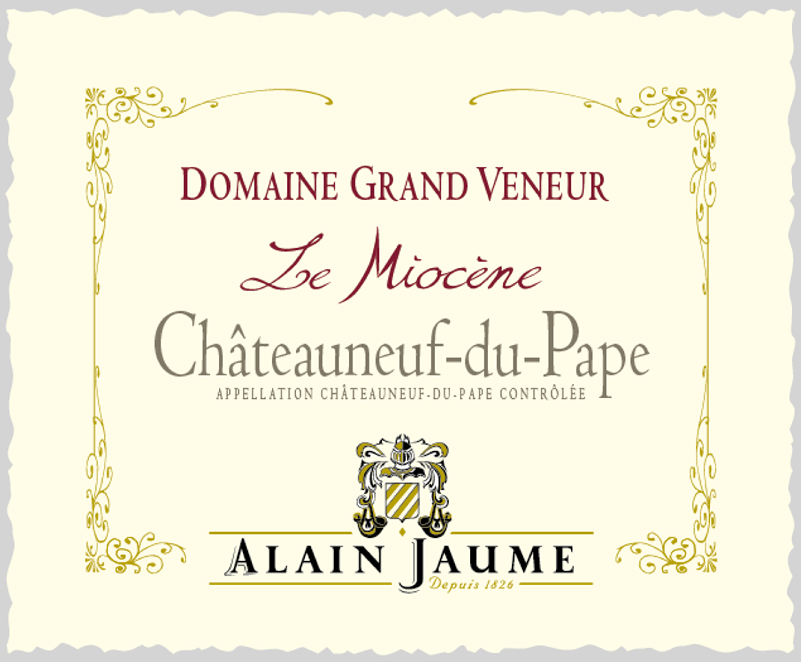
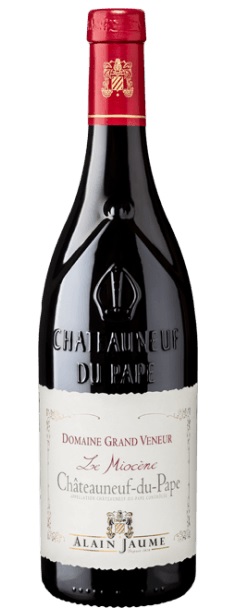
Grand Veneur Chateauneuf du Pape Rouge Le Miocene is made from 70% Grenache, 20% Syrah, 10% Mourvèdre .
An intense dark-ruby color. The nose develop aromas of ripe black fruit (such as blackberry), cherry and spice box. The palate reveals the presence of tannins, in high quantity and elegant. The finish is long and luxurious. This is the Châteauneuf du Pape expression, displaying all the characteristics of the terroir.
Soil type: Plots are located northern part of Châteauneuf du Pape and the vines are grown under organic process.The soil is marked by the violence wrought by the Rhone river. It consists of a layer of marine molasses of the Miocene period covered by alpine alluvium. The presence of a great number of rounded stones known as "galets" in the earth is evidence of the time when the Rhone, then a torrent, tore fragments of rock from the Alps and deposited them on the plain. The GRAND VENEUR cuvee will express year after year a great power and aromatic complexity.
Winemaking & ageing: Harvest is sorted by hand, destemmed and crushed. Fermentation temperature is controlled at 30°C. Vatting period of 18 to 20 days. Matured in vats and oak casks.
The Grand Veneur Estate
In 1320 Pope Jean XXII planted the first vines of Chateauneuf-du-Pape, but it was only in 1360 that the wines of the region first gained fame. Oddly, the wine that gave Chateauneuf-du-Pape its original reputation was the Blanc and not the Rouge. The white wine was a favorite of Pope Innocent VI. The Domaine dates back to 1826, having been founded at that time by Mathieu Jaume. Since 1979, Alain Jaume has run the Domaine and now has the help of his two sons: Sebastien and Christophe.
"Popes throughout history have liked their juice, and when the papal see moved to Avignon in the 13th century, that juice was Chateauneuf-du-Pape ("the pope's new castle") made from grapes grown nearby in the Southern Rhone. The castle is a ruin now, the papal court long gone back to Rome, but the wines that bear the pope's coat of arms emblazoned on the bottle are still produced more or less according to the long-standing recipe. Not every winemaker uses all 13 of the grapes in the proscribed blend, though. At Domaine Grand Veneur, an estate that dates to 1826, Alain Jaume and his sons Sebastien and Christophe emphasize Grenache blended with Syrah and Mourvedre."
- Los Angeles Times
"Improved Chateauneuf with very accomplished, stylish reds since the late 1990s; also very good Vacqueyras and Cotes-du-Rhone Villages." - Anthony Dias Blue's pocket guide to wine 2006
"Grand Veneur is one of the most brilliant estates in Chateauneuf du Pape as well as the force behind the negociant wines sold under the Alain Jaume label. Virtually everything they produce has merit. Some of this estate’s 2009 red wines are just hitting the market as they are bottled early to preserve their fruit and freshness. I can’t say enough about the job Alain Jaume’s two sons, Sebastian and Christophe, have done with this estate. The impeccable attention to detail in the vineyards, the meticulous vinification, and the careful bottling benefit every consumer." - Wine Advocate (#190, August 2010)
"Great bargains continue to emerge from Domaine Grand Veneur as well as from their negociant arm of the business, labeled Alain Jaume" - Wine Advocate (#195, June 2011)
"Don't miss the following "Best Buys" reviewed in several previous issues: Alain Jaume 2010 Cotes du Rhone Haut de Brune (87), Grand Veneur 2010 Cotes du Rhone Blanc (88), Grand Veneur 2009 Cotes du Rhone Les Champauvins (89), Grand Veneur 2009 Cotes du Rhone Reserve Blanc (89), Grand Veneur 2010 Cotes du Rhone Blanc (91), Grand Veneur 2010 Cotes du Rhone Rose (86), Grand Veneur 2009 Lirac Clos de Sixte (91), and Grand Veneur 2010 Cotes du Rhone Blanc de Viognier (89). Credit Christophe and Sebastian Jaume for making this one of the most impeccably run estates in the Rhone Valley. To reiterate, this is an estate at the top of its game and the wines remain fairly priced as well. The 2010 Grand Veneur Chateauneuf du Papes reveal youthful, crisper, more focused styles than their 2009 counterparts. I suspect their pHs are lower, the total acids slightly higher, and the alcohols perhaps .5 to 1% lower across the board." - Wine Advocate (issue197, October 2011)"
The Grand Veneur Vineyard
The estate is located in the commune of Orange and consists of 50 hectares (123 acres). It covers four different appellations: Chateauneuf-du-Pape, Cotes-du-Rhone Villages, Cotes-du-Rhone and Lirac.
The family produces wines under two labels:
- Domaine Grand Veneur – Estate
- Alain Jaume – Negociant
Some wine by Grand Veneur:
Annual production:
- Cotes du Rhone Villages CHAMPAUVINS : +/- 9,000 cases
- Lirac Rouge CLOS DE SIXTE : +/- 5,000 cases
- Chateauneuf du Pape Rouge Grand veneur : 3,300 cases
- Chateauneuf du Pape Blanc Grand veneur : 400 cases
- Chateauneuf du Pape LES ORIGINES red : 1,700 cases
- Chateauneuf du Pape LA FONTAINE white : 300 cases
- Chateauneuf du Pape VIEILLES VIGNES : 530 cases

Grand Veneur Chateauneuf du Pape Rouge Le Miocene is made from 70% Grenache, 20% Syrah, 10% Mourvèdre .
An intense dark-ruby color. The nose develop aromas of ripe black fruit (such as blackberry), cherry and spice box. The palate reveals the presence of tannins, in high quantity and elegant. The finish is long and luxurious. This is the Châteauneuf du Pape expression, displaying all the characteristics of the terroir.
Soil type: Plots are located northern part of Châteauneuf du Pape and the vines are grown under organic process.The soil is marked by the violence wrought by the Rhone river. It consists of a layer of marine molasses of the Miocene period covered by alpine alluvium. The presence of a great number of rounded stones known as "galets" in the earth is evidence of the time when the Rhone, then a torrent, tore fragments of rock from the Alps and deposited them on the plain. The GRAND VENEUR cuvee will express year after year a great power and aromatic complexity.
Winemaking & ageing: Harvest is sorted by hand, destemmed and crushed. Fermentation temperature is controlled at 30°C. Vatting period of 18 to 20 days. Matured in vats and oak casks.

Grand Veneur Chateauneuf du Pape Rouge Le Miocene is made from 70% Grenache, 20% Syrah, 10% Mourvèdre .
An intense dark-ruby color. The nose develop aromas of ripe black fruit (such as blackberry), cherry and spice box. The palate reveals the presence of tannins, in high quantity and elegant. The finish is long and luxurious. This is the Châteauneuf du Pape expression, displaying all the characteristics of the terroir.
Soil type: Plots are located northern part of Châteauneuf du Pape and the vines are grown under organic process.The soil is marked by the violence wrought by the Rhone river. It consists of a layer of marine molasses of the Miocene period covered by alpine alluvium. The presence of a great number of rounded stones known as "galets" in the earth is evidence of the time when the Rhone, then a torrent, tore fragments of rock from the Alps and deposited them on the plain. The GRAND VENEUR cuvee will express year after year a great power and aromatic complexity.
Winemaking & ageing: Harvest is sorted by hand, destemmed and crushed. Fermentation temperature is controlled at 30°C. Vatting period of 18 to 20 days. Matured in vats and oak casks.
Review:
A classic nose of deep red and black cherries is embraced by captivating violet perfume and saffron-cardamom spice. The palate is concentrated, supported by youthful tannins and a generous wave of acidity that refreshes the palate and provides lift to its intense dark-fruit finish. This expression will be exciting to revisit even after a few years of cellaring.
- Wine Enthusiast (December 2023, Best of Year issue), 94 pts

Grand Veneur Chateauneuf-du-Pape Rouge Les Origines is made from 50% Grenache, 30% Mourvedre and 20% Syrah
Matured in vats (grenache) and in oak casks (syrah and mourvèdre).
Deep and brilliant, purple-red colour. An exciting nose with aromas of black fruit (blackcurrant, cherry) spices and vanilla. This great aromatic complexity is found on the palate : the spices and ripe fruit appear with an elegant woodiness and harmonious tannins. The finish has good aromatic length and introduces a touch of liquorice and pepper.
A terrific Châteauneuf du Pape with great concentration and finesse.
Best between 2 and 20 years. Best to decant if young (less than 5 years old).
Soil type Extreme north of Châteauneuf du Pape. This plateau is made with a high quantity of red clay mixed with rocks. This area is considerated to be one of the best to produce rich and powerful red wines. By definition, LES ORIGINES will always deliver a great complexity and ageing potential. Winemaking & ageing Harvest is sorted by hand, destemmed and crushed. Fermentation temperature is controlled at 30°C. Vatting period of 18 to 20 days. Matured in vats (grenache) and in oak casks (syrah and mourvèdre).
Review:
"The huge nose of violet pastilles, mulberries, smoked bacon and a touch of hot asphalt pulls you into this expansive but beautifully balanced Chateauneuf that’s packed with fine, powdery tannin. So much bitter-chocolate character, but this exactly matches the deep fruit and, at the long crescendo finish, there are fascinating balsamic and hot dry-earth touches. Drinkable now, but best from 2025."
- James Suckling (March 2022), 94 pts

Grand Veneur Chateauneuf Du Pape Vieilles Vignes is made from 50% Grenache, 40% Mourvedre, 10% Syrah
Matured in concrete vats (40%) and oak casks (60%)
It boasts an inky/purple color in addition to a gorgeous perfume of crushed rocks, jammy black fruits, charcoal and graphite. Blackberry aroma with an air of dates pressed in alongside – this is sweet-noted. It is easy to appreciate, a sleek and stylish start. The palate holds excellent fruit that runs well and has kick. Its tannins move round freely and a minted finale comes forward. Its dark fruit is tasty, darkens on the finish, where tar and char from its oak enter. It is all very much together, a bundle of harmony, and will gain local attributes as it ages.
An outstanding Chateauneuf du Pape which display the best of its terroir.
The vines are 50 to 100+ year old. They are planted on red clay soils covered with pebble stones.
Harvest is destemmed and crushed. Fermentation temperature is controlled at 30°C. Vatting period of 18 to 20 days. Matured in concrete vats (40%) and oak casks (60%).
The vineyards are located in the north of Châteauneuf du Pape. GRAND VENEUR «Vieilles Vignes» cuvee is produced from the older vines. Thanks to time and an organic growing, roots go very deep in the soil. Yields are naturally low and grapes highly concentrated.
The vines are 50 to 100+ year old. They are planted on red clay soils covered with pebble stones.
Winemaking and aging
Harvest is destemmed and crushed. Fermentation temperature is controlled at 30°C. Vatting period of 18 to 20 days. Matured in concrete vats (40%) and oak casks (60%).
Pair with venisson, duck, braised lamb or strong cheese.
Review:
"Up with the crème de la crème of the vintage, the 2018 Châteauneuf Du Pape Vieilles Vignes is a bigger, richer wine than the Les Origines cuvée and has a beautiful core of smoked black fruits, candied violets, peppery garrigue, and scorched earth-like aromas and flavors. Playing in the medium to full-bodied end of the spectrum, it’s flawlessly balanced and has terrific tannins, a stacked mid-palate, and a great finish. It certainly shows the more front end-loaded, fleshy, mildly concentrated style of the 2018 vintage, yet the balance is top-notch, and it’s just a thrill to drink today. It should evolve nicely for 10-15 years."
- Jeb Dunnuck (October 2020),96 pts

Grand Veneur Chateauneuf du Pape Blanc Le Miocene is made from 60% Clairette, 40% Roussanne
Pale yellow colour with hints of green, aromas of white flowers (may blossom, honeysuckle).
The palate is pleasantly balanced between liveliness and roundness, which brings out characteristics of dried apricot, honey and elderberry. A Châteauneuf du Pape white displaying a great finesse.
Best between 1 and 8 years.
Soil type Coming from the single vineyard named “La Fontaine”, the plot is facing north.It is made of clay-sand and limestone. Thanks to the northern orientation, it is always very well aired. This sector allow the Roussane and Clairette to mature in great conditions without losing freshness, which we believe is key point. Winemaking & ageing Whole-bunch pressing. Vinification in stainless-steel tanks. Fermentation temperature controlled at 15°C.
Grand Veneur Chateauneuf Du Pape Vieilles Vignes is made from 50% Grenache, 40% Mourvedre, 10% Syrah
Matured in concrete vats (40%) and oak casks (60%)
It boasts an inky/purple color in addition to a gorgeous perfume of crushed rocks, jammy black fruits, charcoal and graphite. Blackberry aroma with an air of dates pressed in alongside – this is sweet-noted. It is easy to appreciate, a sleek and stylish start. The palate holds excellent fruit that runs well and has kick. Its tannins move round freely and a minted finale comes forward. Its dark fruit is tasty, darkens on the finish, where tar and char from its oak enter. It is all very much together, a bundle of harmony, and will gain local attributes as it ages.
An outstanding Chateauneuf du Pape which display the best of its terroir.
The vines are 50 to 100+ year old. They are planted on red clay soils covered with pebble stones.
Harvest is destemmed and crushed. Fermentation temperature is controlled at 30°C. Vatting period of 18 to 20 days. Matured in concrete vats (40%) and oak casks (60%).
The vines are 50 to 100+ year old. They are planted on red clay soils covered with pebble stones.
Harvest is destemmed and crushed. Fermentation temperature is controlled at 30°C. Vatting period of 18 to 20 days. Matured in concrete vats (40%) and oak casks (60%).
The vineyards are located in the north of Châteauneuf du Pape. GRAND VENEUR «Vieilles Vignes» cuvee is produced from the older vines. Thanks to time and an organic growing, roots go very deep in the soil. Yields are naturally low and grapes highly concentrated.
Winemaking and aging
Pair with venisson, duck, braised lamb or strong cheese.
Review:
"The 2021 Châteauneuf Du Pape Vieilles Vignes is even more powerful, with a dense purple color as well as serious notes of blackberries, currants, ground pepper, graphite, chocolate, and violets. I love its mid-palate density, it's medium to full-bodied, has building tannins, and a great finish. It's going to need short-term cellaring, but it’s one heck of an impressive 2021."
- Jeb Dunnuck (November 2021),94-96 pts

Long Shadows Chester Kidder is made from 60% Cabernet Sauvignon, 25% Syrah and 15% Petit Verdot
Allen Shoup named this wine in honor of his mother, Elizabeth Chester, and his grandmother, Maggie Kidder. He selected Long Shadows' director of winemaking and viticulture, Gilles Nicault, to craft this New World blend of Cabernet Sauvignon, Syrah and other classic Bordeaux varieties.
Select Cabernet Sauvignon lots underwent an extended maceration of 40 days to produce supple yet firm tannins that stand up to 30 months of barrel aging in tight-grained French oak barrels (85% new). The extra time in barrel helped to integrate the fruit, enhance the mid-palate with an extra layer of complexity, and provide an appealing earthiness to the finish.
Review:
The Cabernet Sauvignon-dominated 2017 Chester Kidder is another more closed, reserved wine that's loaded with potential. Cassis, toasted spices, violets, and leafy herb notes give way to a rich, full-bodied red that has ripe, velvety tannins, a rounded, mouth-filling texture, and one heck of a great finish. Give bottles 3-5 years if you can and it should be very long lived.
-Jeb Dunnuck 93 Points

Maysara Autees Pinot Blanc is made from 100 percent Pinot Blanc
No oak
Autees is the ancient Persian Goddess that protects all plants, animals and trees on Earth. She is the protector of life and all things that grow.
A slightly richer episode of Pinot Blanc, tending towards monologues of ripe apricot and even lychee.
Act I is entitled: ‘Floral scents in the nose are pure honeysuckle alight on a cool breeze…’ Then the grizzled director cuts to a shock of acidity that beckons you back again.
Act II opens with a playful back-and-forth of the mineral laden mid-palate and a lilting tune of a green grass finish.
Act III is seldom noticed over your mile-wide smile.
At Maysara Winery & Momtazi Vineyard, we are committed to cap-turing the complete expression of our land and conveying it to you through superior quality in every bottle. We practice only low-impact, holistic farming methods in our Demeter Certified Biodynamic Vineyard. We are confident these practices are the best way to capture the true essence of the soil in our fruit and ensure health of our vines and the unique accent of our terroir for generations. This philosophy is carried into the cellar, where Demeter Certified Biodynamic wine-making practices produce wines with intensity, sophistication and elegance while maintaining a purity of both fruit and earth.
Stellar with the firmer cheeses, fresh, ripe fruit and subtly herbed seafood.