
" We don't sell the wine without touching the vine "
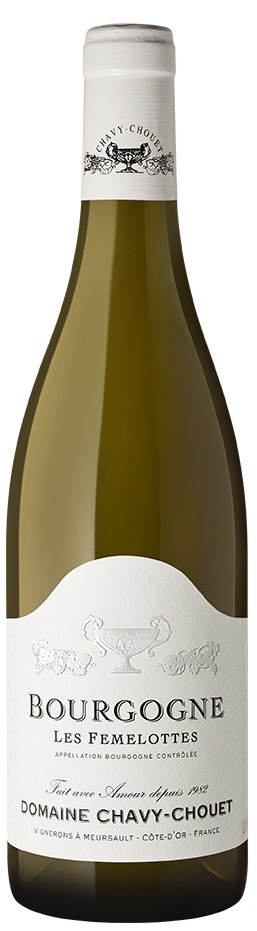
| Country: | France |
| Region: | Burgundy |
| Winery: | Chavy-Chouet |
| Grape Type: | Chardonnay |
| Vintage: | 2023 |
| Bottle Size: | 750 ml |

Chavy-Chouet Bourgogne Rouge La Taupe is made from 100 percent Pinot Noir.
Chavy-Chouet's Pinot Noir is classified as humble Bourgogne Rouge, but the fruit for it comes from an excellent single-vineyard site near Pommard. La Taupe's parcel was once part of the Pommard AOC.
The wine is juicy with a great mouthfeel. It has classic Bourgogne Rouge aromas, with a candied cherry character as well as strawberry, raspberry and spice, yet the structure and length of finish reminds one of a Pommard - ripe & rich with a bigger body.
Average age of the vines: 70 years old.
Density of planting: 10,000 vines per hectare.
Soil: clay
100% distemmed.
Very little intervention. Less pigeage (punch down of the cap) but some remontage (pump-over)
Review:
-Jeb Dunnuck 91 Points
Chavy-Chouet Bourgogne Rouge La Taupe is made from 100 percent Pinot Noir.
Chavy-Chouet's Pinot Noir is classified as humble Bourgogne Rouge, but the fruit for it comes from an excellent single-vineyard site near Pommard. La Taupe's parcel was once part of the Pommard AOC.
The wine is juicy with a great mouthfeel. It has classic Bourgogne Rouge aromas, with a candied cherry character as well as strawberry, raspberry and spice, yet the structure and length of finish reminds one of a Pommard - ripe & rich with a bigger body.
Average age of the vines: 70 years old.
Density of planting: 10,000 vines per hectare.
Soil: clay
100% distemmed.
Very little intervention. Less pigeage (punch down of the cap) but some remontage (pump-over)

Chavy-Chouet Volnay 1er Cru Sous La Chapelle is made from 100 percent Pinot Noir.
Total acreage for this wine: 0.1 hectare (0.25 acres)Planting density: 10 000 vines per hectares
Age of the vines: 10 years
At the bottom of the slope in the heart of Volnay, this plot lies on clay-sand soil.
Volnay is located on the steep sloping hill of Chaignot in the Côte de Beaune, where the southeast facing vines have been valued for centuries. These vineyards have been valued and exploited for centuries. Long before the French Revolution, the harvests of Volnay went to the Knights of Malta, the Abbeys of Saint-Andoche d’Autun and Maizières, or to the Dukes of Bourgogne and their successors, the Kings of France.
Volnay has a reputation for being among the most delicate, feminine of the Bourgogne wines. Limestone soil dominates the area, with deeper, gravelly soils at the foot of the slope, where Chavy Chouet’s vines are located.
This Volnay is full of character; broad and fruity. Smooth and elegant tannins make it a feminine wine, marked by aromas of black berries and leather.
Review:
-Jeb Dunnuck 94 Points

Boussey Bourgogne Blanc Cote d'Or Vieilles Vignes is made from 100 percent Chardonnay.
Domaine Boussey is a five-generation family estate in the village of Monthelie, in the heart of the Cote de Beaune, today run by Laurent and Karen Boussey. This white comes off a single old-vine parcel set within the commune of Meursault itself, farmed on the classic clay and limestone of the slope, and carries the stricter Bourgogne Cote d'Or appellation reserved for fruit grown on the true Cote d'Or hillsides.
Two-thirds is raised in seasoned French oak and a third in stainless steel to hold on to freshness and fruit. The result is a genuine, small-domaine white Burgundy at an everyday price, with lime and citrus, a flinty edge and a note of honeysuckle carried on a fine, saline balance of acidity and roundness.

Florence Cholet Bourgogne Blanc Cote d'Or is made from 100 percent Chardonnay.
Full, well-balanced and round. Persistent, with beautiful minerality due to the wine terroir.
Filet of Sole as well as chicken with crawfish is creamy sauce (Poularde aux Ecrevisses).
Vineyards are located in the commune of Puligny Montrachet and Meursault.

Manoir du Carra Bourgogne Blanc Le Soly is made of 100% Chardonnay. Average 50 year old vines.
The nose shows step by step fruity, smoky and mineral aromas. A slight oaky hint in the end with a lingering finish: those are typical Chardonnay aromas.
The wine is estate bottled.Ageing is done on fine lees during 3 to 5 months. About 40% of the wine has its alcoholic and malolactic fermentation in oak barrels (new, one, two or three wine barrels) with a weekly “Bâtonnage” (lee stirring) during 6 months. In the end, the wine in the barrels is blended with the wine in vats. Manual harvest of very ripe grapes. Selection of the best grapes on a vibrating sorting table, light pressing. The alcoholic fermentation takes place in cold stainless-steel vats.
Chavy-Chouet Bourgogne Blanc Femelottes is made form 100 percent Chardonnay.
This is a charming, rich, focused and delightful white. Medium-bodied with a smooth texture, the wine has a fresh backbone of acidity, clean apple and citrus flavors, and an excellent balance. A most refreshing quaff and one that is great value. A delicate, expressive wine of exceptional quality.
The grapes from this wine are grown from the Puligny-Montrachet area. (either outside of the AOC limit or with younger vines).
The grapes from this wine are grown from the Puligny-Montrachet area. (either outside of the AOC limit or with younger vines).
Aged 10 months in oak barrels (10% new, the rest in 2-3 year old barrels).
The Domaine Chavy-Chouet Estate
Romaric Chavy took over the estate in 2014, making him the eighth generation to make wine in his family. Romaric learned from his father, Hubert Chavy, who founded the winery. Chavy-Chouet is one of the oldest families in Puligny-Montrachet. The Ropiteau family (on his mother's side) is the oldest one in Meursault.
Hubert Chavy (known not only for his winemaking but also for his charisma) was able to train Romaric in for a few years before his passing in early 2014. Romaric has become a very smart vigneron with a great philosophy. Making wine has come naturally to him, as if often does in Burgundy when you are next in line.
After six years at a specialist winemaking school and with plenty of experience in winegrowing and vinification around the world under his belt, Romaric has given the estate a makeover, watching over his 15 hectares of vines with a rigorous eye. He is proud of his roots, and his approach combines rigor, tradition, and innovation.
A group from Kysela visits Chavy-Chouet in January each year, carrying on a tradition of tasting from barrels, then bottles, and then finishing with some mystery wines. The group has to guess the appellation and the vintage of wines being poured from magnums...a tough job, but somebody has to do it.
This is a 15 hectare-domaine (37 acres) that produces wine from 14 A.O.C.'s (80% White, 20% Red). The vineyard is divided into 70 parcels planted to vines that are 40 years old or more. He uses Gillet as his cooper, who blends oak from Nevers, Limousin and Allier forests. The barrels receive medium toast. Romaric, just as his father, Hubert, does not fine or filter his wines, as he prefers their purity to shine through.
The winery covers 1,300 square meters, including 800 square meters of cellars, and is a mix of ancient and ultra-modern. The set-up allows him to work hand-in-hand with nature in a well-managed yet pleasant environment, and to meet his very high demands in terms of quality. The wines are put into barrels using gravity, intervention is kept to a minimum, and an irreproachable attitude to cleanliness also symbolize his quest for excellence in the shape of pure and balanced wines that burst with energy.
A corked bottle of 1983 Pichon-Lalande led to my inaugural visit to this Meursault domaine. My precious Pauillac corked, I ordered a bottle of 2015 Bourgogne Les Femelottes from Chavy-Chouet at Brat restaurant in London. It was so damn delicious that I ordered another and emailed winemaker Romaric Chavy that I must visit pronto.
Arriving at the gates, I noticed that there was no doorbell or knocker. When I was noticed loitering outside, the gates finally opened and Romaric Chavy informed me that they do without a doorbell because they have so many visitors. Chavy is a young and confident guy, very media-savvy, which is uncommon in Burgundy. He worked abroad in various countries including South Africa and Greece before taking over Chavy-Chouet at the age of just 22. Before tasting through the 2017s, which had all been bottled, I asked about the background of the domaine.
“The holdings come from two sides of my grandfather’s family. Chavy comes from Puligny-Montrachet, and his wife was part of the Ropiteau family in Meursault. Back then, he sold the wines to Bouchard Père. It was my own father, Hubert, who started bottling his own wine when he married his wife from Pommard and bought this house in Meursault. I started at the domaine in 2006 when we were still selling off grapes. I already had a good network [of potential clients] and so we started to bottle everything and develop exports. My father passed away in 2014. Now we have 15 hectares, mostly old vines located in five villages, producing around 90,000 bottles, of which around 90% is exported. We have three or four people working full-time and we work in a classical way - lutte raisonée and ploughing in the vineyard. This year we approached half the vineyard organically, but when the pressure became too high, we switched back and used spray. We press the fruit for two hours, with a 24-hour debourbage, and then ferment in barrel using natural yeast, a maximum of 20% new oak for between 9 and 12 months, with no lees stirring and a light filtration before bottling. We try to keep as much natural CO2 as possible.”
It is always a pleasure to discover a producer who has skimmed under your Burgundy radar for some time. Chavy-Chouet has built a loyal following here in the UK and I can understand why. These wines are very pure, terroir-driven and focused. Yet they are not challenging or pretentious and give much sensory pleasure. As I mentioned, you can splash the cash on a Premier Cru white if you wish, but do not ignore the 2017 Bourgogne Blanc Les Femelottes. It is unequivocally Village Cru in quality – no real surprise given that its vines are adjacent to Puligny-Village. The 2017 Meursault Charmes is an absolute knockout, whilst the monopole Clos des Corvées de Citeau is superb. This is an address I will definitely return to in the future, though I have made a mental note to phone ahead, so that I can actually get in. - Neal Martin"
- Antonio Galloni's Vinous (2017 Burgundy: A Modern Classic, January 2019)
-150x300.jpg "Philippe Milan Bourgogne Blanc 2022")
Philippe Milan Bourgogne Blanc is made from 100% Chardonnay
The wine is produced from vines planted in the commune of Chassey le Camp at high elevation, which brings freshness to this Chardonnay. Ripe fruit is nicely balanced with delicate notes of oak and a hint of citrus on the finish. Full flavored and complex.
Chavy-Chouet Bourgogne Rouge La Taupe is made from 100 percent Pinot Noir.
Chavy-Chouet's Pinot Noir is classified as humble Bourgogne Rouge, but the fruit for it comes from an excellent single-vineyard site near Pommard. La Taupe's parcel was once part of the Pommard AOC.
The wine is juicy with a great mouthfeel. It has classic Bourgogne Rouge aromas, with a candied cherry character as well as strawberry, raspberry and spice, yet the structure and length of finish reminds one of a Pommard - ripe & rich with a bigger body.
Average age of the vines: 70 years old.
Density of planting: 10,000 vines per hectare.
Soil: clay
100% distemmed.
Very little intervention. Less pigeage (punch down of the cap) but some remontage (pump-over)
Review:
-Jeb Dunnuck 91 Points

COLOR: Deep ruby red
NOSE: Intense bouquet with hints of ripe fruit
TASTE: Full, balanced taste

Cortenova Montepulciano d' Abruzzo is made from 100% Montepulciano d'Abruzzo
Deep ruby red color with violet highlights and a pleasant and fruity bouquet. Full bodied, soft tannins and good acidity.
Excellent with pasta dishes and red meats.

Domaine de la Janasse Chateauneuf-du-Pape Cuvee Vieilles Vignes is made from 65% Grenache, 20% Mourvèdre, 10% Syrah, 5% divers.
In contrast to Chaupin, which is made from old-vine Grenache on sandy soils, the cuvée Vieilles Vignes is from old vines of Grenache, Mourvedre, Syrah along with smaller percentages of other permitted varieties that are grown in these old vineyards. The wine is sourced from 4 terroirs: pebbly clay, sand, gravelly red clay and sandy limestone. Vieilles Vignes is always the most powerful and concentrated Châteauneuf-du-Pape cuvée made at Domaine de la Janasse.
Review:
-Jeb Dunnuck 98 Points
-Joe Czerwinski 98 Points
-Falstaff 98 Points
-Decanter World Wine Awards 97 Points

Deep red with a slight purple hue on release. The wine has a rich mix of dark chocolate infused with coffee bean and black liquorice, then scents of tar, aniseed, raw (pure) soy and black olive on the nose. The palate is expansive, and yet balanced and finessed. An amalgam of dark berried flavors and textural sensations. The 100% new oak is completely absorbed, meshed with ripe tannins, completing a palate of impressive length and youthfulness.
Parcels of fruit for this wine were identified in the vineyard by the winemakers. Daily fruit inspection led to the fruit being harvested at optimum flavor ripeness. The fruit was harvested at night and quickly transported to the winery. The fruit was destemmed to 6T open fermenters for fermentation. A Shiraz specific yeast was selected to ferment the wine and fermentation was carried out at a maximum of 28°C. The fermenter was manually pumped over twice daily in the first half of fermentation to give the winemakers control of color, flavor and tannin extraction. Pump over regimes were adjusted toward the end of fermentation to suit the tannin and flavor extraction of the wine. The cap was completely broken up on each pump over. The wine remained in fermenters for 6-8 days (dependent on parcel) before being pressed, inoculated with malolactic bacteria and filled to American oak (100% new barrels). The wine was racked post malolactic fermentation and returned to the same barrels. The wine was topped every month and after six months racked and returned to the same barrels again. Prior to bottling the parcels were emptied from oak and blended. Minimal fining and filtration was carried out prior to bottling.
Review:
-Jeb Dunnuck 96 Points
-Wine Spectator 94 Points

Ottella Lugana DOC Le Creete is made from 100% Turbiano (clonal type of Trebbiano di Lugana)
PRODUCTION AREA: S. Benedetto di Lugana. The grapes are harvested exclusively from our own vineyards; harvesting is strictly manual in small 17kg-crates
TRAINING METHOD: Guyot, double arc
Golden, warm, intense straw yellow. Immediate exotic notes.
It develops in a very pleasant fashion, good mineral impression Rich, succulent and well balanced for a truly
satisfactory mouthfeel. Mineral on the finish with just enough acidity to
provide lift and depth.
FOOD: Sea or lake fish to bring out its outstanding features; goes well with white meat and soup, and has quite a surprising affinity with tasty cheese
ALCOHOL BY VOLUME: 13% vol
SERVING TEMPERATURE: 10-12 degrees Celcius
Review:
-James Button 93 Points

Chaume Bourgogne Rouge 2024 is made from Pinot Noir.
Color: bright ruby red. Bouquet: blackcurrant, raspberry and hints of blackberry. Palate: a smooth, balanced attack with fine tannins and a supple finish.
Pairs with butterflied lamb, char-grilled steak or venison; rustic dishes such as cassoulet or duck with olives; or roast goose.



