" We don't sell the wine without touching the vine "
| Country: | France |
| Region: | Burgundy |
| Winery: | Chavy-Chouet |
| Grape Type: | Chardonnay |
| Vintage: | 2018 |
| Bottle Size: | 750 ml |

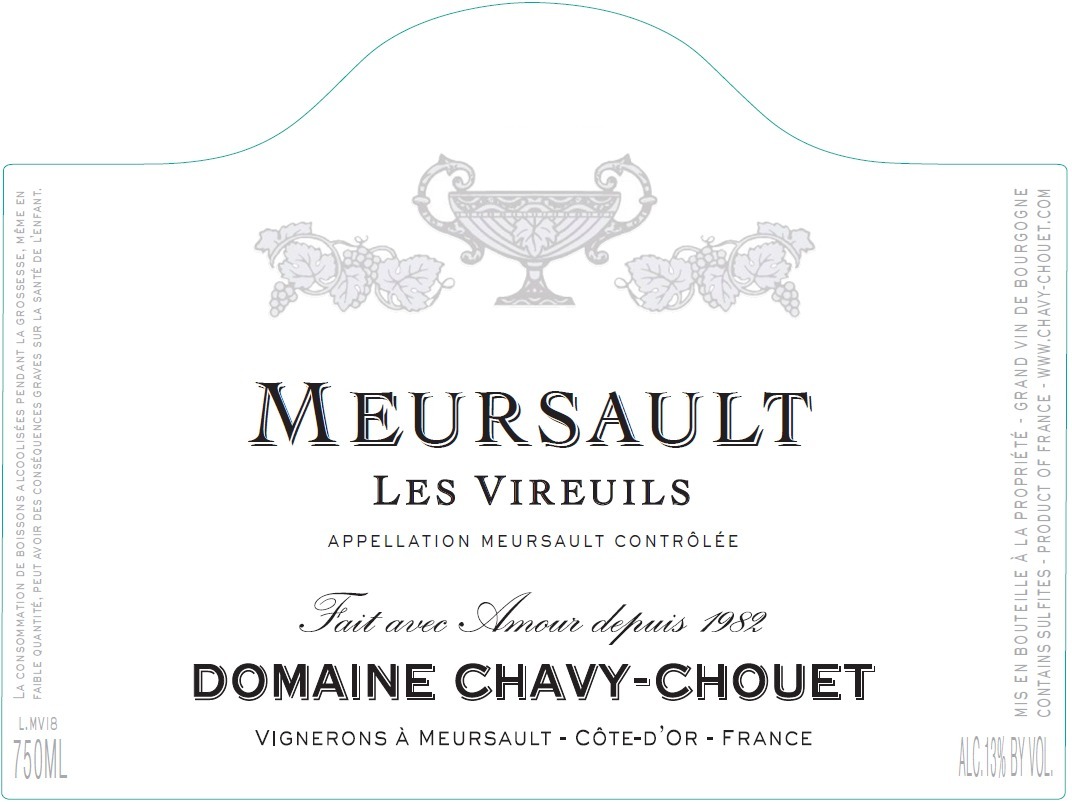
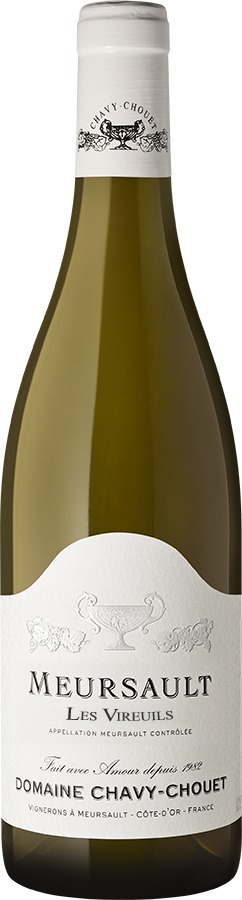
Chavy-Chouet Meursault Les Vireuils is made from 100 percent Chardonnay.
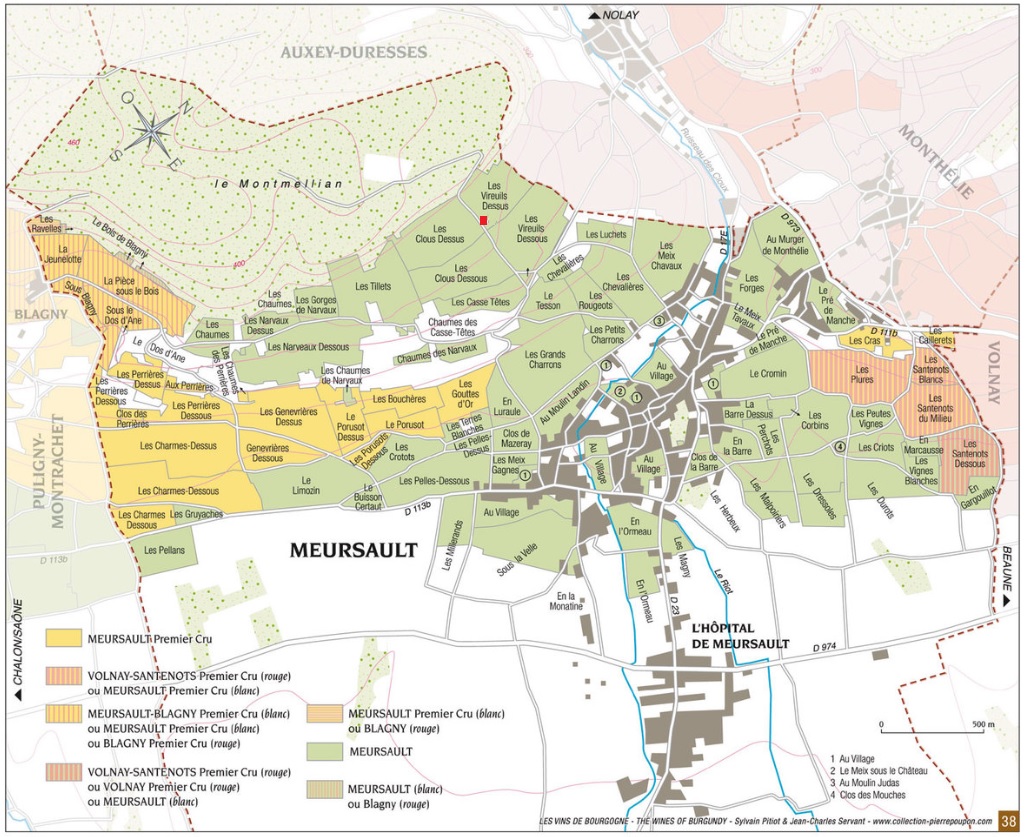
The "Les Vireuils" parcel is located on the top of the hill above Meursault, right below the forest.
It is slightly cooler parcel with a limestone soils with a higher presence of rocks. The wines coming from this parcel are always sharp with a vibrant acidity and a lot of freshness.
Tasting notes: Concentrated, powerful, and lively, Les Vireuils has all the classic characteristics of the Meursault appellation. Its sophistication, structure, and assured elegance reflect the character of the soil.
It is a great match with fish in creamy sauce, cheese, white meats.
Review:
-Jeb Dunnuck 94 Points

Chavy-Chouet Meursault Les Casse Tetes is made from 100 percent Chardonnay.
A "casse tête" in French is a conundrum or puzzle and the name of this plot refers to the hardness of the soil and the challenge it was for our ancestors to plant vines on this pebbly limestone ground.
Surface Area : 1.5 acres (0.6 hectares)
Age of the vines: 45 years old
Planting density : 10,000 vines per hectares
Soil Type : Limestone
Tasting notes: Concentrated, powerful, and lively, Les Casse-Têtes is the very quintessence of the Meursault appellation. Its sophistication, structure, and assured elegance reflect the character of the soil.
Review:
-Jeb Dunnuck 92 Points

Chavy-Chouet Meursault Premier Cru Les Genevrieres is made from 100 percent Chardonnay.
Fruity flavors and typical nutty nuances. The Genevrières parcels are located in the heart of Meursault's southern premiers crus. "Genevrieres" takes its name from the presence, years ago, of the juniper bushes which covered its slope, and it is sometimes said that the tang of this aromatic berry can be detected in the wine.
The Genevrières parcels are located in the heart of Meursault's southern premiers crus. "Genevrieres" takes its name from the presence, years ago, of the juniper bushes which covered its slope, and it is sometimes said that the tang of this aromatic berry can be detected in the wine.
Fruity flavors and typical nutty nuances.

Chavy-Chouet Meursault Clos des Corvees de Citeaux is 100 percent Chardonnay
Aged in new oak barrels (Allier).
The Clos des Corvees de Citeau is a .96 hectare vineyard located in Meursault. It was part of the appellation of l'Ormeau; an old property of the Cistercian monks who made a two meter wall around the vines. The tall walls create a micro-climate that encourages early growth and ripening.
Thanks to its clay rich soil, the vineyard produces a rich, opulent and luscious wine that can be enjoyed young. This is a powerful and elegant white Burgundy; expressive, fresh and fruity with intense and strong flavors.
Review:
-James Suckling 95 Points

Chavy-Chouet Premier Cru Meursault Les Charmes is made from 100 percent Chardonnay.
This fine and sensual wine, with hints of blossom and roasted hazelnut, has a concentration that makes it discreet in its youth but powerful over time.
Located right next to Puligny-Montrachet, the plot of Les Charmes was planted in 1943 on a sandy clay-limestone soil that produces small, concentrated berries for an intense wine that is perfect for ageing.
Chavy-Chouet Meursault Les Vireuils is made from 100 percent Chardonnay.
The "Les Vireuils" parcel is located on the top of the hill above Meursault, right below the forest.
It is slightly cooler parcel with a limestone soils with a higher presence of rocks. The wines coming from this parcel are always sharp with a vibrant acidity and a lot of freshness.
Tasting notes: Concentrated, powerful, and lively, Les Vireuils has all the classic characteristics of the Meursault appellation. Its sophistication, structure, and assured elegance reflect the character of the soil.
Review:
The 2018 Meursault Les Vireuils comes from two parcels of vine on either side of the climat (15- and 50-year-old vines). One is a new parcel bought by Chavy (unbelievably, it was advertised on a website that Romaric Chavy happened to see; the transaction was done in a couple of weeks). It has a lovely nose of menthol-tinged citrus fruit that gains intensity with aeration. The palate is very well balanced with well-judged acidity, vivid orange zest and citrus notes and a precise, mineral-driven finish. This is a superb Les Vireuils.
-- Neal Martin Vinous 92 Points
The Domaine Chavy-Chouet Estate
Romaric Chavy took over the estate in 2014, making him the eighth generation to make wine in his family. Romaric learned from his father, Hubert Chavy, who founded the winery. Chavy-Chouet is one of the oldest families in Puligny-Montrachet. The Ropiteau family (on his mother's side) is the oldest one in Meursault.
Hubert Chavy (known not only for his winemaking but also for his charisma) was able to train Romaric in for a few years before his passing in early 2014. Romaric has become a very smart vigneron with a great philosophy. Making wine has come naturally to him, as if often does in Burgundy when you are next in line.
After six years at a specialist winemaking school and with plenty of experience in winegrowing and vinification around the world under his belt, Romaric has given the estate a makeover, watching over his 15 hectares of vines with a rigorous eye. He is proud of his roots, and his approach combines rigor, tradition, and innovation.
A group from Kysela visits Chavy-Chouet in January each year, carrying on a tradition of tasting from barrels, then bottles, and then finishing with some mystery wines. The group has to guess the appellation and the vintage of wines being poured from magnums...a tough job, but somebody has to do it.
This is a 15 hectare-domaine (37 acres) that produces wine from 14 A.O.C.'s (80% White, 20% Red). The vineyard is divided into 70 parcels planted to vines that are 40 years old or more. He uses Gillet as his cooper, who blends oak from Nevers, Limousin and Allier forests. The barrels receive medium toast. Romaric, just as his father, Hubert, does not fine or filter his wines, as he prefers their purity to shine through.
The winery covers 1,300 square meters, including 800 square meters of cellars, and is a mix of ancient and ultra-modern. The set-up allows him to work hand-in-hand with nature in a well-managed yet pleasant environment, and to meet his very high demands in terms of quality. The wines are put into barrels using gravity, intervention is kept to a minimum, and an irreproachable attitude to cleanliness also symbolize his quest for excellence in the shape of pure and balanced wines that burst with energy.
A corked bottle of 1983 Pichon-Lalande led to my inaugural visit to this Meursault domaine. My precious Pauillac corked, I ordered a bottle of 2015 Bourgogne Les Femelottes from Chavy-Chouet at Brat restaurant in London. It was so damn delicious that I ordered another and emailed winemaker Romaric Chavy that I must visit pronto.
Arriving at the gates, I noticed that there was no doorbell or knocker. When I was noticed loitering outside, the gates finally opened and Romaric Chavy informed me that they do without a doorbell because they have so many visitors. Chavy is a young and confident guy, very media-savvy, which is uncommon in Burgundy. He worked abroad in various countries including South Africa and Greece before taking over Chavy-Chouet at the age of just 22. Before tasting through the 2017s, which had all been bottled, I asked about the background of the domaine.
“The holdings come from two sides of my grandfather’s family. Chavy comes from Puligny-Montrachet, and his wife was part of the Ropiteau family in Meursault. Back then, he sold the wines to Bouchard Père. It was my own father, Hubert, who started bottling his own wine when he married his wife from Pommard and bought this house in Meursault. I started at the domaine in 2006 when we were still selling off grapes. I already had a good network [of potential clients] and so we started to bottle everything and develop exports. My father passed away in 2014. Now we have 15 hectares, mostly old vines located in five villages, producing around 90,000 bottles, of which around 90% is exported. We have three or four people working full-time and we work in a classical way - lutte raisonée and ploughing in the vineyard. This year we approached half the vineyard organically, but when the pressure became too high, we switched back and used spray. We press the fruit for two hours, with a 24-hour debourbage, and then ferment in barrel using natural yeast, a maximum of 20% new oak for between 9 and 12 months, with no lees stirring and a light filtration before bottling. We try to keep as much natural CO2 as possible.”
It is always a pleasure to discover a producer who has skimmed under your Burgundy radar for some time. Chavy-Chouet has built a loyal following here in the UK and I can understand why. These wines are very pure, terroir-driven and focused. Yet they are not challenging or pretentious and give much sensory pleasure. As I mentioned, you can splash the cash on a Premier Cru white if you wish, but do not ignore the 2017 Bourgogne Blanc Les Femelottes. It is unequivocally Village Cru in quality – no real surprise given that its vines are adjacent to Puligny-Village. The 2017 Meursault Charmes is an absolute knockout, whilst the monopole Clos des Corvées de Citeau is superb. This is an address I will definitely return to in the future, though I have made a mental note to phone ahead, so that I can actually get in. - Neal Martin"
- Antonio Galloni's Vinous (2017 Burgundy: A Modern Classic, January 2019)

Clos Saint-Jean is a 41-hectare estate in Châteauneuf-du-Pape run by brothers Vincent and Pascal Maurel. Considered by many critics and wine-writers as the preeminent estate espousing the modern style of winemaking in Châteauneuf, this cellar is one of the oldest in the region, having been founded in 1900 by the greatgreat-grandfather of Vincent and Pascal, Edmund Tacussel. A short time after its founding and well before the AOP of Chateauneuf-du-Pape was created in 1923, Edmund began bottling estate wines in 1910.
The farming at Clos Saint-Jean is fully sustainable due to the warm and dry climate, which prevents the need for chemical inputs. Instead, Vincent and Pascal employ organic methods for pest control, mainly pheromones, to prevent pests from taking up residence in their vines, a process called amusingly enough in French, confusion sexuelle. The vines tended manually, and harvest is conducted in several passes entirely by hand.
Deus ex Machina is a literary and dramatic term for a miraculous intervention that interrupts a logical course of events in a plot or play. A suitable name for a cuvée that had it’s start in the torrid vintage of 2003 when Philippe Cambie and Vincent Maurel made the decision to harvest at the end of September, weeks after their neighbors. Deus ex Machina is a blend of old vine Grenache from La Crau, aged in tank with equally ancient Mourvedre from the sandy soils of BoisDauphin aged in demi-muid. Deus ex Machina is only made in the best vintages.
Review:
Lastly, the 2022 Châteauneuf Du Pape Deus-Ex Machina shows a similar profile to the Combes des Fous, yet it brings another level of tannins and concentration. Kirsch liqueur, white flowers, sandalwood, cured meats, and graphite notes all shine here, and it's full-bodied, has a deep, layered, powerful, yet weightless profile, lots of ripe tannins, and a blockbuster of a finish. This ripe, sexy, seamless, incredibly impressive beauty will compete with anything in the vintage. As usual, this cuvée is 60% Grenache and 40% Mourvedre, which is brought up in roughly 40% new demi-muids.
Review: Jeb Dunnuck 97 Points

G.D. Vajra Barolo Coste di Rose is made from 100 percent Nebbiolo.
The Coste di Rose is a very seductive wine right out of the gate. Cherries and roses burst on the nose, with hints of amarena, red hard candy, wild berries, wet stone, mint and thyme. The palate is radiant and expressive, with all of the signature elements of Coste di Rose in nice evi-dence: the ethereal character, the saline, up-front tannic structure, and further whiffles of roses and cherries in the finish.
G.D. Vajra is one of Barolo's most beloved family estates, farming organically in La Morra since the early 1970s and known for fragrant, high-toned, transparent Nebbiolo. Coste di Rose is one of the highest and coolest crus in Barolo, its sandy, well-draining soils yielding especially perfumed and graceful wines; the 2022 is a touch more structured and powerful than most.
Review:
Floral, as is typical of this estate, with crunchy red fruit and rose petals. The palate is medium-bodied, with a blanket of delicate, tender fruit defined by chalky, precise yet silky tannins. Drinkable now with proper aeration, but will improve with some bottle age.
James Suckling, 96 points
Review:
-James Suckling 96 Points
-Monica Larner (Robert Parker) 95 Points