
" We don't sell the wine without touching the vine "
| BUY MORE! SAVE MORE! | ||||||||||||||||||||
|
| Country: | France |
| Regions: | Loire Vouvray |
| Winery: | Gaudrelle |
| Grape Type: | Chenin Blanc |
| Organic: | Yes |
| Vintage: | 2023 |
| Bottle Size: | 750 ml |
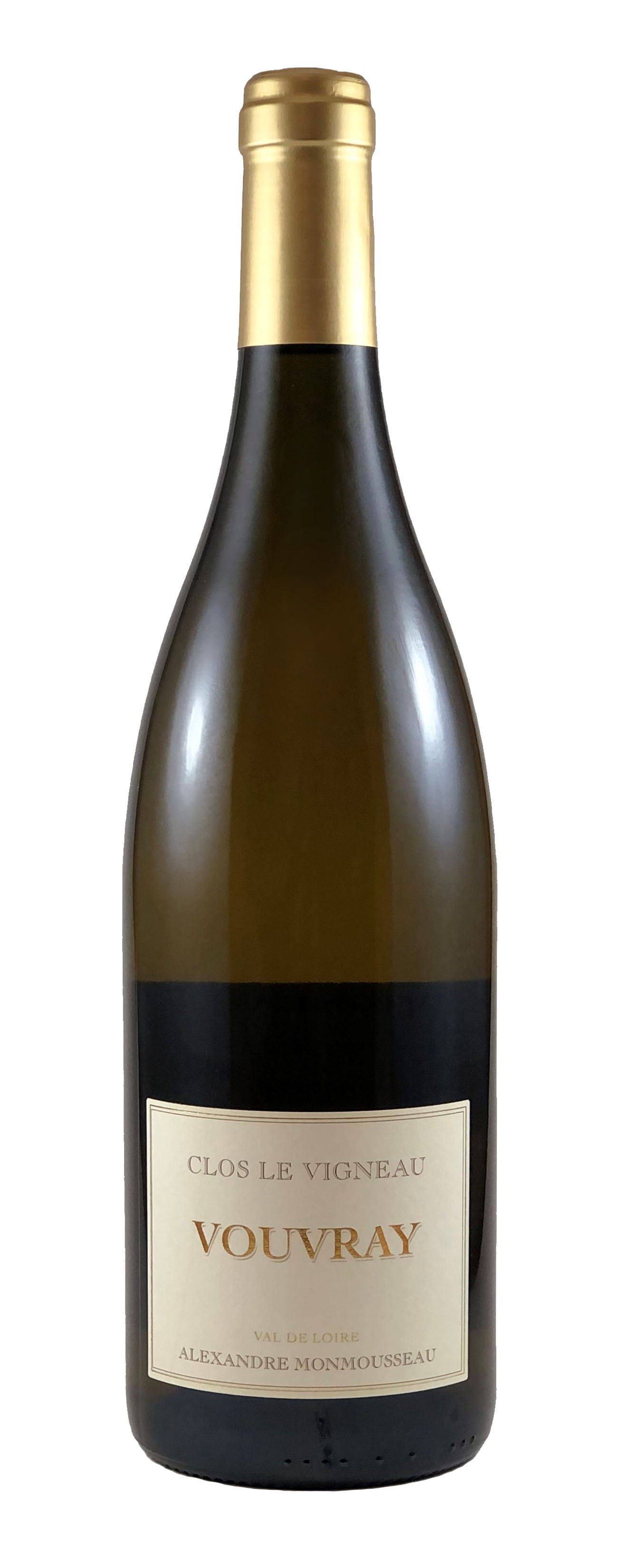
Gaudrelle Monmousseau Clos le Vigneau Vouvray is made from 100% Chenin Blanc
Clos Le Vigneau is a single vineyard from an area known as "les Gués d'Amant" or "Lover's Gap". Most of the vines were planted in 1929.
Off dry in style with honey, earth and apricot notes. Wines from the town of Vouvray have been known to age well for 40 years. This particular bottling should hold for at least 5-7 years.
Chateau Gaudrelle is owned by fifth generation winemaker Alexandre Monmousseau. Alexandre's father, Armand Monmousseau, is the former head of his family's sparkling wine firm in Montrichard. Alexandre, intense and confident, received his schooling in Beaune and is one of the leaders of the Sec-Tendre (soft-dry) movement that includes producers like Huet and Champalou..
Monmousseau also produces Kysela's famous Vouvray, Clos le Vigneau.
The AOC of Vouvray covers 9 villages:
• Vouvray
• Vernou sur Brenne
• Noizay
• Chançay
• Reugny
• Parçay
• Meslay
• Rochecorbon
• Tours-Sainte Radegonde, which is the birth place of the vineyard (end of the 4th century).
"It is amazing how good a value Vouvray has remained despite the fact that it is such a popular wine from Loire. The appellation was founded in 1936 and covers nine villages in the region. You can find sparkling wines at this estate – sec (dry) or demi-sec (basically off-dry, although for most consumers these would be considered dry) – as well as their sweet wines, which vary considerably in their degrees of sweetness and are referred to as moelleux. All four of the following cuvees performed brilliantly in my tasting." - Robert Parker's Wine Advocate (June 2012)
Today the Monmousseau family farms 14 hectares (34.6 acres) of land: 6 hectares for Clos le Vigneau, 8 hectares for Château Gaudrelle. Clos Le Vigneau is a single vineyard from an area known as “les Gués d'Amant” or “Lover’s Gap”. Most of the vines were planted in 1929. The soil is a mixture of argilo-calcaire, silex and gravel. Alexandre Monmousseau believes in low yields for concentration and flavor. The grapes are hand harvested. Pressing is long and slow, fermentation is in stainless steel with two rackings and a light filtration before bottling.

Jean Reverdy Sancerre Blanc is 100% Sauvignon Blanc
Single vineyard. Vinification: cold fermentation in stainless steel tank, no oak, no malolactic fermentation.
Sweet, fruity and clean. White flowers (acacia, jasmine) and citrus fruits aromas. Perfectly balanced.
A delicious wine, perfect with fish dishes, especially salmon, and a local goat cheese Crottin de Chavignol.

Castelmaure Grande Cuvee Corbieres Rouge is made from 50% Grenache (30 year old) and 50% Syrah (30 year old)..
In the early 1990’s, Castelmaure began experimenting with a Prestige Cuvée of Corbières. This wine has become known as “Grande Cuvée” and is made with the help of the winemaking team of Tardieu-Laurent.
Vinification: destemming, pneumatic press, end of fermentation at 25 degrees C; two racking; aging in tank then in 220 Liter Bordeaux barrels for 10-12 months. Egg fining, slight filtration..
Deep and intense color, powerful aromas of dark berry fruit, prune and coffee nuances, and a persistent finish.
Vineyards: planted on 50% Schist and 50% limestone soils.

Alexandre Monmousseau Gaudrelle Vouvray Reserve Personelle is made from 100 percent Chenin Blanc
Fine Chenin Blanc typicity, with aromas of ripe apples and honeyed notes. Rich, smooth, rounded palate with great structure and weight. Has the acidity to support ageing for 10 years.
Chateau Gaudrelle Vouvray Reserve Personelle 2009 is 100 percent Chenin Blanc
Fine Chenin Blanc typicity, with aromas of ripe apples and honeyed notes. Rich, smooth, rounded palate with great structure and weight. Has the acidity to support ageing for 10 years.

Produced from 100% Chenin Blanc planted on clay and flint stones based soils.
Vinification: aged in stainless steel tanks with temperature controlled fermentation. Aged on the lees for 4 months.
Kieselguhr filtration.
This sparking wine is fresh and fruity. Rich and easy to drink, which makes it a wonderful aperitif. For the aficionados this is an excellent food friendly wine. Its quality makes it a great alternative to Champagne.
"The two sparkling wines should not be missed. They’re both terrific examples of how good sparkling Vouvray can be. Both are 100% Chenin Blanc cuvees, with the non-vintage Chateau Gaudrelle Vouvray Brut showing lots of effervescence and plenty of flowery brioche, buttered citrus, melon and dried apricot notes. It is crisp, fresh, and ideal for drinking over the next several years."
-Wine Advocate 90 pts
"Just off-dry, this almond- and apple-flavored wine achieves a fine balance of crispness and richness. There is just a touch of honey, intertwined with delicious citrusy acidity."
- Wine Enthusiast , 90 pts

Alain de la Treille Les Folies Vouvray is made from 100 percent Chenin Blanc.
This is our newest Loire valley project, with an Eco friendly lightweight bottle and a screwcap.
Les Folies Vouvray is stunning with its elegancy and freshness which is carried through the ripe fruity palate, manned with hints of honey and apricots.
Les Folies Vouvray goes well with Asian food, fishes, charcuteries, BBQ pork spareribs or simply as an aperitif.

Clos Saint-Jean Chateauneuf Du Pape Vieilles Vignes is made from a Grenache, Syrah, Mourvedre, Cinsault, Vaccarèse and Muscardin, the Châteauneuf-du-Pape Vieilles Vignes is made from old vines located in and around Le Crau. The Grenache is aged in concrete for 12 months while the remainder is aged in demi-muid.
Review:
This has good concentration and energy to the dense core of dark fruit and bitter cherry, with great poise and elegance despite its ripeness (an impressive feat for the vintage). Guided by finely crushed mineral accents and tannins, this reveals pretty high-toned floral notes and leafy tobacco. Grenache, Syrah, Mourvedre, Cinsault, Vaccarese and Muscardin. Drink now through 2032. 900 cases made.
-Wine Spectator 95 Points

All older vintage wines have been purchased from a single collectors cellar. Pictures can be requested before shipment.

All older vintage wines have been purchased from a single collectors cellar. Pictures can be requested before shipment.

Thorn Clarke Varietal Collection Pinot Gris is made from 100 percent Pinot Gris.
We believe that exceptional wines are created in the vineyard and that we are custodians, rather than creators of quality. Six generations of rich viticultural and geological family history has gone into creating these wines, which truly showcase the best of the Barossa & Eden Valley.
Pale straw in color with quartz green hues at the edge. A classic Pinot Gris style with lifted nashi pear, apples and nougat aromas. The palate is a textural, medium weight style with juicy pome fruits and zesty lime and grapefruit. A refreshing style with a subtle texture and long, fruit driven finish.



