" We don't sell the wine without touching the vine "
| Country: | France |
| Regions: | Rhone Vacqueyras |
| Winery: | Colline St-Jean |
| Grape Type: | Grenache |
| Vintage: | 2015 |
| Bottle Size: | 750 ml |
Clos Saint-Jean Chateauneuf Du Pape Vieilles Vignes is made from a Grenache, Syrah, Mourvedre, Cinsault, Vaccarèse and Muscardin, the Châteauneuf-du-Pape Vieilles Vignes is made from old vines located in and around Le Crau. The Grenache is aged in concrete for 12 months while the remainder is aged in demi-muid.
Review:
This has good concentration and energy to the dense core of dark fruit and bitter cherry, with great poise and elegance despite its ripeness (an impressive feat for the vintage). Guided by finely crushed mineral accents and tannins, this reveals pretty high-toned floral notes and leafy tobacco. Grenache, Syrah, Mourvedre, Cinsault, Vaccarese and Muscardin. Drink now through 2032. 900 cases made.
-Wine Spectator 95 Points

Cazaux Vacqueyras Blanc Vieilles Vignes 50% Clairette, 30% Roussanne and 20% Viognier
The wine has a beautiful golden color.
The aromas are rich and
exotic with mango, almonds, toast, lemon, pineapple white flowers and
papaye. These aromas will develop to honey, butter and pear after ageing
for a few years.
The finish is long, citrusy and toasty.
Terroir: Slopes of sandy soil or grey limestone.
Yield: 25 -30 hl/ha
Age of the vines: 70 years old minimum. The oldest are around 90 years old.
The
grapes are pressed pneumatically after a few hours contact with the
skins.The must is kept at 20°c during the alcoholic fermentation to
optimise the aromas and respect the wine’s suppleness.
Barrel fermented an aged in 228-liter French Oak barrel for 12 months with regular stirrings of the lees.
MaloLactic Fermentation also in barrel.
Enjoy this wine with rich dish, river fish or poultry cooking in creamy sauce. Delicious with a mushroom risotto.
Clos Saint-Jean is a 41-hectare estate in Châteauneuf-du-Pape run by brothers Vincent and Pascal Maurel. Considered by many critics and wine-writers as the preeminent estate espousing the modern style of winemaking in Châteauneuf, this cellar is one of the oldest in the region, having been founded in 1900 by the greatgreat-grandfather of Vincent and Pascal, Edmund Tacussel. A short time after its founding and well before the AOP of Chateauneuf-du-Pape was created in 1923, Edmund began bottling estate wines in 1910.
The farming at Clos Saint-Jean is fully sustainable due to the warm and dry climate, which prevents the need for chemical inputs. Instead, Vincent and Pascal employ organic methods for pest control, mainly pheromones, to prevent pests from taking up residence in their vines, a process called amusingly enough in French, confusion sexuelle. The vines tended manually, and harvest is conducted in several passes entirely by hand.
Combe des Fous literally means, the hill of the fool. The hill, in this case, is located in the far southern reach of Le Crau which was left barren for many centuries because the layer of galets was so exceedingly deep that everyone assumed vines could never survive there. The fool in this situation is Edmund Tacussel, the great-great-grandfather of Vincent and Pascal Maruel who planted a Grenache vineyard on this site in 1905. That old-vine Grenache form the heart of this cuvée with a small amount of Syrah, Cinsault and Vaccarèse. La Combe des Fous is only made in the best vintages.
Review:
This has good concentration and energy to the dense core of dark fruit and bitter cherry, with great poise and elegance despite its ripeness (an impressive feat for the vintage). Guided by finely crushed mineral accents and tannins, this reveals pretty high-toned floral notes and leafy tobacco. Grenache, Syrah, Mourvedre, Cinsault, Vaccarese and Muscardin. Drink now through 2032. 900 cases made.
-Wine Spectator 95 Points
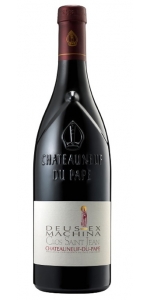
Clos Saint-Jean is a 41-hectare estate in Châteauneuf-du-Pape run by brothers Vincent and Pascal Maurel. Considered by many critics and wine-writers as the preeminent estate espousing the modern style of winemaking in Châteauneuf, this cellar is one of the oldest in the region, having been founded in 1900 by the greatgreat-grandfather of Vincent and Pascal, Edmund Tacussel. A short time after its founding and well before the AOP of Chateauneuf-du-Pape was created in 1923, Edmund began bottling estate wines in 1910.
The farming at Clos Saint-Jean is fully sustainable due to the warm and dry climate, which prevents the need for chemical inputs. Instead, Vincent and Pascal employ organic methods for pest control, mainly pheromones, to prevent pests from taking up residence in their vines, a process called amusingly enough in French, confusion sexuelle. The vines tended manually, and harvest is conducted in several passes entirely by hand.
Deus ex Machina is a literary and dramatic term for a miraculous intervention that interrupts a logical course of events in a plot or play. A suitable name for a cuvée that had it’s start in the torrid vintage of 2003 when Philippe Cambie and Vincent Maurel made the decision to harvest at the end of September, weeks after their neighbors. Deus ex Machina is a blend of old vine Grenache from La Crau, aged in tank with equally ancient Mourvedre from the sandy soils of BoisDauphin aged in demi-muid. Deus ex Machina is only made in the best vintages.
Review:
Lastly, the 2022 Châteauneuf Du Pape Deus-Ex Machina shows a similar profile to the Combes des Fous, yet it brings another level of tannins and concentration. Kirsch liqueur, white flowers, sandalwood, cured meats, and graphite notes all shine here, and it's full-bodied, has a deep, layered, powerful, yet weightless profile, lots of ripe tannins, and a blockbuster of a finish. This ripe, sexy, seamless, incredibly impressive beauty will compete with anything in the vintage. As usual, this cuvée is 60% Grenache and 40% Mourvedre, which is brought up in roughly 40% new demi-muids.
Review: Jeb Dunnuck 97 Points
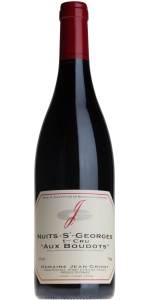
Domaine Jean Grivot Nuits-Saint-Georges Premier Cru Aux Boudots is made from 100 percent Pinot Noir.
Domaine Jean Grivot is among the great names in Burgundian wine. Étienne Grivot and his wife Marielle took over from Étienne’s father Jean Grivot in 1987. The vineyards are densely planted and farmed organically “sans certification” while the aim in the cellar is for balance and clear expression of terroir.
Jean Grivot’s 38.3 acres spread across 22 appellations with vineyards in the communes of Vosne-Romanée, Vougeot, Chambolle-Musigny, and Nuits-Saint-Georges. Besides the three grand crus, there are 8 premier crus including the much lauded Les Beaux Monts and Suchots in Vosne-Romanée. The grapes are completely de-stemmed and fermentation is spontaneous.
Nuits-Saint-Georges Aux Boudots 1er cru lies in the “Zone Vosnoise” or northern end of Nuits-Saint-Georges just below Les Damodes. It borders Vosne-Romanée Aux Malconsorts 1er just to its north. Its position slightly lower on the slope with deep soil full of pebbles results in a richer and fuller wine.
The grapes are destemmed and maceration à froid usually lasts just a day or two. The alcoholic fermentation is spontaneous and malolactic fermentation occurs in barrel. Depending on the vintage, the proportion of new oak is around 30-60% for the premier crus.
The wine shows aromas and flavors of red berries, herbs, and purple flowers. The palate is rich with ripe fruit and medium weight with bright acidity and fine tannins. Aging in 30-60% new Burgundian pièce brings notes of vanilla, toast, and baking spices.
Red Burgundy might be the world’s most flexible food wine. The wine’s high acidity, medium body, medium alcohol, and low tannins make it very food-friendly. Red Burgundy, with its earthy and sometimes gamey character, is a classic partner to roasted game birds, grilled duck breast, and dishes that feature mushrooms, black truffles, or are rich in umami.
Reviews:
‘The 2020 Nuits Saint-Georges Aux Boudots Ter Cru has the best aromatics among Grivat Nuits Saint-Georges with very well defined red berry fruit, briary and lignt sous-bois aromas. The palate is medium-badied with fine-grain tannins, slightly savory on the entry, fresh and saline on the finish. This has real verve and class, though it will benefit from time in bottle
-Vinous 93-95 Points
A wine with the substance and structure to support the generous lashings of new oak used for maturation, and the overall effect is elegant and classic in style. Aux Boudots, where Grivot has 0.85ha, is at the northern edge of Nuits, just over the border from Vosne-Romanée Malconsorts. They began to pick on the 3rd of September – Etienne specified that they are very particular that the tannins are ripe and do what they can to prolong the vegetative cycle. Still, the grapes were picked with an entirely correct pH of around 3.4.
-Decanter 94 Points
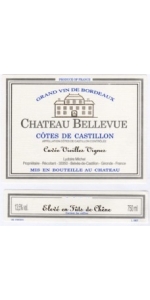
Bellevue Cotes de Bordeaux-Castillon Vieilles Vignes 2020 is 65% Merlot, 35% Cabernet Franc.
Average age of the vines is 40 years old.
The wine offers a rich and intense bouquet of blackcurrant, blackberry and strawberry.
It is smooth and full in the mouth with a velvety texture. Acidity combined with firm but well-integrated tannins are a fine supporting cast to the black fruit flavors at the end.
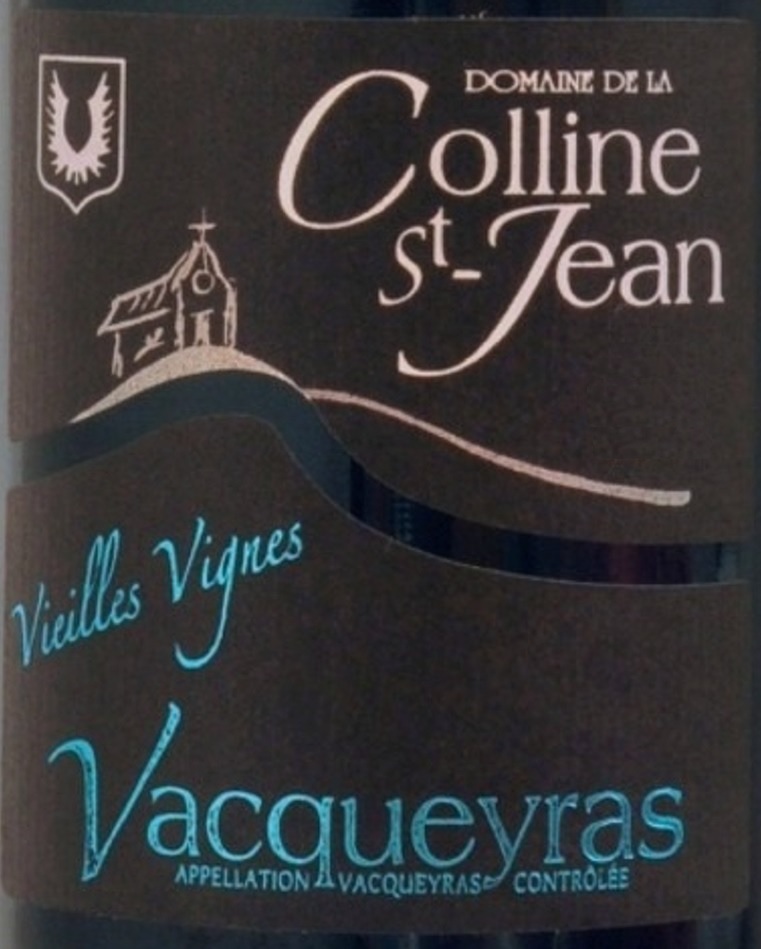
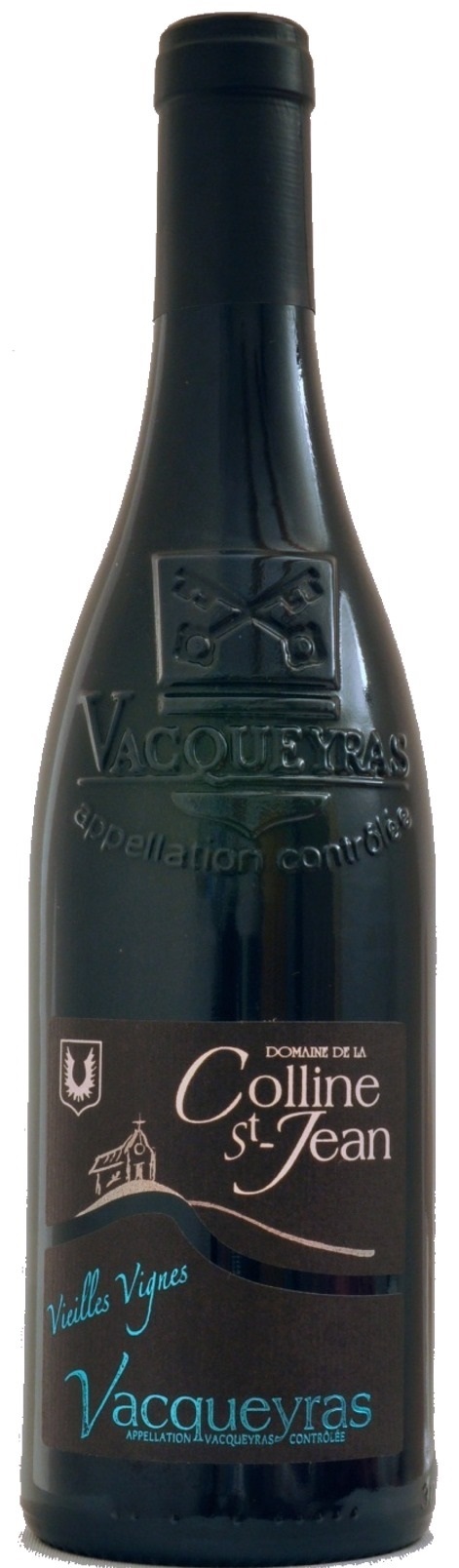
Colline Saint Jean Vacqueyras Vieilles Vignes is made from 80% Grenache and 20% Syrah.
This wine has a deep purple color, with an intense nose of ripe black fruits, plum, brandied cherries, and chocolate. In the mouth, the wine has rich flavors of black fruits. It is meaty, well-structured, and the tannins are round and elegant.
The juice is aged in concrete tanks for 18 months. The lack of oak helps to frame in the bright and defined dark berry flavors of the old vine grapes. I can not recall another red wine that displays this depth yet displays on the palate with such refreshing acidity.
Vieilles Vignes means old vines.For this specific wine, the age of the vines are comprised between 85 and 110 years old.
Traditional method. Manually picked. Harvest carefully sorted and 100% destemed. Maceration with skins during 20 days in cement vats. Large work of pump over to push the cap.
Red meat, game, white meat, poultry, dishes in sauce, cheese, chocolate dessert.
Review:
The old vine cuvee is the 2015 Vacqueyras Vieilles Vignes (80% Grenache and 20% Syrah), and it tastes similar to the classic cuvee, yet has more concentration and length. Toasted spices, black raspberries, crushed violets and licorice give way to a full-bodied, concentrated, ripe 2015 that has sweet tannin and loads of charm. It’s a big, blockbuster-styled beauty to buy by the case. -Wines Advocate 91-93+ Points
The Domaine St-Jean Estate
Located in the middle of the Cotes du Rhone, in the village of Vacqueyras, at the foot of Dentelles de Montmirail, Domaine de La Colline St. Jean has been a family-owned property for several generations.
The Domaine St-Jean Vineyard
They have 35 ha of vineyards in Vin de Pays du Vaucluse, Côtes-du-Rhône, Vacqueyras, Gigondas and Beaumes de Venise. Roland Alazard and his son preserve the character and the traditions of wine producers in their Cotes-du-Rhone wines. The hillside vineyards are heated by the sun giving the resulting wine a generous crimson robe, complex flavors and a delicate roundness on the palate.
Vacqueyras AOC represent 1,690 hectares (4,191 acres), of which only 1,300 hectares (3,224 acres) are planted with vines.
Total production for the entire Vacqueyras AOC is roughly 42,775 hectoliters (474,089 twelve-bottle-case equivalent).
The Grade Cellar Kingly Project Cabernet Sauvignon is made from Napa Valley Cabernet Sauvignon.
"This is a noble expression of Cabernet Sauvignon" in full regalia, with decadent aromas and a mouthfeel viscous and sleek. "This vintage of the Kingly Project Cabernet Sauvignon enters the scene" -- Thomas Rivers Brown
Review:
The 2018 Cabernet Sauvignon Kingly Vineyard is endowed with tremendous richness and concentration. It emerges from the best spots within Block 5, which is a bit more protected from the elements. The 2018 is a bit closed today, but it has a lot of promise. Time in the glass brings out layers of inky dark fruit and the savory, minerally notes that are such signatures. This potent Calistoga Cabernet needs time to shine, but it is impressive today just the same.
-Vinous 96 Points
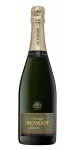
Henriot Brut Millesime 2014 is made from 50% Chardonnay, 50% Pinot Noir.
If the expression is intense and heady, it is nevertheless of an extraordinary finesse and elegance. A strength of character emerges, powerful, virile yet restrained and humble. The register is fresh, floral, vanilla, greedy. In the mouth the structure is solid, constructive, rectangular. The tannins take place and last after tasting. The freshness is present throughout the tasting, ending with a delicate bitter touch.
Review:
Showing floral notes of acacia and jasmine alongside sourdough, lemons and green apples. Walnuts and apricots, too. Open and inviting, with gentle nutty undertones, a medium to full body and a fine mousse. Long and persistent. 50% chardonnay and 50% pinot noir. Disgorged October 2022. This will be released later in 2023. Drink or hold.
- James Suckling 93 Points