" We don't sell the wine without touching the vine "
| Country: | France |
| Regions: | Burgundy Maconnais |
| Winery: | Croix Senaillet |
| Grape Type: | Chardonnay |
| Organic: | Yes |
| Vintage: | 2018 |
| Bottle Size: | 750 ml |

Croix Senaillet Saint Veran is made from 100 percent unoaked Chardonnay.
Fresh and fruity with floral, peach and citrus fruit aromas followed by mineral notes. Mineral, citrus and honey flavors. Rich and luscious palate with a long finish.
Produced from a selection of 40 parcels spread over 17 hectares. Some of the parcels include: Maillettes, Bergades, Poncétys, Terres noires, Pommards, Chênes, Surigny, Prâgnes, Bruyère, Chailloux, etc Average age of the vines is 45 years. The soil is made of clay and limestone. South, southeastern exposure - a few plateaux. Careful vinification. Minimal intervention in the vinification process. Modern equipment (pneumatic press, thermo-regulated tanks). Each parcel is harvested at full maturity. Destemming, slow press, slow fermentation, malolactic fermentation, aging on the lees.

Croix Senaillet St. Veran Les Rochats is made from 100 percent Chardonnay.
This Saint Veran Les Rochats is produced from 50-year-old Chardonnay vines, grown organically on Jurassic-era limestone (Entroque limestone), covered by pebbles that act as a filtering soil. The parcel is southeast facing on half hills.
Clear golden color with light green reflections. The wine has a rich and complex bouquet with a wide array of aromas: pear, nougat, wild peach and kiwi. The mouth is rich and dense bringing freshness with a nice volume and finishing on a light exotic note.
Vineyard
Surface area : 1 Ha.
Soil : limestone soil from the Jurassic period, covered by pebbles acting like a filtering soil.
South-east facing parcel on half-hills.
Grape variety : organically-grown Chardonnay.
Plantation density : 8.500 vinestocks per ha.
Age of vines : 50 years.
Mâconnais style pruning quite short, with 10 to 12 buds.
Hand-harvesting at optimal maturity.
Destemming to avoid herbaceous taste.
Slow and gentle pneumatic pressuring guarantees purity of juice and extraction of the finest aromas.
Very slow alcoholic fermentation in stainless still tank.
Malolactic fermentation.
Aging in stainless steel tanks for 9 months with gentle stirring of fine lees.
Pairs well with shrimp risotto, sautéed veal with eggplant.

All older vintage wines have been purchased from a single collectors cellar. Pictures can be requested before shipment.

When the founding fathers of the Napa Valley carved out new sub-AVAs (American Viticultural Areas) in the 1980s, Soda Canyon Ranch was not yet on anyone’s map. The vineyard is neighbored to the northwest and west by the winegrowing districts of Stags Leap District and Oak Knoll District, respectively, which were among the early pioneers of California Cabernet Sauvignon to attain global fame. To the northeast and southeast—and further off the beaten path—were Atlas Peak and Coombsville, thought to be the next frontiers for the emerging wine-producing region.
With richness and depth of flavor, the 2018 Timeless Napa Valley is the embodiment of patience and attention to detail. Decades of experience at Soda Canyon Ranch allow winemaker Nate Weis and team to highlight the individual merits of each block. Combining the strongest lots from each resulted in a refined and harmonious bottling.
In 2018, the diurnal shift at Soda Canyon Ranch produced a darker, lusher fruit profile of Cabernet Sauvignon. Simultaneously, the overnight recovery periods resulted in expressive and refined Merlot, giving the wine a pleasant profile of bright, red fruit. With an extended harvest window, the signature, plush density and structure of Petit Verdot is also prevalent in the final blend. Cabernet Franc thrived in 2018 with its predilection for the cooler soils and the climate of blocks 5, 6, 16, 20 and 21—areas we call the Transition Zone and Hardpan Alley. The variety’s floral and tobacco-like aromatics are accentuated, and its more aggressive nature for back-end tannins tamed.
Once blended, the 2018 vintage rested in French oak barrels for 16 months, developing flavors of vanilla and baking spice. Velvety tannins dance across the palate of bright and lingering cassis. With a smooth finish, this is a comforting wine of elegance and depth—a sophisticated expression of the sedate summer.
Review:
This is a little old-school and shows lots of dark berry, chocolate and dried fruit. It’s full, dense and layered with fleshly sensibility. Velvety texture.
-James Suckling 93 Points

It is hard to imagine with the Lithology range receiving 298 points out of 300 for the three single-vineyard wines, that there could possibly be a wine above them. But there is, and it is our Estate wine. Blended several times very intently by masters of their craft Philippe Melka and Michel Rolland, this is the ultimate expression of our house’s work. Positive, full-bodied, and quite powerful, there’s the expected crème de cassis and blackberry from St. Helena Cabernets, with mineral, herb, subtle tobacco and vanilla, plum skins, and pie crust, purple flowers, forest-conifer notes, and very fine tannic structure. It is a magnificent, and magnificently elegant expression of this house, and when asked recently, Monsieur Rolland stated plainly to me, “oh yes indeed – this is the best one, the best yet…”
Review:
The flagship 2018 Cabernet Sauvignon Alejandro Bulgheroni comes from a selection made by winemakers Philippe Melka and Michel Rolland, mostly from Rutherford and Oakville fruit. Aged 20 months in 78% new French oak, it has incredible aromatics of black and blue fruits, spring flowers, and graphite to go with a massive, full-bodied, concentrated style on the palate that somehow stays graceful, weightless, and elegant. This tour de force in Napa Valley Cabernet Sauvignon is guaranteed to put a smile on your face over the coming 20-25+ years.
-Jeb Dunnuck 99 Points

Alejandro Bulgheroni Lithology Beckstoffer Las Piedras Cabernet Sauvignon is made from 100 percent Cabernet Sauvignon.
From a St. Helena vineyard planted by early Napa settler Edward Bale more than 150 years ago, and later serving as the estate vineyard for the area’s first winery built by Henry Pellet in 1860, the Las Piedras site always gives us our prettiest wine. When placed next to Dr. Crane and To-Kalon wines, the Las Piedras show a certain elegance, with a very graceful entry and finely detailed complexity. We produce it with at least 75% new French oak, so there is a floral, spicy, and vanilla accent to the intense red and black fruits, cassis, and black cherry liqueur. What distinguishes this bottling is the beautifully fine tannins, delicate texture, and stunning purity. (Less than 100 cases made.)
Fermentation 70% Oak, 24% Concrete, 6% Puncheon
Review:
"The 2018 Cabernet Sauvignon Lithology Beckstoffer Las Piedras Vineyard comes from a world-class site outside of St. Helena and is all Cabernet that spent 20 months in 80% new oak. It offers a touch more red fruit as well ample cassis, spring flowers, loamy earth, and spice-like aromas and flavors. It has a wonderful sense of minerality, ultra-fine tannins, a dense, layered texture, and incredibly purity of fruit. It’s another just about off the charts release from this estate."
- Jeb Dunnuck 98 Points
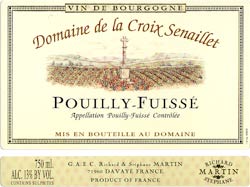
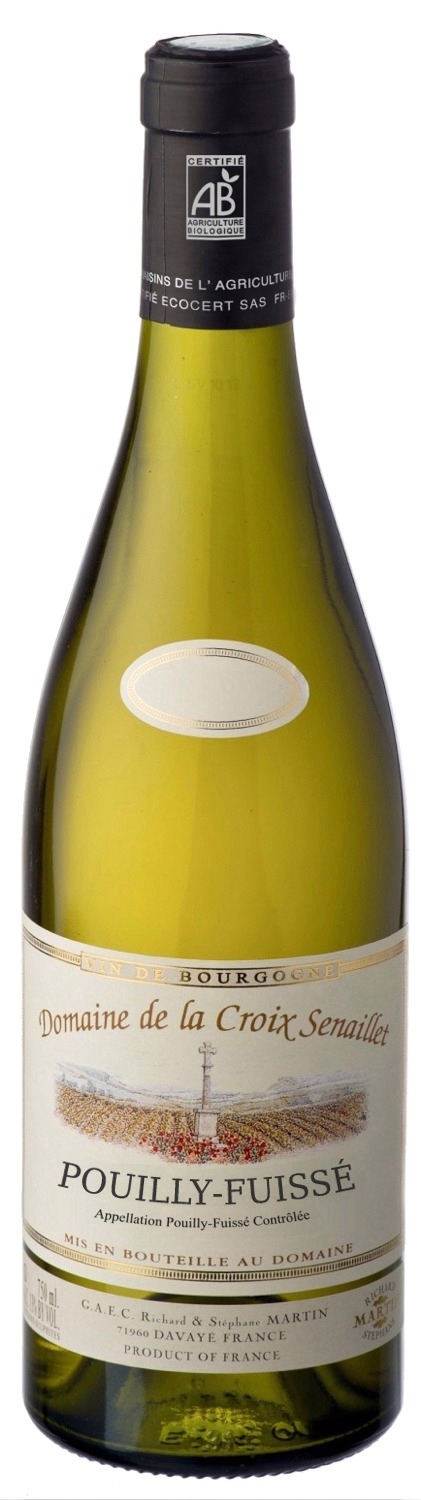
Bright gold color. The wine expresses delicate toasty notes, subtle caramel, almonds and ripe fruits aromas. The mouth is round, ample. The oak is well integrated giving volume, depth and a juicy finish. This elegant and well-balanced wine shows the minerality of the Pouilly-Fuisse terroir and presents a great ageing potential
Surface area : 59 ares located in the village of Solutré and Fuissé.
Soil : Jurassic limestones mixed with platy marl.
South and North-east facing parcel.
Grape variety : organically-grown Chardonnay.
Plantation density 8.000 vinestocks per ha.
Age of vines : 70 years.
Very low yield focusing on concentration.
Harvest at full maturity; destemming; slow and gentle pneumatic pressing to ensure purity of fruit and extract fine aromas.
Very slow alcoholic fermentation partly in demi-muids of 228L. Malolactic fermentation
Aging on the lees for 10 months; stirring of the lees.
Pair with bresse traditional chicken served with Burgundian truffles, roasted lobster with cream of avocado, pork tenderloin with bacon and sweet potatoes.
The Domaine de la Croix Senaillet Estate
This second generation old estate is located in the town of Davaye, in southern Burgundy. The winery was founded by Maurice Martin in 1969. His son Richard took it over in 1990 and was joined by his brother Stéphane in 1992. While Richard takes care of the vinification and the sales, Stephane is in charge of the vineyard. They sell 80% of their production in bottle and 20% to negociants. Currently, they export 40% of their wine outside of France.
"Domaine de la Croix Senaillet" takes its name from a cross that had been given by an ancient mayor of the village called Benoit Senaillet. The records show that the mayor donated the cross to Davaye in 1866 to replace the one that was destroyed in 1793 during the French Revolution. According to the common believes, the cross that was blessed in 1867 would protect the inhabitants of the village and everyone that would pass by.
The Domaine de la Croix Senaillet Vineyard
The vineyards are located on the south/southeastern slopes of the Solutre and Vergisson rocks. The estate spreads over 52 parcels in the town of Davayé and measures 22 hectares total (54.3 acres): 17 ha in St Veran, 5 ha in Macon, less than 1 hectare in Pouilly-Fuisse. The soil is both chalk and clay. The vines are 40 years old on average. In order to increase the quality of the grapes, Stephane has decided to use "culture raisonnee", which means that they watch carefully and daily the vineplant, checking for the sanitary level in the vineyard and use very small amount of pesticide and chemical products if necessary.
Saint Veran's AOC represents 696 hectares (1,726 acres) in total.
The total production for the AOC is around 42,775 hectoliters (474,089 twelve-bottle-case equivalent)

Échezeaux is loyal to its appellation through the finesse of its attack on the palate and its overall balance. But it's also a wine with pronounced acidity, which gives it freshness and structure and bestows upon it a sometimes austere finish.

SALE!
Morambro Creek Cabernet is 100 percent Cabernet
Deep purple in color. A rich elegant nose of cassis with overtones of vanilla and coffee. Lush, ripe palate dominated by black fruits, cherry and chocolate. Full bodied with savory, integrated fruit tannins and persistent finish.
Winemaking at Morambro Creek is very traditional and labour intensive. Oak maturation takes place using 35% new French barrels. This blend was put together using select barrels from our family estate that best demonstrate the intensity of our fruit balanced by integrated oak.
Total Acidity: 6.6 g/L
pH: 3.49