
" We don't sell the wine without touching the vine "
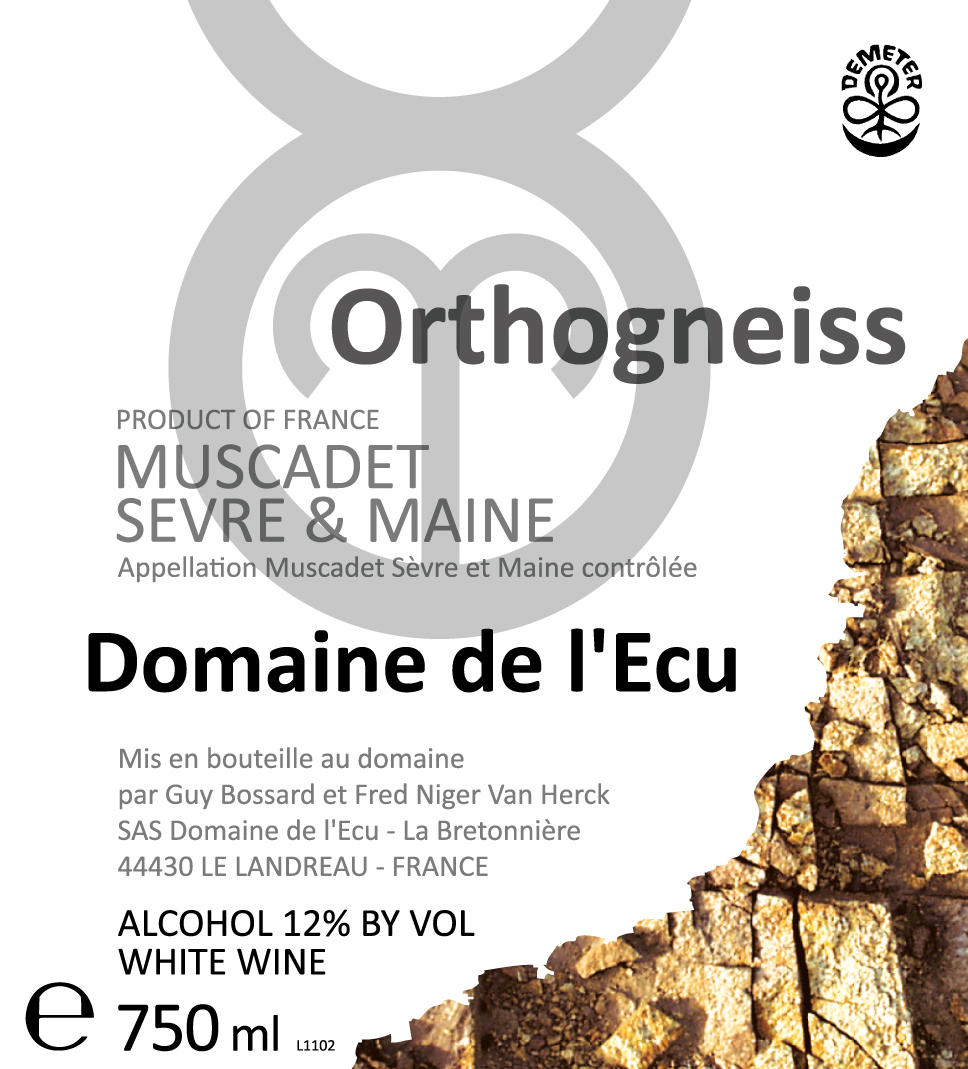
| Country: | France |
| Region: | Loire |
| Winery: | Ecu (Guy Bossard) |
| Grape Type: | Melon de Bourgogne |
| Organic: | Yes |
| Vintage: | 2019 |
| Bottle Size: | 750 ml |
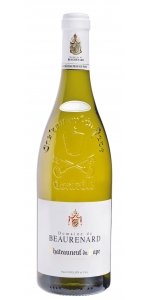
Domaine de Beaurenard Chateauneuf-du-Pape Blanc is made from Clairette blanche & Rose, Grenache Blanc & Gris, Bourboulenc, Roussanne, Picpoul and Picardan.
Gold bright green color. Expressive nose with pear and stone fruits aromas (peach, apricot) with jasmine and roasted almonds notes. The mouth is smooth and fleshy like stone fruit we can smell, with a long a nice finish.
Review:
Always terrific, the 2023 Châteauneuf Du Pape Blanc is no exception, and readers who love vibrant, age-worthy Rhône whites can safely buy this cuvée in just about every vintage. Based on 30% Clairette, 20% Grenache Blanc, 25% Bourboulenc, 22% Roussanne, and splashes of Picardan and Picpoul Blanc, the 2023 reveals a medium gold hue as well as textbook aromatics of pear and orchard fruits intermixed with honeyed flowers, chalky minerality, and subtle green almond nuances. This balanced, medium-bodied, vibrant white is very much in the fresh, focused, yet still textured, approachable style of the vintage.
-Jeb Dunnuck 93 Points

All older vintage wines have been purchased from a single collectors cellar. Pictures can be requested before shipment.
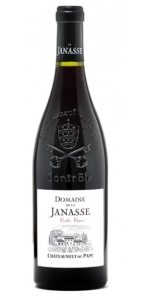
Domaine de la Janasse Chateauneuf-du-Pape Cuvee Vieilles Vignes is made from 65% Grenache, 20% Mourvèdre, 10% Syrah, 5% divers.
In contrast to Chaupin, which is made from old-vine Grenache on sandy soils, the cuvée Vieilles Vignes is from old vines of Grenache, Mourvedre, Syrah along with smaller percentages of other permitted varieties that are grown in these old vineyards. The wine is sourced from 4 terroirs: pebbly clay, sand, gravelly red clay and sandy limestone. Vieilles Vignes is always the most powerful and concentrated Châteauneuf-du-Pape cuvée made at Domaine de la Janasse.
Review:
The 2020 Châteauneuf Du Pape Vieilles Vignes also saw some stems (the estate started keeping some stems with the 2016 vintage) and was 75% destemmed, with the blend being 70% Grenache, 20% Mourvèdre, and the rest Syrah, Cinsault, and Terret Noir. As usual, it’s a more powerful, black-fruited wine comparted to the Cuvée Chaupin and has lots of crème de cassis, liquid violet, crushed stone, woodsmoke, and peppery herbs. It displays the vintage’s purity and freshness yet brings the concentration as well as the structure. I’ll be shocked if it’s not in the handful of top wines in the vintage.
-Jeb Dunnuck 96-98 Points
Domaine de la Janasse Chateauneuf-du-Pape Cuvee Vieilles Vignes is made from 65% Grenache, 20% Mourvèdre, 10% Syrah, 5% divers.
In contrast to Chaupin, which is made from old-vine Grenache on sandy soils, the cuvée Vieilles Vignes is from old vines of Grenache, Mourvedre, Syrah along with smaller percentages of other permitted varieties that are grown in these old vineyards. The wine is sourced from 4 terroirs: pebbly clay, sand, gravelly red clay and sandy limestone. Vieilles Vignes is always the most powerful and concentrated Châteauneuf-du-Pape cuvée made at Domaine de la Janasse.
Review:
The advantages of old vines are perhaps most evident in the more difficult vintages (whether hot and dry or cool and rainy). The 2021 Chateauneuf du Pape Vieilles Vignes is a strong effort, delivering supple, velvety waves of ripe black cherries and black raspberries. Medium to full-bodied, it's rich and concentrated without seeming at all heavy or unbalanced, finishing long and juicy. It's approximately 75% Grenache, 15% Mourvèdre, 5% Syrah and 5% other varieties, keeping in mind that up to 15% of the old Grenache vines are actually Clairette Rose.
-Wine Advocate 96 Points
All older vintage wines have been purchased from a single collectors cellar. Pictures can be requested before shipment.
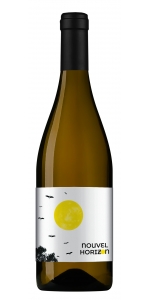
Color : pale gold
Aromas : subtle with notes of white fruit and flowers
Mouth : balanced, fresh and mineral
TA: 3.0 g/L
RS: 1.5 g/L
Domaine de l'Ecu Muscadet Orthogneiss is made from 100% Melon de Bourgogne sourced from a 3 hectare vineyard.
Sub-soil: Orthogneiss
Yield: 45-50 hl/haSoil ploughing and soil scraping. Canopy management.
PRUNING: Simple Guyot.
Orientation of slopes is SOUTH EAST. Soil is granulous and not very deep. Sub-soil: Orthogneiss.
Production: 555 cases
It is the color of white gold and crystal clear. The nose is subtle and elegant with the zest of citrus fruits, white flowers and spices such as ginger and cumin and there are notes of flintstone, dried fruits and toasted almonds. The attack is sharp and straight, the mouth is complex, an impression of great purety and rare elegance; very salty notes, chalky and slightly smokey notes and notes of citrus fruits, a wine with the ability to be kept for a long time.
Organically farmed since 1975. Biodynamic – Demeter certified since 1998. 100 % hand-picked grapes Reception of the grape harvest by gravity, no use of pumps. Pneumatic gentle press No racking of the must Fermentation: 100 % natural yeast • Temperature control: 15 °- 17 °. Aged "ON THE LEES" in underground vats
A perfect match to the following dishes:
Asian cuisine, fish curry,
Thai white rice, cucumber raita.
Snail Casserole Sole meunière & steamed crispy vegetables.
Brittany Lobster, wine and brandy reduction, puréed sweet potatoes with star anise.
Scallops in spicy breadcrumbs.
Scallops flambéed in whisky.
Spicy prawns, coriander cream.
Chicken Colombo.
Review:
"Tightly wound and very savory, with a core of lemon zest and honeysuckle flavors, while tangy fleur de sel and oyster shell notes give this intensity on the finish. Pure, showing impressive length. Drink now through 2026. 1,000 cases made, 100 cases imported. - AZ”
- Wine Spectator (December 2019), 91 pts
"One of a pair of wines named after the rock of the vineyard, this offers great fruitiness, crisp lemon and a mineral edge that balances with the wine's fresh character. It is a delicious wine, still developing, ready from late 2019. - ROGER VOSS”
- Wine Enthusiast (October 2019), 91 pts
The Domaine de l'Ecu Guy Bossard Estate
The domaine is located in the hamlet of Le Landreau in Sevre et Maine, Muscadet's best region of production. The family has been producing wine there for 5 generations, but current owner Guy Bossard defies the prevailing view that organic producers can't make great wine. The estate became organic in 1975, and biodynamic in 1986. Guy Bossard makes his own compost using algae, forest brush and basalt. He produces 3 different cuvees, each masterfully crafted to highlight the expression of the specific soil types.
The Hermine d'Or designation is given to specially selected Cuvees of Muscadet, (tasted blind) that score highly. Hermine d'Or wines are picked for:
1. Typicity - Trueness to type (no oak here).
2. Ageability - The ability to improve in the bottle.
3. Minerality - Classic feature of wines of this region.
This insignia, Hermine d'Or, is as near a guarantee of quality as can be found in the region.
Matt Kramer, the Wine Spectator - My Wines of the Year -
"Ah, my beloved Muscadet always pops up on this list, as I like to buy'em and age'em for upward of a decade. Guy Bossard, the owner-winemaker of Domaine de l'Ecu, is obsessed with Muscadet. His vines and winemaking are fully biodynamic. If Burgundy's Domaine Leroy made Muscadet, it would be Domaine de l'Ecu. In the classic 2002 vintage, Bossard offered multiple bottlings based on soil types. His Expression de Granit is all about intense minerality; Expression d'Orthogneiss is spicier, richer and denser. Both need 10 years of age. The prices are absurdly low."
"The gifted, highly regarded Guy Bossard produces serious Muscadets, built to age; fully biodynamic since 1986." - Anthony Dias Blue's pocket guide to wine 2006
The Domaine de l'Ecu Guy Bossard Vineyard
Guy Bossard farms 17 hectares (42 acres) entirely using biodynamic methods. The average age of the vines is 45 years.
The wines are fermented "sur lie", on the yeast, to prevent oxidation and impart full flavor and a slight spritz to the finished product.
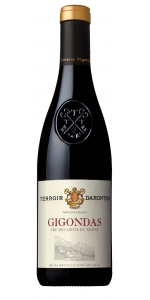
The Gigondas appellation is naturally delimited by the Dentelles de Montmirail to the east and the upper plateaux of the Ouvèze River to the west. The rugged topography of the Dentelles, amazing limestone pyramids, protects the vines from excessive summer heat and the full force of the mistral. Our vines grow on steep terraces up to 400 metres in altitude.
This Cru Gigondas displays a fine balance between freshness and an impression of sweetness due to old Grenache vines planted at high altitude. The wine is big on the palate, with a dense texture of rich, ripe tannin. Its polished personality reflects a top-rate terroir.
Review:
"Very full, rich and luxurious in style with ripe red berries and some rich, meaty fruit coming through on the palate; grainy and gritty tannins, with plenty to chew on. Feels youthful and tight but harmonious. The lovely acid line brings precision and pep. Tapered finish. Very appealing!"
- Decanter WWA 2022, 96 points and Gold Medal

All older vintage wines have been purchased from a single collectors cellar. Pictures can be requested before shipment.
Brize Cabernet d'Anjou Rose Louresses is made from Cabernet Franc.
Cabernet d'Anjou is a semi-sweet rosé wine from the Loire Valley, produced from Cabernet Franc and/or Cabernet Sauvignon grapes. The 'Louresses' designation refers to the specific vineyard parcel at Domaine de Brize.
This charming rosé offers a beautiful salmon-pink color with delicate aromas of strawberry, raspberry, and rose petals. On the palate, it is fresh and fruity with a hint of sweetness balanced by crisp acidity.
Perfect as an aperitif, or pair with Asian cuisine, spicy dishes, or fresh fruit desserts.



