
" We don't sell the wine without touching the vine "
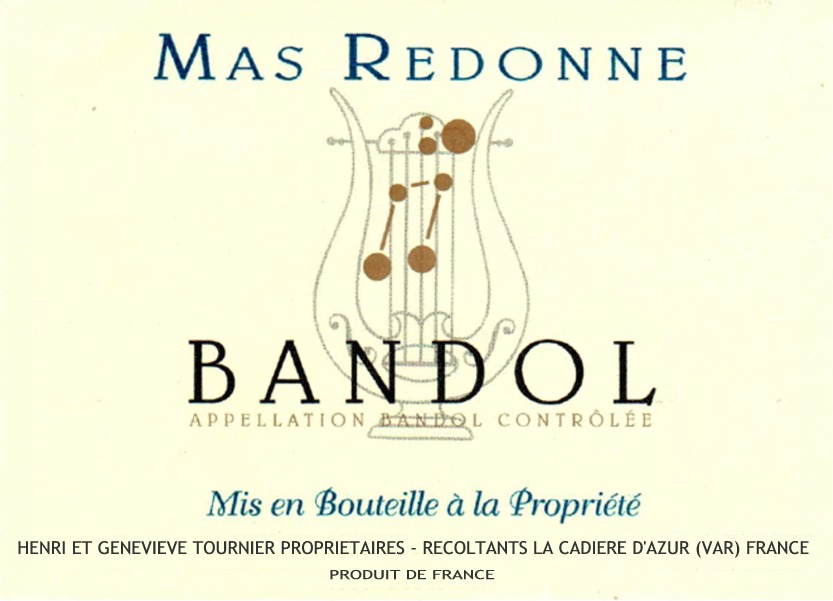
| Country: | France |
| Winery: | Roche Redonne |
| Grape Type: | Mourvedre |
| Vintage: | 2012 |
| Bottle Size: | 750 ml |

Domaine de la Janasse Chateauneuf-du-Pape Cuvee Vieilles Vignes is made from 65% Grenache, 20% Mourvèdre, 10% Syrah, 5% divers.
In contrast to Chaupin, which is made from old-vine Grenache on sandy soils, the cuvée Vieilles Vignes is from old vines of Grenache, Mourvedre, Syrah along with smaller percentages of other permitted varieties that are grown in these old vineyards. The wine is sourced from 4 terroirs: pebbly clay, sand, gravelly red clay and sandy limestone. Vieilles Vignes is always the most powerful and concentrated Châteauneuf-du-Pape cuvée made at Domaine de la Janasse.
Review:
The advantages of old vines are perhaps most evident in the more difficult vintages (whether hot and dry or cool and rainy). The 2021 Chateauneuf du Pape Vieilles Vignes is a strong effort, delivering supple, velvety waves of ripe black cherries and black raspberries. Medium to full-bodied, it's rich and concentrated without seeming at all heavy or unbalanced, finishing long and juicy. It's approximately 75% Grenache, 15% Mourvèdre, 5% Syrah and 5% other varieties, keeping in mind that up to 15% of the old Grenache vines are actually Clairette Rose.
-Wine Advocate 96 Points
Domaine de la Janasse Chateauneuf-du-Pape Cuvee Vieilles Vignes is made from 65% Grenache, 20% Mourvèdre, 10% Syrah, 5% divers.
In contrast to Chaupin, which is made from old-vine Grenache on sandy soils, the cuvée Vieilles Vignes is from old vines of Grenache, Mourvedre, Syrah along with smaller percentages of other permitted varieties that are grown in these old vineyards. The wine is sourced from 4 terroirs: pebbly clay, sand, gravelly red clay and sandy limestone. Vieilles Vignes is always the most powerful and concentrated Châteauneuf-du-Pape cuvée made at Domaine de la Janasse.
Review:
The 2020 Châteauneuf Du Pape Vieilles Vignes also saw some stems (the estate started keeping some stems with the 2016 vintage) and was 75% destemmed, with the blend being 70% Grenache, 20% Mourvèdre, and the rest Syrah, Cinsault, and Terret Noir. As usual, it’s a more powerful, black-fruited wine comparted to the Cuvée Chaupin and has lots of crème de cassis, liquid violet, crushed stone, woodsmoke, and peppery herbs. It displays the vintage’s purity and freshness yet brings the concentration as well as the structure. I’ll be shocked if it’s not in the handful of top wines in the vintage.
-Jeb Dunnuck 96-98 Points

Mas Redonne Bandol Rose is made from 55% Mourvèdre, 35% Cinsault, 10% Grenache.
Nice light salmon color, typical of Bandol.
The wine expresses some citrus, Pomelos (a delicious type of grapefruit) and lots of white fruit aromas and minerality.
The flavors are fresh, fruity and very aromatic with tons of apricot and mango.
Grilled salmon, chicken dishes as well as salads, sushi and sashimi.
Mas Redonne Bandol Rose is made from 55% Mourvèdre, 35% Cinsault, 10% Grenache.
Nice light salmon color, typical of Bandol.
The wine expresses some citrus, Pomelos (a delicious type of grapefruit) and lots of white fruit aromas and minerality.
The flavors are fresh, fruity and very aromatic with tons of apricot and mango.
Grilled salmon, chicken dishes as well as salads, sushi and sashimi.
Mas Redonne Bandol Rose is made from 55% Mourvèdre, 35% Cinsault, 10% Grenache.
Nice light salmon color, typical of Bandol.
The wine expresses some citrus, Pomelos (a delicious type of grapefruit) and lots of white fruit aromas and minerality.
The flavors are fresh, fruity and very aromatic with tons of apricot and mango.
Grilled salmon, chicken dishes as well as salads, sushi and sashimi.

All older vintage wines have been purchased from a single collectors cellar. Pictures can be requested before shipment.
Mas Redonne Bandol Rose 2012 is made from 55% Mourvèdre, 35% Cinsault, 10% Grenache
Nice light salmon color, typical of Bandol.
The wine expresses some citrus, Pomelos (a delicious type of grapefruit) and lots of white fruit aromas and minerality.
The flavors are fresh, fruity and very aromatic with tons of Apricot and Mango.
Yield : lower than 38 Hectoliters per Hectare
Alcohol per volume : 12.4%
Total Acidity : 3.46
Residual sugar: 0.23
PH: 3.28
The Domaine Roche Redonne Estate
Domaine Roche Redonne, founded in 1979, is a family owned winery run by Henri and Genevieve Tournier. The property is located on the foothills of the Bandol appelation, along the Mediterranean Coast, in the town of La Cadiere d'Azur, near Bandol, and is surrounded by olive trees and garrigue (wild herbs).
The Domaine Roche Redonne Vineyard
The 12 hectare vineyard is farmed under organic method. Both Henri and Genevieve focus on the work on the vineyard in respect of the environment. The vines are more than 40 years of age on average (between 20 years old for the youngest and 60 years old for the oldest), which means very low yields, and the steep hilled vineyards can only be harvested by hand.

Dr. Loosen Riesling Eiswein is made from 100 percent Riesling.
This vibrant, racy dessert wine conjures flavors of densely packed pear, apple and guava, with an intense, nervy edge in the aroma. It is luscious, silky and juicy on the palate, with bright acidity giving it a crisp, dynamic finish.
Review:
This is extremely rich, yet the acidity keeps it on its toes. The palate is rich, sporting rhubarb and apricot flavors that are laced by hints of earth, coriander seed and honeyed oolong tea. It has an appealing sweet tart character that takes over and is matched by super suave texture. Shows incredible persistence through the long finish. Drink now through 2050.
-Wine Enthusiast 95 Points

Mortet Bourgogne Passetoutgrain is mae from 60% Gamay and 40% Pinot Noir
Aged 11 months in Neutral French oak barrels.
12% ABV
Malolactic fermentation in barrel.
Slight filtration before bottling.
Bourgogne Passetoutgrains is an Appellation d'origine contrôlée (AOC) for wine from the region of Burgundy.
Most Bourgogne Passetoutgrains is red, although rosé wine may also be produced. Unlike other Burgundy wines, which are
primarily produced from a single grape variety, Bourgogne Passetoutgrains is essentially a cuvée of Gamay and Pinot noir.
This is a quintessential bistro wine. Fresh and fruity, displaying red and black fruit flavors. Well balanced, good structure and silky finish with excellent length. Serve slightly chilled.
Oeufs en Meurette (poached eggs served in a red wine sauce with onions and lardons).
Boeuf Bourguignon (beef cooked in red wine with carrots and patatoes).
Pizza and pasta.



