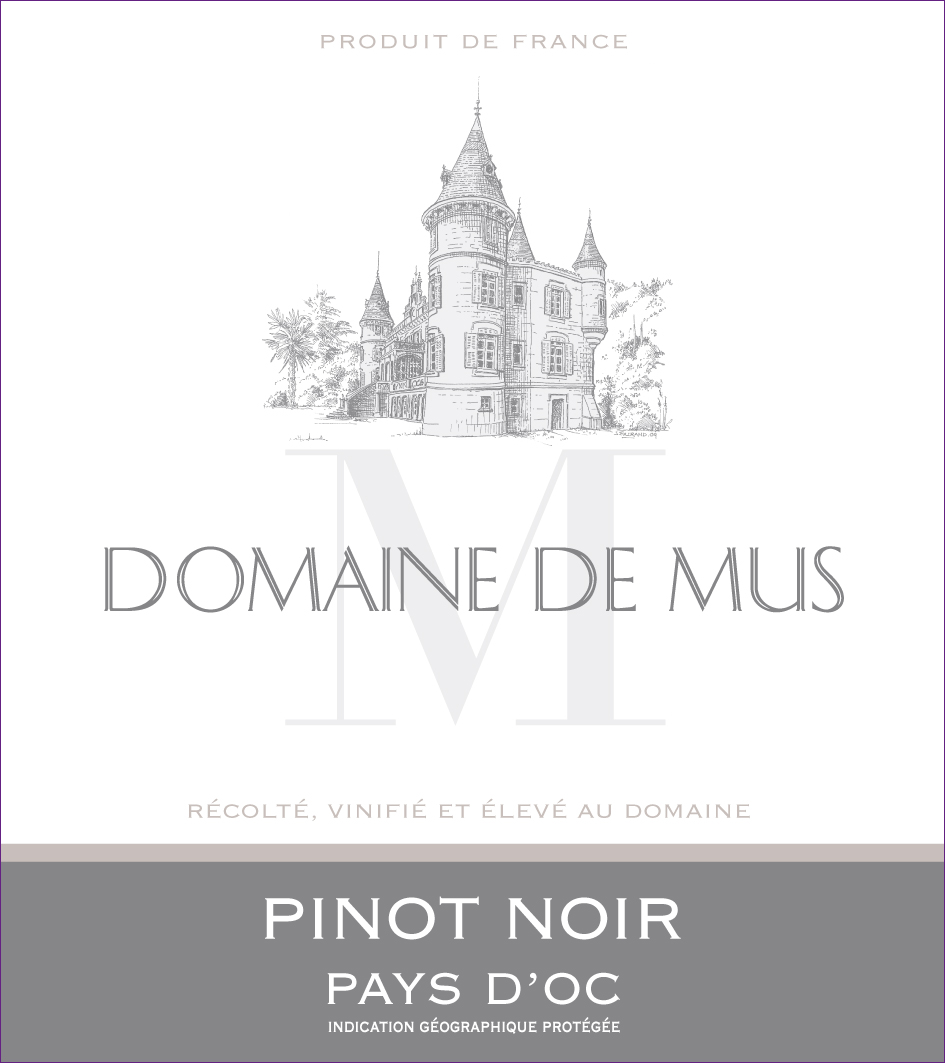
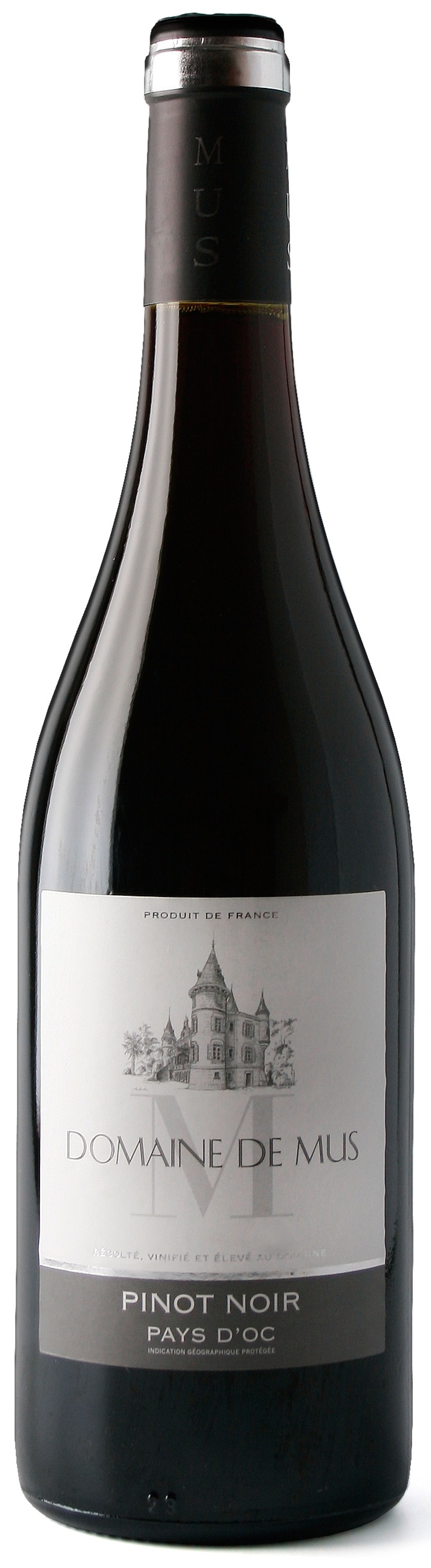
" We don't sell the wine without touching the vine "
| Country: | France |
| Region: | Languedoc |
| Winery: | Chateau de Mus |
| Grape Type: | Pinot Noir |
| Vintage: | 2016 |
| Bottle Size: | 750 ml |

All older vintage wines have been purchased from a single collectors cellar. Pictures can be requested before shipment.

Domaine Nico le Paradis Pinot Noir is made from 100 percent Pinot Noir.
The cool climate vineyard that belongs to Laura and her sister Adrianna Catena feels like paradise itself to Laura. It is lined by trees and fruit orchards, with majestic views of the Andes. Inside the 12 Hectare vineyard, there is a little house with two tiny bedrooms and a kitchen, where Laura dreams of spending a whole month reading books-Laura's version of paradise. The little house is affectionately named Chateau Laura. About the Vineyard The tiny parcel where Le Paradis is grown was planted in 2011 with Dijon 667 Clones over two acres. Wine Production The grapes from this small parcel were elaborated in 15 separate microvinifications.
All the microvinifications were fermented with indigenous yeast. 20% of the microvinifications were fermented with 100% whole clusters in oak roll-fermentor of 600L and low temp (22 Celcius degrees). 40% were fermented with 20% whole cluster in small vats of 800L and 40% fermented in small vats of 800L without sulfites until 4%V/V of alcohol.
Review:
From soils rich in calcium carbonate and sand, in a vineyard 1,600 meters above sea level, this wine comes from a selection of 2.7 hectares that produced very little fruit in 2016, just barely enough to fill 800 bottles. But watch out for this white, with its edge, its minerality, those saline notes that are so characteristic of chardonnay from the chalky Gualtallary soils. The wine was aged for a year in used barrels, and it has some of the toast, but here it’s the deep minerality that dominates.
Patricio Tapia - Descorchados 96 Points

Domaine de la Janasse Chateauneuf-du-Pape Cuvee Vieilles Vignes is made from 65% Grenache, 20% Mourvèdre, 10% Syrah, 5% divers.
In contrast to Chaupin, which is made from old-vine Grenache on sandy soils, the cuvée Vieilles Vignes is from old vines of Grenache, Mourvedre, Syrah along with smaller percentages of other permitted varieties that are grown in these old vineyards. The wine is sourced from 4 terroirs: pebbly clay, sand, gravelly red clay and sandy limestone. Vieilles Vignes is always the most powerful and concentrated Châteauneuf-du-Pape cuvée made at Domaine de la Janasse.
Review:
The 2020 Châteauneuf Du Pape Vieilles Vignes also saw some stems (the estate started keeping some stems with the 2016 vintage) and was 75% destemmed, with the blend being 70% Grenache, 20% Mourvèdre, and the rest Syrah, Cinsault, and Terret Noir. As usual, it’s a more powerful, black-fruited wine comparted to the Cuvée Chaupin and has lots of crème de cassis, liquid violet, crushed stone, woodsmoke, and peppery herbs. It displays the vintage’s purity and freshness yet brings the concentration as well as the structure. I’ll be shocked if it’s not in the handful of top wines in the vintage.
-Jeb Dunnuck 96-98 Points

Domaine de Beaurenard Chateauneuf-du-Pape Blanc is made from Clairette blanche & Rose, Grenache Blanc & Gris, Bourboulenc, Roussanne, Picpoul and Picardan.
Gold bright green color. Expressive nose with pear and stone fruits aromas (peach, apricot) with jasmine and roasted almonds notes. The mouth is smooth and fleshy like stone fruit we can smell, with a long a nice finish.
Review:
Always terrific, the 2023 Châteauneuf Du Pape Blanc is no exception, and readers who love vibrant, age-worthy Rhône whites can safely buy this cuvée in just about every vintage. Based on 30% Clairette, 20% Grenache Blanc, 25% Bourboulenc, 22% Roussanne, and splashes of Picardan and Picpoul Blanc, the 2023 reveals a medium gold hue as well as textbook aromatics of pear and orchard fruits intermixed with honeyed flowers, chalky minerality, and subtle green almond nuances. This balanced, medium-bodied, vibrant white is very much in the fresh, focused, yet still textured, approachable style of the vintage.
-Jeb Dunnuck 93 Points
Domaine de la Janasse Chateauneuf-du-Pape Cuvee Vieilles Vignes is made from 65% Grenache, 20% Mourvèdre, 10% Syrah, 5% divers.
In contrast to Chaupin, which is made from old-vine Grenache on sandy soils, the cuvée Vieilles Vignes is from old vines of Grenache, Mourvedre, Syrah along with smaller percentages of other permitted varieties that are grown in these old vineyards. The wine is sourced from 4 terroirs: pebbly clay, sand, gravelly red clay and sandy limestone. Vieilles Vignes is always the most powerful and concentrated Châteauneuf-du-Pape cuvée made at Domaine de la Janasse.
Review:
The advantages of old vines are perhaps most evident in the more difficult vintages (whether hot and dry or cool and rainy). The 2021 Chateauneuf du Pape Vieilles Vignes is a strong effort, delivering supple, velvety waves of ripe black cherries and black raspberries. Medium to full-bodied, it's rich and concentrated without seeming at all heavy or unbalanced, finishing long and juicy. It's approximately 75% Grenache, 15% Mourvèdre, 5% Syrah and 5% other varieties, keeping in mind that up to 15% of the old Grenache vines are actually Clairette Rose.
-Wine Advocate 96 Points

Bright fruit on the nose boasts notes of black cherry, black plum, violets, rose, orange, cocoa nibs, tobacco, mushroom and forest floor. On the palate, complex layers of fruit slowly melt into a bold, structured wine that impresses from start to finish. Velvety tannins interact gracefully with the wine’s fruit and acidity, all coming together to create a delightful wine and a beautiful expression of Willamette Valley Pinot Noir.
Review:
The 2021 King Estate ‘Domaine’ Pinot Noir was stored in 26% new French oak before bottling and represents the top one percent of Estate Pinot Noir barrels. Red currants combine with freshly tilled soils, Black cherry and shades of dried herbs. The palate is soft and refined with silky tannins that frame a core of red and dark fruit flavors. Finishing long, with good viscosity, this is already sgiwubg beautifully right now.
Owen Bargreen 94 Points
Nice red color, with garnet-red shades.
Expressive and charming on the nose with nice flower notes (violet, peony).
On the palate, fresh and round, a fine and elegant red wine on red fruit notes (cranberries, redcurrants), with a beautiful balance. A nice length, with a soft spicy finish. A beautiful Mediterranean expression of the variety.
The average age of the vines is 11 years old.
Traditional winemaking. A very special attention is paid to the health state of the crop, harvested when fully matured. Complete destemming. Macerating in vats during 5 weeks, under heat monitoring. Fermentation under the effect of selected yeasts. End of fermentation under control of the temperature. When the fermenting process is achieved, free-run and press wines are kept separately and sometimes partly or totally blended, according to the vintage aromatic and gustatory expression. Ageing in vats until bottling.
The Chateau de Mus is located in Murviel-Les-Beziers in the Languedoc region.It is home to a gorgeous Renaissance-style castle.
The Julien Family has been working hard in the vineyards, in the cellars, but they also have a restoration project for the chapel and the castle located on the property. Today, Yannick and Brice are representing the 5th generation of winemakers in the Family.
Date Founded: 2004
Dating back at least 800 BC, the Château de Mus represents one of the largest archaeological sites in Hérault, illustrating the prehistoric, Celtic, Roman, Greek and Etruscan ages. The estate was named after an ancient fortified place called « Murus » («city wall» in Latin), built up on a promontory over the Orb river. At MUS, a Romanesque church was built in 1070 (today its restoration is in progress) such as one of the six first castles of the area. Twice destroyed during the crusade against the Cathars in the 13th C. the former mansion was replaced in 1848 by a Renaissance-style castle, prefiguring the great times of the “wine chateaux” in Languedoc.
The JULIEN'S bought the CHATEAU DE MUS in 2004
The vineyard is planted to traditional grape varieties of the Languedoc’s AOP, Grenache, Syrah, Mourvèdre, Cinsault, in the estate’s AOP area, and also of a range of different French varieties planted in the Vin de Pays area, mainly Cabernet Franc, Cabernet Sauvignon, Merlot, Petit Verdot, Malbec, Pinot Noir, Tannat, Marselan, Muscat, Grenache Gris, Sauvignon blanc, Sauvignon, Vermentino, Viognier.
The winery is modern and the temperature controlled vinification is a huge part of the quality process. Concrete tanks, stainless steel and open top fermenters are used for almost all of their wines

Argot Napa Cabernet Sauvignon Sugarloaf Vineyard is made from 100 percent Cabernet Sauvignon.
Sugarloaf’s terroir continues to impress with its expression of classically-styled Napa Valley Cabernet Sauvignons — impeccably pure black and red fruit character; broad, rich, perfectly ripe tannins; classic Napa Valley notes of cigar leaf, eucalyptus, and freshly-tilled earth; and definitive complexities of clove, all-spice and bay leaf. Having assessed past vintages with a few years of age, we have come to greatly value the significant reward Sugarloaf delivers after a few years in the cellar.
From Block 6, an acre of fiercely steep, ferociously rocky hillside, located in Napa’s far south-eastern foothills, deeply affected by the cooling influences of San Pablo Bay. One of the latest harvests in all of Napa Valley each vintage. Mother Nature was kind to this site in 2019, being our most bountiful year here ever. With perfect set, and vines displaying great health, this normally stingy hillside delivered superlative quality, without restraint of yield. After a slow start in the Spring, 2019’s particularly warm September and October played beautifully to the vineyard’s strengths, and delivered a classic Halloween-time harvest.
Review:
"It is not often that you see a 100% Cabernet Sauvignon coming from this rising star, cooler-climate vineyard in south Napa. This wine comes exclusively from the low-yielding, steep, rocky "Block 6." Deep purple-black in color, the 2019 Cabernet Sauvignon Sugarloaf Vineyard needs a little coaxing to reveal wonderfully pure scents of blackcurrant cordial, juicy blueberries and ripe blackberries, plus suggestions of iris bulb, dark chocolate, molten licorice and cedar chest. The big, rich, seductive, full-on full-bodied palate is laden with ripe, energetic black berry layers, framed by firm, ripe, grainy tannins and seamless freshness, finishing long and perfumed. A stunning, true-blue Napa blockbuster with its own very evocative signature, this comes highly recommended! 175 cases were made. - Lisa Perrotti-Brown"
- Robert Parker's Wine Advocate (November 2021), 97+ pts

Feileacan Wine Irish Cream is made from a wine base blended with fresh Irish cream.
Féileacán Irish Country Cream is a creamy, sweet Irish liqueur alternative. It is inspired by Irish Whiskey cream liqueurs that quickly became popular around the world in the 70’s. Féileacán Irish Country Cream is a neutral fermented grape wine with cream, sugar, and flavorings such as vanilla, caramel, and coffee. All the ingredients are blended together until smooth and creamy, resulting in a rich, indulgent liqueur alternative with a smooth finish. Féileacán Irish Country Cream can be enjoyed on its own, over ice, or used as an ingredient in cocktails and desserts. It is a popular ingredient in coffee drinks, such as the Irish Coffee and the Mudslide, as well as in desserts such as cheesecake and chocolate mousse. In addition to being delicious, Féileacán is also versatile and easy to use. It can be used as a substitute for cream or milk in a variety of recipes, adding a rich, creamy flavor to dishes such as pancakes, waffles, and French toast. Féileacán Irish Country Cream is a delicious and versatile liqueur alternative that has helped many Beer and Wine restaurants sell many Irish inspired cocktails.
Tasting Notes: Féileacán is smooth and creamy with a sweet rich flavor. It has notes of vanilla, caramel, and hints of chocolate and coffee.